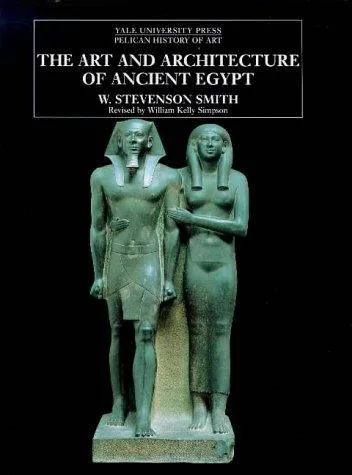
The Art and Architecture of Ancient Egypt
 72
72

The Art and Architecture of Ancient Egypt
William Stevenson Smith's "The Art and Architecture of Ancient Egypt" offers a dense but rewarding scholarly account. The work's strength lies in its meticulous detail, particularly in describing the stylistic evolution of sculpture and the structural innovations in temple construction. For instance, Smith's detailed analysis of the mastaba tombs and their development provides a clear picture of early funerary architecture. A limitation, however, is the text's academic dryness; it can be challenging for readers without a prior background in Egyptology to fully engage with the minutiae of stylistic analysis. The book's value is undeniable for specialists, providing a solid reference point for understanding the material culture of this ancient society. It remains a significant contribution to the field.
📝 Description
72
William Stevenson Smith's 1988 study examines the art and architecture of ancient Egypt.
This comprehensive survey covers Egyptian artistic achievements and architectural accomplishments from the predynastic era to the Roman period. Smith provides detailed analyses of iconic structures and artistic forms, considering their historical and cultural settings. The book examines how religious beliefs, pharaonic authority, and everyday life influenced the design of temples, tombs, and sculptures. It highlights the consistent and intentional conservatism within Egyptian artistic traditions, often tied to ritual and cosmology. Smith also dissects the foundational principles of Egyptian design, including proportion, the use of symbolism in religious and secular contexts, and the integration of art and architecture for state and afterlife purposes. Specific elements like hieroglyphs, divine imagery, and major complexes such as Karnak and Giza are discussed.
While not overtly esoteric, Smith's detailed examination of ancient Egyptian art and architecture often touches upon themes that resonate with esoteric traditions. The emphasis on ritualistic principles, cosmological underpinnings of design, and the integration of art within a sacred worldview aligns with certain mystical interpretations of ancient cultures. The book's focus on the symbolic language embedded within structures and imagery can be seen as a key to understanding a deeper, non-literal meaning, which is a hallmark of esoteric study. It provides factual data that can inform broader inquiries into ancient spiritual systems.
💡 Why Read This Book?
• Gain a detailed understanding of the architectural principles behind structures like the Great Pyramid of Giza, learning about the engineering and symbolic considerations that guided their construction. • Explore the evolution of Egyptian artistic canons from the Old Kingdom through the New Kingdom, appreciating how societal and religious shifts influenced sculptural and pictorial representations. • Understand the function of art and architecture within the Egyptian religious framework, specifically how tomb decoration served the deceased's journey into the afterlife.
⭐ Reader Reviews
Honest opinions from readers who have explored this book.
❓ Frequently Asked Questions
What is the primary focus of "The Art and Architecture of Ancient Egypt"?
The book provides a comprehensive scholarly analysis of the artistic styles and architectural achievements of ancient Egypt, spanning from its early dynasties to the Roman period.
Who is the intended audience for this book?
It is aimed at serious students, scholars, and enthusiasts of Egyptology, art history, and archaeology who seek in-depth knowledge beyond introductory texts.
Does the book cover the Amarna Period?
Yes, the work addresses the distinct artistic innovations of the Amarna Period, including the changes in royal portraiture and religious expression under Akhenaten.
Are there detailed descriptions of specific Egyptian sites?
Certainly. The book includes extensive descriptions and analyses of major sites such as the Giza plateau, the temples at Karnak and Luxor, and tomb complexes in the Valley of the Kings.
When was "The Art and Architecture of Ancient Egypt" first published?
The book was first published in 1988, offering a comprehensive overview based on scholarship available at that time.
Does the book discuss the use of materials in Egyptian art and architecture?
Yes, it frequently discusses the materials employed, such as granite, limestone, and sandstone, along with their quarrying and transportation, and the pigments used in painting.
🔮 Key Themes & Symbolism
Continuity and Divine Order
A central theme is the remarkable continuity in Egyptian art and architecture, driven by a profound belief in cosmic order (Ma'at) and the divine nature of kingship. Smith illustrates how artistic conventions, from the rigid poses of statues to the hierarchical scale in reliefs, were maintained for over three millennia. This conservatism was not stagnation but a deliberate adherence to established forms believed to uphold universal balance and ensure the pharaoh's successful transition to divinity, reflecting a worldview deeply rooted in cyclical time and ritualistic practice.
Architecture of the Afterlife
The book extensively details how funerary architecture served as a crucial conduit to the afterlife. Structures like the pyramids, mastabas, and rock-cut tombs were not mere burial places but complex machines designed to house the deceased's ka and ba, facilitate their eternal sustenance, and ensure their rebirth. The intricate tomb decorations, filled with scenes of daily life and offerings, were intended to magically provide for the deceased in perpetuity, highlighting a sophisticated theological understanding of death as a transition rather than an end.
Symbolism in Form and Function
Smith emphasizes the pervasive use of symbolism in Egyptian art. Every element, from the shape of a temple pylon to the rendering of a god's iconography, carried specific meaning. The lotus and papyrus motifs symbolized Upper and Lower Egypt, while the ankh represented life. This symbolic language was integral to the function of art and architecture, serving to reinforce religious doctrine, glorify the gods and pharaohs, and maintain the cosmic order. The integration of hieroglyphic inscriptions further amplified these symbolic layers.
The Pharaoh as Divine Mediator
The pharaoh's central role as the divine intermediary between the gods and humanity is a recurring motif. The art and architecture consistently depict the ruler in a position of power, interacting with deities, performing sacred rituals, and embodying both earthly authority and celestial connection. Monumental building projects were often initiated by pharaohs to demonstrate their piety, secure divine favor, and project an image of eternal power and stability, solidifying their god-king status.
💬 Memorable Quotes
Direct passages from the work, attributed to the author.
“The development of the Egyptian tomb from the mastaba to the pyramid is a direct evolution of a specific form.”
— This highlights Smith's focus on the functional and developmental progression of architectural types, seeing Egyptian building not as isolated creations but as part of a continuous historical and practical lineage tied to funerary rites.
“Sculpture was never intended to be seen in isolation, but as part of a larger architectural or religious context.”
— This points to the integrated nature of Egyptian art, where statues and reliefs were designed to complement their surroundings, serving specific purposes within temples, tombs, or public monuments.
“The artist's adherence to established canons ensured the perpetuation of religious beliefs and the divine order.”
— This interpretation emphasizes how artistic conventions were not merely aesthetic choices but vital tools for reinforcing the core tenets of Egyptian religion and cosmology, ensuring stability.
“Temple architecture aimed to create an environment that facilitated divine presence and royal ritual.”
— This interpretation underscores the functional aspect of Egyptian temples, designed as sacred spaces to house deities and enable the pharaoh's performance of essential religious duties.
“The Amarna period represents a significant, though temporary, departure from traditional artistic norms.”
— This acknowledges the unique stylistic shift during Akhenaten's reign, while also noting its eventual suppression and return to more orthodox artistic conventions, placing it within the broader context of Egyptian art history.
🌙 Esoteric Significance
Tradition
While primarily a work of art history and archaeology, "The Art and Architecture of Ancient Egypt" touches upon esoteric interpretations through its detailed exploration of Egyptian cosmology, funerary practices, and the symbolic language embedded in its monuments. It provides the factual bedrock upon which many esoteric traditions, particularly those influenced by 19th and early 20th-century Theosophy and Hermeticism, build their understanding of ancient Egyptian mysticism, divine kingship, and afterlife beliefs.
Symbolism
The book meticulously documents symbols like the ankh (life), the djed pillar (stability, Osiris), and the Eye of Horus (protection, healing, royal power). These are presented through their artistic and architectural contexts, such as their incorporation into temple reliefs, sarcophagi, and amulets. Their function within the Egyptian worldview—maintaining Ma'at, ensuring rebirth, and connecting the earthly to the divine—is explored, offering tangible examples of the symbolic systems that underpin esoteric thought.
Modern Relevance
Contemporary esoteric practitioners and scholars of comparative religion frequently reference works like Smith's to ground their studies of ancient Egyptian magical and spiritual systems. Modern Hermetic orders, Western esotericists studying Egyptian deities, and those exploring shamanic or astral projection techniques often draw from its descriptions of temple layouts, ritualistic imagery, and the pharaoh's divine role to inform their own practices and conceptual frameworks.
👥 Who Should Read This Book
• Students of art history and archaeology seeking a detailed, fact-based survey of ancient Egyptian artistic and architectural developments. • Individuals interested in the religious and cosmological underpinnings of ancient civilizations, particularly how beliefs shaped physical structures and visual representations. • Researchers and practitioners within Western esoteric traditions who wish to understand the source material and historical context for ancient Egyptian symbolism and mythology.
📜 Historical Context
Published in 1988, William Stevenson Smith's "The Art and Architecture of Ancient Egypt" emerged during a period of robust academic engagement with Egyptology, building upon decades of archaeological discovery and scholarly interpretation. The work implicitly engaged with established Egyptological discourse, drawing from figures like Flinders Petrie and James Henry Breasted, while also incorporating newer understandings of social and economic history. Unlike more popular, speculative works, Smith's approach was firmly grounded in material evidence and stylistic analysis, positioning it within the rigorous academic tradition. Its reception was largely positive within scholarly circles for its comprehensive scope and detailed analysis, though it faced the general challenge of synthesizing a vast and complex field into a single, accessible volume for a broad academic audience.
📔 Journal Prompts
The evolution of the mastaba into the pyramid complex.
The symbolic meaning of lotus and papyrus motifs in Egyptian art.
The pharaoh's representation as a divine mediator in temple reliefs.
The architectural function of Egyptian tombs in relation to the afterlife.
The use of hieroglyphs as both writing and sacred imagery.
🗂️ Glossary
Ma'at
The ancient Egyptian concept of truth, balance, order, harmony, law, morality, and justice. It was personified as a goddess and was fundamental to the Egyptian worldview and the pharaoh's role.
Ka
In ancient Egyptian belief, the spiritual double or life force of a person, which needed sustenance and a physical vessel (like a statue) to survive in the afterlife.
Ba
Another aspect of the soul in ancient Egyptian religion, often depicted as a human-headed bird, representing personality and mobility, able to travel between the tomb and the world.
Mastaba
An early form of Egyptian tomb, characterized by a flat, rectangular structure with sloping sides built over a subterranean burial chamber.
Pylon
A monumental gateway forming the entrance to a temple in ancient Egypt, typically trapezoidal in shape and decorated with reliefs and inscriptions.
Hieroglyphs
The formal writing system used in ancient Egypt, combining logographic, syllabic, and alphabetic elements. They were often integrated into art and architecture for religious and monumental purposes.
Amarna Period
A distinctive period in Egyptian history (circa 1353–1336 BCE) during the reign of Akhenaten, characterized by radical changes in art, religion, and architecture, notably the worship of the Aten.
🔮 Readers Also Liked
Browse all →









More by William Stevenson Smith
All books →
More Free Occult Philosophy Books
View all →