The Ancient Secret of the Flower of Life
 83
83

The Ancient Secret of the Flower of Life
Drunvalo Melchizedek's "The Ancient Secret of the Flower of Life" is a substantial undertaking, delving into a particular understanding of sacred geometry and its connection to consciousness. Its strength lies in its systematic presentation of complex geometric forms and their purported cosmic significance, offering a visual language for creation. The book's ambition to reconnect readers with ancient knowledge is palpable. However, the text occasionally leans into speculative leaps that, while engaging, may challenge readers seeking strictly empirical validation. The detailed explanation of the Merkaba meditation technique, while central to the author's thesis, demands significant focus and can be a hurdle for those new to such practices. It's a work that invites deep contemplation rather than casual reading, demanding an openness to its unique cosmological framework. The book offers a distinct perspective on universal patterns.
📝 Description
83
First published in April 1999, "The Ancient Secret of the Flower of Life" proposes a geometric blueprint for creation.
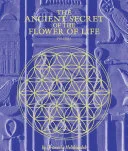
Drunvalo Melchizedek's work centers on the Flower of Life, a geometric pattern formed by overlapping circles. He suggests this symbol is fundamental to the universe, encoding the blueprint for all creation and consciousness. The book acts as a guide, intended to help readers recall this inherent knowledge.
The text is structured to lead the reader through an understanding of sacred geometry and its connection to reality's energetic structure. It discusses the potential for human evolution and the nature of consciousness, drawing parallels between mathematical forms and spiritual understanding. Readers interested in these connections will find the material engaging.
This book connects to a tradition viewing geometric forms as central to divine creation, a concept seen in Pythagoreanism and Theosophy. It follows thinkers like Helena Blavatsky and Rudolf Steiner in exploring esoteric knowledge. The focus on a specific recurring geometric pattern aligns with a broader interest in universal symbols found in various spiritual and mystical traditions.
💡 Why Read This Book?
• Gain an understanding of the "Flower of Life" symbol as a blueprint for creation, moving beyond its aesthetic appeal to its geometric underpinnings as presented in the text. • Learn about the Merkaba meditation technique, a specific practice detailed within the book for personal energetic activation and consciousness expansion. • Explore the concept of the "Toroidal" field as a model for energy and consciousness, offering a different perspective on energetic dynamics than conventional physics.
⭐ Reader Reviews
Honest opinions from readers who have explored this book.
❓ Frequently Asked Questions
When was "The Ancient Secret of the Flower of Life" first published?
The book was first published in April 1999, marking its entry into the discourse on sacred geometry and consciousness during the late 20th century.
What is the "Flower of Life" symbol according to the book?
The "Flower of Life" is presented as a fundamental geometric pattern composed of multiple overlapping circles, believed to be the source code or blueprint for all life and the universe itself.
What is the Merkaba meditation mentioned in the book?
The Merkaba meditation is a spiritual technique described in the book that involves visualizing and activating a counter-rotating field of energy around the body, intended to facilitate spiritual ascension and connection.
Does the book discuss other geometric shapes besides the Flower of Life?
Yes, the work explores various geometric forms and their relationships, often linking them to concepts like the Seed of Life, the Egg of Life, and the Tree of Life, as part of the larger geometric cosmology.
Who is Drunvalo Melchizedek?
Drunvalo Melchizedek is the author of "The Ancient Secret of the Flower of Life" and other works focused on sacred geometry, consciousness, and ancient spiritual traditions.
Is the book suitable for beginners in esoteric studies?
The book can be approached by beginners with an open mind, but its depth and the nature of its concepts, like Merkaba meditation, may require dedicated study and contemplation.
🔮 Key Themes & Symbolism
Sacred Geometry as Universal Language
The work posits that geometric forms are not mere mathematical constructs but the underlying language of the cosmos. The "Flower of Life" symbol, in particular, is presented as a visual representation of unity and the interconnectedness of all things, from the smallest atom to the largest galaxy. It suggests that by understanding these patterns, we can access deeper truths about existence and our place within it, linking ancient wisdom traditions with modern scientific inquiry into fundamental structures.
Consciousness and Energetic Fields
Central to the book is the idea that consciousness is intimately linked to energetic fields, often depicted through geometric forms. The concept of the "Merkaba," a personal light-body vehicle, and the "Toroidal" field are explored as mechanisms through which consciousness interacts with the universe. Melchizedek suggests that specific meditative practices can activate these fields, leading to expanded awareness and a remembrance of our innate spiritual capabilities, thereby offering a path to personal transformation.
Remembering Ancient Origins
The text frames its teachings as a form of remembering, implying that this knowledge is not new but has been forgotten by humanity. It connects the "Flower of Life" and related geometries to ancient civilizations and spiritual lineages, suggesting a lost understanding of creation and consciousness. By reintroducing these symbols and practices, the book aims to help readers reconnect with an ancestral wisdom that predates current paradigms, fostering a sense of continuity with the past.
The Blueprint of Creation
The book elaborates on the idea that the "Flower of Life" symbol contains the basic elements of creation, from which all forms manifest. It's presented not just as a symbol but as an active principle, a geometric matrix from which reality unfolds. This perspective offers a framework for understanding the underlying order of the universe and how intricate structures arise from simple, repeating patterns, challenging conventional views of chaotic emergence.
💬 Memorable Quotes
Direct passages from the work, attributed to the author.
“The Flower of Life is the map of creation.”
— This statement expresses the book's core thesis: that the geometric pattern known as the Flower of Life is not just a symbol but a comprehensive representation of how the universe and all life within it came into being.
“We are all interconnected through these geometric fields.”
— This highlights the interconnectedness of all beings and phenomena, suggesting that our individual consciousness and physical forms are part of larger energetic and geometric structures that bind us together.
“The Merkaba is our personal light vehicle.”
— This refers to the concept of the Merkaba as a spiritual vehicle, an energetic field around the body that can be activated through specific meditations to facilitate higher states of consciousness and spiritual travel.
“Understanding sacred geometry helps us remember who we are.”
— This reflects the idea that the study of these ancient patterns is a path to self-discovery and the realization of our true spiritual nature, which has been obscured by contemporary life.
💡 Key Ideas
Editorial paraphrase of the work's core concepts — not direct quotes.
Geometry is the language of the divine.
This paraphrase suggests that the fundamental patterns and forms found in geometry are the very means by which the divine or universal intelligence communicates its design and structure to the cosmos.
🌙 Esoteric Significance
Tradition
This work draws heavily from Neoplatonic and Pythagorean traditions that see mathematics and geometry as fundamental to the divine order and the structure of reality. It also aligns with Gnostic ideas of a pre-existent divine pattern and the potential for human spiritual awakening. While not strictly Hermetic, it shares the Hermetic principle of "As Above, So Below" by linking cosmic patterns to human experience and consciousness.
Symbolism
The primary symbol is the "Flower of Life," a complex geometric pattern representing the interconnectedness of all life and the unity of creation. Another key symbol is the "Merkaba," interpreted as a divine light-vehicle composed of opposing spiritual energies, crucial for ascension. The "Toroidal" field, a doughnut-shaped energy pattern, is also central, symbolizing the continuous flow of energy and consciousness throughout the universe.
Modern Relevance
The work's concepts of sacred geometry and energy fields have influenced contemporary spiritual practitioners, artists, and designers. Thinkers and communities focused on consciousness studies, holistic health, and sustainable design often reference or draw inspiration from Melchizedek's ideas about universal patterns and energetic coherence.
👥 Who Should Read This Book
• Students of sacred geometry and ancient symbolism seeking to understand foundational patterns of creation. • Individuals interested in alternative models of consciousness and energetic fields, particularly the Merkaba and Toroidal concepts. • Seekers exploring the connection between mathematics, spirituality, and the perceived blueprint of the universe.
📜 Historical Context
Published in 1999, "The Ancient Secret of the Flower of Life" emerged during a resurgence of interest in esoteric and New Age spirituality, a movement influenced by figures like Helena Blavatsky and the Theosophical Society's exploration of ancient wisdom. The book tapped into a growing audience seeking alternative cosmologies and explanations for reality beyond mainstream science and religion. It arrived at a time when works like those by contemporaries such as Doreen Virtue (though in a different domain) were also gaining traction, indicating a public appetite for spiritual guidance. While not facing overt censorship, its ideas, particularly regarding sacred geometry and consciousness, operated outside established academic and religious discourse, positioning it within a counter-cultural intellectual current. Its reception was largely within dedicated spiritual and self-help communities, rather than mainstream academic circles.
📔 Journal Prompts
The geometric structure of the "Flower of Life" as a symbol for unity.
Activating the "Merkaba" energy field through visualization practices.
The "Toroidal" field as a model for universal energy flow.
Recalling ancient origins through the study of geometric patterns.
The relationship between mathematical forms and spiritual understanding.
🗂️ Glossary
Flower of Life
A geometric pattern composed of multiple evenly-spaced, overlapping circles arranged in a flower-like pattern with six-fold symmetry, believed to contain the fundamental forms of space and time.
Merkaba
A divine light-vehicle described as a spiritual energy field around the human body, composed of sacred geometry, believed to be activated for spiritual ascension and interdimensional travel.
Toroidal Field
A donut-shaped or vortex-like energy field that is believed to surround living beings and celestial bodies, representing a continuous flow of energy and consciousness.
Sacred Geometry
The study of geometric shapes and patterns that are considered fundamental to the structure of the universe and possess spiritual or mystical significance.
Prana
The vital life force or energy that permeates the universe, often associated with breath and consciousness in various spiritual traditions.
Void
In the context of creation myths, the primordial state of emptiness or nothingness from which all existence is said to have emerged.
Metatron's Cube
A complex geometric figure derived from the Fruit of Life pattern, containing all five Platonic solids, believed to hold significant esoteric meaning.