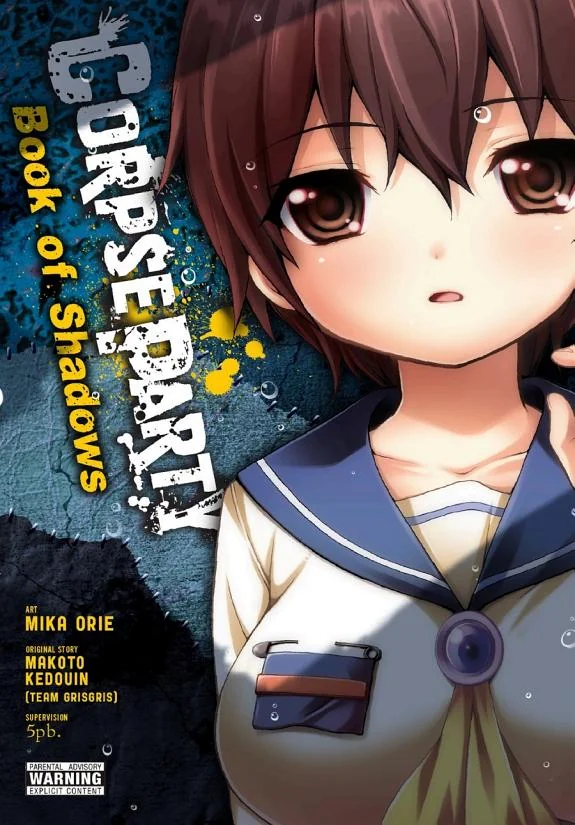
Corpse Party: Book of Shadows
 76
76

Corpse Party: Book of Shadows
Corpse Party: Book of Shadows takes the audacious step of dissecting its own preceding narrative, offering a meta-commentary on consequence and regret. The strength lies in its willingness to deconstruct the original's closure, presenting horrifying "what if" scenarios that amplify the existing dread. The exploration of alternate timelines, particularly concerning characters like Ayumi Shinozaki and her desperate attempts to alter fate, is chillingly effective. However, the narrative occasionally falters in maintaining the raw, visceral impact of the first installment. While the psychological depth is commendable, the pacing can feel slightly more academic than visceral at times, particularly when dissecting the mechanics of the curse. One passage that stands out is the depiction of how a single unmade choice could cascade into a reality far worse than the original. Ultimately, Book of Shadows is a compelling, if slightly less immediate, addition that enriches the Corpse Party universe through intelligent narrative subversion.
📝 Description
76
Published in 2017, Corpse Party: Book of Shadows revisits Heavenly Host Elementary to examine branching timelines.
Corpse Party: Book of Shadows, released in 2017, functions as a narrative sequel to the original Corpse Party: Blood Covered. The story returns to the haunted Heavenly Host Elementary School, but instead of repeating past events, it focuses on alternate possibilities and the consequences of different choices. The book delves into how unresolved trauma and regret manifest within a supernatural setting, creating new horrors from the characters' internal struggles.
This installment is aimed at fans of the Corpse Party series who wish to explore the lore and character development further. It will also appeal to readers of supernatural horror that emphasizes psychological dread and the impact of alternate realities on the human psyche. Those who enjoy interactive storytelling, even in a text-based format, will find merit in its 'what-if' scenarios and the examination of how player choices affect narrative outcomes.
The series originated from the visual novel and survival horror game scene, with Makoto Kedouin's work gaining recognition for its unsettling atmosphere and narrative depth. Book of Shadows continues this trend, building upon the established 2011 narrative of Blood Covered. It presents a meta-narrative that reflects on the nature of sequels and the persistent appeal of its cursed school setting.
While rooted in supernatural horror, Book of Shadows touches on themes of temporal distortion and the manifestation of regret. The cursed school acts as a nexus where characters' past decisions and unspoken desires physically interact with their present. This concept aligns with certain occult traditions that posit locations can retain psychic imprints, becoming focal points for spiritual or psychological phenomena. The exploration of 'what-ifs' also echoes a fascination with parallel universes and the paths not taken, a concept explored in various mystical and philosophical schools.
💡 Why Read This Book?
• Learn how the narrative explores the psychological impact of alternate choices, specifically examining the cascading effects of single decisions within the cursed environment of Heavenly Host Elementary School. • Experience the unique "what-if" structure that challenges the finality of the original game's conclusion, offering a meta-narrative layer to the established horror. • Gain insight into the nature of regret and unresolved trauma as manifested through supernatural events, a core theme exemplified by Ayumi Shinozaki's actions.
⭐ Reader Reviews
Honest opinions from readers who have explored this book.
❓ Frequently Asked Questions
Is Corpse Party: Book of Shadows a direct continuation of the original game's plot?
No, Book of Shadows is not a direct plot continuation but rather an exploration of alternate timelines and "what-if" scenarios stemming from the events of the original Corpse Party: Blood Covered. It revisits the haunted halls of Heavenly Host Elementary School to examine different outcomes.
What is the significance of "Book of Shadows" in the Corpse Party lore?
The "Book of Shadows" title refers to the narrative's focus on exploring alternative possibilities and the hidden, darker paths that could have unfolded. It represents the collection of these "what-if" narratives, delving into the consequences of choices not made.
Who is the primary author of Corpse Party: Book of Shadows?
The author is Makoto Kedouin, the primary writer and director behind the Corpse Party series. The game was first published in 2017 by Team GrisGris.
What kind of horror does Book of Shadows employ?
Book of Shadows leans heavily into psychological horror, exploring themes of regret, trauma, and the consequences of choices through its alternate reality scenarios. While still featuring graphic elements, its focus is on the dread of what might have been.
Does the book offer new lore about Heavenly Host Elementary School?
Yes, by presenting alternate timelines and character fates, the book implicitly expands the lore of Heavenly Host Elementary School and the nature of its curse, showing how different circumstances might interact with the school's malevolent influence.
Can I understand Book of Shadows without playing the original Corpse Party?
While it offers a meta-commentary, understanding the emotional weight and character connections is significantly enhanced by having played or experienced Corpse Party: Blood Covered. Book of Shadows assumes familiarity with the initial events and characters.
🔮 Key Themes & Symbolism
The Weight of Unmade Choices
This work intensely focuses on the philosophical concept of counterfactuals—the "what-ifs" and "should-haves." It posits that even unchosen paths exert a form of psychic pressure. The cursed environment of Heavenly Host Elementary becomes a canvas for these spectral possibilities, manifesting characters' regrets and anxieties. The narrative probes how the knowledge of alternative, potentially better, outcomes can be as torturous as present suffering, particularly for characters like Ayumi Shinozaki who grapple with the desire to undo past tragedies.
Fractured Realities and Temporal Echoes
Book of Shadows explores the idea of fractured timelines and temporal echoes generated by intense emotional trauma and supernatural curses. The school itself acts as a nexus, not just for spirits, but for the resonance of different potential realities. This exploration moves beyond simple ghost stories into a more metaphysical examination of how consciousness and choice interact with the fabric of time and space, suggesting that the past is not immutable but a fluid construct influenced by present regrets.
The Curse as a Mirror of Internal Conflict
The malevolent force within Heavenly Host Elementary is depicted not just as an external entity, but as a reflection of the characters' internal states. The horrors encountered are often amplified or tailored by the characters' own guilt, fears, and desires. This perspective aligns with certain esoteric traditions where external manifestations are seen as projections of inner turmoil. The book uses the supernatural setting to externalize psychological burdens, demonstrating how unresolved trauma can create personal hells.
Consequence and the Illusion of Closure
The narrative questions the very notion of closure, suggesting that apparent endings are merely one possibility among many. The "Book of Shadows" itself symbolizes this lack of finality, offering a collection of alternative conclusions that undermine the perceived resolution of the original game. It implies that the true curse lies not just in the school's supernatural activity, but in the inability to escape the lingering traces of what might have been, challenging the reader's own perception of narrative finality.
💬 Memorable Quotes
Direct passages from the work, attributed to the author.
“Everything could have been different if only one small thing had changed.”
— This reflects the core theme of counterfactual existence. It suggests that the present reality, with all its horrors, is just one branch of possibility, and the weight of unmade decisions can be as oppressive as actual suffering.
“The past doesn't end; it just echoes in different rooms.”
— This highlights the concept of temporal resonance. It posits that past events, especially traumatic ones, don't simply cease to exist but continue to reverberate, manifesting in new and unexpected ways across different timelines or realities.
“She sought a way out, not of the school, but of the choices she had made.”
— This points to the psychological aspect of the curse. The characters' true struggle is not merely against ghosts, but against their own regrets and the desire to escape the consequences of their past actions, even if those actions were unavoidable.
“Heavenly Host doesn't just kill you; it shows you why you deserved it.”
— This interpretation suggests the curse personalizes the horror, using the victims' own perceived failings or past traumas against them. It implies a form of karmic or psychological retribution manifested supernaturally.
“The real horror wasn't the ghosts, but the reality that refused to be buried.”
— This emphasizes the meta-narrative aspect, suggesting that the enduring trauma and the inescapable nature of certain events (or their potential alternatives) are the true sources of dread, rather than the immediate supernatural threats.
🌙 Esoteric Significance
Tradition
While not explicitly tied to a single established esoteric lineage like Hermeticism or Gnosticism, Corpse Party: Book of Shadows appeals to themes found in certain occult traditions that explore the power of belief, the manifestation of thoughtforms, and the concept of psychic residue. The idea that strong emotions and unresolved trauma can imbue locations with lingering energy or even create sentient manifestations aligns with animistic beliefs and certain interpretations of spiritualism. The narrative's focus on how characters' inner states directly shape their external reality echoes principles found in magical traditions where willpower and visualization are paramount.
Symbolism
The cursed elementary school, Heavenly Host, functions as a potent symbol of corrupted innocence and the perversion of formative environments. Its haunted halls represent the inescapable nature of trauma and regret, acting as a psychic echo chamber. The "Book of Shadows" itself symbolizes forbidden knowledge and the dangerous allure of exploring alternative realities or past mistakes, hinting at a grimoire of potential dooms. The pervasive bloodstains and dismemberment serve as visceral symbols of the shattering of physical and psychological integrity under extreme duress.
Modern Relevance
Contemporary horror fiction and games continue to explore the intersection of psychological trauma and supernatural manifestation, areas where Book of Shadows excels. Thinkers and practitioners interested in Jungian psychology, particularly concepts like the shadow self and archetypal manifestations, might find parallels in how the curse externalizes characters' inner demons. Furthermore, the narrative's exploration of branching timelines and the philosophical implications of choice and consequence remains relevant in discussions surrounding determinism, free will, and the nature of reality in both fictional and philosophical contexts.
👥 Who Should Read This Book
• Fans of survival horror games and visual novels seeking deeper narrative exploration beyond jump scares, particularly those interested in the Corpse Party series' established lore. • Readers fascinated by psychological horror that examines the impact of trauma, regret, and the concept of alternate realities on character development. • Individuals interested in meta-narratives and stories that deconstruct their own genre or previous installments, offering a unique commentary on storytelling and consequence.
📜 Historical Context
Makoto Kedouin's Corpse Party series, originating in the late 1990s as a freeware RPG Maker game, found significant traction in the early 2010s with its more polished iterations like Corpse Party: Blood Covered (2011). Book of Shadows, released in 2017, arrived during a period of renewed interest in narrative-driven horror and visual novels, a genre that had seen earlier successes with titles like Higurashi: When They Cry (2007) by 07th Expansion. These games shared a focus on psychological horror, seemingly innocent settings turned nightmarish, and complex, often branching, narratives that explored dark themes. Book of Shadows specifically engaged with the burgeoning trend of meta-narratives within gaming, dissecting its own established storyline. While not facing overt censorship, the series' graphic content and mature themes placed it outside mainstream discussion, appealing instead to a dedicated niche audience seeking visceral and psychologically taxing horror experiences.
📔 Journal Prompts
The weight of Ayumi Shinozaki's attempts to alter fate.
Heavenly Host Elementary as a manifestation of collective regret.
The psychological toll of witnessing alternate, horrific outcomes.
The narrative's commentary on the illusion of closure.
The symbolic meaning of the "Book of Shadows" itself.
🗂️ Glossary
Heavenly Host Elementary School
The primary setting of the Corpse Party series, a notoriously haunted and cursed school where numerous tragedies have occurred, serving as a nexus for supernatural phenomena and spectral manifestations.
Sachiko Shinozaki
The vengeful spirit of a young girl central to the curse of Heavenly Host Elementary. Her presence and the circumstances of her death are a driving force behind the supernatural events plaguing the school.
Alternate Timelines
Parallel versions of reality explored in Book of Shadows, where different choices lead to divergent and often more horrifying outcomes than the original narrative's conclusion.
Counterfactuals
Scenarios exploring "what if" situations, focusing on what might have happened if certain events had occurred differently. Book of Shadows heavily utilizes this concept to examine character regrets and consequences.
Psychic Residue
The concept that intense emotions or traumatic events can leave an imprint on a location, influencing the supernatural phenomena that occur there. This is a key element in the haunting of Heavenly Host.
Team GrisGris
The Japanese independent game development circle responsible for the creation and ongoing development of the Corpse Party series, including Book of Shadows.
The Binding Ritual
A ritual performed by characters, often with the intention of saving friends or altering fate, which inadvertently binds them to the cursed grounds of Heavenly Host Elementary.
This book appears in 1 collection
🔮 Readers Also Liked
Browse all →









From the “Book of Shadows” Collection
View all →





More Free Occult Philosophy Books
View all →