The Affirmations Book for Sharing
 81
81

The Affirmations Book for Sharing
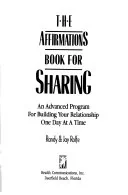
Randy Rolfe's 1991 offering, The Affirmations Book for Sharing, tackles the well-trodden path of positive self-talk with a focus on communal application. Its strength lies in its directness; the affirmations themselves are simple, often declarative statements that avoid excessive spiritual jargon, making them accessible to a broad audience. A limitation, however, is the inherent repetitiveness common to the genre; the utility of affirmations hinges on consistent practice, which can sometimes feel monotonous if not integrated into a larger framework of personal inquiry. The concept of "sharing" them is an interesting angle, particularly the idea that collective vocalization might amplify their effect, a notion explored implicitly in the book's structure rather than through explicit theoretical exposition. It offers a pragmatic, if conventional, approach to mental reframing.
📝 Description
81
Published in 1991, Randy Rolfe's The Affirmations Book for Sharing offers positive declarations for personal growth.
This book collects positive statements intended for both individual improvement and strengthening connections with others. It works from the idea that repeating affirmations can change internal thought patterns, leading to more confidence, calm, and general well-being. The structure specifically encourages using these affirmations with other people, suggesting that personal development can be a group activity.
It is for people looking for simple ways to get better mentally and build inner strength. Those interested in positive psychology, self-help methods, and using mindful language will find it useful. Its focus on sharing also suits therapists, counselors, educators, and anyone who leads group activities or wants to improve relationships through shared positive intentions.
Released in the early 1990s, a time of growing interest in New Age spirituality and self-empowerment, this book fits into a larger cultural movement emphasizing personal control over mental and emotional states. This period saw many guides for success and happiness, often using psychological ideas and Eastern meditation practices. Rolfe's work contributed by offering a clear, practical method to cultivate a positive mindset.
💡 Why Read This Book?
• You will learn to harness the practice of positive self-declarations, as exemplified by the book's collection of affirmations, to cultivate personal resilience and a more optimistic outlook. • You will gain insight into the concept of shared affirmation, understanding how the 'for sharing' aspect can foster a supportive environment for collective personal growth. • You will discover a practical method for integrating mindful language into daily interactions, directly drawing from the book's accessible affirmations for tangible self-improvement.
⭐ Reader Reviews
Honest opinions from readers who have explored this book.
❓ Frequently Asked Questions
When was The Affirmations Book for Sharing first published?
The Affirmations Book for Sharing was first published in 1991 by Randy Rolfe, contributing to the self-help literature boom of the early 1990s.
What is the core principle behind the affirmations in this book?
The core principle is that consistent, focused positive statements, when spoken or thought repeatedly, can positively influence one's mindset, beliefs, and overall well-being.
How does the 'for sharing' aspect differentiate this book?
The 'for sharing' aspect suggests that affirmations can be used communally, potentially amplifying their effect through shared intent and vocalization in groups or relationships.
Who is Randy Rolfe?
Randy Rolfe is the author of The Affirmations Book for Sharing, a work focused on self-improvement through positive affirmations.
Is this book part of a specific esoteric tradition?
While not explicitly tied to a single tradition, its focus on affirmations aligns with broader New Thought and self-help movements that draw from various spiritual and psychological concepts.
🔮 Key Themes & Symbolism
Power of Positive Declarations
The central tenet is the efficacy of positive affirmations. Rolfe posits that consistent, vocalized declarations, framed as present realities (e.g., 'I am confident'), can rewire subconscious beliefs. This practice aims to shift an individual's internal dialogue from self-doubt to self-assurance, fostering a more empowered perspective on life's challenges. The book provides numerous examples designed for direct application.
Communal Affirmation Practice
A distinguishing feature is the emphasis on sharing these affirmations. This suggests that the energetic or psychological impact of positive statements is not solely an individual pursuit. By sharing affirmations in pairs, groups, or even within families, the book promotes a collective cultivation of positive mental states, creating a supportive echo chamber for personal growth.
Mindful Language and Intent
The work underscores the significance of deliberate language. Each affirmation is a carefully chosen phrase intended to direct one's focus and energy. This aligns with esoteric principles that suggest consciousness shapes reality, and that by consciously directing one's thoughts and words, individuals can influence their external circumstances and internal experience.
Accessible Self-Improvement Tools
Rolfe's approach is designed for ease of use. The affirmations are typically concise and straightforward, requiring no prior specialized knowledge. This makes the book a practical resource for anyone seeking tangible methods to enhance their self-esteem, reduce anxiety, or simply foster a more positive outlook on life without complex theoretical frameworks.
💬 Memorable Quotes
Direct passages from the work, attributed to the author.
“I radiate peace and well-being.”
— This affirmation expresses the outward projection of an internal state. It suggests that cultivating inner peace isn't just for personal benefit but also influences one's environment and interactions, becoming a form of energetic emanation.
“I embrace new opportunities with joy.”
— This speaks to an attitude of openness and optimism towards change. It frames potential challenges or shifts in life as positive events, encouraging a proactive and enthusiastic engagement with the unfolding of one's path.
“I share love and receive love freely.”
— Highlighting the 'for sharing' aspect, this affirmation emphasizes reciprocity in emotional connection. It promotes an active giving and receiving of affection, suggesting that healthy relationships are built on a fluid exchange of positive emotional energy.
“My mind is calm and clear.”
— This is a direct assertion aimed at mental regulation. It serves as a tool for grounding oneself during times of stress or confusion, reinforcing the possibility of achieving mental clarity through focused intent.
“I am surrounded by positive energy.”
— This affirmation focuses on environmental influence and personal energetic fields. It suggests a belief that one can attract and maintain a supportive, uplifting energetic atmosphere through conscious declaration.
🌙 Esoteric Significance
Tradition
The work aligns broadly with the New Thought movement, a philosophical and spiritual movement that emerged in the United States in the 19th century. New Thought emphasizes the power of thought and belief in shaping reality, a principle central to Rolfe's affirmations. While not strictly Hermetic or Kabbalistic, it shares with these traditions an interest in the creative power of consciousness and the use of specific formulations to influence one's experience.
Symbolism
The primary 'symbol' is the affirmation itself – a verbal construct acting as a seed of intention. The act of 'sharing' can be seen as a symbolic act of co-creation or energetic amplification, akin to chanting in group meditation practices. The book implicitly uses the concept of 'energy' as a symbolic force that can be directed and amplified through focused positive statements.
Modern Relevance
Rolfe's emphasis on accessible, shareable affirmations speaks to contemporary practices in mindfulness, positive psychology coaching, and even therapeutic modalities like Cognitive Behavioral Therapy (CBT). Online communities and apps dedicated to daily affirmations draw directly from this lineage of thought, demonstrating the enduring appeal of simple, empowering verbal tools for mental well-being.
👥 Who Should Read This Book
• Individuals new to self-affirmation practices seeking straightforward, easy-to-implement techniques for boosting self-esteem. • Therapists, counselors, or group facilitators looking for accessible tools to incorporate into sessions for fostering positive dialogue and shared intention. • Anyone interested in the practical application of positive psychology principles and the power of language to shape personal reality.
📜 Historical Context
Published in 1991, Randy Rolfe's *The Affirmations Book for Sharing* arrived during a flourishing period for the self-help and New Age movements. The late 1980s and early 1990s saw a surge in popular interest in mind-body connections, positive psychology precursors, and Eastern spiritual practices adapted for Western audiences. Works by Louise Hay and authors influenced by the Silva Method were prominent. Rolfe's book fits within this milieu, offering a practical, accessible tool for personal empowerment through positive affirmations. Unlike more complex philosophical texts, it provided direct, actionable statements. While not directly engaging with specific esoteric contemporaries in its text, its dissemination occurred alongside a broader cultural embrace of concepts like the Law of Attraction, which gained significant traction in the following decade. The book's straightforward approach likely contributed to its appeal in a market saturated with diverse approaches to personal transformation.
📔 Journal Prompts
Reflect on the affirmation 'I radiate peace and well-being.' How might this outward projection affect your interactions?
Consider the concept of sharing affirmations. What potential benefits or challenges do you foresee in practicing them communally?
Explore the affirmation 'I embrace new opportunities with joy.' What specific new opportunities could you apply this to?
How does the affirmation 'My mind is calm and clear' contrast with your typical mental state?
Analyze the affirmation 'I share love and receive love freely.' What does 'freely' imply in the context of emotional exchange?
🗂️ Glossary
Affirmation
A positive statement or declaration, often repeated, intended to reinforce a desired belief, attitude, or outcome.
Positive Declarations
Statements framed in positive terms, asserting desired states or qualities as if they are already present reality.
Mindful Language
The conscious and intentional use of words to direct thoughts, emotions, and focus towards desired outcomes.
Energetic Amplification
The concept that focused intention or positive energy, especially when shared among multiple individuals, can be magnified.
Self-Improvement
The process of actively seeking to enhance one's personal qualities, skills, and well-being.
New Thought
A spiritual movement emphasizing the power of thought and belief in shaping physical and personal reality.
Personal Growth
The ongoing journey of developing oneself through learning, experience, and self-reflection.
This book appears in 1 collection
🔮 Readers Also Liked
Browse all →









From the “Affirmations” Collection
View all →









More Free Occult Philosophy Books
View all →