Tarot Divination
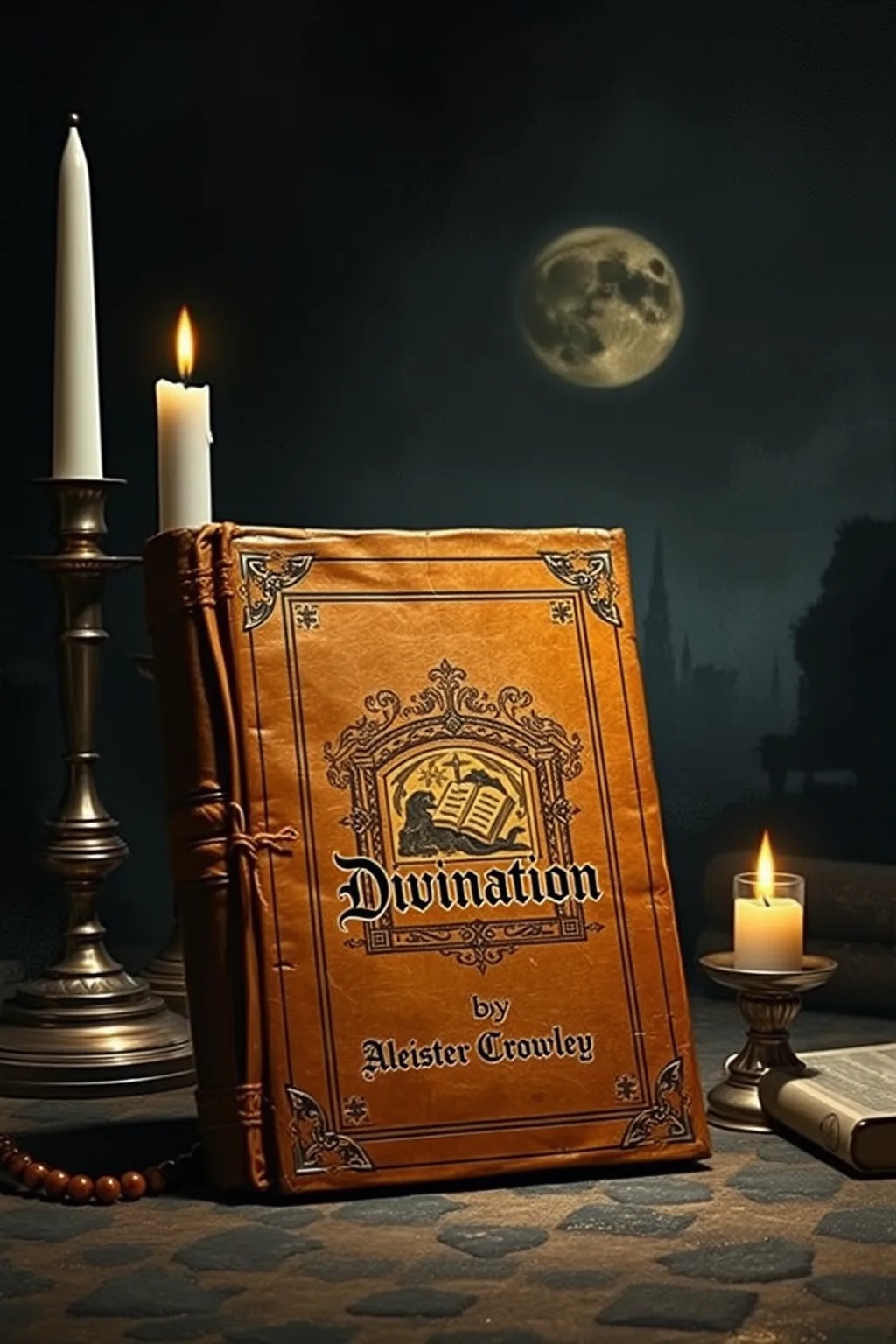
 82
82

Tarot Divination
Crowley’s *Tarot Divination* offers a dense, often demanding, but ultimately rewarding dive into the symbolic mechanics of the cards. Unlike many introductory texts that focus on divinatory meanings alone, Crowley frames the Tarot as a profound system for understanding consciousness and the universe, deeply entwined with his own magical theories. The strength lies in its intellectual rigor; Crowley doesn't shy away from Kabbalistic correspondences or his own unique interpretations, such as linking the Fool card to the Hebrew letter Aleph. A limitation for some may be the sheer density of esoteric references, which can feel impenetrable without prior knowledge of Crowley's wider work or the Golden Dawn tradition. The section on the Court Cards, for instance, provides a nuanced psychological portrait of each figure, moving beyond simple archetypes to complex energies. It's a text that demands study, not casual browsing.
📝 Description
82
First published in 1976, Aleister Crowley's Tarot Divination details his unique approach to the cards.
Tarot Divination presents Aleister Crowley's perspective on using Tarot cards for symbolic interpretation and spiritual insight. This text goes beyond simple prediction, connecting the Tarot to occult philosophy and psychological archetypes. Crowley provides a framework for understanding the symbolic language within the Major and Minor Arcana. The work is intended for serious students of esoteric traditions interested in the magical and philosophical aspects of the Tarot. It appeals to practitioners of Western esotericism and those seeking to integrate Tarot symbolism into magical or meditative practices. Readers will benefit from a prior understanding of occult concepts or a readiness to engage with complex symbolic systems.
Crowley's mature thought is evident, building on earlier occult systems and his own interpretations of mythologies and spiritual disciplines. The book elaborates on core concepts such as the Tarot as a map of consciousness, its correspondence with the Kabbalistic Tree of Life, and its use in ceremonial magic. Crowley emphasizes the Tarot's role in self-discovery and the attainment of gnosis, moving beyond fortune-telling to a system for spiritual development.
Aleister Crowley, a significant figure in early 20th-century occultism, developed this work within the context of his involvement with the Hermetic Order of the Golden Dawn and his founding of Thelema. Tarot Divination reflects his mature magical and philosophical views, integrating elements from established occult systems with his personal interpretations of ancient mythologies. Its posthumous publication allowed for wider access to his ideas on the Tarot, which had previously been known primarily to his inner circle, placing it within the lineage of Western esotericism.
💡 Why Read This Book?
• Gain insight into the Kabbalistic correspondences of the Tarot, specifically how Crowley links the 78 cards to the Tree of Life as detailed in his extensive commentaries. • Understand the Tarot as a tool for spiritual development and self-initiation, as presented through Crowley's unique Thelemic lens, moving beyond simple fortune-telling. • Explore the symbolic language of the Major Arcana through Crowley's specific interpretations, such as the connection between the Fool and the Hebrew letter Aleph, first outlined in his extensive occult writings.
⭐ Reader Reviews
Honest opinions from readers who have explored this book.
❓ Frequently Asked Questions
When was Aleister Crowley's Tarot Divination first published?
Aleister Crowley's *Tarot Divination* was first published posthumously in 1976, many years after his passing in 1947. This allowed for the wider dissemination of his complex theories on the Tarot.
What is the relationship between Crowley's Tarot Divination and the Hermetic Order of the Golden Dawn?
Crowley was a prominent member of the Hermetic Order of the Golden Dawn in his early career. His work on the Tarot, including *Tarot Divination*, draws heavily on the symbolic systems and Kabbalistic frameworks developed within that influential occult order.
Does this book focus on predictive fortune-telling?
While the book addresses divination, its primary focus is on the Tarot as a symbolic system for understanding consciousness, the universe, and spiritual evolution, rather than solely for predictive purposes.
Is prior knowledge of the Kabbalah necessary to read this book?
While helpful, extensive prior knowledge of the Kabbalah is not strictly necessary, though the book frequently references its concepts. Crowley's interpretations offer a unique, sometimes challenging, entry point into these connections.
What makes Crowley's approach to Tarot unique?
Crowley's approach integrates Tarot with his personal magical system, Thelema, and extensive Kabbalistic interpretations. He views the cards as a profound map of the psyche and the cosmos, intended for initiation and gnosis.
What is the significance of the Hebrew letter Aleph in Crowley's Tarot interpretations?
Crowley famously associated the Hebrew letter Aleph, the first letter of the Hebrew alphabet, with the Fool card (Card 0). This connection signifies beginnings, the unmanifest, and the divine spark.
🔮 Key Themes & Symbolism
Tarot as Kabbalistic Map
Crowley presents the 78 Tarot cards not just as divinatory tools but as a comprehensive symbolic map of the Kabbalistic Tree of Life. He meticulously details the correspondences between the Major Arcana, Minor Arcana, and the paths and sephiroth of the Tree. This framework allows for a deeper understanding of the cosmic order and human consciousness as reflected in the cards, moving beyond simplistic interpretations to a complex esoteric cosmology.
The Tarot and Consciousness
A central theme is the Tarot's role as a mirror to the human psyche and consciousness. Crowley explores how the archetypal figures and situations depicted on the cards represent stages of spiritual development, psychological states, and the process of self-initiation. The book guides readers to use the cards for introspection, self-understanding, and the exploration of the subconscious, viewing the Tarot as a key to unlocking inner potential and achieving gnosis.
Thelemic Integration
As a foundational text for students of Thelema, Crowley's system, *Tarot Divination* integrates the Tarot into his broader magical and philosophical framework. Concepts such as the True Will and the Great Work are implicitly or explicitly connected to the Tarot's symbolism. The book offers a Thelemic perspective on the cards, emphasizing their use in the magician's quest for enlightenment and the manifestation of divine purpose in the material world.
Beyond Divination
Crowley's work intentionally pushes the boundaries of traditional Tarot reading. While acknowledging its divinatory applications, he emphasizes its function as a tool for magical practice, meditation, and philosophical inquiry. The book encourages a profound engagement with the symbols, aiming for spiritual transformation and direct experience of the divine rather than mere prediction of future events.
💬 Memorable Quotes
Direct passages from the work, attributed to the author.
“The Fool card is associated with the Hebrew letter Aleph.”
— This highlights Crowley's system of assigning Hebrew letters to the Major Arcana, linking the primal, unmanifest energy of Aleph (representing air and beginnings) to the Fool's journey.
“The Tarot is a map of the Tree of Life.”
— This statement captures Crowley's view of the Tarot as a structured cosmological and psychological system, directly correlating its elements with the Kabbalistic Tree, providing a framework for esoteric study.
“The cards represent forces and intelligences.”
— This interpretation emphasizes the dynamic, energetic nature of the Tarot for Crowley, viewing the cards not as static images but as conduits or representations of potent occult forces and spiritual entities.
“The Great Work is symbolized by the Tarot.”
— Crowley connects the Tarot's symbolism to the ultimate goal of occultism – the Great Work of spiritual attainment and self-realization – suggesting the cards offer a path or a guide towards this transformative achievement.
“The Court Cards possess individual characteristics beyond simple archetypes.”
— This points to Crowley's nuanced approach to the Court Cards (King, Queen, Knight, Page), suggesting they represent complex psychological states or specific spiritual functions rather than superficial roles.
🌙 Esoteric Significance
Tradition
Crowley's work on Tarot is deeply rooted in Western Esotericism, particularly Hermeticism and Kabbalah, as transmitted and expanded by the Hermetic Order of the Golden Dawn. He reinterprets and synthesizes these traditions through the lens of his own Thelemic philosophy. While building upon existing frameworks, Crowley's approach is distinct for its emphasis on psychological integration, magical application, and a radical personal interpretation of universal principles.
Symbolism
Key symbols include the Tree of Life, which Crowley maps directly onto the Tarot's structure, providing a cosmic blueprint. The Hebrew letters are assigned to the Major Arcana, imbuing each card with linguistic and mystical significance (e.g., Aleph for the Fool). The symbolism extends to the elements, astrological correspondences, and archetypal figures, all integrated into a cohesive system for understanding the universe and the human soul.
Modern Relevance
Crowley's Tarot interpretations continue to influence modern occultists, magicians, and serious Tarot students. His *Book of Thoth*, which heavily informs *Tarot Divination*, is considered a foundational text for understanding the Tarot within a complex magical system. Contemporary practitioners in Thelema, as well as those exploring Kabbalistic Tarot or psychological approaches to the cards, frequently reference Crowley's work.
👥 Who Should Read This Book
• Advanced students of Western Esotericism seeking to understand the theoretical underpinnings of Tarot beyond simple divination, particularly those interested in Kabbalah and ceremonial magic. • Practitioners of Thelema looking to deepen their understanding of Crowley's magical system and its application through the symbolism of the Tarot cards. • Comparative occult scholars or researchers interested in tracing the evolution of Tarot symbolism and its integration into diverse magical philosophies in the early to mid-20th century.
📜 Historical Context
Aleister Crowley, a towering and controversial figure in 20th-century occultism, developed his theories on Tarot over decades, deeply influenced by his involvement with the Hermetic Order of the Golden Dawn and his founding of Thelema. *Tarot Divination*, published posthumously in 1976, reflects the culmination of these ideas. Its appearance decades after Crowley's death in 1947 allowed his complex interpretations to reach a wider audience, contrasting with earlier, less systematic approaches to Tarot prevalent in the early 20th century. This era also saw significant engagement with occult symbolism by contemporaries such as Dion Fortune and A.E. Waite (whose own Rider-Waite-Smith deck, published in 1909, offered a different symbolic interpretation). Crowley's work, with its emphasis on Kabbalistic correspondences and his personal magical system, offered a distinct, often more rigorous, path within the burgeoning field of Western esotericism.
📔 Journal Prompts
The Fool card's association with the Hebrew letter Aleph.
The Tarot as a map of the Tree of Life.
The symbolic representation of forces and intelligences.
Crowley's interpretation of the Court Cards.
The Tarot's connection to the Great Work.
🗂️ Glossary
Thelema
A religious and philosophical system established by Aleister Crowley, based on his 1904 reception of a text called *The Book of the Law*. Its central tenet is 'Do what thou wilt shall be the whole of the Law.'
Kabbalah
A system of Jewish mysticism that explores the nature of God and creation through symbolic interpretation of scripture and divine emanations, often visualized through the Tree of Life.
Tree of Life
A diagram central to Kabbalistic teachings, consisting of ten interconnected spheres (Sephiroth) representing divine attributes and stages of creation, often used as a framework for esoteric understanding.
Gnosis
Knowledge, particularly spiritual or mystical knowledge, often attained through direct experience or intuition, leading to enlightenment or salvation.
Major Arcana
The 22 trump cards of the Tarot deck, typically representing significant life lessons, spiritual archetypes, and major events in a reading.
Minor Arcana
The 56 cards of the Tarot deck, divided into four suits (Wands, Cups, Swords, Pentacles/Coins), representing everyday events, situations, and challenges.
Great Work
In esoteric traditions, the ultimate spiritual quest for self-realization, divine union, or the perfection of the self and the cosmos. In Thelema, it is tied to the discovery and execution of one's True Will.
🔮 Readers Also Liked
Browse all →
More by Aleister Crowley
All books →
More Free Divination & Tarot Books
View all →