Tao magic
 81
81

Tao magic
Ireneus Lázló Legeza’s *Tao Magic* offers a rare, detailed look into the practical mechanics of Taoist sorcery, a subject often obscured by dense philosophical texts or simplified Western adaptations. Legeza avoids the pitfalls of sensationalism, instead presenting a methodical exposition grounded in what appears to be extensive research and potentially direct transmission. The strength of the book lies in its systematic breakdown of ritual components, from the use of specific incantations to the energetic preparation of the practitioner. However, the sheer density of information, particularly concerning specific diagrams and their precise application, can feel overwhelming without direct tutelage. A particularly illustrative section details the construction and activation of a protective talisman, showcasing the meticulous nature of Taoist ritual. While demanding, *Tao Magic* provides a rare, unvarnished glimpse into a powerful esoteric tradition. It is an essential, if challenging, resource for serious students of comparative magic.
📝 Description
81
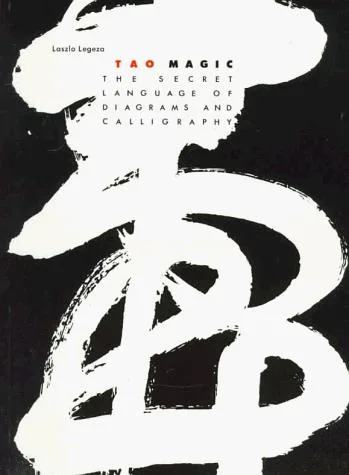
Ireneus Lázló Legeza published Tao Magic in 1976, detailing Taoist magical practices.
Tao Magic, authored by Ireneus Lázló Legeza and first published in 1976, examines the practical application of Taoist principles. The book moves beyond theory to cover ritual, energy cultivation, and spiritual development. Legeza sought to clarify this complex system for both new students and those already familiar with Eastern esoteric traditions.
This work is useful for anyone interested in comparative esotericism, particularly those wanting to understand Taoism's magical and ritualistic aspects. Practitioners of other magical systems may find it beneficial for engaging with a non-Western framework. Scholars of religion, anthropology, and occult studies will find Legeza's detailed exposition valuable for its historical and practical insights into a living tradition, offering a counterpoint to more purely philosophical or historical treatments.
The book introduces fundamental Taoist concepts necessary for magical practice. It explains the role of the *Tao* as the source of existence and the interplay of Yin and Yang as primary cosmic forces.
Published in 1976, Tao Magic appeared during a time of increased Western interest in Eastern philosophies. The 1970s saw a growing audience looking for alternatives to Western religious and occult models. Legeza's book entered a field where earlier Western scholars had established a scientific and historical understanding of Taoism, but the practical, magical applications were less accessible. This work aimed to bridge that gap, allowing for a more direct engagement with Taoist sorcery and inner alchemy.
💡 Why Read This Book?
• Gain practical methods for energy cultivation and spiritual development, distinct from Western esoteric traditions, by understanding *Qi* manipulation techniques described in the book. • Explore the intricate relationship between cosmic forces (Yin and Yang) and ritual efficacy, as detailed in Legeza's analysis of Taoist magical correspondences. • Learn specific ritualistic procedures and the function of talismans and incantations as presented in *Tao Magic*, offering a concrete methodology for engaging with Taoist sorcery.
⭐ Reader Reviews
Honest opinions from readers who have explored this book.
❓ Frequently Asked Questions
What is the primary focus of Ireneus Lázló Legeza's Tao Magic?
The book's primary focus is on the practical and ritualistic aspects of Taoist magic, detailing methods for energy cultivation, spiritual development, and the application of Taoist principles in sorcery.
When was Tao Magic first published and why is its timing significant?
Tao Magic was first published in 1976, a period of significant Western interest in Eastern spiritual and esoteric traditions, making it an important resource for accessible information on Taoist magical practices.
Does Tao Magic explain concepts like Qi and Yin/Yang?
Yes, the book systematically explains fundamental Taoist concepts such as Qi (vital life force) and the interplay of Yin and Yang, demonstrating their importance and application within magical practices.
Is Tao Magic suitable for beginners in esoteric studies?
While comprehensive, the book's detailed nature may present a challenge for absolute beginners. However, it is highly valuable for those with some background in esoteric studies or comparative religion seeking to understand Taoist sorcery.
What kind of magical practices are covered in Tao Magic?
The book covers a range of practices including ritualistic ceremonies, energetic cultivation through breathing and meditation, the use of talismans, incantations, and understanding alignment with natural cycles for magical effect.
What distinguishes Tao Magic from purely philosophical books on Taoism?
Unlike books focused solely on philosophy, Tao Magic emphasizes the operational and practical dimensions of Taoism, specifically its magical applications and ritualistic frameworks, providing a functional guide.
🔮 Key Themes & Symbolism
Ritualistic Application of Tao
This theme explores how the abstract principles of the Tao are translated into concrete ritualistic actions. Legeza details the meticulous construction of talismans, the precise utterance of incantations, and the energetic preparation of the practitioner. It moves beyond mere philosophy to demonstrate the operational side of Taoist magic, emphasizing the importance of correct form and intent in aligning with cosmic forces for specific magical outcomes. The work shows how the Tao is not just a concept but a dynamic force to be invoked and worked with.
Qi Cultivation and Manipulation
Central to Taoist magic is the concept of Qi, or vital life force. This theme examines the methods described for cultivating, directing, and amplifying Qi. Legeza presents various techniques, including specific breathing exercises, meditative states, and energetic exercises designed to enhance the practitioner's internal power. Understanding and mastering Qi is presented as fundamental for any successful magical operation within the Taoist framework, impacting health, longevity, and spiritual attainment.
Cosmic Harmony and Alignment
Tao Magic underscores the principle that effective magic requires alignment with the natural order of the universe. This theme examines how practitioners must harmonize themselves with the cycles of nature, the balance of Yin and Yang, and the broader cosmic energies. Legeza illustrates how ritual timing, symbolic representation, and the correct invocation of forces are all geared towards achieving this alignment, making the practitioner a conduit for universal energies rather than an isolated force.
The Esoteric Significance of Symbols
The book highlights the profound role of symbols within Taoist magic. This theme focuses on specific visual and verbal symbols – from talismans to specific characters and incantations – and their esoteric meanings. Legeza explains how these symbols are not merely decorative but act as potent conduits or keys that unlock specific energies or states of consciousness. Their correct interpretation and application are crucial for the efficacy of Taoist rituals and magical operations.
💬 Memorable Quotes
Direct passages from the work, attributed to the author.
“The Tao is the source from which all things arise.”
— This interpretation emphasizes the fundamental nature of the Tao as the ultimate origin point of all existence, the unmanifest from which the manifest world emerges, serving as the foundational principle in Taoist cosmology and magic.
“Qi must be cultivated and directed for magical efficacy.”
— This highlights the practical necessity of mastering the vital life force, Qi. It suggests that successful magical operations in Taoism are not accidental but require deliberate training and focused intention to channel this energy effectively.
“Ritual requires precise forms and correct incantations.”
— This points to the structured nature of Taoist magic. It implies that the effectiveness of rituals is dependent on adherence to specific procedures, symbolic actions, and the accurate recitation of verbal formulae, acting as keys to unlock desired spiritual or energetic effects.
“Yin and Yang represent the fundamental polarities that govern the cosmos.”
— This interpretation explains the core duality of Taoist thought, where Yin and Yang are seen as complementary, opposing forces whose dynamic balance shapes all phenomena and is crucial to understand for magical manipulation.
“Talismans serve as focal points for concentrated energy.”
— This explains the function of talismans in Taoist magic as more than just symbols. They are presented as powerful tools designed to gather, focus, and direct specific energetic currents or intentions for magical purposes.
🌙 Esoteric Significance
Tradition
This work falls squarely within the Taoist esoteric tradition, specifically focusing on the magical and alchemical branches. It departs from purely philosophical interpretations of the *Tao Te Ching* or *Zhuangzi* to explore the practical application of Taoist principles in ritual and personal transformation. Legeza's approach emphasizes the operational aspects, aligning with lineages that focus on the direct manipulation of vital energies (*Qi*) and cosmic forces, rather than solely on ethical or metaphysical contemplation.
Symbolism
Key symbols include the *Tao* itself, representing the ineffable, ultimate reality and source. The dynamic interplay of Yin and Yang is crucial, symbolizing complementary opposites whose balance governs all phenomena. *Qi* (vital energy) is another central motif, depicted as the animating force that practitioners learn to cultivate and direct through various techniques, including breathing exercises and specific ritualistic gestures, to achieve magical effects.
Modern Relevance
Contemporary practitioners of Qigong and Neidan (Internal Alchemy) may find resonance in Legeza's detailed exposition of energy cultivation. Modern Western occultists interested in comparative esotericism often consult works like *Tao Magic* to understand non-Western magical systems. Furthermore, scholars and practitioners exploring embodied spirituality and the integration of mind-body practices find value in its systematic approach to harnessing internal and external energies for transformative purposes.
👥 Who Should Read This Book
• Students of comparative esotericism seeking to understand non-Western magical systems, particularly Taoism, beyond philosophical discourse. • Practitioners of energy work (like Qigong or Tai Chi) interested in the theoretical and ritualistic underpinnings of Qi manipulation for magical purposes. • Researchers in religious studies and anthropology focusing on the practical applications of spiritual traditions and the history of occult literature.
📜 Historical Context
Published in 1976, Ireneus Lázló Legeza's *Tao Magic* arrived during a period of intense Western fascination with Eastern spiritual traditions. The counterculture movement of the 1960s and 70s fostered a search for alternative wisdom, leading many to explore Taoism beyond its philosophical texts. While scholars like Joseph Needham were documenting the history of Chinese science and technology, and authors such as Alan Watts offered accessible introductions to Taoist philosophy, the practical, magical, and ritualistic dimensions remained largely esoteric to Western readers. Legeza's work aimed to fill this gap, presenting a detailed, operational view of Taoist sorcery. It contrasted with the more prevalent Western Hermetic or ceremonial magic traditions, offering a distinct non-Western system of esoteric practice. The book's reception was likely within specialized circles of occultists and comparative religion enthusiasts, rather than mainstream academic or popular discourse.
📔 Journal Prompts
The function of talismans in Taoist magic.
Cultivating and directing Qi through specific exercises.
The balance of Yin and Yang in ritual practice.
Principles of cosmic harmony and natural alignment.
Interpreting specific Taoist incantations for magical effect.
🗂️ Glossary
Tao (Dao)
The fundamental, ineffable principle of the universe in Taoist philosophy; the Way or the Path from which all existence arises and to which all returns.
Qi (Ch'i)
Vital life force or energy that animates all living beings and permeates the universe. Its cultivation and direction are central to Taoist health, longevity, and magical practices.
Yin and Yang
Two complementary, opposing forces whose dynamic interaction creates and sustains the universe. Yin represents passive, dark, feminine qualities; Yang represents active, light, masculine qualities.
Talismans
Objects, often inscribed with symbols or characters, used in Taoist magic to focus energy, invoke specific forces, or provide protection. They act as conduits for magical intent.
Incantations
Spoken words or formulas used in Taoist rituals to invoke deities, spirits, or cosmic forces, or to direct energy for a specific magical purpose.
Neidan
Internal Alchemy; a Taoist practice focused on cultivating spiritual essence and immortality through meditation, breathing exercises, and visualization, rather than external elixirs.
Cosmic Harmony
The state of alignment between the individual, the Earth, and the heavens, achieved by living in accordance with the natural cycles and principles of the Tao.
🔮 Readers Also Liked
Browse all →









More by Ireneus László Legeza
All books →
More Free Occult Philosophy Books
View all →