Amulet
 79
79

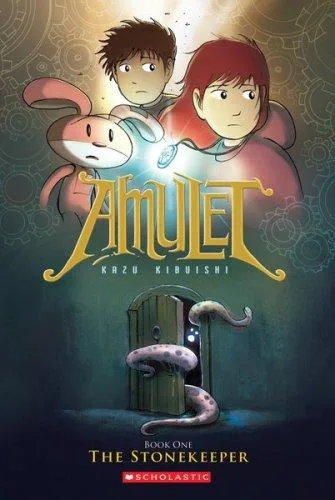
Amulet
Kazu Kibuishi’s Amulet presents a visually arresting portal fantasy that excels in its world-building and character design. The depiction of the city of Haven, with its intricate architecture and looming threats, is particularly strong, drawing the reader into Emily’s surreal predicament. The initial discovery of the amulet and the subsequent transportation to this perilous dimension is handled with a brisk, engaging pace. However, the plot, while serviceable, occasionally feels constrained by genre conventions, particularly in its archetypal quest structure. The supporting characters, while functional, lack the depth that would elevate them beyond their narrative roles. A standout element is the visual storytelling; Kibuishi’s art is consistently dynamic, rendering the fantastical with a grounded yet imaginative flair. The decision to focus on Emily's immediate family as the core motivation grounds the high stakes. Ultimately, Amulet delivers a competent and visually pleasing adventure, though its narrative ambition is somewhat outpaced by its artistic execution.
📝 Description
79
Kazu Kibuishi's graphic novel Amulet, published in 2018, begins with a family's move to a new house.
The story follows Emily, a young girl who discovers a mysterious amulet in her new home. This artifact activates, transporting her and her family to a dangerous, hidden world called Alledia. This new realm is under threat from a malevolent force, and Emily finds herself tasked with protecting her mother and brother.
Amulet blends elements of fantasy and adventure with a touch of the uncanny. Emily's journey forces her to confront her fears and discover her own inner strength as she faces the challenges of Alledia. The narrative focuses on her growth and the bonds of family tested by extraordinary circumstances. Readers witness her transition from an ordinary girl into a key figure in a world she never knew existed.
While not directly linked to specific historical esoteric movements, Amulet draws on the enduring literary tradition of magical objects serving as gateways to other dimensions. This concept, seen in late 19th-century adventure tales like those by H. Rider Haggard, resonates with the idea of hidden realms and artifacts of power. The narrative echoes the trope of the 'chosen one' and the discovery of latent abilities, common themes in fantasy literature that tap into archetypal journeys.
💡 Why Read This Book?
• Experience a visually rich portal fantasy where a magical amulet transports the protagonist, Emily, to a dangerous world, offering a unique blend of adventure and personal courage, directly inspired by Kibuishi's distinct artistic style. • Discover the narrative exploration of bravery and familial bonds as Emily confronts the challenges of a hidden city, providing a compelling reason for young readers to engage with themes of responsibility. • Witness the creation of a fantastical realm, Haven, and its unique visual design, which serves as a backdrop for a classic hero’s journey, offering a departure from more traditional fantasy settings.
⭐ Reader Reviews
Honest opinions from readers who have explored this book.
❓ Frequently Asked Questions
What is the main plot of Kazu Kibuishi's Amulet?
Amulet follows Emily, a young girl who discovers a mysterious amulet that transports her and her brother to a hidden, magical city named Haven. They must navigate this world and confront its dangers to rescue their mother.
What age group is Amulet intended for?
Amulet is generally recommended for middle-grade readers, roughly ages 8-12, but its engaging story and art style also appeal to older children and adults who enjoy fantasy graphic novels.
What are the key themes explored in Amulet?
Key themes include courage, family, responsibility, and the transition from the ordinary to the extraordinary. Emily's journey highlights her growth as she faces daunting challenges to protect her loved ones.
How many books are in the Amulet series?
Amulet is the first book in a planned series by Kazu Kibuishi. As of its initial publication in 2018, subsequent volumes have continued the story of Emily's adventures.
What makes Amulet's artwork unique?
Kazu Kibuishi's artwork in Amulet is characterized by its vibrant colors, detailed environments, and dynamic character designs. The visual style effectively bridges the gap between the mundane and the fantastical.
Is Amulet based on any existing myths or legends?
While Amulet draws on common fantasy tropes like magical artifacts and hidden worlds, it is an original story created by Kazu Kibuishi, rather than a direct adaptation of specific myths or legends.
🔮 Key Themes & Symbolism
The Magical Amulet
The titular amulet is more than a plot device; it is the catalyst for transformation and passage between worlds. Its discovery by Emily signifies an irreversible shift from the mundane to the extraordinary. Within esoteric traditions, such objects often represent keys to hidden knowledge or power, requiring a worthy individual to wield them. In Amulet, the amulet's function is directly tied to familial connection and the need for protection, suggesting a form of sympathetic magic or a bond that transcends physical space.
The Hidden City of Haven
Haven serves as the primary setting for Emily's trials. This concealed metropolis, populated by various beings and governed by distinct rules, functions as a liminal space. Esoterically, such hidden cities or realms often represent spiritual planes or states of consciousness accessible only through specific means or to those with a particular disposition. Haven's precarious state, threatened by dark forces, mirrors the internal struggles and external dangers faced by protagonists in many allegorical tales, demanding the restoration of balance.
Courage and Responsibility
Emily's journey is fundamentally one of developing courage and accepting profound responsibility. Thrust into a role she did not seek, she must overcome fear to protect her younger brother and, eventually, her mother. This narrative arc aligns with archetypal hero myths where the protagonist's growth is measured by their willingness to face adversity and the burdens placed upon them. The story suggests that true strength lies not in the absence of fear, but in acting despite it, a common theme in philosophical and spiritual narratives.
Family Bonds as Motivation
The driving force behind Emily's actions is her deep love for her family, particularly her brother and mother. This emotional core grounds the fantastical elements, providing a relatable and powerful motivation for her quest. In many esoteric traditions, the protection of one's kin or community is a sacred duty. The narrative emphasizes that even in the face of otherworldly dangers, the bonds of love and loyalty can provide the ultimate source of strength and resilience, guiding the protagonist through trials.
💬 Memorable Quotes
Direct passages from the work, attributed to the author.
“I have to save my mom.”
— This simple declaration expresses Emily's core motivation. It moves beyond mere adventure, grounding her extraordinary journey in a deeply human and relatable desire to protect her family, highlighting the power of familial love as a driving force.
“This city is not safe.”
— A direct warning, this statement underscores the inherent dangers within Haven. It signals the shift from wonder to peril, indicating that the magical world Emily has entered is fraught with threats that require vigilance and bravery.
“The amulet is important.”
— This understated observation points to the artifact's significance. It suggests a deeper purpose and power tied to the amulet, hinting at its role as more than just a key, but potentially a tool or even a sentient entity within the narrative.
“We have to stick together.”
— Spoken by Emily, this emphasizes the importance of unity and mutual support, especially between her and her brother. It reflects a fundamental principle in many challenging situations: solidarity provides strength against external pressures.
“There's a darkness here.”
— This phrase alludes to the antagonist or the corrupting force within Haven. It introduces the classic conflict between light and shadow, good and evil, setting the stage for Emily's struggle against malevolent powers.
🌙 Esoteric Significance
Tradition
Amulet does not align with a single, established esoteric tradition but draws from the broad archetype of the portal fantasy, a genre rich with symbolic potential. Its narrative structure echoes elements found in Gnostic myths of a hidden, divine realm and the hero's journey common in Hermetic teachings and Jungian psychology. The concept of a chosen individual tasked with saving a world, particularly one connected to family, appeals to archetypal patterns explored across various spiritual and philosophical systems, suggesting an underlying universal structure of initiation and transformation.
Symbolism
The most prominent symbol is the titular amulet, functioning as a key or conduit to another dimension. In esoteric lore, such objects often represent concentrated power or a direct link to spiritual forces. The city of Haven itself, with its peculiar architecture and inhabitants, can be interpreted as a symbol of a higher plane or a spiritual testground. The presence of encroaching darkness or a corrupting influence within Haven symbolizes the challenges and obstacles faced on any path of spiritual development or personal growth.
Modern Relevance
Amulet's enduring appeal speaks to a modern hunger for accessible fantastical narratives that explore fundamental human themes. It finds resonance with contemporary readers and creators interested in the power of visual storytelling to convey complex ideas about courage and family. While not explicitly cited in academic esoteric circles, its narrative structure and archetypal journey align with concepts explored in modern Jungian analysis and the broader New Age movement's interest in personal transformation and discovering inner potential through challenging experiences.
👥 Who Should Read This Book
• Young readers aged 8-12 seeking an engaging fantasy adventure with a strong female protagonist, offering an introduction to graphic novels and classic heroic narratives. • Fans of portal fantasy and stories featuring magical artifacts, who will appreciate the unique world-building and the directness of the magical premise. • Parents and educators looking for visually appealing books that explore themes of courage, family loyalty, and overcoming fear in a child-appropriate manner.
📜 Historical Context
Kazu Kibuishi's Amulet, released in 2018, entered a vibrant field of young adult and middle-grade graphic novels. The early 21st century saw a significant boom in this medium, with works like Jeff Smith's Bone (begun 1991, concluded 2004) and Raina Telgemeier's Smile (2010) paving the way for diverse narratives. Amulet's blend of fantasy adventure and accessible art aligns with the trend toward genre storytelling for younger audiences, a stark contrast to earlier periods where graphic novels often faced censorship or were primarily adult-oriented. While not directly engaging with specific esoteric movements of its time, it taps into a perennial fascination with magical objects and hidden worlds that has roots in Victorian literature and has been consistently explored by authors like C.S. Lewis and J.R.R. Tolkien. The serialization of Amulet, typical of modern graphic novel publishing, allowed for a gradual unfolding of its narrative, building anticipation for subsequent installments.
📔 Journal Prompts
Emily's discovery of the amulet and its immediate impact.
The contrasting atmospheres of Emily's home world and Haven.
Reflect on the nature of courage as depicted through Emily's actions.
The role of familial bonds in motivating extraordinary deeds.
Interpreting the symbolism of the city of Haven and its inhabitants.
🗂️ Glossary
Amulet
A magical object that serves as a key or conduit, enabling passage to a hidden world and possessing significant power within the narrative.
Haven
The name of the hidden, magical city to which Emily is transported. It is a place of wonder and danger, populated by various beings and under threat.
Portal Fantasy
A subgenre of fantasy fiction where a protagonist travels from their familiar world to a different, often magical, realm through a portal.
Protagonist
The main character of the story, in this case, Emily, whose journey and development drive the narrative forward.
Archetype
A recurring symbol, character type, or narrative pattern that appears across different cultures and stories, such as the hero's journey.
Liminal Space
A transitional or in-between state or place, often symbolic of change, transformation, or a threshold between different realities.
Graphic Novel
A book-length comic book, characterized by its narrative structure and artistic presentation through sequential art.
🔮 Readers Also Liked
Browse all →








More by Kazu Kibuishi
All books →





More Free Occult Philosophy Books
View all →