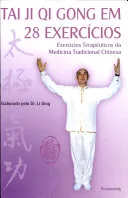
Tai Ji Qi Gong Em 28 Exercícios
 73
73

Tai Ji Qi Gong Em 28 Exercícios
The strength of "Tai Ji Qi Gong em 28 Exercícios" lies in its straightforward presentation of a defined set of movements. Unlike more esoteric texts that can be dense with philosophical discourse, this work offers a clear, actionable sequence. The 28 exercises provide a manageable framework for consistent practice. However, its anonymity is a significant limitation; without an attributed author or a historical anchor beyond general 20th-century Qi Gong development, discerning its unique lineage or specific pedagogical intent proves challenging. The emphasis on precise physical form in exercise 12, for example, is well-described but lacks the deeper energetic commentary found in texts by masters like Yang Jwing-Ming, leaving the practitioner to infer much of the subtler Qi dynamics. It serves as a functional manual but offers little interpretive depth.
📝 Description
73
This book details 28 specific movements for cultivating vital energy through Tai Ji Qi Gong.
Tai Ji Qi Gong em 28 Exercícios provides a structured method for developing vital energy, or Qi, through a series of 28 distinct movements. The practice connects mind and body, encouraging the synchronization of breath with deliberate physical actions, drawing from Tai Ji principles. The exercises aim to improve health, foster balance, and enhance awareness of the body's energetic pathways. This work functions as a practical manual, giving clear directions for each of the 28 forms.
Individuals seeking an introduction to Qi Gong practice, especially those drawn to the methodical flow of Tai Ji, will find this text suitable. It is accessible to beginners wanting to cultivate internal energy for physical health and mental clarity. Experienced practitioners may also benefit, expanding their practice with this particular set of 28 exercises. Those interested in Eastern health philosophies and the cultivation of 'life force' will find it a direct starting point.
While the author and exact origin of Tai Ji Qi Gong em 28 Exercícios are unknown, its approach aligns with 20th-century Qi Gong developments. These practices often standardized exercises derived from traditional martial arts and medicine for public health. The focus on a specific number of movements for therapeutic aims is characteristic of this period, aiming to make older traditions more approachable.
This text belongs to the tradition of Qi Gong, a practice rooted in Chinese Taoist and Buddhist philosophies. Qi Gong focuses on the cultivation and circulation of vital energy (Qi) through specific postures, movement, and breath control. The emphasis on a set sequence of 28 exercises, likely derived from or related to Tai Ji forms, suggests a systematized approach to energetic development. Such methods are common in traditions aiming to harmonize the body's internal systems, promote longevity, and achieve mental stillness through physical discipline.
💡 Why Read This Book?
• Gain a structured method for cultivating Qi through 28 distinct movements, offering a clear path to improving energy flow and physical balance, distinct from generalized Qi Gong forms. • Learn specific breathing and posture synchronization techniques as detailed in the instructions for each exercise, providing practical tools for stress reduction and mental focus. • Understand the foundational principles of Tai Ji's energetic application in a simplified, accessible format, allowing for a direct engagement with the mind-body connection.
⭐ Reader Reviews
Honest opinions from readers who have explored this book.
❓ Frequently Asked Questions
What is the primary benefit of practicing the 28 exercises in Tai Ji Qi Gong?
The primary benefit is the cultivation and harmonization of Qi (vital energy) throughout the body, leading to improved physical health, mental clarity, and a greater sense of internal balance.
Is Tai Ji Qi Gong suitable for complete beginners?
Yes, the 28 exercises are presented as a foundational sequence, making it accessible for beginners who are new to Qi Gong or Tai Ji principles.
How does this practice differ from traditional Tai Chi?
While rooted in Tai Ji principles, this work focuses specifically on Qi Gong exercises designed for energy cultivation and health, often simpler and more direct than the martial applications found in full Tai Chi forms.
Are there specific breathing techniques involved?
Yes, the practice emphasizes the synchronization of breath with movement. While not always explicitly detailed for every exercise, the integration of breath is a core component for effective Qi circulation.
Can practicing these exercises help with stress reduction?
Absolutely. The combination of slow, deliberate movements, focused breathing, and mindful attention inherent in these exercises is highly effective for calming the nervous system and reducing stress.
What is the recommended frequency for practicing the 28 exercises?
While the text may not specify, consistent daily practice is generally recommended for Qi Gong to achieve optimal benefits in energy cultivation and health maintenance.
🔮 Key Themes & Symbolism
Qi Cultivation
The central theme is the deliberate cultivation of Qi, the vital life force. The 28 exercises are presented as a systematic method to gather, circulate, and harmonize this energy within the practitioner's body. This focus moves beyond mere physical exercise, emphasizing the energetic body and its role in overall well-being. The work implies that through precise movements and breath control, individuals can actively influence their internal energetic state, leading to enhanced vitality and health.
Mind-Body Integration
This practice underscores the inseparable connection between the mind and the body. Each movement requires conscious attention and intention, fostering a state of mindful presence. The exercises are designed to synchronize physical actions with breath and mental focus, creating a unified experience. This integration is key to unlocking the deeper benefits of Qi Gong, promoting not only physical health but also mental equilibrium and emotional balance.
Structured Practice
The organization into 28 specific exercises offers a clear, step-by-step curriculum. This structured approach makes the practice accessible and repeatable, allowing for progressive mastery. Unlike more free-form meditation or energy work, these defined movements provide a tangible framework. The numbered sequence suggests a logical progression, guiding the practitioner through a complete cycle of energetic development.
Health and Longevity
Underlying the practice is the traditional Eastern understanding that balanced Qi flow contributes directly to health and longevity. The exercises are presented as a means to prevent illness, alleviate existing ailments, and promote a longer, more vital life. By clearing energetic blockages and strengthening the body's natural systems, the practice aims to foster resilience and sustained well-being.
💬 Memorable Quotes
Direct passages from the work, attributed to the author.
“Synchronization of breath with deliberate movement.”
— This phrase expresses the core mechanic of Qi Gong. It highlights that the practice is not just about physical form, but about the integration of breath as an active component in directing and amplifying vital energy.
“Cultivating the body's vital energy.”
— This points to the fundamental aim of Qi Gong: to actively develop and enhance the internal life force, Qi, as a means to achieve health and well-being, rather than passively waiting for it.
“The 28 distinct forms for energetic balance.”
— This emphasizes the structured nature of the practice. The specific number and sequence of exercises are presented as a deliberate system designed to achieve a particular outcome: harmonizing the body's energetic field.
“Mindful intention guides the flow.”
— This highlights the crucial role of mental focus. The practitioner's awareness and directed thought are presented as essential elements in guiding the movement of Qi during the exercises.
“Harmonizing internal pathways.”
— This refers to the concept of meridians or energy channels within the body. The practice aims to clear obstructions and ensure smooth circulation along these pathways for optimal health.
🌙 Esoteric Significance
Tradition
This work aligns with the Taoist tradition's emphasis on cultivating internal energy (Qi) for health, longevity, and spiritual development. Within Taoism, practices like Qigong are integral to achieving harmony between the individual and the Tao, the fundamental principle of the universe. While often presented in a secular health context today, its roots are deeply esoteric, aiming for energetic transformation and alignment with natural forces.
Symbolism
The number 28 itself can hold symbolic weight, potentially relating to lunar cycles or specific energetic configurations within the body's micro-cosmos. The flowing movements symbolize the continuous, unobstructed circulation of Qi, mirroring the natural flow of water or wind. The focus on breath represents the connection to the universal energy that animates all things, the 'breath of life'.
Modern Relevance
Contemporary practitioners of mindfulness, yoga, and various somatic therapies often draw upon principles found in Qi Gong, including the mind-body integration and energy cultivation techniques presented here. Modern scientific research into the benefits of mindful movement and breathwork also validates the underlying concepts, making these ancient practices relevant to current wellness trends.
👥 Who Should Read This Book
• Individuals seeking a structured, step-by-step introduction to energy cultivation practices derived from Tai Ji principles. • Practitioners interested in developing greater physical balance, mental focus, and stress reduction through deliberate movement and breathwork. • Students of traditional Chinese health systems looking for accessible exercises focused on harmonizing the body's vital energy (Qi).
📜 Historical Context
The emergence of systematized Qi Gong forms like the 28 exercises likely falls within the mid-to-late 20th century, a period marked by the People's Republic of China's efforts to standardize and promote traditional Chinese medicine and martial arts for public health. Following the Cultural Revolution, there was a concerted push to codify practices that had previously been passed down through less formal channels. This era saw the development of numerous standardized Qi Gong routines, such as the 'Yi Jin Jing' (Muscle/Tendon Changing Classic) and the 'Ba Duan Jin' (Eight Brocades), often with a focus on therapeutic benefits. These standardized forms were intended to be accessible, teachable, and reproducible across large populations, moving away from the more varied and sometimes secretive lineages of older practices. While not directly engaging with Western esoteric movements, this period saw a parallel interest in internal cultivation across various cultures, though Qi Gong's development was primarily driven by state-sponsored health initiatives and academic research into traditional practices.
📔 Journal Prompts
The synchronization of breath and movement in Exercise 5.
The concept of harmonizing internal pathways.
The role of mindful intention in directing Qi.
The specific sequence of the 28 forms.
The cultivation of vital energy as presented.
🗂️ Glossary
Qi
The fundamental vital life force or energy believed to flow through all living things. In Qi Gong, the practice aims to cultivate, circulate, and balance Qi for health and well-being.
Qi Gong
A system of coordinated body posture and movement, breathing, and meditation used for health, spirituality, and martial arts training. Literally 'energy work' or 'energy cultivation'.
Tai Ji
Often translated as 'Supreme Ultimate'. Refers to a concept in Chinese philosophy and cosmology, and also the martial art and health practice known as Tai Chi Chuan, which emphasizes slow, flowing movements and internal energy.
Meridians
In Traditional Chinese Medicine, these are pathways through which Qi flows. Blockages or imbalances in meridians are believed to cause illness.
Breath Synchronization
The practice of coordinating inhalation and exhalation with specific physical movements, a key technique in Qi Gong for enhancing energy flow and mindful awareness.
Vital Energy
A translation of Qi, referring to the animating force or life energy that permeates and sustains living organisms.
Forms
Specific sequences of movements within practices like Tai Ji or Qi Gong. Each form typically has a name and a prescribed set of actions and principles.