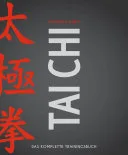
Tai Chi
 78
78

Tai Chi
Karsten Kalweit's 'Tai Chi: Das komplette Trainingsbuch' arrives as a dense, instructive manual, aiming to cover the full spectrum of Tai Chi training. Its strength lies in its methodical progression, beginning with essential Chi-Gong exercises before introducing four distinct Tai Chi forms. The detailed exposition of the 40-figure Yang Style competition form, alongside the 13-figure saber and 32-figure sword forms, offers substantial material for dedicated practitioners. However, the sheer volume of instruction, while comprehensive, can feel overwhelming. The work's focus on detailed technical execution, while admirable for its completeness, occasionally overshadows the more philosophical or meditative aspects that many seek in Tai Chi. A passage detailing the precise footwork for the 'Parting the Wild Horse's Mane' sequence, for instance, is technically accurate but lacks evocative language to capture the energetic flow. Kalweit provides a technically sound and thorough training resource, though it might require supplementary material for those seeking a deeper exploration of Tai Chi's spiritual dimensions.
📝 Description
78
Karsten Kalweit's 2017 guide details Tai Chi training from foundational exercises to complex forms.
Karsten Kalweit's 'Tai Chi: Das komplette Trainingsbuch,' published in 2017, offers a thorough approach to Tai Chi practice. The book begins with basic Chi-Gong exercises that focus on breath and movement, establishing a solid foundation before moving to more involved sequences. Kalweit aims to give practitioners a complete grasp of Tai Chi's physical and energetic principles, going beyond simple movements to include its deeper meaning. The text is suitable for beginners looking for an introduction and for experienced practitioners wishing to improve their skills. It is particularly valuable for those interested in the connection between physical activity, meditation, and cultivating internal energy. Readers drawn to traditional Chinese martial arts, therapeutic movement, or the philosophy behind practices such as Chi-Gong will find detailed instruction and background information.
This work places Tai Chi within its historical and philosophical lineage, a practice with centuries of history in China, often linked to Taoist thought and martial arts. While Kalweit's book is a contemporary publication from 2017, it adheres to established forms and methods. The Yang style, a central focus, is one of the most common Tai Chi lineages, recognized for its smooth, deliberate movements and its emphasis on developing internal power and relaxation. The inclusion of specific forms, such as the 40-figure Yang Style competition form, illustrates how Tai Chi has developed into both a personal discipline and a recognized competitive art.
💡 Why Read This Book?
• Learn the foundational Chi-Gong exercises, including specific breathing techniques, to build internal energy before engaging with complex forms, as detailed in the introductory chapters. • Master the precise sequences of the 40-figure Yang Style competition form, providing a structured path for skill development and performance practice. • Understand the application of core Tai Chi principles like 'Song' (relaxation) and 'Zhan Zhuang' (standing meditation) through Kalweit's systematic breakdown of movements and postures.
⭐ Reader Reviews
Honest opinions from readers who have explored this book.
❓ Frequently Asked Questions
What are the core Chi-Gong exercises presented in Karsten Kalweit's Tai Chi book?
The book begins with fundamental Chi-Gong exercises focusing on breath control and gentle movements designed to cultivate internal energy (Chi) and prepare the body for Tai Chi forms.
Which Tai Chi styles and forms are covered in 'Tai Chi: Das komplette Trainingsbuch'?
It covers four complete Tai Chi forms, including three from the Yang Style: the 40-figure Yang Style competition form, the 13-figure Yang Style saber form, and the 32-figure Yang Style sword form.
Is Karsten Kalweit's Tai Chi book suitable for absolute beginners?
Yes, the book starts with basic Chi-Gong and breathing exercises, making it accessible for beginners while offering advanced forms for experienced practitioners.
What is the significance of the Yang Style forms mentioned in the book?
The Yang Style is one of the most popular and widely practiced Tai Chi lineages. Kalweit's inclusion of its competition, saber, and sword forms provides structured learning for these specific disciplines.
When was Karsten Kalweit's 'Tai Chi' book first published?
The book was first published on October 2, 2017, offering a contemporary compilation of Tai Chi training methods.
Does the book explain the concept of Chi or Qi?
Yes, the book explores the concept of Chi (Qi), the vital life force, and how it is cultivated and directed through the specific breathing and movement techniques taught in the Chi-Gong and Tai Chi sections.
🔮 Key Themes & Symbolism
Cultivation of Chi
The central theme revolves around the cultivation and circulation of Chi (Qi), the vital life force. Kalweit's work systematically details how foundational Chi-Gong exercises, particularly breathwork and specific postures like 'Zhan Zhuang' (standing like a post), are essential for developing this internal energy. The book guides practitioners to feel and direct Chi through the intricate movements of the Tai Chi forms, illustrating its role in health, vitality, and martial efficacy.
Yang Style Lineage
A significant portion of the book is dedicated to the widely recognized Yang Style of Tai Chi. Kalweit presents several key Yang Style forms, including the 40-figure competition form, the 13-figure saber form, and the 32-figure sword form. This focus highlights the structured nature of this lineage, emphasizing its flowing, expansive movements and its suitability for both health cultivation and martial application, making it a core part of modern Tai Chi practice.
Movement as Meditation
Beyond physical technique, the book implicitly frames Tai Chi practice as a form of moving meditation. The emphasis on mindfulness, precise coordination of breath and body, and the concept of 'Song' (relaxation and yielding) encourages a state of focused awareness. This approach transforms repetitive forms into opportunities for internal stillness and contemplation, aligning Tai Chi with broader contemplative traditions.
Esoteric Principles in Practice
Kalweit's work translates esoteric concepts into tangible physical practice. Principles such as the 'Eight Energies' or 'Primal Forces' (e.g., Peng, Lu, Ji, An) are not merely theoretical but are demonstrated through specific movement patterns within the forms. This practical application bridges the gap between abstract energetic concepts and embodied experience, offering a method for engaging with subtle energies through disciplined physical training.
💬 Memorable Quotes
Direct passages from the work, attributed to the author.
“Das vorliegende Lehrbuch umfasst das gesamte Spektrum des Tai-Chi-Trainings.”
— This opening statement from the original blurb emphasizes the book's ambition to provide a complete and exhaustive training resource for Tai Chi practitioners, covering all essential aspects from foundational exercises to advanced forms.
“Es beginnt mit grundlegenden Chi-Gong-Atem- und Bewegungsübungen.”
— This highlights the pedagogical approach, prioritizing fundamental Chi-Gong techniques related to breath and movement as the essential starting point for anyone undertaking Tai Chi training within this manual.
“vier komplette Tai-Chi-Formen in verschiedenen Disziplinen”
— This indicates the book's structure, which introduces practitioners to four distinct and complete Tai Chi forms, spanning different weapon disciplines and styles, offering variety and depth.
“drei Formen in traditionell gestufter Weise aus dem weltweit bekannten Yang-Stil”
— This specifies the lineage focus within the forms presented, emphasizing the inclusion of three traditional, step-by-step sequences from the globally recognized Yang Style of Tai Chi.
“40 Figuren Yang-Stil-Wettkampfform, 13 Figuren Yang-Stil-Säbelform und 32 Figuren Yang-Stil-Schwertform”
— These specific form names denote the concrete curriculum offered, detailing the exact Yang Style sequences covered: a competition form, a saber form, and a sword form, each with a defined number of figures.
🌙 Esoteric Significance
Tradition
While Tai Chi is often presented as a martial art or health practice, its roots are deeply intertwined with Taoist philosophy and internal alchemy. Kalweit's work, by focusing on the cultivation of Chi and the precise execution of forms, implicitly engages with this tradition. The emphasis on breath control, energetic flow, and the concept of 'Yin' and 'Yang' in movement aligns with core Taoist principles of balance and harmony, serving as a practical embodiment of these esoteric concepts.
Symbolism
The forms themselves are rich in symbolic potential. Movements like 'Parting the Wild Horse's Mane' or 'White Crane Spreads its Wings' can be interpreted beyond their literal depiction, representing phases of transformation, overcoming obstacles, or embodying qualities of nature. The use of weapons like the saber and sword introduces further layers of symbolism related to discernment, protection, and the channeling of focused energy, mirroring symbolic implements found in various mystical traditions.
Modern Relevance
Contemporary practices in mindfulness, somatic therapy, and even certain branches of energy healing draw parallels with the principles found in Tai Chi. Thinkers and practitioners exploring embodied cognition, the mind-body connection, and non-dualistic approaches to well-being find Kalweit's detailed instruction on cultivating internal awareness and energetic coherence highly relevant. The structured presentation of forms also appeals to those seeking disciplined, systematic methods for personal development that integrate physical, mental, and energetic dimensions.
👥 Who Should Read This Book
['• Dedicated Tai Chi practitioners seeking to deepen their understanding of the Yang Style, particularly those interested in the 40-figure competition form, saber, or sword forms.', '• Beginners to the internal arts looking for a structured, comprehensive introduction to Chi-Gong and fundamental Tai Chi principles.', '• Students of traditional Chinese medicine or Taoist philosophy interested in the practical, embodied application of concepts like Chi cultivation and energetic balance.']
📜 Historical Context
Published in 2017, Karsten Kalweit's 'Tai Chi: Das komplette Trainingsbuch' emerges in an era where traditional Chinese martial arts and internal energy practices have achieved global recognition and diversification. While Tai Chi itself has centuries of history, its popularization in the West accelerated significantly throughout the 20th century, leading to numerous styles and interpretations. Kalweit's work contributes to this modern landscape by presenting established Yang Style forms, including the 40-figure competition form, which itself evolved from earlier, longer Yang sequences in the mid-20th century for standardization. This period saw a parallel growth in the study of Qigong as a distinct but related discipline. Kalweit's approach, focusing on a comprehensive training manual, reflects a contemporary trend in martial arts pedagogy towards structured, detailed instruction. It engages with the established lineage of Yang Luchan and his descendants, offering a codified system to a broad audience, contrasting with more esoteric or lineage-specific transmissions.
📔 Journal Prompts
Analyze the foundational Chi-Gong exercises in relation to the subsequent Tai Chi forms.
Reflect on the principle of 'Song' (relaxation) during the 40-figure Yang Style competition form.
Consider the symbolic representation within the 32-figure Yang Style sword form.
Explore the energetic pathway of Chi during the 13-figure Yang Style saber form.
Compare the preparatory Chi-Gong movements with the dynamic execution of a specific Tai Chi posture.
🗂️ Glossary
Chi (Qi)
The fundamental vital life force or energy believed to flow through all living beings, cultivated and directed in practices like Chi-Gong and Tai Chi.
Chi-Gong
A system of coordinated body posture and movement, breathing, and meditation used for health, spirituality, and martial arts training, often serving as a foundation for Tai Chi.
Yang Style
One of the major styles of Tai Chi, characterized by its slower, more deliberate, and expansive movements compared to other styles.
Song
A core Tai Chi principle referring to relaxation, looseness, and yielding, essential for allowing Chi to flow freely and for developing internal power.
Zhan Zhuang
Literally 'standing like a post' or 'stake standing,' a fundamental Chi-Gong and Tai Chi standing meditation practice to build internal strength and awareness.
Saber Form (Dao)
A set of Tai Chi movements specifically designed for practicing with the saber, a single-edged Chinese sword.
Sword Form (Jian)
A set of Tai Chi movements designed for practicing with the Jian, a double-edged straight Chinese sword.