Super tarot
 80
80

Super tarot
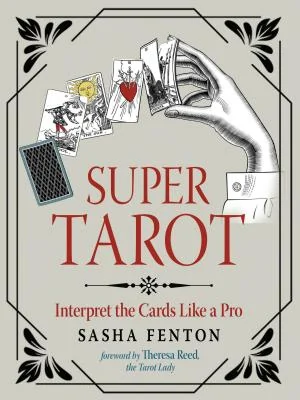
Sasha Fenton’s Super Tarot is less about the mystical pronouncements of fate and more about the tarot as a sophisticated psychological mirror. Fenton grounds the reader in the Rider-Waite-Smith tradition, meticulously dissecting each card’s symbolism with an eye toward archetypal meaning. The strength lies in its systematic approach, particularly in the detailed breakdown of the Minor Arcana, which often receives less attention than the Major Arcana in introductory texts. However, the book's very thoroughness can sometimes feel dense; the sheer volume of information might overwhelm a reader seeking quick divinatory answers. A particularly effective section is the explanation of the Court Cards, moving them beyond simple character archetypes to nuanced representations of energy dynamics. Super Tarot offers a solid, if sometimes academic, foundation for serious tarot study.
📝 Description
80
Sasha Fenton's Super Tarot, published in 2003, examines tarot cards as keys to personal understanding.
Super Tarot offers a structured guide to tarot interpretation, moving beyond basic card meanings to their symbolic and psychological applications. Sasha Fenton presents a methodical approach, suitable for readers seeking a solid grasp of the practice. The book treats tarot cards not merely as divinatory instruments but as archetypal keys for self-discovery.
This book is for individuals committed to developing their tarot skills. It welcomes beginners needing a firm foundation and intermediate readers wishing to improve their interpretive abilities. Those interested in the psychological aspects of tarot or its use for self-reflection will find valuable content.
Published in 2003, Super Tarot arrived during a time of growing interest in esoteric studies and personal growth. The early 21st century saw many occult and metaphysical texts become widely available. Fenton's book adds to this with a clear interpretation of tarot, a practice with roots back to the 18th century when figures like Antoine Court de Gébelin connected it to ancient Egyptian symbolism.
💡 Why Read This Book?
• Gain a structured understanding of the 78-card tarot system, including the often-overlooked Minor Arcana, as detailed in Fenton's systematic approach to card interpretation. • Learn practical methods for laying out and reading tarot cards, moving beyond rote memorization to intuitive application, as demonstrated in the book's reading techniques. • Explore the tarot as a tool for self-awareness and personal growth by understanding its archetypal symbolism, referencing concepts like the Major Arcana's journey.
⭐ Reader Reviews
Honest opinions from readers who have explored this book.
❓ Frequently Asked Questions
What is the primary tarot deck used in Super Tarot?
Sasha Fenton primarily utilizes the Rider-Waite-Smith tarot deck as the basis for her interpretations, referencing its widely recognized imagery and symbolism throughout the book.
Does Super Tarot focus on fortune-telling or personal development?
While it covers divinatory aspects, Super Tarot emphasizes the tarot's role as a tool for psychological insight and personal development, exploring its archetypal meanings.
What level of tarot knowledge is assumed for Super Tarot?
The book is suitable for both beginners seeking a comprehensive introduction and intermediate practitioners looking to deepen their understanding and interpretive skills.
When was Super Tarot first published?
Super Tarot by Sasha Fenton was first published in 2003, reflecting a period of significant interest in esoteric and self-help literature.
Are there exercises or prompts for practicing tarot reading?
Yes, the book includes elements designed to encourage practice and deeper engagement with the tarot, facilitating a hands-on learning experience.
How does Super Tarot explain the symbolism of the Minor Arcana?
Fenton provides detailed explanations for each card in the Minor Arcana, connecting their suit and number to broader symbolic meanings and narrative progression.
🔮 Key Themes & Symbolism
Archetypes and the Psyche
Super Tarot posits the tarot as a system of archetypes, mirroring fundamental aspects of the human psyche. The Major Arcana, in particular, are presented as stages of an inner journey, echoing Carl Jung's theories on the collective unconscious and universal patterns of experience. Fenton guides readers to see how these ancient symbols can illuminate personal struggles, aspirations, and the process of individuation, offering a framework for self-discovery beyond simple prediction.
The Structure of the Arcana
The book meticulously breaks down the 78 cards into their constituent parts: the 22 Major Arcana and the 56 Minor Arcana (divided into four suits). Fenton explains the inherent symbolism within each suit (Wands, Cups, Swords, Pentacles) and how the numerical progression within each suit contributes to a narrative or developmental arc. This structured approach explains the tarot, providing a logical foundation for interpreting card combinations and spreads.
Intuitive Reading Techniques
While providing extensive symbolic and psychological context, Super Tarot also focuses on practical application. Fenton outlines various methods for shuffling, laying out cards, and interpreting the resulting spreads. The emphasis is on integrating learned knowledge with intuitive perception, encouraging readers to develop their own unique reading style. This balances intellectual understanding with the experiential aspect of working with the cards.
Tarot as a Symbolic Language
Fenton treats the tarot deck as a rich, symbolic language capable of communicating complex ideas and inner states. Each card is a word or phrase within this language, and spreads form sentences or narratives. By understanding the grammar and vocabulary of this system, readers can gain insights into situations, understand hidden dynamics, and explore potential future trajectories, using the cards as a sophisticated tool for symbolic inquiry.
💬 Memorable Quotes
Direct passages from the work, attributed to the author.
“Each suit has its own character and meaning.”
— This statement underscores the book's systematic approach to the Minor Arcana, emphasizing that the Wands, Cups, Swords, and Pentacles possess distinct energies and thematic associations that are crucial for accurate interpretation.
“The Major Arcana chart a spiritual journey.”
— This interpretation points to Fenton's conceptualization of the 22 Major Arcana cards as representing significant archetypal stages or lessons encountered on the path of personal and spiritual development.
“Combinations of cards tell a story.”
— This highlights the dynamic nature of tarot reading as presented in the book, where individual card meanings are synthesized to form a cohesive narrative or complex understanding of a situation.
💡 Key Ideas
Editorial paraphrase of the work's core concepts — not direct quotes.
The tarot is a mirror reflecting our inner world.
This paraphrased concept highlights Fenton's view of the tarot not as an external oracle, but as a tool for introspection, revealing subconscious patterns and psychological states to the user.
Intuition must be guided by knowledge.
This paraphrased concept emphasizes Fenton's balanced methodology, suggesting that while personal insight is vital, it gains clarity and accuracy when grounded in a solid understanding of tarot symbolism and structure.
🌙 Esoteric Significance
Tradition
Super Tarot operates within the broad Western esoteric tradition, specifically drawing heavily from the lineage that interprets the tarot through a psychological and archetypal lens, often associated with the Rider-Waite-Smith school. While not strictly Hermetic or Kabbalistic, it utilizes symbolic language and archetypal structures that have been integrated into these traditions over centuries, particularly following the work of occultists like A.E. Waite. Fenton adapts these influences for a modern audience seeking practical application and self-understanding.
Symbolism
Key symbols explored include the Fool's journey, representing the initiation into life's experiences and the unfolding of potential. The four suits—Wands (action, spirit), Cups (emotions, relationships), Swords (intellect, conflict), and Pentacles (material world, manifestation)—are presented as fundamental forces or domains of human experience. The Court Cards are examined as complex representations of personality types or energy dynamics, moving beyond simple characterizations.
Modern Relevance
Fenton's work remains relevant for contemporary practitioners of tarot who favor a psychological and archetypal approach. It provides a solid foundation for those engaging with modern tarot communities and online resources that often reference the Rider-Waite-Smith imagery. Thinkers and practitioners focused on Jungian psychology, archetypal studies, and modern divination that emphasizes personal empowerment and self-reflection can find Fenton's structured interpretations valuable.
👥 Who Should Read This Book
• Aspiring tarot readers seeking a structured, comprehensive introduction to the 78-card system, particularly those who prefer learning the Rider-Waite-Smith symbolism. • Individuals interested in the psychological and archetypal dimensions of the tarot, looking to use it as a tool for self-reflection and personal growth. • Intermediate tarot practitioners aiming to deepen their interpretive skills and gain a more nuanced understanding of the Minor Arcana and Court Cards.
📜 Historical Context
Published in 2003, Sasha Fenton's Super Tarot arrived during a resurgence of interest in esoteric studies, a trend amplified by the internet's ability to connect practitioners and disseminate information. The early 21st century saw a proliferation of tarot guides, often drawing on established traditions like the Rider-Waite-Smith system, first introduced in 1909. Fenton's work contributes to this ongoing dialogue by offering a structured, psychologically-oriented interpretation, distinguishing itself from purely divinatory or historical analyses. While theosophy and earlier occult revivals had explored tarot symbolism extensively, Fenton's approach reflects a contemporary focus on personal growth and archetypal psychology, influenced by thinkers like Carl Jung, whose concepts of the collective unconscious gained traction in esoteric circles throughout the 20th century.
📔 Journal Prompts
The Fool's journey as a metaphor for personal evolution.
Interpreting the suit of Swords through a recent intellectual challenge.
The role of the Queen archetype in your current relationships.
Mapping the Pentacles' progression against a material goal.
Reflecting on the energetic interplay between two chosen tarot cards.
🗂️ Glossary
Major Arcana
The 22 trump cards of the tarot deck, traditionally representing significant life lessons, archetypal figures, and spiritual journeys.
Minor Arcana
The 56 cards of the tarot deck, divided into four suits, which typically represent everyday events, challenges, and circumstances.
Rider-Waite-Smith Deck
A highly influential tarot deck first published in 1909, known for its detailed imagery and the innovative inclusion of fully illustrated scenes in the Minor Arcana.
Archetype
In psychology and mythology, a universal, archaic pattern or image that derives from the collective unconscious and is believed to influence human behavior and understanding.
Spread
A specific arrangement of tarot cards laid out in a pattern, designed to address a particular question or area of inquiry.
Court Cards
The four face cards within each suit of the Minor Arcana: Page, Knight, Queen, and King, often representing people, personality types, or stages of development.
Divination
The practice of seeking knowledge of the future or the unknown by supernatural means, such as interpreting tarot card readings.
🔮 Readers Also Liked
Browse all →









More by Sasha Fenton
All books →





More Free Divination & Tarot Books
View all →