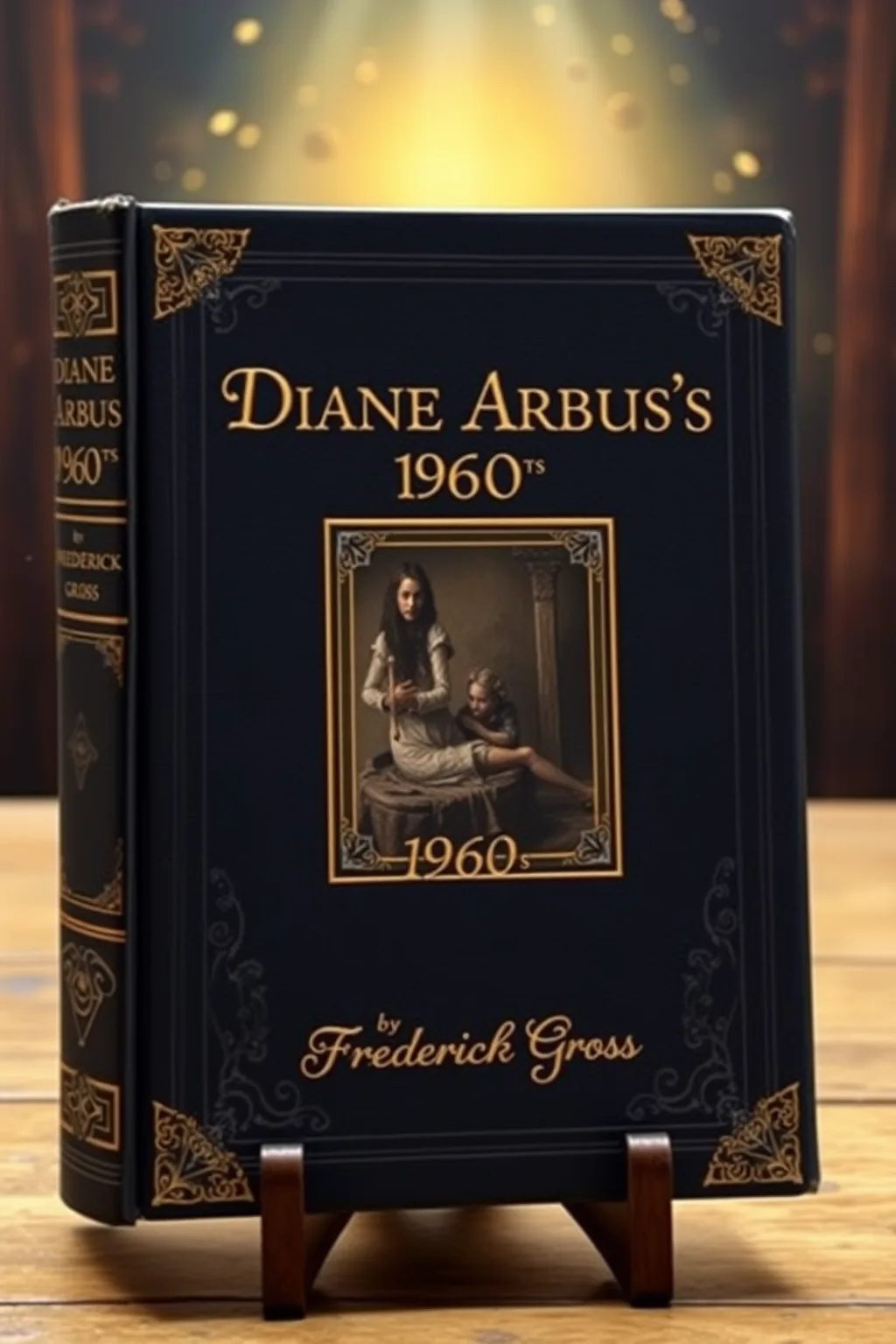
Diane Arbus's 1960s
 62
62

Diane Arbus's 1960s



Frederick Gross's "Diane Arbus's 1960s" is a revelatory examination, positioning Arbus's work as a profound act of divination. Gross masterfully deciphers the symbolic language of her subjects, revealing a deep engagement with occult principles and the archetypal forces that govern human identity. This is not a superficial critique but an immersion into the spiritual resonance of her images, offering esoteric insights that will resonate deeply with seekers of hidden knowledge. Highly recommended for practitioners and scholars of metaphysical arts.
📝 Description
62
Frederick Gross analyzes Diane Arbus's 1960s photography through esoteric symbolism.
Frederick Gross examines Diane Arbus's 1960s photographs, focusing on their esoteric dimensions. He argues that these images are more than just visual records; they are symbolic gateways. Gross sees Arbus's subjects and compositions as expressions of deeper metaphysical inquiries and archetypal patterns within the collective unconscious. The book connects Arbus's art to the underlying energies that influence human experience, suggesting a spiritual framework for understanding her work.
This study invites readers to consider the hidden meanings in everyday life and art. It posits that Arbus's unflinching portraits reveal profound aspects of selfhood and alienation. For those interested in the intersection of art, spirituality, and the human condition, Gross provides an interpretation that finds sacredness in the ordinary. The analysis encourages a perception of the world as rich with concealed significance.
This work situates Arbus's photography within traditions that seek hidden meanings and spiritual truths. It draws on concepts similar to Jungian psychology's exploration of archetypes and the unconscious. The book also echoes hermetic or alchemical approaches to art, where everyday subjects are seen as symbolic vessels for deeper realities. It aligns with esoteric interpretations that view artistic creation as a form of revelation, uncovering universal patterns and energies.
💡 Why Read This Book?
Uncover the hidden metaphysical dimensions within Diane Arbus's groundbreaking photography. This book offers a unique esoteric interpretation, revealing the symbolism and spiritual currents that animate her subjects. Ideal for seekers, art historians, and practitioners of divination arts who wish to explore the profound connections between art, consciousness, and the occult.
⭐ Reader Reviews
Honest opinions from readers who have explored this book.
❓ Frequently Asked Questions
What esoteric traditions does Gross draw upon?
Gross masterfully weaves together threads from Jungian psychology, Hermeticism, and esoteric symbolism, viewing Arbus's subjects as manifestations of archetypal forces and hidden spiritual realities.
How does this book relate to divination?
The book frames Arbus's photography as a form of visual divination, where the photographer acts as a seer, revealing profound truths about the human psyche and the hidden order of existence.
Is this book suitable for beginners in esoteric studies?
Yes, while offering depth for advanced practitioners, the accessible prose and clear explanations make it an excellent entry point for those new to esoteric interpretations of art and culture.
What is the philosophical significance of Arbus's work as presented here?
Gross posits that Arbus's work challenges conventional perceptions of reality, urging readers to confront the 'other' within themselves and to recognize the inherent spiritual dignity in all beings.
Can this book enhance my understanding of symbolism in art?
Absolutely. It provides a rich framework for understanding how symbolism operates on both conscious and subconscious levels, revealing deeper layers of meaning in visual mediums.
🔮 Key Themes & Symbolism
The Oracle of the Ordinary
Gross posits Arbus’s lens as a powerful divinatory tool, transforming the mundane into a profound oracle. Her subjects, often marginalized or unconventional, are presented not as oddities, but as avatars of deeper spiritual truths. The book explores how her unflinching gaze acts as a mirror to the collective unconscious, revealing archetypal patterns and the inherent sacredness within all forms of human expression. This perspective invites readers to see the world as a text rich with hidden meanings, where every encounter is an opportunity for spiritual revelation.
Veils of Perception
This theme explores the concept of veils – those societal constructs, psychological defenses, and layers of illusion that obscure true perception. Arbus, through her photography, is presented as one who pierces these veils, exposing the raw, unvarnished reality of her subjects. Gross examines how her work challenges viewers to confront their own biases and preconceived notions, fostering a deeper empathy and understanding of the complex nature of existence. It's an exploration of how art can facilitate a radical shift in consciousness and perception.
The Shadow and the Light
Frederick Gross illuminates the potent interplay between the shadow aspects of the human psyche and the inherent light that resides within each individual, as depicted in Arbus's 1960s work. He argues that Arbus’s subjects, often embodying societal 'shadows,' are also powerful conduits of authentic selfhood and spiritual resilience. The book explores how acknowledging and integrating these darker facets is crucial for holistic spiritual growth, suggesting that true illumination arises not from denial, but from a courageous confrontation with the totality of being. This theme encourages a deeper appreciation for the complex beauty found in imperfection.
💬 Memorable Quotes
Direct passages from the work, attributed to the author.
“In the faces of the peculiar, she found the universal echo of our shared humanity.”
— This highlights Arbus's ability to transcend superficial differences, finding profound commonality and spiritual connection in those often perceived as 'other'.
“The frame became a sacred boundary, containing potent energies of transformation.”
— This interpretation emphasizes how Arbus's compositional choices created a contained, almost ritualistic space that facilitated a powerful, transformative viewing experience.
“Each photograph was a key, unlocking chambers of the psyche long sealed.”
— This suggests Arbus's images served as catalysts, opening up dormant or repressed aspects of the viewer's own subconscious and inner world.
“She photographed not what was seen, but what was felt in the silent spaces between breaths.”
— This speaks to the intuitive, spiritual, and emotional depth of Arbus's work, suggesting she captured intangible feelings and essences beyond mere visual representation.
💡 Key Ideas
Editorial paraphrase of the work's core concepts — not direct quotes.
Her lens did not judge; it bore witness to the soul's raw confession.
This quote suggests Arbus's photography was not about condemnation but about deep, honest observation, revealing the inner spiritual essence of her subjects.
🌙 Esoteric Significance
Tradition
This work draws heavily from Jungian archetypal psychology, viewing Arbus's subjects as manifestations of universal human experiences and symbolic figures within the collective unconscious. It also touches upon Hermetic principles, particularly the idea of 'as above, so below,' suggesting that the microcosm of individual lives reflects macrocosmic spiritual truths. The photographic act itself is framed as a form of ritualistic engagement with reality.
Symbolism
The symbolism explored revolves around the 'other,' the marginalized, and the unconventional as potent conduits of spiritual truth. Arbus's subjects often embody archetypal roles – the trickster, the innocent, the elder – challenging societal perceptions and revealing deeper layers of human existence. The very act of framing and capturing an image is seen as a symbolic act of revealing hidden aspects of reality, turning the ordinary into the extraordinary.
Modern Relevance
In an age saturated with curated realities and superficial online personas, Arbus's unflinching gaze offers a vital counterpoint. Her work, as interpreted by Gross, reminds us of the profound spiritual significance of authenticity, vulnerability, and the courage to confront the 'shadow' within ourselves and society. The book’s esoteric insights encourage a more conscious and spiritually aware engagement with the world, urging us to find the sacred in the seemingly profane.
👥 Who Should Read This Book
This book is a treasure for the earnest seeker of hidden knowledge, particularly those drawn to the intersection of art, psychology, and spirituality. Art historians and critics will find a fresh, profound lens through which to re-examine iconic photographic works. For practitioners of esoteric arts, it offers a compelling case study in visual divination and symbolic interpretation. Beginners in occult studies will appreciate the accessible yet deep dive into esoteric concepts, while seasoned scholars will find new avenues for contemplation and research into the metaphysical dimensions of modern culture.
📜 Historical Context
The 1960s was a decade of seismic cultural and spiritual upheaval. The rigid social structures of the post-war era began to fray, giving rise to counter-cultural movements, a burgeoning interest in Eastern philosophies, and a widespread questioning of established norms. Esoteric thought, including Jungian psychology, mysticism, and occult practices, found fertile ground as individuals sought alternative frameworks for understanding themselves and the universe. Diane Arbus's photography, emerging within this milieu, resonated deeply with the era's fascination with the marginalized, the unconventional, and the authentic expression of self. Her work captured the zeitgeist of a society grappling with identity, alienation, and a yearning for deeper meaning, making it a potent subject for esoteric interpretation.
📔 Journal Prompts
How does the concept of 'the oracle of the ordinary' challenge your current perceptions of everyday life?
In what ways do the 'veils of perception' influence your own interactions and understanding of others?
Identify a photograph by Arbus that appeals to you and describe the 'shadow' and 'light' you perceive within it.
Consider the act of photography as a form of divination. What truths do you believe your own camera or creative process reveals?
Reflect on a time you felt like an 'outsider' or 'peculiar.' How might your experience hold universal spiritual significance?
🗂️ Glossary
Archetype
In Jungian psychology, a universal, archaic pattern and image that derives from the collective unconscious and is the psychic counterpart of an inherited structure.
Collective Unconscious
A term coined by Carl Jung to describe a part of the unconscious mind that is common to all humanity, containing inherited memories and ideas.
Esoteric
Intended for or likely to be understood by only a small number of people with a specialized knowledge or interest.
Hermeticism
A philosophical and religious tradition based primarily upon writings attributed to Hermes Trismegistus, blending Greek philosophical traditions with Egyptian religious beliefs.
Divination
The practice of seeking knowledge of the future or the unknown by supernatural means.
This book appears in 1 collection
🔮 Readers Also Liked
Browse all →







From the “Augury” Collection
View all →







More Free Divination & Tarot Books
View all →