Story of the Chinese Zodiac

 74
74

Story of the Chinese Zodiac
M. Chang's "The Story of the Chinese Zodiac" presents the familiar twelve animals with a commendable lack of sensationalism, focusing instead on their traditional associations and cultural significance. The strength lies in its systematic approach, detailing each animal's personality, compatibility, and even traditional remedies or lucky charms associated with them. For instance, the discussion of the Dragon's auspicious nature, particularly for those born in its year, provides a concrete example of the text's depth. However, the book could benefit from a more critical examination of its historical origins, perhaps engaging more directly with scholarly debates surrounding the zodiac's precise emergence, rather than presenting the traditional narrative as undisputed fact. The 1994 publication date means it predates some more recent cross-cultural analyses. Despite this, it remains a solid, informative primer.
📝 Description
74
M. Chang's 1994 book traces the Chinese Zodiac's cultural and philosophical underpinnings.
Published in 1994, "The Story of the Chinese Zodiac" by M. Chang examines the twelve animals that form the basis of this ancient calendrical system. The book details the characteristics, personality traits, and associated fortunes for each animal sign. It goes beyond simple astrological assignments to investigate the cultural and philosophical foundations that have established the zodiac's significance in East Asian societies over centuries. This work is for anyone curious about the Chinese Zodiac, whether they want to understand their own birth sign or are interested in comparative mythology and cultural studies. It offers an accessible introduction for newcomers and sufficient detail for those seeking to expand their existing knowledge. Scholars of East Asian culture and those in related spiritual disciplines will find it a useful reference.
This book situates the Chinese Zodiac within a long tradition of East Asian cosmology, which connects celestial cycles to human life and the natural world. It examines how astronomical observations and philosophical ideas, particularly Taoism, shaped a system deeply integrated with the lunisolar calendar. This calendar's importance for agriculture and religious practices underscores the zodiac's role in understanding cosmic order and its influence on human affairs. The enduring nature of this tradition highlights its significance as a framework for interpreting personality and fortune across generations.
💡 Why Read This Book?
• Gain specific insights into the personality traits and compatibility patterns of each of the twelve zodiac animals, such as the Rat's resourcefulness or the Ox's steadfastness, moving beyond superficial stereotypes. • Understand the foundational role of the lunisolar calendar and the integration of the Five Elements (Wu Xing) in shaping Chinese astrological interpretations, as detailed in the text's explanations. • Explore the cultural significance of the Dragon, a potent symbol in Chinese mythology, and its specific astrological implications for those born under its sign, as presented in the book's dedicated sections.
⭐ Reader Reviews
Honest opinions from readers who have explored this book.
❓ Frequently Asked Questions
What is the origin of the Chinese Zodiac animals?
The exact origins are debated, but the Chinese Zodiac system, featuring twelve animals, likely emerged during the Han Dynasty (206 BCE – 220 CE) or possibly earlier, evolving from ancient animal worship and agricultural calendars.
How does the Chinese Zodiac differ from Western astrology?
Unlike Western astrology, which is based on the sun's position relative to constellations, the Chinese Zodiac is based on a twelve-year cycle, with each year represented by an animal, and is tied to the lunisolar calendar.
Are there specific characteristics associated with each zodiac animal?
Yes, each of the twelve animals—Rat, Ox, Tiger, Rabbit, Dragon, Snake, Horse, Goat, Monkey, Rooster, Dog, Pig—is believed to imbue those born in its year with particular personality traits, strengths, and weaknesses.
What role do the Five Elements play in the Chinese Zodiac?
The Five Elements (Wood, Fire, Earth, Metal, Water) are combined with the twelve animals to create a more nuanced sixty-year cycle, influencing personality, fortune, and compatibility beyond the animal sign alone.
When was "Story of the Chinese Zodiac" first published?
The book "Story of the Chinese Zodiac" by M. Chang was first published in 1994.
Is the Chinese Zodiac used for predicting the future?
Traditionally, the Chinese Zodiac has been used to understand personality, predict compatibility in relationships and business, and offer guidance on fortune and potential challenges throughout life.
🔮 Key Themes & Symbolism
Animal Archetypes and Their Virtues
The core of the book lies in its detailed exposition of the twelve animal archetypes: Rat, Ox, Tiger, Rabbit, Dragon, Snake, Horse, Goat, Monkey, Rooster, Dog, and Pig. Each is presented not merely as a year marker but as a repository of specific virtues and behavioral tendencies. For instance, the Ox is associated with diligence and reliability, while the Monkey signifies intelligence and mischief. Chang elucidates how these archetypal energies are believed to influence the character, life path, and relationships of individuals born under their respective signs, offering a framework for self-understanding and interpersonal dynamics.
The Lunisolar Calendar and Time Cycles
This work thoroughly explains the Chinese lunisolar calendar, which underpins the zodiac's cyclical nature. It details how the twelve animal signs are integrated into this system, with each animal governing a specific year. Beyond the annual cycle, the book touches upon the more complex sixty-year cycle, formed by the combination of the twelve animals with the five elements (Wu Xing). This cyclical understanding of time is fundamental to Chinese cosmology and divination, offering a perspective where events and human lives unfold in predictable, repeating patterns.
Yin and Yang in Zodiacal Balance
The principles of Yin and Yang, central to Taoist philosophy, are explored in relation to the Chinese Zodiac. Chang explains how the twelve animals are categorized as either Yin or Yang, and how this duality influences their interactions and compatibility. This binary opposition is not seen as conflict but as a dynamic interplay necessary for balance. Understanding the Yin and Yang aspects of each sign provides deeper insights into potential harmonies and discords between individuals, reflecting a fundamental concept in traditional Chinese thought.
The Dragon as a Supreme Symbol
The Dragon holds a particularly revered position within the Chinese Zodiac and broader culture. The book dedicates attention to this potent symbol, highlighting its association with power, good fortune, and imperial authority. Individuals born in the Year of the Dragon are often considered exceptionally lucky and possess strong leadership qualities. Chang discusses the unique significance of the Dragon sign, differentiating it from the other eleven animals due to its mythical status and its deep cultural resonance in China and East Asia.
💬 Memorable Quotes
Direct passages from the work, attributed to the author.
“Each animal sign carries distinct traits, influencing personality and destiny.”
— This expresses the core belief that one's birth year animal is not just a label but a fundamental determinant of character and life's trajectory within the traditional Chinese worldview.
“Compatibility between signs follows predictable patterns of harmony and conflict.”
— This highlights the practical application of the zodiac in relationships, suggesting that understanding animal sign interactions can foster better interpersonal dynamics and avoid potential friction.
“The cyclical nature of the calendar reflects cosmic order.”
— This emphasizes the philosophical underpinnings of the zodiac, linking the recurring animal cycles to a larger, divinely or naturally ordained structure governing time and existence.
“The Dragon is a symbol of ultimate auspiciousness and power.”
— This points to the unique status of the Dragon within the pantheon of zodiac animals, signifying its exceptional cultural importance and its association with supreme good fortune.
“Yin and Yang principles govern the interactions between zodiac signs.”
— This explains how fundamental Taoist concepts of complementary opposites are applied to understand the dynamics and balance within the relationships between the twelve animal energies.
🌙 Esoteric Significance
Tradition
This work primarily aligns with Taoist cosmology and traditional Chinese folk religion, systems that emphasize harmony with natural cycles and the unseen forces governing existence. It departs from purely philosophical Taoism by focusing on a divinatory and archetypal system. While not strictly Hermetic or Kabbalistic, it shares with these traditions an interest in correspondences, archetypal symbolism, and the cyclical nature of time and manifestation as a means to understand the human condition and divine order.
Symbolism
Key symbols include the twelve animals themselves, each representing a complex set of archetypal energies and virtues (e.g., the Horse symbolizing freedom and dynamism). The Dragon stands out as a supreme symbol of imperial power, good fortune, and cosmic energy. The concept of the Five Elements (Wu Xing: Wood, Fire, Earth, Metal, Water) is also central, symbolizing fundamental forces whose interactions dictate balance, change, and destiny within the cyclical framework.
Modern Relevance
Contemporary practitioners of East Asian spiritual disciplines, including Feng Shui consultants and astrologers, continue to draw heavily on the principles outlined in works like this. Furthermore, in an era seeking holistic approaches to well-being and self-understanding, the zodiac's emphasis on archetypal psychology and life path guidance finds resonance with modern interest in personal development, comparative mythology, and mindfulness practices.
👥 Who Should Read This Book
• Individuals interested in comparative mythology and cultural anthropology, seeking to understand the symbolic systems that have shaped East Asian societies for centuries. • Aspiring practitioners of Chinese metaphysics, such as Feng Shui or traditional Chinese medicine, who need a foundational understanding of the zodiacal cycles and their energetic influences. • Seekers of self-knowledge and personal development, looking for frameworks beyond Western paradigms to explore personality, potential, and life's challenges through archetypal animal symbolism.
📜 Historical Context
Published in 1994, M. Chang's "The Story of the Chinese Zodiac" emerged during a period of increased global interest in Eastern philosophies and esoteric traditions, spurred partly by the counter-culture movements of the late 20th century and a growing academic focus on comparative religion and cultural studies. The work engages with a tradition stretching back millennia, with evidence suggesting the zodiac's formation around the Han Dynasty (206 BCE – 220 CE). At this time, competing schools of thought in China included Confucianism, which emphasized social order and ethics, and Mohism, focusing on utilitarianism. While not directly engaging with these contemporaneous philosophical rivals of antiquity, Chang's work implicitly presents the Taoist-influenced zodiac as a distinct worldview. Its reception in the 1990s was generally positive within popular interest circles, though academic sinology tended to focus on more primary source analyses, often treating popular astrological texts as secondary cultural artifacts.
📔 Journal Prompts
The Rat's association with resourcefulness and adaptability.
The Ox's embodiment of diligence and stability.
Reflecting on the Dragon's symbolism of power and good fortune.
The interplay of Yin and Yang energies within the zodiac.
The significance of the sixty-year cycle combining animals and elements.
🗂️ Glossary
Lunisolar Calendar
A calendar system that synchronizes both lunar phases and the solar year, crucial for traditional East Asian observances and agricultural cycles, forming the basis for the zodiac's yearly assignments.
Wu Xing
The Chinese concept of the Five Elements (Wood, Fire, Earth, Metal, Water), representing fundamental forces and their dynamic, cyclical interactions, used to refine astrological interpretations beyond the animal signs.
Yin and Yang
The Taoist principle of complementary, interdependent opposites (e.g., dark/light, passive/active) that underlies all phenomena, applied in the zodiac to understand balance and relationships between signs.
Zodiac Animals
The twelve creatures (Rat, Ox, Tiger, Rabbit, Dragon, Snake, Horse, Goat, Monkey, Rooster, Dog, Pig) that represent each year in the Chinese astrological cycle, each with associated characteristics.
Sixty-Year Cycle
A larger cycle combining the twelve animal signs with the five elements, creating a more complex and nuanced system for tracking time and astrological influences in Chinese tradition.
Archetype
A symbolic representation or recurring image in the collective unconscious, such as the zodiac animals, embodying universal patterns of human experience and personality.
Auspiciousness
The state of being favorable or fortunate; in the context of the Chinese Zodiac, certain signs or combinations are considered particularly auspicious, bringing good luck.
🔮 Readers Also Liked
Browse all →









More by M. Chang
All books →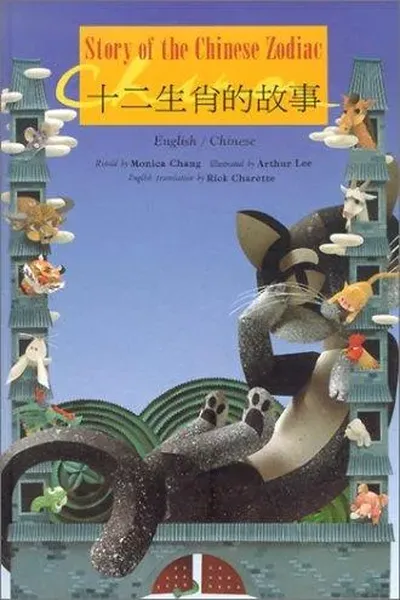
More Free Astrology & Cosmology Books
View all →