Astrology
 75
75

Astrology
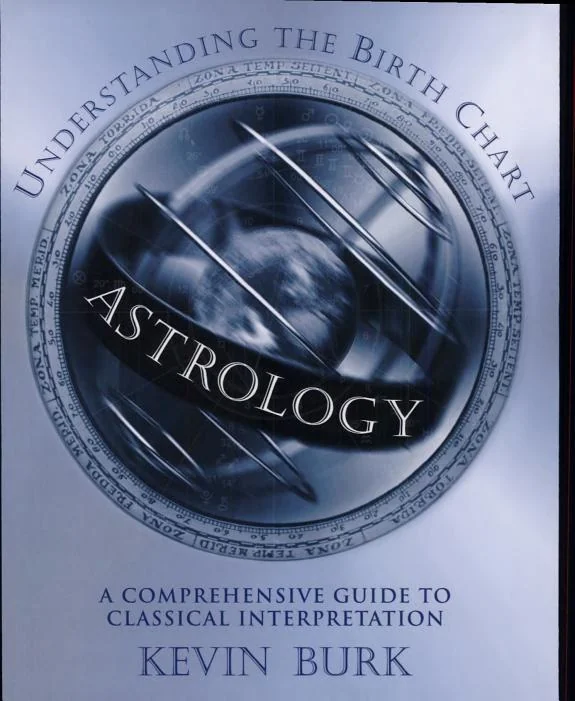
Kevin Burk’s "Astrology: Understanding the Birth Chart" succeeds admirably where many astrological primers falter: it teaches the craft without resorting to mysticism or overly complicated jargon. Burk’s strength lies in his pedagogical clarity, presenting the birth chart as a coherent system rather than a collection of disconnected symbols. He rightly emphasizes understanding the underlying principles that make astrological techniques valid, a point often overlooked. The section detailing planetary dignities, for instance, is particularly well-explained, offering a concrete framework for assessing planetary strength. However, the book’s commitment to avoiding obscure techniques, while a virtue for beginners, might leave those already familiar with more advanced methods wanting more depth. The work is thoroughly grounded but lacks the speculative edge that some practitioners seek. Still, for its stated purpose of providing a clear, step-by-step guide to chart interpretation, it is an exceptionally well-executed and valuable resource.
📝 Description
75
Kevin Burk's 2001 book offers a clear method for reading birth charts.
Published in 2001, "Astrology: Understanding the Birth Chart" presents a systematic method for astrological interpretation. The book focuses on core principles, aiming to give readers a firm grasp of natal chart analysis. It moves from basic astrological elements to their interactions, avoiding obscure or niche techniques. This approach is suitable for beginners or those wanting to organize their existing knowledge. Readers who prefer a structured learning path and understand the reasoning behind astrological methods will find this text helpful. It offers a direct style, contrasting with more abstract or specialized astrological works.
Burk introduces the fundamental components of astrology: planets, signs, houses, and aspects. He stresses how these elements work together in a birth chart, forming a unified symbolic system. The book emphasizes practical application, guiding readers on how to combine these parts to interpret personality, life possibilities, and personal growth patterns.
Appearing in 2001, "Astrology: Understanding the Birth Chart" coincided with a resurgence of interest in practical astrology. While psychological astrology and the Uranian school held sway, Burk's work provided a more accessible entry point. It stands apart from the more complex or spiritually dense systems that had gained popularity since the mid-20th century. The book grounds astrological interpretation in clear, understandable principles.
💡 Why Read This Book?
• Learn the fundamental principles of natal chart interpretation, moving beyond memorization of planetary meanings to understanding their interactions, as explained in Burk's structured approach to planets, signs, houses, and aspects. • Grasp the 'why' behind astrological techniques by focusing on underlying principles, enabling a deeper comprehension of how and why specific interpretations are derived from the birth chart. • Develop a practical skill set for analyzing a natal chart with clarity and precision, avoiding the pitfalls of obscure methods and gaining a solid foundation for further study.
⭐ Reader Reviews
Honest opinions from readers who have explored this book.
❓ Frequently Asked Questions
What makes Kevin Burk's "Astrology: Understanding the Birth Chart" different from other astrology books?
Burk's book prioritizes a systematic, principle-based approach, focusing on core concepts and clear explanations rather than obscure techniques. It aims for a solid grasp of chart interpretation fundamentals, making it accessible for beginners.
Is this book suitable for someone with no prior knowledge of astrology?
Yes, the book is explicitly designed for beginners. It takes readers step-by-step from the basics to more complex chart interpretation, avoiding unnecessary jargon and focusing on foundational principles.
What year was "Astrology: Understanding the Birth Chart" first published?
The book "Astrology: Understanding the Birth Chart" by Kevin Burk was first published in 2001.
Does the book cover advanced astrological techniques?
The book focuses on core techniques and principles for understanding the birth chart. It deliberately avoids sidetracking into obscure or advanced methods, aiming for a comprehensive understanding of the fundamentals.
What are the main components of a birth chart discussed in the book?
The book systematically covers the essential components of a birth chart: planets, zodiac signs, houses, and the aspects that connect them, explaining how these elements interact.
Who is the author, Kevin Burk, and what is his approach?
Kevin Burk is presented as a teacher with a clear, structured method. His approach emphasizes understanding the underlying principles of astrology to make the techniques valid and comprehensible.
🔮 Key Themes & Symbolism
Foundational Principles
The book grounds astrological interpretation in fundamental principles, moving beyond rote memorization. Burk emphasizes understanding why astrological techniques work, focusing on the inherent logic connecting planets, signs, houses, and aspects. This approach ensures readers build a robust framework for analysis, rather than just learning isolated facts. The work provides a coherent system for deciphering the birth chart's symbolic language.
Systematic Chart Analysis
Burk presents a clear, step-by-step methodology for interpreting a natal chart. The focus is on integrating core components—planets, signs, houses, and aspects—into a unified understanding of an individual's psyche and life path. This structured progression ensures that readers can methodically break down complex charts and build comprehensive interpretations without getting lost in esoteric details.
Clarity Over Obscurity
A defining characteristic of this work is its commitment to clarity and accessibility. It deliberately avoids examining obscure astrological techniques or 'fuzzy thinking,' instead prioritizing concepts that are universally applicable and understandable. This makes the book an excellent resource for those seeking a direct, no-nonsense introduction to astrological interpretation.
The Birth Chart as a Map
The birth chart is presented as a symbolic map of an individual's potential and personality at the moment of birth. Burk explains how to read this map by understanding the interplay of celestial bodies and terrestrial divisions (houses). The work illuminates how these symbolic configurations offer insights into character, challenges, and opportunities throughout life.
💬 Memorable Quotes
Direct passages from the work, attributed to the author.
“The book moves step-by-step from the core basics to the finer complexities of chart interpretation.”
— This highlights the author's pedagogical intent: to provide a structured learning path that gradually builds understanding, making complex astrological concepts digestible for the reader.
“A real grasp of the subject entails more than just learning the techniques-it also involves grasping the underlying principles that make those techniques valid.”
— This emphasizes Burk's philosophy of teaching astrology. He believes true comprehension comes from understanding the foundational logic and principles, not merely memorizing procedures.
“Avoiding sidetracks into obscure techniques and fuzzy thinking.”
— This states the book's editorial stance: to remain focused on essential, well-established astrological concepts and methods, ensuring clarity and practical utility for the student.
“Designed to be useful to all students of the birth chart.”
— This conveys the book's broad appeal and intended audience, aiming to serve as a foundational text for anyone serious about learning astrological interpretation, regardless of their current level.
“The work explores the interconnectedness of planets, signs, houses, and aspects.”
— This points to the book's analytical method, where the focus is on how the various components of the birth chart interact to form a cohesive whole, rather than examining them in isolation.
🌙 Esoteric Significance
Tradition
While not strictly adhering to a single esoteric lineage like Hermeticism or Kabbalah, Burk's work engages with the Western Esoteric Tradition's use of astrology as a symbolic language for understanding cosmic and human order. It aligns with the Hermetic principle of 'As Above, So Below' by positing a correspondence between celestial movements and earthly life, emphasizing astrology as a divinatory and self-knowledge tool.
Symbolism
The book systematically deciphers core astrological symbols: the planets (archetypal energies), the zodiac signs (qualitative expressions), and the houses (domains of experience). It interprets their interplay as a symbolic language. For instance, Mars in Aries within the 10th house is not just a placement but a symbolic configuration indicating assertive career drive, a key motif in understanding personal destiny.
Modern Relevance
Burk's methodical approach remains highly relevant for contemporary astrology students overwhelmed by online information. His emphasis on foundational principles influences modern pedagogical methods, particularly within psychological and practical branches of astrology. Thinkers and practitioners focused on clear, actionable astrological insight continue to draw from his structured teaching style for self-study and client work.
👥 Who Should Read This Book
• Aspiring astrologers seeking a clear, structured introduction to birth chart interpretation, who will benefit from Burk's step-by-step guidance and focus on core principles. • Students of esoteric studies who wish to understand the symbolic language of astrology as a tool for self-knowledge and understanding cosmic correspondences. • Individuals interested in practical psychology and self-development who can use astrological birth chart analysis, as explained by Burk, to gain personal insights.
📜 Historical Context
Published in 2001, Kevin Burk's "Astrology: Understanding the Birth Chart" arrived as the internet was democratizing access to astrological knowledge, leading to a proliferation of varying approaches. While psychological astrology, influenced by figures like Carl Jung, had been dominant since the mid-20th century, and esoteric traditions like Kabbalistic astrology continued to hold sway, Burk’s work carved a niche by offering a straightforward, principle-driven curriculum. It presented a clear alternative to the often spiritually dense or highly technical systems prevalent at the time. Unlike authors who might engage with historical astrological figures like Ptolemy or study complex predictive techniques, Burk’s focus remained on providing a solid, practical foundation for chart interpretation, making it a valuable resource for a generation of new students seeking clarity.
📔 Journal Prompts
The Ascendant's role in expressing planetary energies.
Reflecting on the Sun-Moon dynamic and its integration.
Interpreting the house placement of Saturn and its associated lessons.
Analyzing the nature of a challenging aspect, such as a square between Mars and Venus.
How the Moon's sign influences emotional expression and needs.
🗂️ Glossary
Birth Chart
A symbolic map representing the positions of celestial bodies at the exact moment and location of a person's birth, used for astrological interpretation.
Planet
In astrology, celestial bodies (Sun, Moon, Mercury, Venus, Mars, Jupiter, Saturn, Uranus, Neptune, Pluto) that represent distinct psychological drives or archetypal energies.
Sign
One of the twelve divisions of the zodiac, each characterized by a distinct set of qualities and symbolism that colors the expression of planets within it.
House
One of the twelve divisions of the celestial sphere, representing different areas of life experience where planetary energies manifest.
Aspect
The angular relationship between two or more planets in a birth chart, indicating how their energies interact and influence each other.
Natal Chart
An alternative term for the Birth Chart, referring to the astrological chart cast for the moment of birth.
Dignity
A concept in astrology that describes the inherent strength or weakness of a planet based on its placement in a specific zodiac sign.
This book appears in 1 collection
🔮 Readers Also Liked
Browse all →









From the “Natal Astrology” Collection
View all →









More Free Astrology & Cosmology Books
View all →