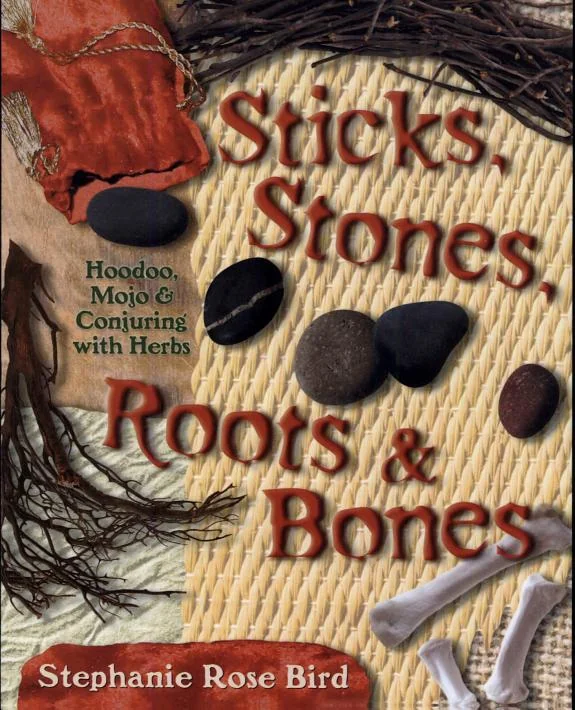
Sticks, Stones, Roots & Bones
 75
75

Sticks, Stones, Roots & Bones
Stephanie Rose Bird’s *Sticks, Stones, Roots & Bones* offers a welcome departure from many superficial treatments of Hoodoo. Bird anchors her exploration in genuine historical research, demonstrating a clear connection between West African spiritual practices and their post-slavery American iterations. Her discussion of sympathetic magic, particularly how natural objects become focal points for intention, is lucid and practical. A notable strength is the book's emphasis on the healing aspects of Hoodoo, moving it away from solely fortune-telling or hexing stereotypes. However, the work could benefit from further engagement with the socio-political context that shaped Hoodoo's development and its practitioners, particularly concerning the periods of intense persecution. The section on spiritual baths, while informative, feels somewhat brief given their centrality. Bird’s accessible prose makes complex concepts understandable, but a deeper dive into specific regional variations might have added further depth. Ultimately, this book serves as a solid, respectful introduction to a vital spiritual tradition.
📝 Description
75
Stephanie Rose Bird's 2004 book, Sticks, Stones, Roots & Bones, examines Hoodoo's historical and practical dimensions.
Sticks, Stones, Roots & Bones traces the development of Hoodoo, a spiritual tradition with roots in West African diasporic practices. Bird details how this nature-based system evolved through the transatlantic slave trade and adapted in the American South. The book goes beyond simple history to present accessible methods for using Hoodoo principles today, highlighting its uses for protection and healing.
This work is for anyone wanting a clear understanding of Hoodoo, moving past sensationalized views. It will interest practitioners of folk magic, rootworkers, and those studying African traditional religions in the Americas. Students of comparative religion, cultural historians, and people curious about nature-based spirituality will find it valuable. The book is especially suited for readers who appreciate historical background and practical, earth-centered magical techniques.
This book places Hoodoo within the context of African diasporic religions, emphasizing its specific lineage and practices. It connects Hoodoo's spiritual and medicinal knowledge to West African ethnic groups, showing how these traditions persisted despite the disruptions of slavery. The work also situates Hoodoo within the broader category of American folk magic and spiritualism, noting its development alongside other traditions in the late 19th and early 20th centuries.
💡 Why Read This Book?
• Gain practical insight into the use of natural elements like stones and roots for magical work, as detailed in the chapters on sympathetic magic, offering a tangible connection to earth-based spiritual practices. • Understand the historical lineage of Hoodoo, tracing its roots back to specific West African traditions and their adaptation during the 19th century, providing a context often missing in popular accounts. • Learn about specific Hoodoo healing modalities, such as spiritual bathing and the application of protective charms, presented with historical context and practical guidance for personal well-being.
⭐ Reader Reviews
Honest opinions from readers who have explored this book.
❓ Frequently Asked Questions
What are the primary West African roots of Hoodoo discussed in the book?
The book identifies specific West African ethnic groups, such as the Kongo and Yoruba, whose spiritual, medicinal, and magical traditions significantly informed the development of Hoodoo. These traditions emphasize the power of natural elements and ancestral veneration.
How does Stephanie Rose Bird explain the use of 'sticks, stones, roots & bones' in Hoodoo practice?
Bird explains these natural elements as potent conduits for spiritual energy and intention. They are used in sympathetic magic, where their inherent properties or symbolic associations are harnessed for healing, protection, or other magical workings.
Is the book suitable for beginners interested in Hoodoo?
Yes, the book is highly suitable for beginners. Bird offers a clear historical overview and practical advice without assuming prior knowledge, making the complex tradition accessible and respectful.
What historical period does the book focus on for the development of Hoodoo?
The book primarily focuses on the period following the transatlantic slave trade, detailing how West African spiritual practices were adapted and transformed in the American South, particularly during the 19th century.
Does the book discuss the healing aspects of Hoodoo?
Absolutely. A significant portion of the book is dedicated to exploring Hoodoo as a nature-based healing tradition, covering practices like spiritual bathing, herbal remedies, and the use of charms for well-being.
What is the significance of sympathetic magic in the context of this book?
Sympathetic magic is presented as a core principle in Hoodoo, where the practitioner creates a connection between objects (like stones or roots) and the person or situation they wish to influence, based on the principle that like affects like.
🔮 Key Themes & Symbolism
Diasporic Spiritual Continuity
This theme examines how West African spiritual and magical traditions, despite the trauma of the transatlantic slave trade, were preserved and adapted. Bird highlights the resilience of these practices, demonstrating their continuity through Hoodoo. She connects specific elements, like the veneration of ancestors and the use of natural materials, to their West African origins, showing how enslaved peoples recreated sacred landscapes and spiritual cosmologies in a new world. This continuity is presented not just as survival, but as a dynamic evolution of living traditions.
Nature-Based Healing and Magic
The book emphasizes Hoodoo as fundamentally a nature-based system. It explores how elements from the natural world—roots, stones, bones, herbs, water—are imbued with spiritual power and utilized for healing, protection, and spiritual growth. Bird details practices like spiritual bathing and the creation of gris-gris bags, explaining the symbolic and energetic properties attributed to these materials. This perspective positions Hoodoo as a holistic practice concerned with the well-being of the individual and their relationship with the environment.
Sympathetic and Contagious Magic
Central to Bird's explanation of Hoodoo is the principle of sympathetic magic, where 'like affects like.' This theme looks at how objects are used to represent or connect with people or situations, allowing for influence at a distance. The book illustrates how the energetic properties of natural items are harnessed through this principle. Contagious magic, where things once connected remain connected, is also explored, providing a framework for understanding how talismans and charms function within the tradition.
Practical Application and Empowerment
Beyond historical and theoretical exploration, a key theme is the practical application of Hoodoo for everyday life and personal empowerment. Bird offers guidance on how individuals can incorporate Hoodoo principles and techniques into their own spiritual practices. This theme underscores Hoodoo's function as a tool for navigating life's challenges, fostering resilience, and asserting agency. It presents the tradition as a living, accessible system for those seeking spiritual connection and practical solutions.
💬 Memorable Quotes
Direct passages from the work, attributed to the author.
“The magic of Hoodoo is deeply rooted in the earth and the natural world.”
— This statement captures the book's core argument: Hoodoo is not an abstract system but is intrinsically tied to the physical environment. It highlights the use of natural elements as the primary medium for magical work and spiritual connection.
“Hoodoo developed as a way for enslaved Africans to maintain their spiritual heritage and find solace.”
— This interpretation emphasizes the resilience and adaptive nature of Hoodoo. It frames the tradition's development within the oppressive context of slavery, highlighting its role in preserving culture and providing psychological and spiritual support.
“Stones, roots, and bones are not mere objects; they are vessels of spiritual power.”
— This highlights the animistic or pan-spiritual perspective within Hoodoo, where natural items are seen as possessing inherent spiritual energy. They are active participants in magical workings, not passive tools.
“The practice of spiritual bathing is a significant cleansing and protective ritual.”
— This points to a specific, practical application within Hoodoo focused on purification and warding off negative influences. It underscores the tradition's concern with maintaining spiritual and energetic hygiene.
“Understanding sympathetic magic is key to grasping how many Hoodoo spells function.”
— This interpretation emphasizes the theoretical underpinnings of Hoodoo practices. It suggests that the principle of connection between like things or things once connected is fundamental to enacting change through ritual.
🌙 Esoteric Significance
Tradition
Hoodoo, as explored in this work, represents a powerful manifestation of African Traditional Religions within the diaspora. It carries elements of animism, ancestor veneration, and nature worship, akin to spiritual systems found in regions like West Africa. While often categorized broadly under 'folk magic,' its deep spiritual roots and complex cosmology align it with indigenous esoteric traditions that emphasize direct experience and connection with the spirit world through natural forces.
Symbolism
The title itself, 'Sticks, Stones, Roots & Bones,' points to key symbolic elements. Sticks can represent assertion and protection; stones, grounding and endurance; roots, connection to ancestry and the earth's power; and bones, ancestral wisdom and the physical form. These are not merely ingredients but potent symbols representing fundamental forces within the Hoodoo worldview, used to channel spiritual energy and intention.
Modern Relevance
Contemporary practitioners of folk magic, rootworkers, and those interested in earth-centered spirituality frequently draw upon the foundational knowledge presented in *Sticks, Stones, Roots & Bones*. Its clear articulation of Hoodoo principles and practical applications makes it relevant for modern discussions on cultural appropriation, spiritual heritage, and the revitalization of indigenous healing practices in urban and digital contexts.
👥 Who Should Read This Book
• Aspiring Hoodoo practitioners seeking a respectful and historically grounded introduction to the tradition's core principles and practices. • Students of comparative religion and African American cultural studies interested in understanding the evolution of spiritual traditions under duress. • Individuals drawn to nature-based spirituality and folk magic looking for practical techniques for personal healing, protection, and empowerment rooted in earth wisdom.
📜 Historical Context
Published in 2004, *Sticks, Stones, Roots & Bones* emerged during a period of renewed academic and popular interest in African American folk traditions. Stephanie Rose Bird's work arrived as scholars like Henry Louis Gates Jr. were further clear the cultural syncretism of the African diaspora. The book contributed to a growing body of literature that moved beyond earlier, often dismissive, anthropological studies of Hoodoo, which sometimes conflated it with witchcraft or viewed it purely as superstition. Bird's approach, emphasizing its West African roots and its function as a nature-based healing system, positioned Hoodoo within a lineage of indigenous spiritual technologies. This contrasted with contemporary Western esoteric movements like Theosophy or Golden Dawn-inspired ceremonial magic, which often focused on different cosmologies and ritual structures. While not directly engaging in a public debate, the book implicitly countered the marginalization of Hoodoo by providing a detailed, respectful, and practical exploration of its foundations.
📔 Journal Prompts
Reflection on the symbolic meaning of specific roots mentioned in the text.
Consideration of how natural elements like stones could be used in personal spiritual practice.
Exploration of ancestral connection through the lens of Hoodoo's diasporic continuity.
Analysis of a personal challenge through the framework of Hoodoo's nature-based healing modalities.
Contemplation of the principles of sympathetic magic as applied to everyday intentions.
🗂️ Glossary
Hoodoo
A spiritual and magical tradition originating among enslaved Africans in the Americas, blending West African spiritual practices with elements adapted from European and Indigenous American folk traditions. It emphasizes nature-based magic, healing, and spiritual work.
Gris-Gris
A type of magical charm or amulet, often a small cloth bag containing specific herbs, roots, stones, or other items, prepared with intention for protection, luck, or other desired outcomes.
Spiritual Bathing
Ritualistic cleansing using specially prepared water infused with herbs, salts, or oils. It is performed to purify the spirit, remove negative influences, and invite positive energy or spiritual blessings.
Sympathetic Magic
A principle of magic based on the belief that 'like affects like.' Practitioners use objects or actions that resemble or are connected to a person or situation to influence them magically.
Rootworker
A practitioner of Hoodoo or similar folk magic traditions who utilizes herbs, roots, and other natural elements in their spiritual work and healing practices.
Contagious Magic
A principle of magic based on the belief that things that were once in contact continue to be connected. Items taken from a person (like hair or nail clippings) can be used to affect them magically.
Ancestor Veneration
The practice of honoring and communicating with deceased ancestors, believed to hold influence and offer guidance. This is a significant component of many African diasporic spiritual traditions, including Hoodoo.
This book appears in 1 collection
🔮 Readers Also Liked
Browse all →









From the “Hoodoo” Collection
View all →








More Free Occult Philosophy Books
View all →