Spook
 76
76

Spook
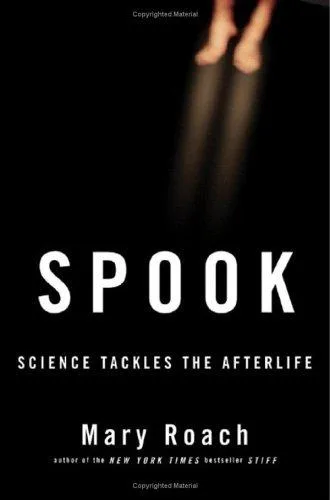
Mary Roach's "Spook" tackles the perennial human fascination with ghosts and the afterlife not with spectral pronouncements, but with a scalpel of scientific inquiry. Her strength lies in her disarming blend of genuine curiosity and unflinching skepticism. She doesn't dismiss the phenomena outright but rather examines the attempts to codify and understand them, from early spiritualist séances to modern ghost-hunting equipment. A particularly compelling section details the investigations into ectoplasm, illustrating the often-fraught line between genuine discovery and elaborate deception. However, the book occasionally feels like a collection of fascinating anecdotes rather than a cohesive argument, leaving the reader wanting a more pronounced thesis on the nature of belief itself. Despite this, Roach's ability to make complex scientific and historical details digestible is unparalleled, offering a unique perspective on the persistent human desire to connect with the departed.
📝 Description
76
Mary Roach's 2015 book "Spook" examines the science behind ghosts and the afterlife.
Mary Roach's "Spook" began its inquiry in 2015 into the scientific and pseudoscientific attempts to understand phenomena connected to death, ghosts, and the afterlife. The book moves beyond sensational ghost stories to look at the physical and psychological aspects of perceived hauntings. Roach approaches the subject with a mix of curiosity and skepticism. She examines everything from ectoplasm research to modern paranormal investigations.
This work is for readers who appreciate a well-researched, accessible look at the edges of science and belief. It will interest those curious about the history of parapsychology, the psychology of fear and belief, and the scientific method applied to topics often found in folklore. People wondering how the human mind and body react to the unknown, and our fascination with what comes after death, will find "Spook" engaging.
Published in 2015, "Spook" examines spiritualism and paranormal investigation. It references figures and movements from the late 19th and early 20th centuries, a time of high interest in mediums, séances, and validating spiritual claims scientifically. Roach places these historical efforts against the backdrop of evolving scientific understanding. She highlights how early investigations into spirit photography and materializations often lacked rigorous methods or were subject to fraud. The work contrasts these early attempts with more current, though still debated, scientific approaches.
💡 Why Read This Book?
• You will learn about the historical attempts to scientifically validate spiritual phenomena, such as the early 20th-century work on ectoplasm, gaining a concrete understanding of how science has grappled with the paranormal. • You will gain insight into the psychological drivers behind ghost sightings and belief, exploring how human perception and suggestion, as documented in Roach's investigations, can shape experiences. • You will discover the evolution of paranormal investigation technology, from rudimentary devices used in the early 1900s to the equipment discussed in contemporary ghost-hunting culture, providing a specific historical trajectory.
⭐ Reader Reviews
Honest opinions from readers who have explored this book.
❓ Frequently Asked Questions
What is the primary focus of Mary Roach's "Spook"?
"Spook" focuses on the scientific and pseudoscientific investigations into ghosts, death, and the afterlife. Mary Roach examines historical and contemporary attempts to understand and measure these phenomena, exploring the intersection of science, psychology, and belief.
When was "Spook" first published?
"Spook" was first published in 2015, positioning its exploration of paranormal science and belief within a modern context while referencing historical investigations.
Does "Spook" offer proof of ghosts?
No, "Spook" does not offer definitive proof of ghosts. Instead, it critically examines the evidence, methods, and psychology behind claims of paranormal activity, focusing on the human endeavor to understand the unknown.
What kind of scientific topics does Mary Roach cover in "Spook"?
Roach covers topics ranging from the history of spiritualism and parapsychology to the physical and psychological aspects of perceived hauntings, including research into ectoplasm and the use of ghost-hunting equipment.
Is "Spook" a scary book?
"Spook" is not intended to be a scary book. While it deals with themes of death and the afterlife, its tone is investigative and often humorous, focusing on the scientific and historical aspects rather than frightening narratives.
What is Mary Roach's typical writing style?
Mary Roach is known for her accessible, engaging, and often humorous writing style. She tackles complex scientific subjects with a blend of deep research, personal curiosity, and a healthy dose of skepticism.
🔮 Key Themes & Symbolism
The Scientific Pursuit of the Paranormal
The book meticulously details historical and contemporary attempts to apply scientific methodologies to the study of ghosts, spirits, and the afterlife. Roach examines figures and experiments from early parapsychology, highlighting the challenges in establishing empirical evidence for phenomena that defy conventional understanding. She explores the development of equipment designed to detect or measure spectral activity, contrasting the scientific rigor of some researchers with the often unverified claims and potential for fraud that plagued the field, particularly during the spiritualist boom.
Psychology of Belief and Perception
A significant thread in "Spook" is the exploration of why humans are so predisposed to believe in ghosts and an afterlife. Roach explores the psychological factors that contribute to perceived hauntings, including the power of suggestion, pareidolia (seeing patterns in random stimuli), and the human need for comfort or explanation in the face of death. The book examines how our minds can interpret natural events or sensory anomalies as supernatural, underscoring the role of the observer in the experience of the uncanny.
Ectoplasm and Materialization
The phenomenon of ectoplasm, a substance purportedly exuded by mediums during séances, receives considerable attention. Roach scrutinizes historical accounts and photographic evidence of ectoplasm, often revealing the scientific and logical explanations for what was presented as supernatural. This theme serves as a case study for the broader investigation into fraud, self-deception, and the desperate desire for proof of life after death that characterized much of early paranormal investigation.
The Science of Death and Dying
Beyond ghosts, "Spook" also touches upon the biological and scientific aspects of death itself. Roach explores what happens to the human body after death, the nature of consciousness, and various theories or speculations about what, if anything, persists. This aspect grounds the more speculative elements of paranormal belief in tangible, albeit often unsettling, scientific realities, providing a counterpoint to the ethereal nature of ghost stories.
💬 Memorable Quotes
Direct passages from the work, attributed to the author.
“The history of spiritualism is a history of fraud, delusion, and wishful thinking, but also of genuine curiosity and a deep desire to understand what lies beyond.”
— This interpretation highlights the dual nature of paranormal investigation as presented by Roach: a field riddled with deception and hope, driven by humanity's enduring quest to comprehend mortality and the unknown.
“The line between science and pseudoscience is often blurred when dealing with phenomena that lie outside our current understanding.”
— This interpretation reflects Roach's exploration of the boundaries of scientific inquiry, particularly when faced with subjects like ghosts, where rigorous testing is difficult and belief often outweighs empirical evidence.
💡 Key Ideas
Editorial paraphrase of the work's core concepts — not direct quotes.
Ectoplasm, when it wasn't just cheesecloth or a strategically placed napkin, was often the product of a medium's desperate imagination or outright deceit.
This quote captures Roach's critical approach to historical paranormal claims, specifically focusing on the dubious substance of ectoplasm and exposing the common methods of trickery employed by fraudulent mediums.
Our brains are wired to find patterns, which is why we see faces in clouds and ghosts in shadows.
This paraphrased concept points to the psychological underpinnings of ghost sightings, suggesting that the human brain's natural tendency to perceive order can lead to misinterpretations of natural phenomena as supernatural.
The human fascination with death and what comes after is as old as humanity itself, driving countless investigations, both scientific and spiritual.
This quote emphasizes the timeless and universal nature of the subject matter, explaining the persistent human drive to seek answers about mortality and the potential for an afterlife that fuels much of the paranormal investigation.
🌙 Esoteric Significance
Tradition
While not strictly adhering to a single esoteric lineage, "Spook" engages with themes common to many occult traditions, particularly those concerned with the nature of the soul, the afterlife, and disembodied consciousness. It implicitly interrogates the spiritualist movement, which itself drew from Christian, Platonic, and even Eastern philosophical ideas about survival after death. Roach's skeptical yet curious approach can be seen as a modern, secularized form of Gnostic inquiry, seeking hidden truths and gnosis through investigation rather than revelation, and questioning established dogma.
Symbolism
The primary symbol explored is the "ghost" itself – representing not just a spectral apparition, but the human desire for continuity, the fear of oblivion, and the unknown. Ectoplasm, as a physical manifestation of the spiritual, symbolizes the attempted bridging of the material and immaterial worlds, often revealing the limitations and deceptions inherent in such attempts. The "afterlife" functions as a potent symbol of hope, mystery, and the ultimate frontier of human knowledge, a concept Roach dissects through scientific and historical lenses.
Modern Relevance
Roach's work remains highly relevant for contemporary thinkers and practitioners interested in the intersection of consciousness, technology, and belief. Modern parapsychology, even if not mainstream, continues to explore consciousness and anomalous phenomena, often drawing upon the historical context Roach provides. Furthermore, her examination of belief formation and the psychology of perception is crucial for understanding modern New Age spirituality, the proliferation of ghost-hunting shows, and the ongoing human quest for meaning in the face of mortality.
👥 Who Should Read This Book
• Skeptical investigators of the paranormal: Readers who approach claims of ghosts and hauntings with a critical eye will appreciate Roach's rigorous examination of evidence and methodology. • Students of parapsychology and the history of science: Those interested in the historical development of fields attempting to study the supernatural will find detailed accounts of early research and key figures. • General readers fascinated by death and the afterlife: Anyone curious about the human obsession with what happens after we die, and the various scientific, pseudoscientific, and psychological explanations proposed, will find this book clear.
📜 Historical Context
Published in 2015, Mary Roach's "Spook" emerged in an era where paranormal investigation had become a popular entertainment genre, yet scientific acceptance remained elusive. The book revisits the late 19th and early 20th centuries, a period marked by the rise of Spiritualism and the first serious scientific inquiries into mediums, séances, and ghostly phenomena. Figures like Sir Arthur Conan Doyle championed the reality of spirits, while scientists like Charles Richet attempted to legitimize research into extrasensory perception and psychical phenomena. Roach implicitly contrasts these early, often methodologically flawed, attempts with the more sophisticated, though still largely fringe, scientific approaches of her own time. The reception of such works often falls into two camps: those eager for validation of the supernatural and those demanding strict adherence to empirical evidence, a dichotomy Roach navigates with her signature blend of humor and critical analysis. Unlike earlier popularizations, Roach’s work is grounded in a modern understanding of psychology and neuroscience, offering a contemporary lens on historical obsessions.
📔 Journal Prompts
The historical attempts to measure ectoplasm in the early 20th century.
Your personal perception of the boundary between scientific explanation and subjective experience.
The role of psychological suggestion in perceived ghostly encounters.
The evolution of ghost-hunting technology discussed in the book.
How the human desire for an afterlife influences belief systems.
🗂️ Glossary
Ectoplasm
A supposed gaseous or ethereal substance emitted by spiritualist mediums during séances, often claimed to be a material manifestation of spirits. Historically, it was frequently exposed as a hoax involving cheesecloth or other materials.
Spiritualism
A religious movement that began in the United States in the 1840s and gained popularity worldwide, based on the belief that the spirits of the dead can communicate with the living through a medium.
Parapsychology
A field of study that investigates paranormal and psychic phenomena, such as telepathy, clairvoyance, precognition, psychokinesis, and survival after death, often attempting to use scientific methods.
Medium
A person believed to be able to communicate with the spirits of the dead, acting as an intermediary between the living and the deceased, often during séances.
Séance
A meeting where people attempt to make contact with the spirits of the dead, typically led by a medium, often characterized by phenomena like table-turning, rappings, or materializations.
Pareidolia
The tendency to perceive a specific, often meaningful, image in a random or ambiguous visual pattern, such as seeing faces in clouds or inanimate objects.
Materialization
In spiritualism, the alleged phenomenon of a spirit or entity becoming visible and tangible in the physical world, often through the emission of ectoplasm by a medium.
🔮 Readers Also Liked
Browse all →









More by Mary Roach
All books →


More Free Occult Philosophy Books
View all →