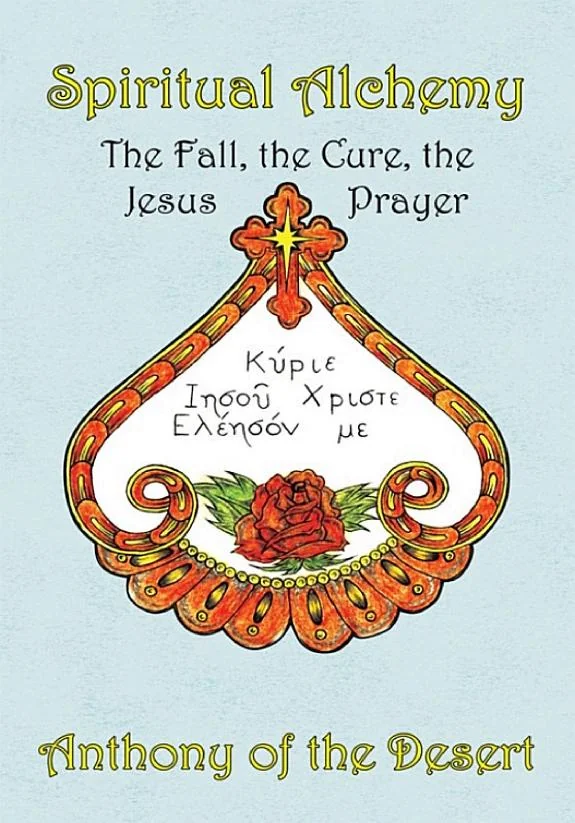
SPIRITUAL ALCHEMY
 79
79

SPIRITUAL ALCHEMY
Anthony of the Desert’s SPIRITUAL ALCHEMY offers a compelling, if at times dense, exploration of the inner alchemical path. The author adeptly bridges the historical alchemical arts with the internal work of spiritual transformation, presenting the Magnum Opus not as a literal quest for gold, but as a blueprint for soul refinement. A particular strength lies in its systematic approach, detailing stages of the Great Work with clarity. However, the book's reliance on alchemical jargon without extensive glossary support in some editions may present a barrier for newcomers. A passage discussing the "separation of the subtle from the gross" effectively illustrates the core principle of discerning spiritual truths from material distractions. SPIRITUAL ALCHEMY is a valuable, albeit demanding, resource for dedicated seekers of esoteric knowledge.
📝 Description
79
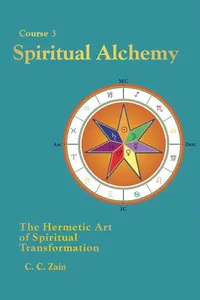
Anthony of the Desert's 2010 work, Spiritual Alchemy, details a practical framework for inner transformation.
Spiritual Alchemy presents the alchemical process as a model for profound psychological change. The book outlines a method for purifying and integrating the self, drawing parallels between the alchemist's workshop and the individual's inner life. It suggests that the forces used to transmute base metals into gold can refine the soul, leading to spiritual enlightenment.
This text is aimed at serious practitioners and scholars of esoteric traditions, especially those interested in the connection between psychology and ancient spiritual practices. It offers a structured approach to self-development for those seeking to reach a higher state of consciousness. Readers familiar with Hermeticism, Christian mysticism, or Gnostic traditions will find much to consider and apply.
Published in May 2010, Spiritual Alchemy arrived during a renewed interest in esotericism. While it draws on ancient sources, its modern approach may connect with the work of scholars like Carl Jung, who examined alchemical symbolism in relation to individuation. The early 21st century saw increasing academic and popular attention to comparative mysticism and the history of Western esotericism, a field where this book found its readership.
Spiritual Alchemy is situated within the Hermetic and mystical traditions, particularly those that interpret alchemical symbolism as a path to spiritual realization. It follows in a lineage that views the transformation of matter as a parallel to the transformation of consciousness. The book's publication in 2010 places it within a modern revival of interest in these ancient disciplines, connecting them to contemporary psychological concepts like individuation, as explored by figures such as Carl Jung. It speaks to traditions that seek gnosis or direct spiritual knowledge through disciplined inner work.
💡 Why Read This Book?
• Gain a structured understanding of the spiritual path as a process akin to the historical alchemical "Great Work," moving beyond abstract notions to concrete stages of inner refinement. • Learn to interpret alchemical symbols, such as the "Philosopher's Stone," as practical metaphors for achieving psychological integration and spiritual enlightenment. • Discover how the alchemical principles of "solve" and "coagula" can be applied to personal challenges, offering a framework for dismantling old patterns and reforming them into spiritual strength.
⭐ Reader Reviews
Honest opinions from readers who have explored this book.
❓ Frequently Asked Questions
What is the primary goal of spiritual alchemy as presented in Anthony of the Desert's work?
The primary goal is the "Great Work" or Magnum Opus: the complete spiritual transformation and perfection of the individual soul, analogous to transmuting base metals into gold.
When was SPIRITUAL ALCHEMY first published?
SPIRITUAL ALCHEMY was first published on May 25, 2010, positioning it within a modern revival of esoteric studies.
Does the book focus on literal alchemy or symbolic transformation?
The book focuses on symbolic transformation, using the historical alchemical processes as a metaphor and practical guide for internal, spiritual, and psychological development.
What kind of reader would most benefit from SPIRITUAL ALCHEMY?
Serious students of esoteric traditions, Hermeticism, Christian mysticism, or Gnosticism, as well as those seeking systematic methods for self-development and consciousness expansion, will find it beneficial.
Are there specific stages of transformation discussed in the book?
Yes, the work typically details stages analogous to alchemical operations such as "solve" (dissolution), "coagula" (purification/solidification), and "coniunctio" (union of opposites).
What is the significance of the 'Philosopher's Stone' in this context?
In SPIRITUAL ALCHEMY, the "Philosopher's Stone" symbolizes the ultimate achievement of spiritual perfection, enlightenment, and the integrated, perfected self.
🔮 Key Themes & Symbolism
The Great Work as Inner Transformation
The central theme is the Major work, or Great Work, interpreted not as the literal creation of gold but as the profound, internal process of spiritual purification and perfection. The book details how the stages of classical alchemy—from calcination and dissolution to conjunction and projection—serve as a symbolic roadmap for the soul's journey toward wholeness and enlightenment. This involves confronting and integrating shadow aspects, refining emotional and mental faculties, and ultimately achieving a state of spiritual realization.
Alchemical Symbolism and Psychological States
SPIRITUAL ALCHEMY extensively employs the strong symbolism of historical alchemy to describe internal psychological and spiritual states. Symbols such as the Ouroboros, the Mercurial Serpent, the Philosopher's Stone, and the divine marriage (hieros gamos) are presented as keys to understanding the dynamic processes of the psyche. The work argues that these ancient images offer precise descriptions of the challenges and triumphs encountered in the pursuit of spiritual self-mastery.
The Union of Opposites
A crucial concept is the reconciliation and integration of dualistic forces within the self. SPIRITUAL ALCHEMY explores how seemingly opposing elements—spirit and matter, masculine and feminine, light and shadow—must be brought into harmonious union for complete spiritual development. This coniunctio is presented as the culmination of the alchemical process, leading to a balanced, integrated, and enlightened state of being.
Practical Application of Esoteric Principles
Beyond theoretical exposition, the book emphasizes the practical application of alchemical principles to daily life and spiritual practice. It offers a framework for individuals to actively engage in their own inner transformation, providing methods and insights that can be directly applied to refine one's character, overcome limitations, and accelerate spiritual progress. The emphasis is on personal laboratory work—the inner crucible of the self.
💬 Memorable Quotes
Direct passages from the work, attributed to the author.
“The alchemist's true laboratory is within the soul.”
— This statement highlights the core tenet that spiritual alchemy is an internal process. It suggests that the transformation of the self is the primary objective, using alchemical metaphors to describe psychological and spiritual evolution rather than physical manipulation of substances.
“Solve et coagula: dissolve the old to form the new.”
— This concise phrase expresses the fundamental alchemical process of destruction and reconstruction. It signifies the necessity of breaking down ingrained patterns, limiting beliefs, or psychological complexes before they can be reformed into a higher, more refined state of being.
“The Philosopher's Stone is the perfected self.”
— This interpretation defines the ultimate goal of the spiritual alchemist. The legendary Philosopher's Stone, capable of transmutation, is understood here as the symbol for the fully realized, integrated, and spiritually enlightened individual.
“Bridging the terrestrial and the celestial through inner work.”
— This concept emphasizes the role of spiritual alchemy in harmonizing the material and spiritual realms within the individual. It suggests that by undertaking internal purification and integration, one can achieve a connection between the earthly existence and higher spiritual realities.
“The Mercurial Serpent guides the ascent.”
— The Mercurial Serpent, a potent alchemical symbol, is presented as an agent of transformation and spiritual ascent. It represents the dynamic, often elusive, energy that facilitates the upward movement of consciousness through the stages of the Great Work.
🌙 Esoteric Significance
Tradition
SPIRITUAL ALCHEMY primarily draws from the Western Hermetic and alchemical traditions, with strong undercurrents of Christian mysticism and Gnosticism. It interprets the ancient art of physical alchemy as a sophisticated symbolic language for the inner spiritual journey. The work fits within this lineage by elaborating on the 'Great Work' (Major work) as a process of soul purification and perfection, a concept central to many esoteric schools seeking union with the divine.
Symbolism
Key symbols include the Philosopher's Stone, representing the perfected, integrated self and spiritual enlightenment; the Mercurial Serpent, symbolizing transformative energy, wisdom, and the fluid, often paradoxical, nature of consciousness; and the divine marriage (hieros gamos), signifying the union of opposites (spirit/matter, conscious/unconscious) as essential for wholeness.
Modern Relevance
Contemporary spiritual seekers, Jungian analysts, and practitioners of esoteric psychology find value in SPIRITUAL ALCHEMY. Its detailed framework for inner transformation speaks to modern approaches to mindfulness, personal growth, and consciousness studies. Thinkers interested in the archetypal dimensions of human experience and the symbolic language of the soul continue to draw upon its interpretations of alchemical processes for therapeutic and spiritual insight.
👥 Who Should Read This Book
• Aspiring practitioners of Hermeticism and Western esotericism seeking a structured path for spiritual development. • Students of comparative religion and mysticism interested in the symbolic language of alchemy as a universal spiritual process. • Individuals undergoing personal transformation who are looking for a deep, metaphorical framework to understand their inner journey and psychological integration.
📜 Historical Context
Published in May 2010, SPIRITUAL ALCHEMY emerged during a period of renewed global interest in esoteric traditions, Western esotericism, and comparative mysticism. This era saw scholars and practitioners alike re-examining historical texts and traditions through lenses informed by depth psychology, particularly the work of Carl Jung, who extensively analyzed alchemical symbolism in relation to the individuation process. While not directly engaging with contemporaries in its original form, the book's thematic material would have resonated with the burgeoning New Age movement and academic circles exploring Hermeticism and Gnosticism. The early 21st century's digital landscape facilitated broader access to such works, contrasting with earlier periods where esoteric texts faced greater scrutiny or were confined to select libraries. The book's focus on internal transformation aligns with a broader philosophical current seeking meaning beyond materialism.
📔 Journal Prompts
The alchemist's inner laboratory: how does the concept of the soul as a crucible apply to your current challenges?
Reflecting on 'solve et coagula': what patterns or beliefs in your life need dissolution and reformation?
Interpreting the Mercurial Serpent: what dynamic or elusive energies are guiding your spiritual ascent?
The coniunctio of opposites: explore a personal duality that requires integration for wholeness.
Identifying the 'Philosopher's Stone' within: what does spiritual perfection signify for you personally?
🗂️ Glossary
Major work
Latin for 'Great Work,' referring to the entire process of spiritual transformation and perfection in alchemy, leading to the creation of the Philosopher's Stone.
Philosopher's Stone
The legendary alchemical substance believed to transmute base metals into gold and to grant immortality; symbolically, it represents the perfected, enlightened, or integrated self.
Solve et Coagula
An alchemical maxim meaning 'dissolve and coagulate.' It represents the cyclical process of breaking down (dissolving) existing forms and then reforming them (coagulating) into a higher state.
Coniunctio
Latin for 'conjunction' or 'union.' In alchemy, it refers to the sacred marriage or union of opposing elements, such as masculine and feminine, spirit and matter, leading to wholeness.
Ouroboros
An ancient symbol depicting a serpent or dragon eating its own tail, representing cycles, eternity, self-creation, and the primordial unity of all things.
Mercurial Serpent
A symbol associated with Mercury (Hermes), representing the volatile, transformative, and often paradoxical forces that drive spiritual and alchemical processes.
Hieros Gamos
Greek for 'sacred marriage.' In alchemy and mysticism, it symbolizes the union of divine masculine and feminine principles, leading to spiritual completion and integration.
This book appears in 1 collection
🔮 Readers Also Liked
Browse all →








From the “Spiritual Alchemy” Collection
View all →







More Free Alchemy & Hermeticism Books
View all →