Sleeping, Dreaming, and Dying
 80
80

Sleeping, Dreaming, and Dying
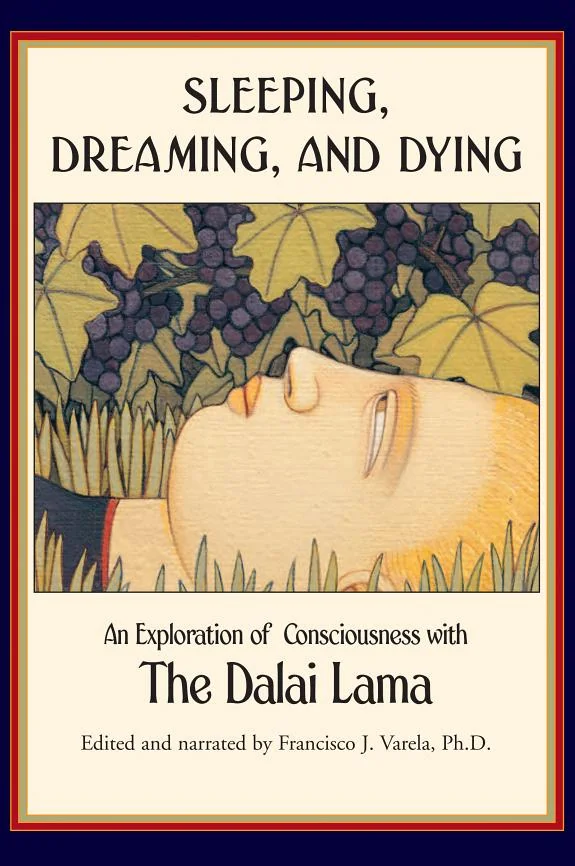
The convergence of the Dalai Lama and Western neuroscientists, spearheaded by Francisco Varela, in *Sleeping, Dreaming, and Dying* offers a fascinating, albeit sometimes uneven, exploration. Varela's narration and scientific grounding provide a crucial anchor, making the complex Buddhist concepts accessible to a scientific audience. The book shines when it directly contrasts the empirical observations of neuroscience with the experiential data from Buddhist meditation. For instance, discussions around the 'dream state' and its potential for insight reveal common ground and stark differences in methodology. However, the dialogue occasionally feels constrained, with the scientific contingent sometimes struggling to fully engage with the subtler points of Buddhist philosophy without resorting to familiar Western psychological paradigms. The strength lies in its ambition to bridge these worlds, though the limitations appear when the depth of Buddhist insight is perhaps too readily translated into standard neuroscientific terms. It remains a valuable document of a pivotal moment in interfaith and interdisciplinary dialogue.
📝 Description
80
In 1997, the 14th Dalai Lama met with neuroscientists to discuss consciousness.
Published in 1997, *Sleeping, Dreaming, and Dying* records a unique conversation between His Holiness the 14th Dalai Lama, Tenzin Gyatso, and Western scientists, notably neuroscientist Francisco Varela. This dialogue bridges Buddhist contemplative traditions with modern empirical research on the mind. The book captures a rare moment where a prominent figure in Tibetan Buddhism directly engages with scientific inquiry into consciousness, the nature of reality, and human experiences during sleep, dreams, and death.
The volume is suited for readers interested in the connections between spirituality and science. Those with backgrounds in psychology, neuroscience, comparative religion, or philosophy of mind will find relevant material. It specifically addresses how ancient meditative techniques might inform current scientific investigations into mental states, including dream phenomenology and the process of dying.
This book is situated within the Tibetan Buddhist tradition's long engagement with the nature of mind and reality. For centuries, Tibetan contemplatives have developed sophisticated methods for observing consciousness, understanding dreams, and preparing for death. This work reflects a modern extension of that tradition, seeking to articulate these insights in a dialogue with Western scientific paradigms. It represents an effort to find common ground and mutual understanding between contemplative experience and empirical investigation.
💡 Why Read This Book?
• Gain an understanding of how Buddhist meditative practices, particularly those concerning lucid dreaming as discussed by the Dalai Lama, offer unique experiential data that can inform neuroscientific models of consciousness. • Explore the concept of 'impermanence' as presented by Tenzin Gyatso, and consider its implications when juxtaposed with scientific perspectives on the stability of neurological processes during waking states and death. • Learn about Francisco Varela's neurophenomenological approach, which seeks to integrate first-person subjective reports with third-person objective observation, providing a concrete methodology for studying altered states of consciousness.
⭐ Reader Reviews
Honest opinions from readers who have explored this book.
❓ Frequently Asked Questions
When was *Sleeping, Dreaming, and Dying* first published?
The book *Sleeping, Dreaming, and Dying* was first published in 1997, marking a significant moment for interdisciplinary dialogue between Buddhism and Western science.
Who are the main contributors to the dialogue in the book?
The primary contributors are His Holiness the 14th Dalai Lama, Tenzin Gyatso, and neuroscientist Francisco Varela, who also narrates the work.
What scientific fields are discussed in relation to Buddhist philosophy?
The book primarily engages with psychology and neuroscience, exploring how these fields can interpret or study phenomena like dreaming and consciousness.
Does the book discuss the process of dying from a scientific perspective?
Yes, the book addresses the process of dying, examining it through both Buddhist contemplative insights and potential interpretations within neuroscience.
What is the significance of Francisco Varela's role?
Francisco Varela, as an internationally recognized neuroscientist, serves as a key facilitator and narrator, bridging the scientific and Buddhist perspectives with his neurophenomenological framework.
Is this book suitable for beginners in Buddhism or neuroscience?
While it assumes some reader interest, the book is generally considered highly readable and aims to make complex topics accessible to those new to either field.
🔮 Key Themes & Symbolism
Consciousness and Its States
The work meticulously dissects various states of consciousness, from ordinary wakefulness to the profound experiences of dreaming and the transition of dying. It explores how Buddhist contemplative practices, such as meditation and lucid dreaming techniques, offer rich, first-person experiential data that can complement and challenge empirical findings in neuroscience. The dialogue highlights the limitations of purely objective, third-person scientific methods in fully grasping the subjective texture of conscious experience, advocating for a more integrated approach like neurophenomenology.
The Nature of Reality and Self
Central to the book is the Buddhist concept of 'emptiness' (śūnyatā) and the illusion of a permanent, independent self. The Dalai Lama articulates these ideas, contrasting them with Western philosophical and scientific assumptions about a solid ego or a fixed reality. The discussions probe how the scientific understanding of the brain and its processes might align with or diverge from the Buddhist view of reality as impermanent and interdependent, questioning the very foundations of what we perceive as real.
The Art of Dying
The book dedicates significant attention to the process of dying, viewed through both spiritual and scientific lenses. Buddhist traditions offer detailed teachings on preparing the mind for death, recognizing it not as an end but as a transition. The dialogue explores how scientific understanding of brain activity, consciousness dissolution, and the near-death experience can interact with these ancient practices, seeking common ground or identifying areas for further investigation into the final moments of life.
Bridging Contemplative and Scientific Epistemologies
A primary goal of *Sleeping, Dreaming, and Dying* is to foster a genuine dialogue between two seemingly disparate ways of knowing: the first-person, experiential knowledge derived from centuries of contemplative practice, and the third-person, empirical knowledge generated by modern science. Francisco Varela's role is crucial here, as he champions neurophenomenology, a methodology designed to bridge these epistemologies, demonstrating how subjective reports can inform scientific models and vice-versa.
💬 Memorable Quotes
Direct passages from the work, attributed to the author.
“The mind is like a river, always flowing, never the same.”
— This metaphor, central to Buddhist philosophy, emphasizes the impermanent and dynamic nature of consciousness. It suggests that our thoughts, feelings, and perceptions are in constant flux, challenging the notion of a static self.
“Dreaming is a state where the mind is less constrained by the physical world.”
— This interpretation highlights the potential for dreams to offer unique insights into the mind's workings, free from the usual sensory input and cognitive filters of waking life.
“The scientific method and contemplative practice can both lead to truth.”
— This concept underscores the book's core thesis: that empirical observation and subjective, introspective inquiry are not mutually exclusive but can serve as complementary paths to understanding reality.
“Death is not an end, but a transformation of consciousness.”
— This perspective, rooted in Buddhist teachings, reframes dying not as cessation but as a natural process of change, suggesting that awareness can persist or shift in form.
“We must learn to observe the mind with the same rigor we observe the external world.”
— This call to action emphasizes the importance of developing introspective skills and applying a systematic approach to understanding our inner landscape, akin to scientific investigation.
🌙 Esoteric Significance
Tradition
This work emerges from the Tibetan Buddhist tradition, a lineage with a profound and ancient emphasis on the systematic study of consciousness through contemplative practice. It represents a modern application of this tradition, engaging directly with scientific frameworks. While Tibetan Buddhism is not typically categorized within Western esoteric systems like Hermeticism or Theosophy, its sophisticated philosophical psychology and techniques for altering consciousness place it at the forefront of non-Western spiritual sciences, offering alternative epistemologies and cosmologies.
Symbolism
While the book is more conceptual than symbolic in its presentation, the very concepts discussed carry deep esoteric weight within Buddhism. The 'dream state' itself can be seen as a symbolic gateway to subtler levels of consciousness, mirroring esoteric notions of visionary or astral travel. The concept of 'emptiness' (śūnyatā) functions as a profound symbol for the ultimate nature of reality, pointing beyond phenomenal appearances to a boundless, unconditioned awareness that underlies all existence, a theme echoed in various mystical traditions.
Modern Relevance
The approach pioneered in *Sleeping, Dreaming, and Dying* continues to influence contemporary fields. Neuroscientists and psychologists studying meditation, mindfulness, and altered states of consciousness frequently cite the dialogues and methodologies explored here. Thinkers in consciousness studies, artificial intelligence researchers exploring sentient machines, and practitioners of contemplative arts draw upon the book's insights into the subjective nature of experience and the potential for scientifically validated inner transformation.
👥 Who Should Read This Book
• Students of comparative religion and philosophy: Gain a direct insight into how a major world spiritual leader engages with scientific inquiry, exploring the convergences and divergences between Buddhist philosophy and Western science. • Neuroscientists and psychologists interested in consciousness: Benefit from the firsthand accounts of contemplative states and the exploration of neurophenomenology as a methodology for studying subjective experience. • Individuals exploring themes of death and dying: Find a unique perspective that integrates Buddhist teachings on the transition of consciousness with contemporary scientific understanding, offering solace and a framework for contemplation.
📜 Historical Context
When *Sleeping, Dreaming, and Dying* was published in 1997, the intellectual landscape was increasingly receptive to the integration of Eastern contemplative traditions with Western scientific inquiry. The work of Francisco Varela, a key figure in cognitive science and neuroscience, was central in this bridging effort, particularly through his development of neurophenomenology. This approach sought to unify first-person subjective experience with third-person objective observation. The book emerged during a period where figures like the Dalai Lama were becoming prominent global voices, engaging with Western audiences on complex philosophical and scientific matters. This dialogue stood in contrast to earlier periods where such exchanges were rare, often met with skepticism or dismissal by mainstream Western science, which was still largely dominated by materialist paradigms. While not a direct engagement, the book's themes echoed broader discussions in consciousness studies, influenced by thinkers who explored altered states and the mind-body problem, such as those working in parapsychology or transpersonal psychology, though the Dalai Lama's approach was firmly rooted in Buddhism.
📔 Journal Prompts
The nature of the 'dream state' as discussed by the Dalai Lama.
The concept of 'impermanence' in relation to waking consciousness.
Francisco Varela's neurophenomenological approach to studying subjective experience.
The Buddhist perspective on the continuity of consciousness beyond physical death.
Reconciling the scientific view of the brain with Buddhist insights into mind.
🗂️ Glossary
Neurophenomenology
A research approach, championed by Francisco Varela, that seeks to bridge first-person subjective experience (phenomenology) with third-person objective scientific investigation (neuroscience) to understand consciousness.
Lucid Dreaming
A state of dreaming in which the dreamer is aware that they are dreaming and may even be able to exert some control over the dream narrative.
Emptiness (Śūnyatā)
A core Buddhist concept referring to the lack of inherent existence or independent self-nature in all phenomena, suggesting interdependence and impermanence.
Contemplative Practice
Meditation and other mental training techniques used within spiritual traditions to cultivate awareness, insight, and specific mental qualities.
Epistemology
The theory of knowledge, especially with regard to its methods, validity, and scope. It is the investigation of what distinguishes justified belief from opinion.
Liminal States
Transitional states of consciousness, such as dreaming, deep meditation, or the process of dying, where ordinary perceptions and self-identity may be altered.
Tibetan Buddhism
A form of Buddhism originating in Tibet, characterized by its unique philosophical traditions, complex meditation practices, and rich iconography, stemming from the Mahayana and Vajrayana schools.
This book appears in 1 collection
🔮 Readers Also Liked
Browse all →









From the “Dream Yoga” Collection
View all →







More Free Occult Philosophy Books
View all →