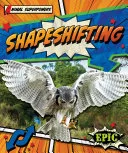
Shapeshifting
 80
80

Shapeshifting
Monika Davies's "Shapeshifting" presents a commendable effort to demystify animal metamorphosis for a younger audience. Its strength lies in the direct, fact-based approach, particularly how it breaks down the mechanics of how animals like the rainfrog alter their physical state. The inclusion of profiles detailing lifespan and conservation status adds a valuable layer of ecological awareness. However, the book's primary limitation is its brevity; while effective for its target audience, it offers only a surface-level exploration. A passage detailing the rainfrog's spiky transformation mechanism, for instance, is informative but leaves one wishing for deeper biochemical or evolutionary context. Ultimately, "Shapeshifting" is a solid, if elementary, introduction to a fascinating biological subject.
📝 Description
80
Monika Davies's 2023 book, Shapeshifting, examines animal transformation with a focus on four specific creatures.
Shapeshifting by Monika Davies introduces young readers to animal metamorphosis. The book details the physical changes animals undergo for survival, using the rainfrog as an example of its skin texture alteration. Davies presents this information through clear explanations and photographs, aiming to engage readers who might otherwise struggle with traditional texts. It also serves as a basic introduction for anyone interested in how animals adapt.
The book grounds the concept of transformation in observable biological processes. It explains the physiological mechanisms behind these changes, making complex adaptations accessible. While the focus is zoological, the concept touches upon a long-standing human fascination with metamorphosis found in mythology and esoteric traditions.
While primarily a zoological text, Shapeshifting touches upon the ancient human fascination with animal transformation. Across cultures and throughout history, mythology and esoteric thought have long explored the idea of beings assuming animal forms. This book connects those ancient narratives to the observable, scientific reality of biological adaptation, bridging the gap between folklore and zoology by examining the tangible ways animals change their appearance for survival.
💡 Why Read This Book?
• You will learn how specific animals, such as the rainfrog, physically adapt their external features for survival, gaining a concrete understanding of biological metamorphosis beyond simple camouflage. • You will discover the conservation status of the featured shapeshifting animals, connecting biological adaptations to contemporary ecological challenges and fostering an awareness of environmental responsibility. • You will gain insight into the physiological mechanisms behind animal transformations, presented with clear diagrams, which offers a simplified yet accurate explanation of biological superpowers.
⭐ Reader Reviews
Honest opinions from readers who have explored this book.
❓ Frequently Asked Questions
What is the main purpose of shapeshifting in animals according to the book?
The book explains that shapeshifting primarily serves as a survival mechanism. Animals alter their appearance or texture to evade predators, ambush prey, or adapt to their environment, as seen with the rainfrog's texture changes.
Which specific animals are featured in Monika Davies's 'Shapeshifting'?
The book features the mutable rainfrog, noted for its spiky texture transformation. It also introduces three other distinct shapeshifting animals, each with unique adaptive abilities explained within the text.
How does the book help reluctant readers engage with the material?
It employs leveled text, colorful photographs with labels, and "fun facts" to make the information accessible and engaging. A diagram visually breaks down how the shapeshifting abilities function.
What additional information is provided about each animal?
Profiles for each animal include details about their typical lifespan and their current conservation status. This adds an ecological dimension to the understanding of their adaptive traits.
When was 'Shapeshifting' by Monika Davies first published?
Monika Davies's 'Shapeshifting' was first published on August 1, 2025. This publication date places it within contemporary scientific literature for young readers.
Does the book explain the scientific basis for these animal transformations?
Yes, the book aims to explain the "superpower" by breaking down how it works. It uses diagrams and straightforward language to make the biological processes understandable for its target audience.
🔮 Key Themes & Symbolism
Biological Adaptation and Survival
This theme centers on how animals evolve specific traits to enhance their chances of survival. Davies illustrates this through examples like the mutable rainfrog, which can shift its skin from smooth to spiky. This adaptation isn't mere appearance; it's a functional strategy for defense or camouflage against predators and environmental changes. The book emphasizes that these 'superpowers' are rooted in evolutionary processes, providing a scientific lens on the natural world.
Metamorphosis as a Biological Process
The core of the book lies in explaining metamorphosis, the process of transformation animals undergo. It moves beyond mythical portrayals to scientific understanding, detailing how creatures alter their physical form. The book uses diagrams to clarify these changes, making complex biological functions accessible. This focus highlights the dynamic nature of life and the remarkable changes organisms can experience during their life cycles.
Conservation Awareness
Beyond the fascinating biological mechanisms, 'Shapeshifting' integrates crucial conservation information. For each featured animal, details on lifespan and conservation status are provided. This contextualizes the animals' adaptations within the broader scope of their ecological roles and the threats they face in the modern world. It subtly encourages readers to consider the importance of protecting these unique species and their habitats.
Bridging Folklore and Science
While presenting scientific facts, the book taps into humanity's long-standing fascination with shapeshifting, a common theme in myths and legends across cultures. By grounding these fantastical concepts in observable biology, Davies bridges the gap between ancient wonder and modern scientific discovery. The 'punk rocker' nickname for the rainfrog hints at this playful connection between the extraordinary and the everyday.
💬 Memorable Quotes
Direct passages from the work, attributed to the author.
“The mutable rainfrog can change its skin from smooth to spiky!”
— This direct observation highlights the book's approach: presenting astonishing natural phenomena with clarity. It immediately grounds the concept of shapeshifting in a specific, tangible example, making the abstract idea of transformation concrete for the reader.
“A diagram breaks down how the superpower works.”
— This indicates the book's commitment to educational clarity. By offering visual explanations for complex biological processes, it targets younger or less experienced readers, making the science behind shapeshifting accessible and understandable.
“Profile features share each animal’s life span and conservation status.”
— This detail underscores the book's dual focus on biological wonder and ecological responsibility. It ensures readers not only learn about the 'how' of adaptation but also the 'why' it matters in terms of species survival.
“Fun facts add details about how these shapeshifters stay safe in the wild!”
— This points to the engaging, supplementary nature of the content. 'Fun facts' are designed to deepen reader interest and provide memorable tidbits that reinforce the primary lessons on animal survival strategies.
“Leveled text and colorful photos with labels will engage and support reluctant readers.”
— This statement directly addresses the pedagogical strategy employed. It emphasizes the book's design to overcome reading barriers by using accessible language, visual aids, and age-appropriate content.
🌙 Esoteric Significance
Tradition
While "Shapeshifting" is fundamentally a work of popular zoology, it touches upon themes resonant within various esoteric traditions that explore transformation. Concepts of metamorphosis and the ability to change form are ancient, appearing in Hermeticism, Gnosticism, and indigenous shamanic practices. Davies's work, by focusing on biological reality, offers a modern, grounded counterpoint to these more mystical interpretations, implicitly validating the ancient human fascination with transmutation through scientific observation.
Symbolism
The primary symbolic element is the animal itself, representing primal forces and adaptive intelligence. The rainfrog's shift from smooth to spiky skin can symbolize the dual nature of existence—vulnerability and defense, the ability to project danger when threatened. The act of changing form, inherent in metamorphosis, broadly symbolizes potential, rebirth, and the fluid nature of identity, concepts explored across various mystical paths.
Modern Relevance
In contemporary occult and metaphysical circles, the idea of shapeshifting continues to be explored, often through psychological or energetic lenses rather than literal transformation. Modern practitioners might draw inspiration from the biological resilience and adaptive strategies detailed in works like Davies's to inform their understanding of personal transformation, energetic fluidity, or the symbolic power of animal totems and spirit guides.
👥 Who Should Read This Book
• Young readers aged 6-10, especially those who are reluctant readers or find traditional textbooks dry, will benefit from the engaging visuals, leveled text, and fun facts. • Parents and educators seeking accessible, fact-based resources for teaching children about biology, animal adaptations, and conservation will find this book a valuable tool. • Budding naturalists and young science enthusiasts curious about the natural world and how animals survive will appreciate the clear explanations and intriguing examples.
📜 Historical Context
Published in 2025, Monika Davies's "Shapeshifting" emerges in an era where science communication for young audiences is increasingly sophisticated. It follows in the tradition of popular science writers who translate complex biological concepts for a broader readership, a lineage including figures like Rachel Carson, whose work in the mid-20th century emphasized ecological interconnectedness. While "Shapeshifting" focuses on zoology, its accessible format carries the spirit of early 20th-century naturalists who sought to popularize scientific discovery. The book sidesteps the more esoteric or mythological interpretations of shapeshifting prevalent in ancient traditions, instead grounding its narrative firmly in observable, biological adaptations. Its reception is likely to be within educational circles and among parents seeking engaging, fact-based content for children, contrasting with more speculative or mythological explorations of transformation.
📔 Journal Prompts
The rainfrog's spiky defense mechanism: how might this inspire a strategy for overcoming personal challenges?
Analyze the conservation status of one featured shapeshifter: what ethical responsibilities arise from this knowledge?
Consider the term 'superpower' in relation to biological adaptation: what does this framing reveal about human perception of nature?
Reflect on the diagram explaining shapeshifting: how does visual representation aid understanding of complex natural processes?
Compare the 'punk rocker' nickname for the rainfrog to its biological function: what does this naming convention suggest about human interpretation of animal traits?
🗂️ Glossary
Mutable Rainfrog
A specific type of frog, nicknamed for its ability to alter its skin texture. It can transition from a smooth surface to a spiky one, demonstrating a remarkable form of biological adaptation for defense.
Shapeshifting
In a biological context, this refers to the ability of an animal to change its physical form or appearance, typically as an adaptation for survival, camouflage, or defense against threats.
Leveled Text
Reading material that has been specifically written or adapted to a particular difficulty level, often used in educational settings to match the reader's comprehension skills.
Conservation Status
An indicator of the likelihood of a species continuing to exist in the wild. It is determined by factors such as population size, rate of decline, and geographic range, assessed by organizations like the IUCN.
Metamorphosis
A biological process by which an animal physically develops after birth or hatching, involving a conspicuous and relatively abrupt change in the animal's body structure through cell growth and differentiation.
Adaptation
A trait with a current functional role in the life of an organism that is maintained and evolved by means of natural selection. It helps an organism survive and reproduce in its environment.
Diagram
A simplified drawing or chart that explains how something works or is structured. In this book, diagrams illustrate the biological mechanisms behind animal shapeshifting.