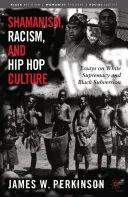
Shamanism, Racism, and Hip Hop Culture
 71
71

Shamanism, Racism, and Hip Hop Culture
Perkinson's analysis in "Shamanism, Racism, and Hip Hop Culture" offers a potent critique of American social structures, tracing the enduring legacy of white Christian dominance. The book's strength lies in its audacious connection between deeply entrenched historical power dynamics and the emergent cultural force of hip hop. The author compellingly argues that this hegemonic framework has historically constrained and continues to limit avenues for cultural struggle and authentic identity formation for marginalized communities. A particularly sharp observation concerns the way this hegemonic narrative has historically positioned Black cultural expressions, including hip hop, not as legitimate spiritual or artistic endeavors, but as symptoms of societal pathology. A limitation, however, is the sometimes dense theoretical framework, which can occasionally obscure the urgency of the lived experiences it seeks to illuminate. Perkinson's exploration of the "interweaving of white entitlement and black disenfranchisement" provides a crucial lens for understanding ongoing social stratification. It is a challenging but vital contribution to understanding American identity.
📝 Description
71
Published in 2005, James W. Perkinson's book links white Christian hegemony to American national identity.
James W. Perkinson's "Shamanism, Racism, and Hip Hop Culture" examines the five-hundred year history of white Christian dominance in America. The book argues that national identity is tied to ongoing white entitlement and the disenfranchisement of Black people. Perkinson connects these dynamics to cultural narratives and social change. He draws parallels between historical power structures and present-day social issues. The work was published in 2005, a time when scholars were increasingly examining hip hop's cultural influence and its relationship to historical oppression. The book engages with post-colonial theory and critiques of Western power.
While categorized under Witchcraft & Paganism, this book's esoteric context lies in its critique of dominant Western spiritual and political structures. Perkinson uses concepts often associated with shamanic worldview – direct experience, altered states, and the power of narrative – to deconstruct the foundations of systemic racism. It challenges the notion of a singular, normative spiritual or cultural truth, suggesting alternative frameworks for understanding power and identity that resonate with counter-cultural and indigenous spiritual traditions.
💡 Why Read This Book?
• Understand the "five hundred year history of white Christian hegemony" and its specific impact on American identity formation, a concept central to the book's thesis. • Grasp how "white entitlement and black disenfranchisement" operate as interlocking forces that shape cultural narratives and limit possibilities for social change, as explored in the book's core arguments. • Gain insight into the specific ways hip hop culture is analyzed within the context of historical power structures, moving beyond superficial interpretations to uncover deeper societal implications presented in the text.
⭐ Reader Reviews
Honest opinions from readers who have explored this book.
❓ Frequently Asked Questions
What is the central argument of "Shamanism, Racism, and Hip Hop Culture"?
The book's core argument is that American identity and history are fundamentally shaped by a 500-year legacy of white Christian hegemony, manifesting as white entitlement and Black disenfranchisement, which restricts other forms of cultural expression and struggle.
When was "Shamanism, Racism, and Hip Hop Culture" first published?
The book was first published on July 7, 2005.
Who is the author of "Shamanism, Racism, and Hip Hop Culture"?
The author is James W. Perkinson.
What academic fields does this book engage with?
The book engages with critical race theory, cultural studies, post-colonial theory, and analyses of power structures within American society.
Does the book offer solutions to the issues it raises?
While the book primarily focuses on historical analysis and critique, its aim is to illuminate the deep-seated nature of these issues, thereby implicitly encouraging readers to consider the systemic nature of the problems.
What does the book mean by 'white Christian hegemony'?
It refers to the historical dominance of white, Protestant Christian cultural norms, values, and power structures in shaping American society, institutions, and identity over centuries.
🔮 Key Themes & Symbolism
Hegemony and American Identity
The work critically examines the pervasive influence of white Christian hegemony over five centuries in America. It argues this dominance has fundamentally shaped national identity, fostering a dynamic of white entitlement that systematically disenfranchises Black communities. This hegemonic structure, Perkinson contends, acts as a powerful constraint on the development and recognition of alternative cultural expressions and struggles, embedding itself deeply within the fabric of American society and its historical narrative.
Race, Power, and Cultural Expression
A central focus is the intricate relationship between race, power, and cultural production, particularly within hip hop. The book analyzes how dominant power structures have historically marginalized and pathologized Black cultural forms, preventing their full recognition as legitimate expressions of spirituality, identity, or resistance. Perkinson explores how the historical interplay of entitlement and disenfranchisement dictates the terms under which such cultures are perceived and understood.
The Interweaving of Entitlement and Disenfranchisement
Perkinson introduces the concept of an ongoing "interweaving of white entitlement and black disenfranchisement" as a core mechanism of American social and historical formation. This dynamic is not merely a passive backdrop but an active force that shapes individual and collective identities, limits social mobility, and constrains the very possibility of cultural struggle outside prescribed boundaries. The work posits this as a foundational element of the American experience.
Shamanism as a Framework for Critique
While not a manual for shamanic practice, the book employs concepts often associated with shamanism—such as altered states, spiritual connection, and alternative worldviews—as a lens to critique dominant Western paradigms. It suggests that the imposition of hegemonic structures has suppressed or distorted indigenous and alternative spiritual understandings, impacting how society perceives and integrates diverse forms of consciousness and cultural expression.
💬 Memorable Quotes
Direct passages from the work, attributed to the author.
“The five hundred year history of white Christian hegemony that has so profoundly shaped American society.”
— This phrase captures the book's central thesis, framing American history not as a neutral unfolding of events, but as a deliberate construction rooted in the enduring dominance of a specific cultural and religious power structure.
“American identity and history are profoundly informed by an on-going interweaving of white entitlement and black disenfranchisement.”
— This interpretation highlights the core analytical framework Perkinson employs, suggesting that the very definition of what it means to be American is inextricably linked to a historical and ongoing power imbalance between white and Black communities.
“Constraints on other forms of cultural struggle.”
— This points to the societal limitations imposed by the dominant hegemonic forces, suggesting that the established power structures actively restrict or channel the ways in which marginalized groups can express dissent or develop their own cultural narratives.
“The work explores the idea that American identity and history are profoundly informed by an on-going interweaving of white entitlement and black disenfranchisement that constrains other forms of cultural struggle.”
— This comprehensive statement outlines the book's primary analytical approach, emphasizing the historical and ongoing nature of racial power dynamics and their restrictive impact on diverse cultural expressions in the United States.
💡 Key Ideas
Editorial paraphrase of the work's core concepts — not direct quotes.
Shamanism, Racism and Hip Hop Culture is a groundbreaking collection of essays...
This quote, from the original blurb, positions the work as a significant and novel exploration of the intersections between spirituality, racial dynamics, and contemporary urban culture, signaling its ambitious scope.
🌙 Esoteric Significance
Tradition
While not strictly adhering to a single lineage, Perkinson's work taps into critical frameworks that, in some esoteric traditions, examine power structures and their impact on consciousness. It shares a critical stance with Gnostic critiques of dominant societal "aeons" or systems of control and appeals to modern esoteric thought that seeks to deconstruct Western materialism and its oppressive social manifestations. The book’s approach suggests a need to reclaim or recognize suppressed spiritual or alternative ways of knowing that challenge hegemonic narratives.
Symbolism
The title itself, "Shamanism, Racism, and Hip Hop Culture," juxtaposes potent symbolic realms. "Shamanism" represents indigenous, earth-connected, and often altered states of consciousness, standing in contrast to the rigid, hierarchical structures of "white Christian hegemony." "Racism" symbolizes the systemic violence and dehumanization embedded in that hegemony. "Hip Hop Culture" emerges as a complex, often contested, modern expression of resistance, identity, and spirituality that arises from the conditions created by racism, seeking its own forms of transcendence and meaning.
Modern Relevance
Perkinson's analysis remains relevant for contemporary thinkers and practitioners in fields ranging from critical theory and ethnic studies to modern occultism and post-colonial spirituality. His framework for understanding how systemic power structures shape identity and cultural expression informs discussions on social justice, decolonization, and the spiritual dimensions of resistance. Thinkers exploring the intersection of power, identity, and liberation in the 21st century, particularly those interested in the cultural impact of historical oppression, find his work a crucial reference point.
👥 Who Should Read This Book
• Students of critical race theory and American cultural history seeking to understand the deep historical roots of racial inequality and their impact on identity. • Scholars and practitioners interested in the intersection of spirituality, culture, and social justice, particularly those examining how dominant narratives can suppress alternative forms of expression. • Readers engaged with hip hop culture who wish to explore its complex relationship with historical power dynamics and its role as a site of cultural struggle and meaning-making.
📜 Historical Context
Published in 2005, "Shamanism, Racism, and Hip Hop Culture" emerged within a vibrant academic landscape grappling with the cultural impact of hip hop and the persistent legacies of American racism. Perkinson's work engaged with critical race theory, post-colonial studies, and critiques of Western modernity that were prominent in intellectual circles. Contemporaries like bell hooks were exploring similar intersections of race, culture, and power in American life. The book arrived at a time when hip hop was increasingly recognized not just as music, but as a complex cultural phenomenon with deep historical roots. While specific reception events for this particular book are not widely documented, its thematic concerns aligned with ongoing scholarly debates about representation, identity, and systemic inequality, placing it within a broader intellectual current challenging established narratives of American exceptionalism.
📔 Journal Prompts
The "interweaving of white entitlement and black disenfranchisement" as a foundational American dynamic.
The role of "white Christian hegemony" in shaping national identity and cultural expression.
How the analysis of hip hop culture reveals underlying power structures.
The concept of "other forms of cultural struggle" being constrained by dominant narratives.
The connection between historical power structures and contemporary identity formation.
🗂️ Glossary
White Christian Hegemony
The enduring dominance of white, Protestant Christian cultural norms, values, and power structures in shaping American society, institutions, and identity over centuries.
White Entitlement
The unearned belief and expectation by white individuals or groups of inherent privileges, advantages, and preferential treatment based on their race within societal structures.
Black Disenfranchisement
The historical and ongoing systemic denial of political, social, economic, and cultural rights and power to Black people in America.
Cultural Struggle
The contestation and negotiation of meanings, identities, and power within and between different cultural groups, often in response to dominant societal norms or oppressive forces.
American Identity
The complex and often contested sense of self and belonging associated with being a citizen or resident of the United States, shaped by historical narratives, social structures, and cultural forces.
Shamanism
A range of indigenous spiritual or religious practices characterized by a practitioner's supposed ability to interact with a spirit world and mediate between it and the visible world.
Hip Hop Culture
A broad cultural movement that originated in the Bronx, New York, in the 1970s among African American and Latino youths, encompassing elements such as rapping, DJing, breakdancing, and graffiti art.