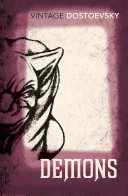
Demons
 78
78

Demons
Dostoevsky’s *Demons* is not a gentle read; it’s a brutal dissection of revolutionary fervor that feels disturbingly relevant decades after its 1872 publication. The novel’s strength lies in its chillingly accurate portrayal of how abstract ideologies can corrupt individuals, twisting intellect into a tool for destruction. The character of Pyotr Verkhovensky, a master manipulator orchestrating chaos, is particularly potent, embodying the dangers of unchecked revolutionary zeal. However, the sheer density of philosophical discourse and the sprawling cast can, at times, make the narrative feel unwieldy. A key passage demonstrating this is the satirical depiction of the literary salon, where intellectual posturing masks a profound moral emptiness. Despite its challenging structure, *Demons* remains a vital examination of political fanaticism.
Verdict: A disturbing yet essential exploration of ideological extremism.
📝 Description
78
Fyodor Dostoevsky's 1872 novel *Demons* dissects the destructive potential of radical ideology.
Published in 1872, *Demons* is a searing satire that examines the destructive consequences when abstract revolutionary theories collide with reality. Dostoevsky portrays a group of intellectuals whose ideological fervor leads to chaos, violence, and moral decay in 19th-century Russia. The narrative critiques nihilistic and socialist movements gaining traction at the time, showing how utopian ideals can devolve into fanaticism and brutality. The novel was partly inspired by the real-life murder of a student by a radical group. Dostoevsky scrutinizes the dangers of utopianism detached from humanistic values and the psychological drives that lead individuals toward extreme action. He questions the morality of revolutionary action that disregards individual conscience and societal order. The work grapples with complex moral and social issues, making it a dense, character-driven narrative.
This novel is suited for readers interested in the philosophical roots of political extremism and the human mind under ideological pressure. Students of Russian literature, political science, and psychology will find ample material for analysis. It appeals to those who appreciate narratives that confront difficult questions about society, revolution, and human nature.
While *Demons* is often read as a political and social critique, it also touches upon a certain spiritual or existential unease prevalent in the late 19th century. Dostoevsky’s exploration of radical ideologies can be seen as a response to a perceived loss of traditional moral anchors and the search for new, often destructive, belief systems. The novel’s depiction of individuals driven by abstract, almost demonic, ideas reflects a concern with the occultation of reason by unchecked will, a theme that resonates within certain philosophical traditions grappling with the darker aspects of human motivation and the allure of the absolute.
💡 Why Read This Book?
• Learn about the psychological drivers of radicalism by examining the descent of characters like Stavrogin and Verkhovensky, illustrating how abstract political theories (like Nihilism) can lead to violence. • Understand the socio-political climate of 1870s Russia, the specific fears surrounding revolutionary groups, and Dostoevsky's critique of contemporary reformers. • Gain insight into Dostoevsky's recurring themes of faith, doubt, and the human capacity for both great good and profound evil, particularly as explored through the Stavrogin character arc.
⭐ Reader Reviews
Honest opinions from readers who have explored this book.
❓ Frequently Asked Questions
What real-life event inspired Dostoevsky's novel *Demons*?
The novel was significantly inspired by the 1869 murder of student Ivan Ivanov by members of Sergei Nechayev's revolutionary cell, an event that shocked Russia and highlighted the dangers of radical political groups.
What is Nihilism as depicted in Dostoevsky's *Demons*?
In *Demons*, Nihilism represents a radical rejection of established social, religious, and moral values, advocating for revolutionary change and often embracing atheism and materialism, as seen in the characters' destructive actions.
Who are the main ideological factions Dostoevsky critiques in the book?
Dostoevsky primarily critiques the Nihilists, a revolutionary movement advocating for radical social and political reform, and various socialist factions whose abstract ideals he believed led to moral corruption and violence.
Is *Demons* a direct allegory for specific political events in 1870s Russia?
While inspired by real events like the Nechayev affair, *Demons* functions more as a broad satire and psychological exploration of the *tendencies* within revolutionary movements, rather than a direct allegory for a single event.
What is the significance of Nikolai Stavrogin in *Demons*?
Stavrogin is a central, enigmatic character whose moral ambiguity and spiritual emptiness represent the destructive potential of a life devoid of conviction or faith, influencing many around him.
How does Dostoevsky portray the role of women in *Demons*?
The female characters, such as Liza Tushina and Dasha Shatova, often become entangled in the destructive schemes of the men, highlighting their vulnerability within the patriarchal and politically charged society depicted.
🔮 Key Themes & Symbolism
Ideological Corruption
The novel starkly illustrates how abstract political doctrines, particularly Nihilism, can sever individuals from moral accountability. Characters adopt radical theories not through reasoned conviction but often as a fashionable pose or a means to exert power. This ideological infection distorts their perception of reality, justifying destructive actions in the name of future utopia. The work examines the psychological appeal of such ideologies, especially to those feeling alienated or seeking purpose, showing how they can lead to a complete breakdown of ethical boundaries and personal responsibility.
The Nature of Evil
Dostoevsky probes the origins and manifestations of evil, portraying it not just as external force but as an internal corruption stemming from spiritual emptiness and moral decay. Characters like Pyotr Verkhovensky embody a deliberate, almost artistic, cultivation of chaos and manipulation. Nikolai Stavrogin, conversely, represents a more passive, existential evil born from ennui and a lack of guiding principles. The novel suggests that evil can arise from a perversion of intellect or a vacuum of faith, leading individuals to inflict suffering without remorse.
Revolutionary Fanaticism
As a response to the burgeoning revolutionary movements of his time, Dostoevsky offers a scathing portrayal of fanaticism. He critiques the tendency of reformers to prioritize abstract political goals over human well-being, leading to terror and societal disintegration. The narrative demonstrates how revolutionary fervor can become a self-perpetuating cycle of violence, fueled by charismatic demagogues and the susceptibility of disillusioned youth. The work serves as a warning against utopian schemes that disregard the complexities of human nature and societal order.
Spiritual Void
A central concern in *Demons* is the consequence of a society adrift from spiritual moorings. Dostoevsky laments the rise of atheism and materialism, arguing that the rejection of God leads to a moral vacuum where nihilistic ideas can flourish. Characters grapple with profound questions of faith, doubt, and the search for meaning in a world increasingly perceived as absurd. The novel implies that without a spiritual foundation, individuals are prone to destructive ideologies and existential despair, as exemplified by Stavrogin's ultimate fate.
💬 Memorable Quotes
Direct passages from the work, attributed to the author.
“We are all good-for-nothing, and we are all going to the dogs.”
— This bleak pronouncement captures the pervasive sense of despair and moral lassitude infecting many characters. It reflects a societal malaise where individuals feel adrift, lacking purpose or conviction, making them susceptible to destructive ideologies.
“I believe that the devil does not exist, but man has created him, he has created him in his own image and likeness.”
— This interpretation of the devil reflects a secularized view of evil, suggesting that humanity itself is the source of malevolence through its actions and internal corruption, rather than an external demonic force.
“The main thing is to have no fear.”
— This seemingly courageous statement is shown to be a dangerous maxim when adopted by revolutionaries. It encourages recklessness and the suppression of moral qualms, enabling terrible deeds in the pursuit of ideological goals.
💡 Key Ideas
Editorial paraphrase of the work's core concepts — not direct quotes.
The most important thing is to love your neighbor and not to love yourself.
This quote, though seemingly simple, points to Dostoevsky's enduring concern with Christian ethics and the antidote he proposes to the self-absorption and ideological fanaticism plaguing his characters.
We are all possessed.
This line captures the novel's title and central theme, suggesting that the characters are not merely acting out of free will but are consumed or 'possessed' by destructive ideas, political fanaticism, or spiritual emptiness.
🌙 Esoteric Significance
Tradition
While not strictly adhering to a single esoteric lineage, *Demons* speaks to Gnostic themes of spiritual corruption and the search for true knowledge amidst deception. The novel explores a world where the material and ideological obscure spiritual reality, a concept central to many mystical traditions. Dostoevsky's focus on the internal battle between faith and doubt, and the human capacity for self-destruction when divorced from a divine center, aligns with perennial philosophical inquiries into the nature of the soul and its fallen state.
Symbolism
The 'demons' themselves symbolize not only literal supernatural entities but also destructive ideologies, psychological obsessions, and spiritual emptiness that possess individuals and society. The recurring motif of fire, particularly the destructive arson, represents the uncontrolled fervor of revolutionary action and the burning away of traditional order, often leading to ruin. The character of Nikolai Stavrogin, with his enigmatic nature and moral void, serves as a symbol of the corrupted soul, attractive yet ultimately hollow, leading others to destruction.
Modern Relevance
Contemporary thinkers and groups concerned with the psychological roots of political extremism, cult dynamics, and the impact of ideological narratives continue to draw from *Demons*. Its analysis of how charismatic figures manipulate followers and how abstract theories can justify violence remains acutely relevant. It is often cited in discussions of totalitarianism, psychological warfare, and the enduring human struggle against nihilism and spiritual decay in secularized societies.
👥 Who Should Read This Book
• Students of political philosophy and history seeking to understand the psychological underpinnings of revolutionary movements and ideological fanaticism. • Readers interested in comparative literature and the intellectual currents of 19th-century Russia, particularly the clash between traditional values and radical ideas. • Individuals exploring themes of existentialism, morality, and the nature of good and evil in literature, who appreciate complex character studies and challenging philosophical inquiry.
📜 Historical Context
Fyodor Dostoevsky's *Demons*, published in 1872, emerged from a Russia grappling with rapid intellectual and social change. The preceding decades saw the rise of Westernizing ideas and revolutionary sentiments, most notably Nihilism, which rejected traditional authority and values. Dostoevsky, deeply conservative and Orthodox Christian, viewed these movements with alarm. The novel was spurred by the 1869 murder of student Ivan Ivanov by members of Sergei Nechayev's radical organization, the People's Retribution. Nechayev, a notorious revolutionary, served as a model for the character Pyotr Verkhovensky. Dostoevsky's work served as a potent critique against the perceived dangers of radicalism, contrasting with more optimistic portrayals of social change found in works by contemporaries like Ivan Turgenev. The novel's reception was controversial, with some praising its prophetic insight and others condemning its perceived reactionary stance.
📔 Journal Prompts
The pervasive sense of nihilism embodied by Stavrogin.
Pyotr Verkhovensky's methods of manipulation and control.
The symbolism of the 'possessed' state within the narrative.
The consequences of abstract ideology detached from human consequence.
The spiritual void explored through the characters' lack of faith.
🗂️ Glossary
Nihilism
A radical philosophical and political movement originating in Russia in the mid-19th century, characterized by the rejection of all religious and moral principles, and the belief that the existing social structure is baseless and must be destroyed.
Radical Reformers
Individuals advocating for fundamental, often revolutionary, changes to the existing social, political, or economic structures, as opposed to incremental or gradual reform.
The Possessed
An alternative title for *Demons*, referring to the state of characters being overwhelmed or controlled by destructive ideas, fanaticism, or spiritual emptiness.
Utopianism
The belief in or pursuit of a state of perfection, often applied to political or social systems, which Dostoevsky critiques as potentially dangerous when pursued without regard for human nature.
Intellectualism
In the context of the novel, often refers to abstract, theoretical reasoning that becomes detached from practical morality and human empathy, leading to destructive outcomes.
Fanaticism
Unreasonable enthusiasm or excessive zeal, especially for an extreme religious or political cause, often leading to intolerance and extremism.
Atheism
Disbelief or lack of belief in the existence of God or gods, a concept prevalent among the nihilistic characters in the novel.