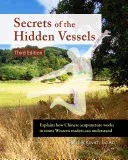
Secrets of the Hidden Vessels
 75
75

Secrets of the Hidden Vessels
Fletcher Kovich’s *Secrets of the Hidden Vessels* attempts a laudable goal: to render the notoriously complex Huangdi Neijing accessible. Kovich succeeds admirably in dissecting the Neijing’s layered meanings, distinguishing between its factual, metaphorical, and seemingly contradictory elements. His explanation of Qi and Yin/Yang, presented without resorting to Western medical analogies, is particularly clear. However, the book occasionally falters in its structure, with some transitions between conceptual explanations feeling abrupt. A passage detailing the Neijing's understanding of the Five Shu Points, for instance, while informative, could benefit from a more explicit link to its practical application as described in later TCM texts. Despite this, Kovich provides a valuable lens through which to view this foundational text. It offers a lucid, scholarly entry point for those intimidated by the original Chinese medical canon.
📝 Description
75
Fletcher Kovich's 2018 book demystifies the Huangdi Neijing, a foundational text of Chinese medicine.
Secrets of the Hidden Vessels, published in 2018, analyzes the Huangdi Neijing, a core text in traditional Chinese medicine. Fletcher Kovich addresses the complexities within the Neijing, which blends observation, metaphor, and sometimes paradoxical ideas. This book helps readers, particularly those unfamiliar with classical Chinese thought, understand concepts like qi, yin, and yang.
The Neijing, attributed to the Warring States or Han Dynasty periods, synthesized earlier medical knowledge. It presented a unified view of the body's connection to the cosmos. Kovich's work examines how this text systematized medical theory, moving beyond fragmented healing practices. The book is aimed at students and practitioners of traditional Chinese medicine seeking a deeper grasp of its theoretical basis. It also interests historians of medicine, scholars of ancient philosophy, and those studying comparative medical systems.
The Huangdi Neijing is a central document in the esoteric tradition of Chinese medicine, viewed not just as a medical manual but as a cosmological treatise. Its concepts of qi, meridians, and the balance of yin and yang are integral to Taoist philosophy and practices aimed at aligning human health with universal principles. Understanding the Neijing is often seen as a path to comprehending a holistic worldview that connects the body, mind, and spirit to the natural order.
💡 Why Read This Book?
• Gain clarity on the concept of Qi, understanding its physiological and energetic roles as elucidated in the Huangdi Neijing, moving beyond simplistic Western interpretations. • Comprehend the dynamic interplay of Yin and Yang as presented in the Neijing, appreciating their application in health and disease according to ancient Chinese medical philosophy. • Decode the metaphorical language within the Neijing, learning to differentiate between literal and symbolic meanings to better grasp its core theories, as explored in Kovich's analysis.
⭐ Reader Reviews
Honest opinions from readers who have explored this book.
❓ Frequently Asked Questions
What is the primary text discussed in Secrets of the Hidden Vessels?
The primary text is the Huangdi Neijing, also known as the Yellow Emperor's Inner Canon. This ancient Chinese medical work, often dated to the Han Dynasty, forms the theoretical foundation for much of traditional Chinese medicine and acupuncture.
Why is the Huangdi Neijing difficult to understand?
The Neijing is challenging due to its blend of empirical facts, metaphorical language, and seemingly contradictory theories. Its concepts can also be difficult for Western readers to grasp without proper contextualization.
What is Qi according to the Neijing and Kovich's interpretation?
Qi, as explored in the book, is understood as vital energy or life force that circulates within the body. Its balance and flow are crucial for health, with imbalances leading to illness.
What role do Yin and Yang play in the Neijing's medical system?
Yin and Yang represent fundamental, complementary forces. Their dynamic balance within the body is essential for maintaining health, according to the Neijing's philosophy, and disharmony leads to disease.
Who is Fletcher Kovich?
Fletcher Kovich is the author of Secrets of the Hidden Vessels, published in 2018. He is presented as an expert who guides readers through complex ancient Chinese medical texts.
What is the significance of the Five Phases in traditional Chinese medicine?
The Five Phases (Wu Xing) provide a framework for understanding the relationships and interactions between different elements in nature and the body. This concept, discussed in the Neijing, helps categorize phenomena and their influences on health.
🔮 Key Themes & Symbolism
The Huangdi Neijing Unveiled
This section dissects the foundational text of Chinese medicine, the Huangdi Neijing. Kovich addresses the text's composite nature, acknowledging its empirical, metaphorical, and often paradoxical elements. He argues that a direct, literal interpretation is insufficient, necessitating an understanding of its underlying philosophical and cosmological framework. The work focuses on making these ancient scripts comprehensible, particularly for those unfamiliar with traditional Chinese medical concepts, bridging the gap between ancient wisdom and modern comprehension.
Qi: The Body's Vital Energy
Central to the Neijing's medical system is the concept of Qi, often translated as vital energy or life force. Kovich explains Qi not merely as a biological function but as a pervasive energetic principle that animates all living things. The book explores how Qi circulates through specific pathways (meridians) within the body, influencing physiological processes and overall vitality. Understanding Qi's movement, balance, and potential blockages is presented as fundamental to comprehending health and disease from a traditional Chinese medical perspective.
Yin and Yang: Cosmic Duality in Health
The principle of Yin and Yang, a core part of Taoist philosophy and traditional Chinese medicine, is thoroughly examined. Kovich illustrates how these complementary, opposing forces are not static but in constant flux, governing all phenomena. Within the body, their balance is crucial for health; an excess or deficiency of either leads to illness. The book elucidates how diagnostic and therapeutic strategies in TCM are rooted in restoring this delicate equilibrium between Yin and Yang.
Holistic Medicine and Its Roots
Secrets of the Hidden Vessels emphasizes the holistic approach inherent in the Neijing. It presents a view of the human body not in isolation but as intrinsically connected to the environment, emotions, and the wider cosmos. Disease is understood as a result of disharmony within this interconnected system. Kovich explores how this ancient text laid the groundwork for understanding disease etiology and developing treatment modalities that address the whole person, rather than isolated symptoms.
💬 Memorable Quotes
Direct passages from the work, attributed to the author.
“The Neijing contains fact, metaphor, and contradiction.”
— This highlights Kovich's central thesis regarding the text's complexity. It suggests that understanding the Neijing requires discerning which parts are literal observations, which are symbolic representations, and how apparent conflicts can be resolved through deeper philosophical context.
“Western readers often struggle with Chinese medicine concepts.”
— This observation underscores the book's purpose: to act as a bridge. Kovich acknowledges the cultural and linguistic barriers that can impede comprehension of traditional Chinese medical thought for those from different intellectual traditions.
“Balance between Yin and Yang is key to well-being.”
— This concisely captures the essence of the Yin-Yang theory as applied to health. It implies that maintaining a dynamic equilibrium of these forces is paramount for preventing illness and promoting vitality.
“The Neijing is the foundation of Chinese acupuncture.”
— This statement establishes the historical and theoretical importance of the Neijing. It asserts that the principles and theories laid out in this ancient text are directly responsible for the development and practice of acupuncture.
💡 Key Ideas
Editorial paraphrase of the work's core concepts — not direct quotes.
Qi is the fundamental animating force.
This paraphrased concept points to the vital role of Qi in the Neijing. It signifies that this energetic substance is considered the primary element responsible for life and its processes within the body.
🌙 Esoteric Significance
Tradition
While rooted in the practical medical traditions of ancient China, the Huangdi Neijing contains significant esoteric and philosophical underpinnings that align with Taoist principles. Its emphasis on Qi, the energetic body, and the interconnectedness of humanity with the cosmos places it within a lineage concerned with cultivating vital energy and achieving harmony with natural laws. This perspective shares common ground with other esoteric traditions that explore subtle energies and universal forces, though its specific systematization is distinctly Chinese.
Symbolism
Key symbols in the Neijing include Qi, the vital energy that animates all life, often visualized as flowing currents. Yin and Yang represent the fundamental duality of existence – dark/light, passive/active, feminine/masculine – whose balance is crucial for health. The Five Phases (Wood, Fire, Earth, Metal, Water) provide a symbolic framework for understanding the cyclical interactions and transformations within the body and its environment, linking physiological processes to natural phenomena.
Modern Relevance
Contemporary practices in acupuncture, herbal medicine, and Qigong continue to draw directly from the principles articulated in the Neijing. Modern thinkers in fields like integral health and transpersonal psychology also find resonance in its holistic view of the human being. The text's exploration of energetic systems and mind-body connections remains relevant for those seeking alternative or complementary approaches to wellness and self-cultivation.
👥 Who Should Read This Book
• Students of Traditional Chinese Medicine seeking to understand the theoretical bedrock of their practice beyond symptom-based approaches. • Scholars of ancient philosophy and comparative religion interested in the cosmological and metaphysical underpinnings of non-Western medical systems. • Health practitioners and enthusiasts looking to explore holistic models of health that emphasize energetic balance and the interconnectedness of mind, body, and environment.
📜 Historical Context
Fletcher Kovich's *Secrets of the Hidden Vessels* engages with the Huangdi Neijing, a text whose compilation is often placed between the Warring States period (475–221 BCE) and the Han Dynasty (206 BCE – 220 CE). This era was marked by profound philosophical developments in China, including the consolidation of Confucianism and the flourishing of Taoist thought, both of which subtly influenced medical theory. The Neijing represented a significant departure from earlier, more empirical or shamanistic healing practices, offering a sophisticated, holistic, and cosmological framework for understanding the body and disease. It articulated concepts like Qi, Yin-Yang, and the Five Phases, which became foundational to traditional Chinese medicine. The work’s influence was immense, shaping medical education and practice for millennia, and it was often contrasted with the more humoral theories prevalent in ancient Greek medicine, which developed independently.
📔 Journal Prompts
The concept of Qi as presented in the Neijing.
The dynamic relationship between Yin and Yang in one's daily life.
How the Five Phases manifest in personal experiences or observations.
The Neijing's view on the connection between emotions and physical health.
Interpreting metaphorical language within ancient medical texts.
🗂️ Glossary
Huangdi Neijing
The Yellow Emperor's Inner Canon, an ancient Chinese medical text considered foundational to traditional Chinese medicine and acupuncture, compiled likely during the Han Dynasty.
Qi (Chi)
Vital energy or life force that circulates within the body, animating all physiological and spiritual functions. Its balance is essential for health.
Yin and Yang
The fundamental principle of duality and complementary opposites that govern the universe and the human body. Their dynamic balance is crucial for health.
Meridians
Channels or pathways within the body through which Qi circulates. Acupuncture points are located along these meridians.
Five Phases (Wu Xing)
A system categorizing phenomena into five elements (Wood, Fire, Earth, Metal, Water) to explain interactions and transformations in nature and the body.
Etiology
The study or theory of the causes or origins of disease, as understood within the framework of traditional Chinese medicine.
Holistic
An approach that views the body, mind, and spirit as an integrated whole, emphasizing the interconnectedness of all aspects of health and well-being.