Secret Societies and Subversive Movements
 74
74

Secret Societies and Subversive Movements
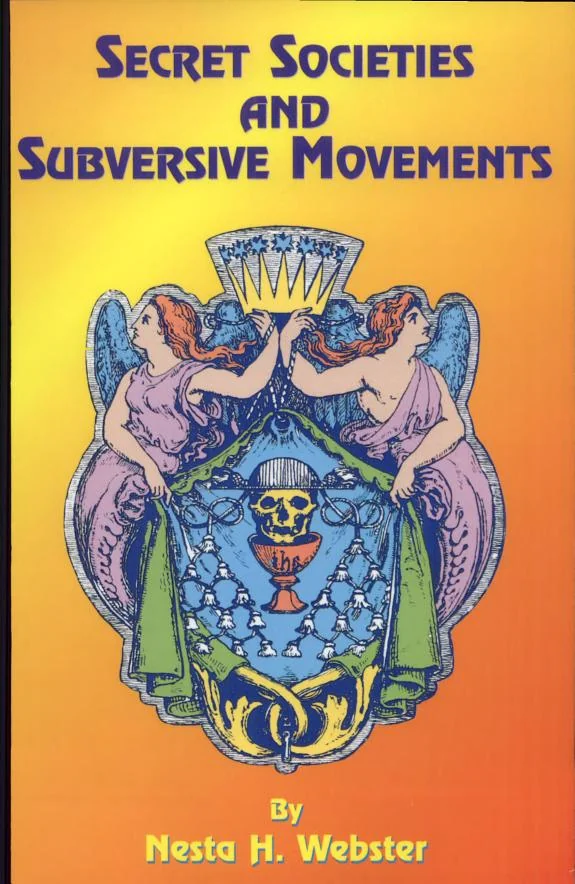
Nesta Webster's "Secret Societies and Subversive Movements" is a formidable, if polemical, survey of historical conspiracies. Her meticulousness in detailing the supposed machinations of groups like the Bavarian Illuminati, citing figures such as Barruel, is impressive. A notable strength lies in her extensive use of archival material and contemporary accounts to build her case, even if that case is undeniably biased. However, the work's primary limitation is its unwavering adherence to a singular thesis, often leading to interpretations that overemphasize secret society influence while neglecting broader socio-economic factors. For instance, Webster's assertion that the French Revolution was solely orchestrated by Freemasons and Illuminati, while a compelling narrative, overlooks the complex interplay of class struggle, Enlightenment ideals, and famine that historians now widely acknowledge. The book's value lies not in its definitive conclusions, but in its detailed exposition of a particular historical perspective and its engagement with the discourse of conspiracy in the early 20th century. It remains a significant document for understanding the history of conspiratorial thinking itself.
📝 Description
74
Nesta H. Webster's 1924 book examines clandestine organizations and their alleged roles in historical upheaval.
Nesta H. Webster's "Secret Societies and Subversive Movements," first published in 1924, scrutinizes the historical influence attributed to various secret organizations. The author meticulously traces the supposed lineage and impact of groups like the Bavarian Illuminati and Freemasonry, employing a critical perspective on their documented activities and ideologies. Webster's work emerged in the early 20th century, a time of significant European unrest and widespread public fascination with hidden power structures.
Written in the wake of World War I, the book engages with an intellectual tradition that linked secret societies to major revolutions, building on earlier works from the late 18th century. Webster uses historical records and contemporary scholarship to support her thesis on the coordinated intent of these groups to destabilize established orders. She analyzes their perceived symbology, internal structures, and methods of propagating revolutionary ideas through networked organizations, contrasting their alleged hidden agendas with their public presentations.
This book stands within a tradition of historical analysis that views secret societies as active agents of social and political change. It follows in the path of 18th-century writers who connected groups like Freemasonry to revolutionary events. Webster's approach, however, is rooted in the early 20th-century context, where anxieties about hidden forces were heightened by global conflict and social upheaval. It reflects a specific intellectual current concerned with the perceived coordination and ideological propagation of clandestine organizations.
💡 Why Read This Book?
• Understand the historical arguments linking Freemasonry and the Bavarian Illuminati to revolutionary periods, as detailed in Webster's analysis of Abbé Barruel's work. • Gain insight into early 20th-century anxieties regarding organized clandestine groups and their perceived influence on political events, particularly in the context of post-WWI Europe. • Examine Webster's methodology in tracing historical narratives of subversion, offering a case study in how secret societies were historically interpreted and debated.
⭐ Reader Reviews
Honest opinions from readers who have explored this book.
❓ Frequently Asked Questions
What historical periods does Nesta Webster focus on regarding secret societies?
Webster's "Secret Societies and Subversive Movements" extensively covers the period leading up to and including the French Revolution, with significant focus on the late 18th century and the activities of groups like the Bavarian Illuminati and Freemasonry. She also extends her analysis into subsequent eras of social and political unrest.
Who were Abbé Barruel and John Robison in relation to Webster's work?
Abbé Barruel and John Robison were 18th-century writers whose works, such as Barruel's 'Memoirs Illustrating the History of Jacobinism,' heavily influenced Webster. She frequently cites them as foundational authorities for her thesis that secret societies, particularly Freemasonry, were instrumental in orchestrating major revolutions.
Is 'Secret Societies and Subversive Movements' considered a primary or secondary source?
While Webster utilizes primary sources and contemporary accounts from the periods she discusses, her book itself functions as a secondary source. It is a historical analysis and interpretation of events and organizations, written from an early 20th-century perspective.
What is the central argument of Nesta Webster's book?
The central argument is that various secret societies, including Freemasonry and the Bavarian Illuminati, have systematically worked to undermine established governments and religions throughout history, culminating in major revolutionary movements.
Does the book discuss modern secret societies?
The book primarily focuses on historical secret societies up to the early 20th century. While it establishes a historical pattern, its detailed examination does not extend to the detailed analysis of contemporary organizations beyond the context of their historical roots.
What is the general tone of 'Secret Societies and Subversive Movements'?
The tone is generally critical and cautionary. Webster presents her findings with a sense of urgency, aiming to expose the perceived dangers and subversive potential of clandestine organizations to the existing social and political order.
🔮 Key Themes & Symbolism
The Illuminati Conspiracy
Webster dedicates substantial attention to the Bavarian Illuminati, tracing their founding by Adam Weishaupt in 1776. She presents them as a prime example of an organized group dedicated to overthrowing religious and monarchical authority. The book analyzes their alleged methods of infiltration, recruitment, and the propagation of revolutionary ideals, portraying them as a blueprint for subsequent subversive movements and a key element in the broader narrative of occult conspiracy.
Freemasonry's Role in Revolution
A significant portion of the book is devoted to Freemasonry, examining its doctrines, rituals, and historical trajectory. Webster argues that, despite its outward appearances, Freemasonry harbors a revolutionary agenda, often intertwined with or influenced by groups like the Illuminati. She scrutinizes historical accounts and testimonies, such as those of Barruel, to demonstrate the perceived link between Masonic lodges and various uprisings, particularly the French Revolution.
Historical Subversion Narratives
Webster explores the concept of historical subversion as a continuous process orchestrated by clandestine networks. She examines how revolutionary ideas are allegedly disseminated through secret channels, influencing public opinion and destabilizing established institutions over generations. The work functions as a historical case study in understanding how narratives of hidden influence have been constructed and propagated, particularly in periods of societal stress.
The Overthrow of Established Order
The overarching theme is the perceived systematic effort by secret societies to dismantle existing religious and political structures. Webster posits that these groups aim for a fundamental societal transformation, often through calculated chaos and the subversion of traditional values. This theme connects various historical events and organizations under a unified umbrella of deliberate, hidden opposition to the status quo.
💬 Memorable Quotes
Direct passages from the work, attributed to the author.
“When in 1827 he read them for the first time he was astonished to find that they showed 'a manifest tendency towards Freemasonry.'”
— This observation highlights a perceived revelation or confirmation of existing suspicions. The subject, having previously refused to examine Masonic texts, found their content aligned with his pre-existing negative conclusions, reinforcing his belief in their subversive nature.
“The book examines how learned men like Barruel and Robison presented evidence for subversive movements.”
— This interpretation focuses on Webster's reliance on and endorsement of specific historical figures. It highlights her use of their documented research and conclusions as foundational evidence for her own thesis regarding the influence of secret organizations.
💡 Key Ideas
Editorial paraphrase of the work's core concepts — not direct quotes.
Both Barruel and Robison, he now realized, were 'learned men, candid men, lovers of their country, who had a reverence for truth and religion.'
This passage underscores Webster's validation of the earlier critics of Freemasonry. By characterizing Barruel and Robison as honest, learned, and morally upright scholars, she lends significant weight to their arguments and implicitly positions her own work as continuing their tradition of critical inquiry.
They give the reasons for their opinions, they quote their authorities, naming the author and page, like honest people.
This quote emphasizes Webster's appreciation for the scholarly methodology of Barruel and Robison. She contrasts their approach—citing sources meticulously—with what she implies is the less transparent or more deceptive nature of the secret societies they critique.
The work explores the concept of secret societies aiming for a 'manifest tendency towards Freemasonry.'
This paraphrased concept suggests that various clandestine groups, when examined closely, reveal an underlying connection or alignment with the principles and structures attributed to Freemasonry, implying a shared lineage or objective.
🌙 Esoteric Significance
Tradition
Webster's work aligns with a tradition of anti-Masonic and anti-occult literature that gained prominence in the late 18th and 19th centuries. While not strictly an esoteric text itself, it engages deeply with organizations often considered esoteric (like Freemasonry and the Illuminati). It operates within a framework that views these groups not as spiritual paths but as political and social forces wielding hidden knowledge for subversive ends, a perspective often found in counter-revolutionary and conservative thought.
Symbolism
While Webster focuses on organizational structures and political aims, she touches upon the perceived symbolism used by these groups. Concepts like 'enlightenment' (as championed by the Illuminati) are reinterpreted not as intellectual or spiritual progress but as a code word for revolutionary subversion. The very act of secrecy and hidden ritual is presented as symbolic of their clandestine and potentially dangerous agenda, aiming to undermine public trust and established authority.
Modern Relevance
Contemporary thinkers and writers exploring the history of conspiracy theories, the evolution of political discourse, and the sociological impact of clandestine organizations often reference Webster's work. While her conclusions are debated, her detailed historical accounts and the specific narratives she promoted continue to inform discussions in fields ranging from political history to the study of fringe movements and the enduring power of conspiratorial thinking in the digital age.
👥 Who Should Read This Book
• Students of historical conspiracy theories: Readers interested in the origins and evolution of narratives surrounding secret societies and their alleged influence on major historical events. • Researchers of Freemasonry and the Illuminati: Individuals seeking a critical, albeit biased, historical perspective on these organizations from an early 20th-century viewpoint. • Comparative historians of social movements: Those examining how clandestine groups have been perceived and analyzed as agents of change or subversion across different eras.
📜 Historical Context
Nesta Webster's "Secret Societies and Subversive Movements" emerged in 1924, a period marked by profound geopolitical shifts following World War I and significant social unrest across Europe. The intellectual climate was rife with anxieties about the perceived influence of hidden forces on historical events, building upon the late 18th-century alarm raised by figures like Abbé Augustin Barruel and John Robison. These earlier scholars had linked Freemasonry and the Bavarian Illuminati to the French Revolution. Webster’s work engaged with this existing discourse, aiming to update and expand upon these theories by examining subsequent revolutionary movements and clandestine organizations. A competing school of thought, emphasizing socio-economic factors and popular agency, offered alternative explanations for revolutions, but Webster remained focused on the agency of secret societies. Her work was received with interest by those predisposed to conspiratorial interpretations but was often critiqued by mainstream historians for its lack of balanced perspective.
📔 Journal Prompts
Adam Weishaupt's founding of the Bavarian Illuminati in 1776 and its alleged aims.
The characterization of Barruel and Robison as honest authorities on secret societies.
The concept of 'occult conspiracy' as presented by Webster.
Freemasonry's perceived tendency towards revolutionary action.
Webster's interpretation of 'enlightenment' within the context of subversive movements.
🗂️ Glossary
Bavarian Illuminati
A secret society founded in Bavaria in 1776 by Adam Weishaupt. Webster portrays it as a highly organized group dedicated to overthrowing monarchies and established religions, aiming to replace them with a rationalist and secular order.
Freemasonry
A fraternal organization with origins in stonemason guilds. Webster critically examines its rituals and structure, arguing that despite its public face, it harbors subversive tendencies and has been historically linked to revolutionary activities.
Abbé Barruel
A French Jesuit priest and writer, known for his influential work 'Memoirs Illustrating the History of Jacobinism' (1797-98). Webster cites him extensively as a key authority proving the link between secret societies and the French Revolution.
John Robison
A Scottish physicist and inventor, who published 'Proofs of a Conspiracy' (1797) alleging a conspiracy by Freemasons and the Illuminati against European monarchies and religion. Webster regards his work as crucial evidence.
Subversive Movements
In Webster's context, these are organized efforts, often operating in secrecy, aimed at undermining or overthrowing established political, religious, or social orders. She posits that secret societies are primary engines of such movements.
Occult Conspiracy
The idea, central to Webster's thesis, that secret societies utilize hidden knowledge, esoteric symbols, and clandestine methods to manipulate events and achieve their goal of societal transformation or destruction.
Enlightenment
While historically referring to an 18th-century intellectual and philosophical movement, Webster reinterprets the term within the context of groups like the Illuminati, suggesting it was a euphemism for radical, anti-religious, and anti-monarchical aims.