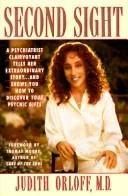
Second sight

 75
75

Second sight
Judith Orloff's "Second Sight" offers a compelling, if at times overly earnest, guide to developing one's intuitive faculties. Orloff, drawing from her background as a psychiatrist and her own experiences, structures the book with clear explanations and practical exercises. A notable strength is her integration of intuitive development with psychological well-being, particularly her emphasis on "intuitive empathy" as a distinct psychic channel. This nuanced approach distinguishes it from more purely metaphysical texts. However, the book occasionally leans into a tone that, while encouraging, can feel slightly prescriptive. For instance, the detailed descriptions of energy sensitivity might overwhelm readers new to such concepts, leading to potential self-diagnosis anxiety. A passage discussing the management of overwhelming empathic input by visualizing a protective shield is particularly illustrative of her practical, yet sometimes simplified, advice. Despite this, "Second Sight" remains a valuable resource for understanding the landscape of psychic perception.
📝 Description
75
Judith Orloff's 2008 book 'Second Sight' presents a structured approach to intuition and psychic abilities.
Published in 2008, Judith Orloff's 'Second Sight' examines intuition and psychic abilities, moving beyond anecdotes to offer a systematic way to understand and develop extrasensory perception. The book frames these abilities not as rare talents but as accessible human faculties. Orloff provides a framework for individuals to recognize and trust their inner knowing. This work is for anyone interested in the subtle energies affecting daily life and decisions. It suits beginners exploring psychic phenomena and those with existing sensitivities seeking deeper understanding. Professionals like therapists, artists, and healers will also find practical methods for applying heightened perception in their work.
Emerging in 2008, 'Second Sight' arrived during a time of increasing public interest in consciousness studies. Orloff's work builds on earlier explorations of psychic phenomena, aiming to demystify these abilities for a contemporary audience. The book connects with traditions that explore inner perception and subtle energies, making concepts more accessible in an era of growing online resources.
💡 Why Read This Book?
• You will learn to identify and cultivate your unique "psychic channels," such as clairvoyance and clairsentience, with specific exercises designed by Dr. Judith Orloff, a psychiatrist who integrates these concepts. • You will gain practical methods for managing empathic overload, a common challenge for sensitives, by learning Orloff's techniques for energetic grounding and boundary setting. • You will understand "intuitive empathy" as a distinct perceptual tool, as detailed in the book, allowing you to better interpret subtle energetic information from people and your surroundings.
⭐ Reader Reviews
Honest opinions from readers who have explored this book.
❓ Frequently Asked Questions
What is "intuitive empathy" as described by Judith Orloff in Second Sight?
Intuitive empathy, as explored in "Second Sight," is a heightened form of empathy where one perceives not just another's emotions but also their subtle energetic signatures and physical well-being, often experienced as gut feelings or intuitive knowing.
When was Judith Orloff's book 'Second Sight' first published?
Judith Orloff's "Second Sight" was first published in 2008, a period marked by increasing public interest in intuitive and psychic development.
Does 'Second Sight' explain how to develop clairvoyance?
Yes, "Second Sight" provides exercises and insights aimed at helping readers recognize and strengthen their clairvoyant abilities, which involve receiving intuitive information through visual impressions or inner knowing.
Are there practical exercises in 'Second Sight' for managing psychic sensitivity?
Absolutely. The book offers numerous practical techniques, including grounding exercises and methods for creating energetic boundaries, specifically designed to help individuals manage heightened psychic sensitivity and empathic input.
What are the main psychic channels discussed in 'Second Sight'?
The primary psychic channels discussed are intuitive empathy, clairvoyance (seeing), clairaudience (hearing), clairsentience (feeling), and precognition (knowing the future).
Is 'Second Sight' suitable for beginners in psychic development?
Yes, "Second Sight" is highly suitable for beginners. Orloff breaks down complex concepts into accessible language and offers step-by-step guidance for exploring and developing one's innate intuitive and psychic abilities.
🔮 Key Themes & Symbolism
Intuitive Empathy as Perception
Orloff posits intuitive empathy as a core psychic faculty, going beyond mere emotional mirroring. It involves sensing energetic imprints, physical states, and subtle cues that reveal deeper truths about individuals and situations. This theme reframes empathy not as a burden but as a sophisticated tool for understanding, allowing readers to interpret the energetic landscape around them with greater clarity and precision, moving beyond surface-level interactions to grasp underlying realities.
Developing Psychic Channels
The book systematically explores the major psychic channels: clairvoyance, clairaudience, clairsentience, and precognition. Orloff clarifies these abilities, presenting them as extensions of natural human perception that can be consciously cultivated. She provides actionable exercises, encouraging readers to identify their dominant channels and practice using them in daily life, thereby fostering a practical approach to expanding one's intuitive repertoire beyond conventional senses.
Holistic Psychic Well-being
A crucial aspect of "Second Sight" is its emphasis on integrating psychic development with overall health. Orloff, a psychiatrist, stresses the importance of grounding, self-care, and emotional balance to prevent burnout and manage the intensity of psychic sensitivity. This holistic perspective ensures that the cultivation of extrasensory abilities supports, rather than detracts from, mental, emotional, and physical well-being, making the journey sustainable and healthy.
Trusting Inner Knowing
The work champions the validation of one's inner voice and gut feelings. Orloff guides readers to recognize the subtle signals of intuition and to build confidence in their validity, even when they contradict external logic or opinions. This theme empowers individuals to rely on their innate wisdom for decision-making and personal growth, fostering self-reliance and a deeper connection to their authentic selves.
💬 Memorable Quotes
Direct passages from the work, attributed to the author.
“Intuitive empathy is not just feeling what others feel; it's sensing their energetic signature.”
— This highlights Orloff's core concept of intuitive empathy, distinguishing it from standard emotional mirroring. It suggests a deeper, energetic perception that allows one to understand a person's core essence and subtle states beyond immediate emotional expression.
“Grounding is essential to manage and direct psychic energy.”
— This interpretation underscores the practical necessity of grounding techniques discussed in the book. It frames grounding not as an optional add-on but as a fundamental requirement for safely and effectively harnessing one's psychic abilities without becoming overwhelmed.
“Our intuition speaks in subtle whispers; we must learn to listen.”
— This emphasizes the gentle and often easily missed nature of intuitive guidance. It calls for a practice of focused attention and inner quietude to discern these subtle inner messages from the constant noise of external stimuli and mental chatter.
“Clairvoyance can manifest as inner visions or a knowing sense of imagery.”
— This clarifies the nature of clairvoyance, expanding it beyond literal seeing. It suggests that this psychic channel can operate through internal mental imagery or a more conceptual, symbolic visual knowing, making it accessible to a wider range of experiences.
“Empaths must protect their energy to avoid psychic exhaustion.”
— This is a direct caution to highly sensitive individuals, stressing the need for energetic boundaries. It acknowledges the potential toll of absorbing others' energies and the importance of proactive self-preservation strategies outlined in the book.
🌙 Esoteric Significance
Tradition
Orloff's work can be seen as a contemporary adaptation of intuitive and psychic development practices found within broader esoteric traditions, particularly those influenced by Theosophy and modern psychological approaches to consciousness. While not strictly adhering to a single lineage like Hermeticism or Kabbalah, "Second Sight" draws on the universal esoteric principle that human consciousness possesses latent abilities beyond the five physical senses, aiming to systematize and validate these for a modern audience.
Symbolism
A key motif is the concept of "psychic channels" themselves – clairvoyance, clairaudience, clairsentience – which function as symbolic representations of expanded sensory perception, akin to the esoteric idea of subtle bodies or energetic centers. The book also implicitly uses the symbol of the "whisper" for intuition, contrasting it with the "shout" of the rational mind, thereby symbolizing the delicate and often overlooked nature of inner guidance that requires careful attention to perceive.
Modern Relevance
In contemporary spirituality and wellness, "Second Sight" remains highly relevant. Its concepts of intuitive empathy and managing empathic overload are frequently referenced by modern sensitives and energy healers. Orloff's approach informs current discussions on emotional intelligence, mindfulness, and the integration of intuition into professional and personal life, resonating with practices like somatic experiencing and trauma-informed care that acknowledge subtle energetic states.
👥 Who Should Read This Book
['• Individuals curious about developing their intuition and psychic abilities: Provides a structured, accessible introduction to concepts like clairvoyance and clairsentience with practical exercises.', "• Highly sensitive people (HSPs) and empaths: Offers crucial guidance on managing empathic overload and protecting one's energy, framed within a psychological context.", '• Professionals in healing, therapy, or creative fields: Presents intuitive perception as a valuable tool for enhancing insight, understanding clients, and fostering innovation.']
📜 Historical Context
Judith Orloff's "Second Sight," released in 2008, arrived as the early 21st century saw a continued surge in popular interest in the paranormal and consciousness studies, building on the foundations laid by the New Age movement of the preceding decades. While authors like Shirley MacLaine had brought psychic phenomena to mainstream attention in the late 20th century, Orloff's work, with her background as a practicing psychiatrist, offered a more integrated, psychologically informed perspective. This era also saw the burgeoning influence of the internet in disseminating esoteric knowledge, making concepts previously confined to niche circles more widely accessible. "Second Sight" positioned itself within a lineage of exploring extrasensory perception, but distinguished itself by bridging the gap between intuitive abilities and psychological well-being, offering practical tools for individuals navigating a complex modern world. It responded to a public appetite for understanding subjective experiences beyond the purely materialist framework, engaging with themes explored concurrently by various self-help and spiritual development authors.
📔 Journal Prompts
Reflect on your experiences with "intuitive empathy" and how it has guided your perceptions.
Identify your dominant "psychic channels" and describe an instance where you consciously used one.
Detail a time you ignored your intuition and the outcome; analyze what might have been different.
Explore the concept of "grounding" and list three ways you can implement it daily.
Consider a situation where you felt overwhelmed by external energies and describe your coping mechanisms.
🗂️ Glossary
Clairvoyance
The psychic ability to perceive visual images, symbols, or scenes that are not accessible through the physical eyes; often experienced as inner visions or mental pictures.
Clairaudience
The psychic ability to hear sounds, words, or messages that are not audible through the physical ears; this can range from inner voices to distinct auditory impressions.
Clairsentience
The psychic ability to feel or sense energetic information, emotions, physical sensations, or presences that are not detectable through ordinary physical touch or empathy.
Intuitive Empathy
A heightened form of empathy that combines emotional understanding with the ability to sense subtle energetic, physical, and emotional states of others, often perceived as gut feelings or direct knowing.
Psychic Channels
Distinct ways or modalities through which psychic or intuitive information is received, such as clairvoyance, clairaudience, clairsentience, and precognition.
Grounding
Techniques used to establish a stable connection with the Earth's energy, helping to manage heightened sensitivities, release excess energy, and maintain psychological and energetic balance.
Precognition
The psychic ability to perceive future events or information before they occur; often experienced as flashes of insight, dreams, or a strong sense of what is to come.
🔮 Readers Also Liked
Browse all →









More by Judith Orloff
All books →




More Free Occult Philosophy Books
View all →