Satan's Tarot
 62
62

Satan's Tarot



Isolde Whitaker, Sacred Texts Editor – Lori A. Davis's 'Satan's Tarot' is a revelation for serious students of esoteric lore. Davis navigates the complex and often demonized symbolism of infernal archetypes with scholarly precision and profound insight. This is not mere shock value; it is a deep dive into the philosophical underpinnings of rebellion, liberation, and the sacred quest for self-sovereignty. The work offers a radical reinterpretation of familiar Tarot imagery, imbuing each card with a potent, transformative energy. Its strength lies in its unflinching exploration of the shadow self and its potential for growth. Highly recommended for practitioners and scholars seeking to expand their understanding of Tarot beyond conventional frameworks and engage with its more challenging, yet ultimately empowering, dimensions.
📝 Description
62
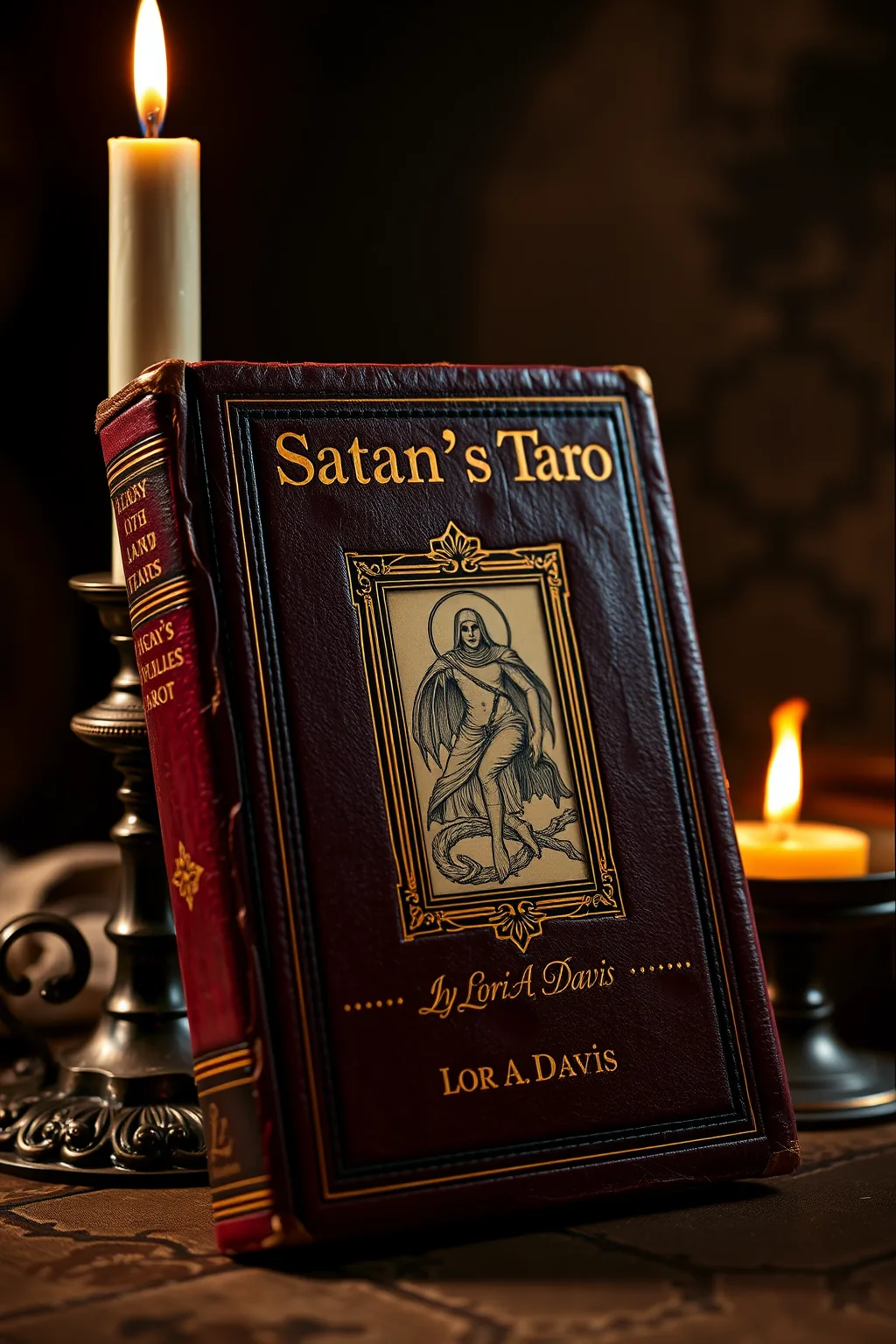
Lori A. Davis's 'Satan's Tarot' examines Satan as a symbol of liberation and self-knowledge.
Lori A. Davis's 'Satan's Tarot' examines the symbolism of Satan not as a deity of evil, but as an archetype for liberation and self-knowledge. The book looks at the infernal archetypes within tarot, suggesting they represent forces that encourage personal transformation. Davis interprets the imagery of Satanic figures as catalysts for confronting and integrating aspects of the self that are often suppressed. This perspective aims to guide readers toward a deeper understanding of personal power and spiritual evolution.
The work moves beyond simple divination, focusing on the philosophical concepts associated with the 'infernal.' It discusses how these concepts relate to challenging established beliefs and awakening inner potential. The book touches upon themes of destruction and rebirth, the acquisition of forbidden knowledge, and shadow work as an alchemical process. Ultimately, 'Satan's Tarot' seeks to provide a framework for the reader to engage with these forces for personal growth and a broader perception of the self and the universe.
This book engages with esoteric traditions that reframe figures traditionally seen as malevolent, such as Satan, as potent symbols within a psychological or spiritual framework. It aligns with occult philosophies that utilize the demonic or infernal not for worship, but as representations of repressed desires, forbidden knowledge, and the challenging aspects of the human psyche. Such interpretations often seek to use these potent, 'shadow' aspects as a means of personal empowerment and spiritual transformation, moving beyond conventional religious or moral interpretations.
💡 Why Read This Book?
Uncover the liberating power of the infernal in Lori A. Davis's 'Satan's Tarot.' This book offers a radical, esoteric perspective on divinatory wisdom, challenging readers to confront hidden aspects of themselves. Ideal for seasoned practitioners, occult scholars, and spiritual seekers yearning to integrate their shadow self and embrace authentic power. Discover a unique path to self-discovery through potent symbolism and profound philosophical insights.
⭐ Reader Reviews
Honest opinions from readers who have explored this book.
❓ Frequently Asked Questions
Is 'Satan's Tarot' suitable for beginners?
While the subject matter is advanced, the author provides clear explanations. Beginners with a strong interest in esoteric Tarot and a willingness to explore challenging concepts will find it accessible, though it is best approached with an open mind and a desire for deep study.
What is the primary philosophical stance of the book regarding Satan?
The book reframes Satan not as an entity of pure evil, but as an archetype of rebellion, liberation, knowledge, and the catalyst for confronting and integrating the shadow self, leading to profound personal growth and self-sovereignty.
Does this book come with a specific tarot deck?
No, 'Satan's Tarot' is a textual exploration of the symbolism and philosophy behind a particular interpretation of Tarot archetypes, designed to enhance understanding of any Rider-Waite-Smith based deck or similar traditions.
How does 'Satan's Tarot' differ from traditional Tarot interpretations?
It shifts the focus from purely benevolent archetypes to a deeper examination of the 'infernal' as forces of transformation, liberation, and the challenging but necessary process of confronting personal shadows and societal constraints.
What kind of esoteric traditions does this book draw upon?
The book draws upon Gnostic philosophies, occult traditions that explore the dualities of existence, and symbolic interpretations found within various Luciferian and left-hand path philosophies, emphasizing self-deification and forbidden knowledge.
🔮 Key Themes & Symbolism
The Archetype of Liberation
This theme looks at Satan as a potent symbol of rebellion against dogma and constraint. It explores how embracing the 'infernal' aspects can be a catalyst for breaking free from limiting beliefs and societal expectations. The text illuminates the journey of self-emancipation, emphasizing the courage required to question established norms and forge one's own spiritual path. It highlights the 'knowledge is power' aspect, where forbidden truths, once uncovered, become tools for personal empowerment and transformation, leading to a more authentic existence.
Shadow Work and Integration
Central to 'Satan's Tarot' is the concept of shadow work – the process of acknowledging, understanding, and integrating the parts of ourselves that we repress or deny. The book presents infernal imagery not as inherently evil, but as powerful metaphors for the primal drives, fears, and desires that reside within the unconscious. Through careful interpretation, readers are guided to confront these aspects, transforming them from sources of shame into reservoirs of strength and profound self-awareness. This integration is presented as essential for wholeness and spiritual evolution.
Forbidden Knowledge and Self-Sovereignty
This theme explores the pursuit of 'forbidden knowledge' as a sacred endeavor that leads to ultimate self-sovereignty. The book posits that true power lies not in external validation or adherence to restrictive doctrines, but in the internal discovery of one's own divine potential. The infernal figures are depicted as guardians of this hidden wisdom, offering keys to unlocking latent abilities and understanding the deeper, often uncomfortable, truths of existence. The ultimate aim is to cultivate a state of self-rule, where individuals are masters of their own destiny and consciousness.
💬 Memorable Quotes
Direct passages from the work, attributed to the author.
“In the shadow lies the seed of your truest fire.”
— Highlights the transformative potential of confronting one's dark or repressed aspects, suggesting they are the source of inner strength and passion.
“To know the darkness is to command the light.”
— Emphasizes the necessity of understanding and integrating all aspects of existence, including the challenging ones, to achieve true mastery and balance.
“Rebellion is the first step toward ascension.”
— Suggests that challenging limitations and established norms is a vital part of spiritual evolution and personal growth.
“The greatest freedom is found in embracing your own abyss.”
— Encourages the reader to explore their deepest inner self, including the uncomfortable or unknown, as the path to ultimate liberty.
💡 Key Ideas
Editorial paraphrase of the work's core concepts — not direct quotes.
The serpent whispers truths the angels fear to speak.
This quote contrasts the perceived innocence of angelic figures with the subversive wisdom offered by the serpent, symbolizing forbidden knowledge and liberation from imposed truths.
🌙 Esoteric Significance
Tradition
This work primarily draws from Gnostic philosophies, Luciferianism, and certain strands of Western Esotericism that emphasize self-deification and the pursuit of forbidden knowledge. It reinterprets the Luciferian archetype as a liberator and bringer of gnosis, contrasting with Abrahamic traditions. The book aligns with esoteric approaches that view duality not as absolute good versus evil, but as essential forces for balance and transformation, often found in Left-Hand Path traditions.
Symbolism
The symbolism is deeply rooted in infernal archetypes. Satan represents the primal urge for freedom, the quest for knowledge, and the confrontation with the shadow self. Cards often feature imagery of serpents, flames, and broken chains, signifying liberation, dangerous knowledge, and the destruction of limitations. The imagery challenges conventional morality, urging the reader to see these 'dark' symbols as potent forces for personal evolution and the attainment of self-sovereignty.
Modern Relevance
In an age of increasing societal control and information saturation, 'Satan's Tarot' offers a potent antidote by championing critical thinking, individual autonomy, and the courage to explore one's inner landscape without fear. Its emphasis on shadow integration appeals to contemporary psychological practices. The book provides a framework for those seeking to deconstruct limiting belief systems and reclaim personal power, offering a radical path toward authenticity and spiritual liberation in a complex world.
👥 Who Should Read This Book
This book is essential for advanced Tarot practitioners and occult scholars seeking to deepen their understanding beyond conventional interpretations. It is highly recommended for seekers of forbidden knowledge and those exploring Gnostic or Luciferian philosophies. Individuals committed to rigorous shadow work and the integration of their primal self will find immense value. While beginners with a strong, open-minded interest in esoteric symbolism may find it challenging yet rewarding, it is primarily aimed at those already familiar with the broader field of occult studies and divinatory arts.
📜 Historical Context
The emergence of books like 'Satan's Tarot' can be traced to periods of significant intellectual and spiritual upheaval, particularly within the occult revival movements of the late 19th and 20th centuries, and continuing into contemporary esoteric thought. These eras saw a renewed interest in challenging traditional religious and societal norms, seeking alternative pathways to spiritual understanding. The reinterpretation of figures like Satan moved beyond simplistic demonology, drawing inspiration from Gnostic traditions that viewed the 'demiurge' as a flawed creator and figures like Lucifer as bringers of light and gnosis. This book taps into a lineage of esoteric thought that seeks to reclaim and re-contextualize symbols often deemed taboo, viewing them as powerful keys to unlocking psychological and spiritual potential, aligning with the broader counter-cultural and individualistic currents in Western esotericism.
📔 Journal Prompts
Reflect on a personal belief or societal norm you have blindly accepted. How might challenging it lead to liberation?
Identify a 'shadow' aspect of yourself that you tend to suppress. How could integrating this aspect empower you?
Consider the concept of 'forbidden knowledge.' What truths do you feel are being withheld from you or society, and why?
Visualize the 'serpent' archetype in your own life. What temptations, wisdom, or transformative potential does it represent?
How can embracing your inner 'abyss' lead to a greater sense of freedom and self-sovereignty?
🗂️ Glossary
Gnosis
In esoteric contexts, particularly Gnosticism, gnosis refers to a direct, intuitive, and salvific knowledge of spiritual truths, often revealed through mystical experience rather than empirical reasoning or dogma.
Shadow Self
In psychology and esotericism, the shadow self represents the unconscious aspects of the personality that the conscious ego does not identify in itself, encompassing repressed desires, fears, and primal instincts.
Self-Sovereignty
The state of complete autonomy and self-governance, where an individual is the ultimate authority over their own thoughts, actions, and destiny, free from external control or undue influence.
Archetype
A universal, archaic pattern and image that derives, together with its accompanying emotions, from the collective unconscious and is the psychic counterpart of an inherited structure, present in all humans.
Left-Hand Path
A broad term in esoteric traditions referring to spiritual paths that emphasize individualism, self-deification, and often the embrace of taboo or unconventional practices, in contrast to more communal or ascetic Right-Hand Path traditions.
This book appears in 3 collections
🔮 Readers Also Liked
Browse all →








From the “Tarot” Collection
View all →







More Free Divination & Tarot Books
View all →