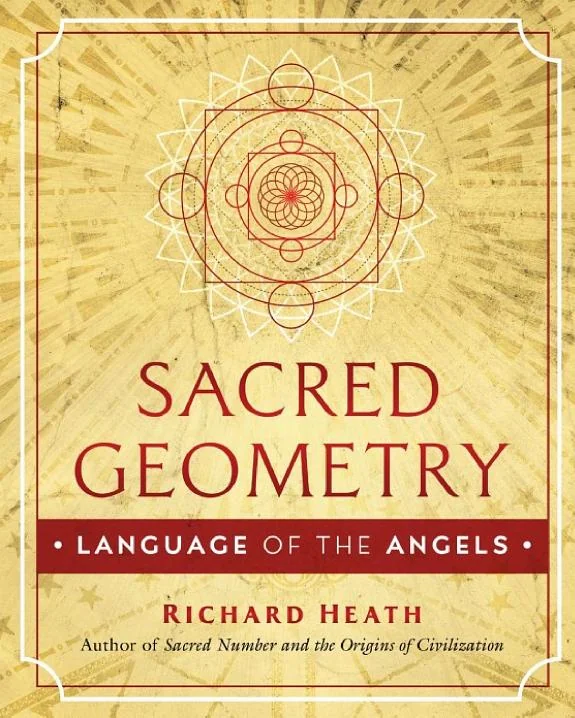
Sacred Geometry: Language of the Angels
 81
81

Sacred Geometry: Language of the Angels
Heath's *Sacred Geometry: Language of the Angels* presents a bold thesis: that the astonishing precision of ancient monuments stems from angelic guidance. The author's meticulous examination of sites like Carnac and the Great Pyramid, detailing specific ratios and alignments, offers a compelling argument for a non-human intelligence at play. A particular strength lies in connecting seemingly disparate sites through a shared mathematical language. However, the reliance on interpreting ancient structures as direct transmissions can feel speculative at times, with the "angelic" intermediary often remaining an unprovable postulate. The chapter discussing the Kaaba, for instance, attempts to fit its geometry into the broader thesis with mixed success. While not always convincing in its core premise, the book is a valuable exploration of the mathematical underpinnings of sacred architecture. It serves as a detailed catalog of geometric phenomena in ancient sites, prompting further investigation regardless of one's belief in angelic involvement.
📝 Description
81
Richard Heath's 2020 book argues that megalithic sites reveal angelic geometry gifted to early humans.
Richard Heath's *Sacred Geometry: Language of the Angels* proposes that the sophisticated mathematical and geometric principles found in ancient megalithic structures were not human creations, but rather transmissions from angelic orders. Heath calls this "number science" a gift to early humans, intended to spur conscious evolution. He examines sites such as Carnac, Stonehenge, the Great Pyramid, and the Hagia Sophia, looking to decipher this celestial blueprint. The book is written for students of esoteric traditions, archaeoastronomy, and comparative religion. It will appeal to those interested in the connections between mathematics, spirituality, and ancient history, particularly those who question standard explanations for megalithic construction and seek a framework that links spiritual elements with physical evidence. Readers curious about the potential influence of non-human intelligence on human development will also find this work relevant.
The book appeared in 2020, a time of ongoing interest in ancient mysteries and esoteric philosophies. Heath's work follows earlier explorations of ancient sites' mathematical precision, like those by Alexander Thom, but adds a distinct angelic or spiritual element. This approach differs from archaeological or anthropological interpretations that emphasize only human ingenuity and societal progress. The book engages with the history of sacred geometry, a subject that has fascinated thinkers from Plato to Renaissance alchemists.
This book enters the tradition of interpreting ancient monumental architecture through a spiritual or occult lens. It engages with concepts of sacred geometry, a field that seeks to understand the divine or cosmic order through mathematical principles and forms. Heath's unique contribution is the direct attribution of this knowledge to angelic beings, framing it as a deliberate impartation for human development. This perspective connects with esoteric ideas about hidden knowledge, non-human intelligence, and the spiritual purpose behind ancient human achievements, contrasting with purely materialist or historical explanations.
💡 Why Read This Book?
• Gain insight into how ancient megalithic structures like Stonehenge may reflect a sophisticated "number science," potentially transmitted from non-human sources, as explored in the book's analysis of British Isles sites. • Understand the proposed angelic transmission of megalithic science to early humans, a concept Heath links to fostering conscious development, as detailed in his examination of sites like the Great Pyramid. • Discover how geometric principles and numerical ratios found in monuments from Carnac to the Kaaba are interpreted as a celestial language for human evolution, offering a unique perspective on ancient architectural achievements.
⭐ Reader Reviews
Honest opinions from readers who have explored this book.
❓ Frequently Asked Questions
What is the core argument of Richard Heath's *Sacred Geometry: Language of the Angels*?
The book argues that ancient sacred monuments worldwide contain "number science" transmitted by angelic orders to early humans, intended to accelerate conscious development and reveal cosmic principles.
Which ancient sites does the book analyze for evidence of angelic geometry?
Heath examines a wide range of sites, including Carnac in Brittany, the Great Pyramid in Egypt, early Christian pavements, the Hagia Sophia in Istanbul, Stonehenge in England, and the Kaaba in Mecca.
When was *Sacred Geometry: Language of the Angels* first published?
The book was first published on October 20, 2020.
What does Heath mean by "number science" in the context of sacred geometry?
He refers to the sophisticated mathematical principles, ratios, and geometric configurations found in ancient structures, which he posits are evidence of a divine or angelic intelligence guiding their design.
How does the book connect angelic orders to human consciousness?
It proposes that the transmission of this sacred geometry was a deliberate act by angelic beings to provide humanity with the knowledge necessary for spiritual and conscious evolution.
Is this book suitable for beginners in esoteric studies?
While accessible, the book delves into complex concepts of geometry and ancient history. It is best suited for those with a foundational interest in esoteric traditions and a willingness to engage with detailed analysis.
🔮 Key Themes & Symbolism
Angelic Transmission of Knowledge
The central thesis posits that angelic orders actively transmitted sophisticated mathematical and geometric knowledge, termed "number science," to early human civilizations. This transmission is presented not merely as accidental discovery but as a deliberate act to guide human evolution. Heath interprets the precise alignments and proportional systems found in megalithic sites as direct evidence of this celestial impartation, suggesting a divinely orchestrated blueprint for consciousness development.
Sacred Geometry in Monuments
Heath meticulously analyzes numerous ancient structures, including the Great Pyramid, Stonehenge, and the Hagia Sophia, to demonstrate the pervasive presence of specific geometric forms and numerical ratios. These are presented as more than mere architectural aesthetics; they are seen as embodiments of cosmic laws and divine intelligence. The work decodes the symbolic language embedded within the very fabric of these sites, revealing a universal mathematical order.
Megalithic Science and Consciousness
The book frames the construction of megalithic sites as a form of "megalithic science" directly linked to the advancement of human consciousness. By studying and implementing the geometric principles gifted by angels, early humans were supposedly propelled along a path of spiritual and intellectual growth. Understanding this ancient science, Heath suggests, can reawaken dormant potentials within modern individuals.
The Kaaba's Geometric Significance
Heath explores the geometric underpinnings of the Kaaba in Mecca, interpreting its form and placement within the broader framework of angelic science. This analysis seeks to demonstrate how even sites from different cultural and religious traditions can be understood through the lens of a universal sacred geometry, suggesting a unifying celestial origin for profound architectural endeavors across disparate societies.
💬 Memorable Quotes
Direct passages from the work, attributed to the author.
“The number science found in ancient sacred monuments reflects wisdom transmitted from the angelic orders.”
— This core assertion frames the book's argument: that the mathematical precision observed in sites like Stonehenge is not accidental but a deliberate impartation of knowledge from celestial beings.
“The work decodes the angelic science hidden in a wide range of monuments.”
— This interpretation emphasizes the analytical approach Heath takes, suggesting his book serves as a guide to understanding the hidden divine mathematics present in ancient architectural wonders globally.
“Early Christian pavements and the Hagia Sophia reveal this celestial blueprint.”
— This interpretation points to specific examples where Heath finds evidence of the 'angelic science,' extending the analysis beyond purely prehistoric megaliths to later historical structures.
“The number science behind ancient structures is explored.”
— A concise summary of the book's focus, indicating that the mathematical principles and geometric designs of ancient sites are the primary subject of investigation.
💡 Key Ideas
Editorial paraphrase of the work's core concepts — not direct quotes.
Angels transmitted megalithic science to early humans to further our conscious development.
This paraphrased concept highlights the book's central thesis regarding the purpose behind the alleged angelic influence on ancient construction projects – the elevation of human awareness.
🌙 Esoteric Significance
Tradition
Heath's work fits within the broader Western Esoteric tradition, particularly drawing from Hermeticism and Neoplatonism, which emphasize the correspondence between the macrocosm (universe) and the microcosm (human being) through mathematical and geometric principles. It also aligns with Theosophical ideas concerning divine hierarchies and their interaction with humanity. The concept of angels as bearers of knowledge echoes ancient Gnostic traditions and the Kabbalistic idea of divine emanations, presenting a unified, albeit uniquely interpreted, cosmology.
Symbolism
Key symbols include the circle, representing divine unity and wholeness; the square, symbolizing the material world and earthly stability; and various platonic solids, which are seen as fundamental building blocks of creation. The number science itself, particularly harmonic ratios like the Golden Ratio (Phi) and simple integer relationships, functions as a primary symbolic language, representing divine order and cosmic harmony made manifest in stone.
Modern Relevance
Contemporary practitioners of sacred geometry, geomancy, and certain New Age spiritual movements find Heath's work relevant. Thinkers exploring consciousness studies and alternative histories often reference such analyses of ancient sites. His ideas resonate with those seeking to reconnect with perceived lost wisdom traditions and explore the potential for non-human intelligence influencing human development, feeding into ongoing discussions about ancient technologies and spirituality.
👥 Who Should Read This Book
• Students of comparative religion and archaeoastronomy seeking non-conventional explanations for ancient megalithic sites. • Practitioners of esoteric traditions interested in the mathematical and geometric underpinnings of sacred architecture worldwide. • Researchers into consciousness studies and ancient wisdom who explore the potential for divine or non-human intelligence influencing human development.
📜 Historical Context
Published in 2020, Richard Heath's work arrives in an era where interest in archaeoastronomy and esoteric interpretations of ancient sites continues to thrive, albeit often on the fringes of mainstream academia. Heath's approach, which posits angelic intervention, stands in contrast to the more secular methodologies of archaeologists like Colin Renfrew, who focus on social and technological development. The book draws inspiration from earlier proponents of sacred geometry and ancient wisdom, such as John Michell, who explored similar themes of cosmic order in British landscape and architecture. While Heath's specific claims about angelic transmissions are not widely debated in academic circles, his meticulous cataloging of geometric patterns in sites like Carnac and the Great Pyramid contributes to a long tradition of seeking deeper meaning in ancient monuments.
📔 Journal Prompts
The "number science" as angelic transmission: Reflect on how mathematical principles might embody spiritual intelligence.
Megalithic science at Carnac: Consider the alignment and purpose of ancient stone circles in relation to cosmic cycles.
The Great Pyramid's geometry: Explore how proportions and dimensions can encode symbolic meaning.
Hagia Sophia's architectural symbolism: Reflect on the integration of geometry and spirituality in later historical periods.
The Kaaba's place in sacred geometry: Consider how universal principles might manifest across diverse cultural contexts.
🗂️ Glossary
Number Science
The term used by Heath to describe the sophisticated mathematical and geometric principles embedded within ancient sacred sites, believed to be of divine or angelic origin.
Megalithic Science
Refers to the advanced knowledge of construction, astronomy, and mathematics evident in the building of large stone monuments (megaliths) across the ancient world.
Angelic Orders
Hierarchies of celestial beings believed by Heath to have imparted sacred geometry and architectural knowledge to early humans.
Conscious Development
The process of spiritual, intellectual, and psychological growth and evolution that Heath suggests was facilitated by the transmission of angelic science.
Harmonic Ratios
Mathematical relationships, such as the Golden Ratio, found within the dimensions and proportions of sacred structures, believed to reflect cosmic harmony.
Sacred Geometry
The study of geometric shapes, proportions, and mathematical patterns found in nature and sacred architecture, believed to reveal fundamental truths about the universe.
Kaaba
The central, cube-shaped structure located in Mecca, Saudi Arabia, considered the most sacred site in Islam, analyzed in the book for its geometric significance.
This book appears in 1 collection
🔮 Readers Also Liked
Browse all →








From the “Sacred Geometry” Collection
View all →







More Free Occult Philosophy Books
View all →