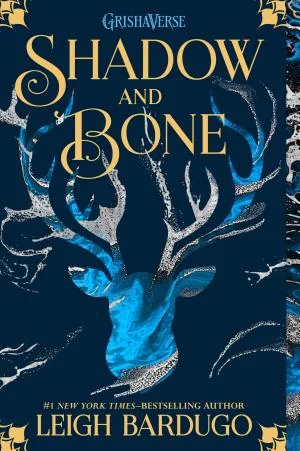
Shadow and Bone
 83
83

Shadow and Bone
Leigh Bardugo's *Shadow and Bone* introduces a compelling world teetering on the edge of darkness, centered around Alina Starkov, a young woman who discovers a dormant, world-altering power. The strength of the novel lies in its intricate world-building, particularly the concept of the Grisha and their distinct orders, which feels both unique and logically constructed within the narrative. The depiction of the Shadow Fold and its monstrous inhabitants is effectively chilling. However, the romantic entanglements, while central to the plot, occasionally feel underdeveloped, with the choices Alina faces sometimes lacking the emotional weight one might expect. A particularly strong passage involves Alina's initial, overwhelming realization of her Sun Summoner abilities, a moment rendered with both awe and terror. The novel ultimately succeeds in establishing a fascinating premise and a character with significant potential, though it sometimes prioritizes plot mechanics over deeper emotional resonance. It’s a promising, if not flawless, start to a larger saga.
📝 Description
83
In Leigh Bardugo's 2012 novel, Alina Starkov discovers she wields a rare Grisha power.
Alina Starkov, an orphan soldier in Ravka, believes herself ordinary until a dangerous crossing of the Shadow Fold reveals a latent, powerful magic. This power is tied to the world's magical forces, coveted and feared by the ruling Grisha. Her life shifts dramatically as she leaves her military post for the Little Palace, undergoing rigorous training.
The Grisha, practitioners of 'small science,' manipulate elements and matter. Bardugo structures them into distinct orders: Ethereal Summoners like Alina, Materialki who craft objects, and Heartrenders who affect living beings. This hierarchy influences power dynamics within Ravka. The Little Palace training emphasizes control and application of these abilities, often under the scrutiny of influential figures.
The Shadow Fold, a dark, monster-infested region, represents a constant threat to Ravka and a symbol of encroaching darkness. Its existence shapes the kingdom's politics and military. The narrative follows Alina's growing power and her potential role as a savior.
This novel engages with themes of chosen one narratives and the manipulation of elemental forces, common in many occult traditions. The Grisha's 'small science' echoes historical concepts of natural magic and alchemy, where practitioners sought to understand and control the fundamental building blocks of reality. Alina's journey from obscurity to wielding immense power aligns with archetypal stories of hidden potential and the challenges of mastering extraordinary gifts. The presence of a corrupting darkness and a prophesied savior also taps into dualistic worldviews found in various esoteric belief systems.
💡 Why Read This Book?
• Gain insight into the intricate 'small science' of the Grisha, exploring how their elemental manipulations function as a distinct magical system, offering a unique lens on power dynamics. • Experience the palpable threat of the Shadow Fold and its Volcra, a vivid environmental antagonist that shapes Ravkan society and military strategy, providing a concrete example of a world shaped by magical peril. • Follow Alina Starkov's transformation from an overlooked orphan to a figure of immense power, examining the personal cost of destiny and the ethical dilemmas of wielding extraordinary influence, as seen in her struggle with the Darkling.
⭐ Reader Reviews
Honest opinions from readers who have explored this book.
❓ Frequently Asked Questions
When was Leigh Bardugo's Shadow and Bone first published?
Shadow and Bone was first published on May 7, 2013. It marked the beginning of the Grishaverse, a world that would later expand into multiple series and a Netflix adaptation.
What are the different orders of Grisha in Shadow and Bone?
The Grisha are divided into three main orders: Ethereals (manipulators of elements like air, fire, water, and light), Materialki (makers who manipulate materials like metal and glass), and Heartrenders (those who can manipulate the human body, including life and death).
Who is the main antagonist in Shadow and Bone?
The primary antagonist is the Darkling, the powerful and ancient leader of the Grisha who seeks to use Alina's unique Sun Summoner abilities for his own complex, often morally ambiguous, ends.
What is the Shadow Fold and why is it important?
The Shadow Fold is a vast expanse of unnatural darkness, filled with monstrous creatures called Volcra. It physically divides the nation of Ravka and represents a major obstacle and a source of constant danger that the Grisha and the Ravkan army must contend with.
Is Shadow and Bone part of a series?
Yes, Shadow and Bone is the first book in the Shadow and Bone trilogy, which is part of the larger Grishaverse. It is followed by Siege and Storm and Ruin and Rising.
What kind of magic system does Shadow and Bone feature?
The magic system is based on the Grisha's ability to manipulate the 'small science,' bending the elements and physical matter. Alina's power as a Sun Summoner is a unique, rare form of Ethereal magic.
🔮 Key Themes & Symbolism
The Nature of Power
The narrative critically examines the corrupting influence of power and the burden of extraordinary ability. Alina's journey as a Sun Summoner forces her to confront the ethical implications of her magic, particularly when wielded by those in authority like the Darkling. The story questions whether power inherently corrupts or if it merely amplifies existing intentions, exploring the sacrifices demanded by leadership and prophecy within the rigid structure of the Grisha orders.
Identity and Belonging
Alina's initial identity as an orphaned cartographer's assistant is shattered by the revelation of her Grisha abilities. Her subsequent integration into the Little Palace, a world of privilege and rigid hierarchy, forces her to question where she truly belongs. The story studies the struggle of reconciling her past self with her newfound destiny, highlighting the societal pressures and personal conflicts that arise when an individual's identity is redefined by their unique capabilities.
Light vs. Darkness
The conflict between light and darkness is a pervasive theme, most overtly represented by Alina's Sun Summoner powers and the Shadow Fold. However, the narrative complicates this dichotomy, suggesting that darkness is not always purely evil and light can be wielded for destructive purposes. The presence of the Darkling, a figure of immense power born from darkness, challenges simplistic interpretations of good versus evil, prompting readers to consider the nuances of moral ambiguity.
Faith and Prophecy
The concept of prophecy and the role of faith, both in divine intervention and in chosen individuals, are central to the plot. Alina is positioned as a potential savior, a figure of legend destined to destroy the Shadow Fold. The story explores the manipulation of faith for political gain and the personal pressure of living up to, or defying, predetermined destinies. This theme questions the extent to which individuals are masters of their own fate versus pawns of prophecy.
💬 Memorable Quotes
Direct passages from the work, attributed to the author.
““I will not be a pawn in your game.””
— This declaration signifies Alina's growing agency and defiance against those who seek to control her power. It highlights her struggle for independence and self-determination amidst overwhelming external pressures and manipulations.
““The Grisha are not soldiers. They are artists.””
— This statement reframes the perception of the Grisha, emphasizing their unique skills and mastery over 'small science' as a form of creation rather than pure combat. It underscores the inherent beauty and complexity of their abilities, distinct from the brutalities of warfare.
““The Fold is not a place. It’s a wound.””
— This interpretation of the Shadow Fold imbues it with a deeper, almost sentient, malevolence. It suggests the darkness is not merely an environmental hazard but a manifestation of past trauma or magical corruption, giving it a more profound and sinister significance.
““Power is only useful if you can wield it.””
— This pragmatic observation underscores the difference between potential and application. It implies that true strength lies not just in possessing abilities but in the skill, control, and will to effectively employ them, especially within the context of the Grisha's structured 'small science'.
💡 Key Ideas
Editorial paraphrase of the work's core concepts — not direct quotes.
“When you are lonely, you are lonely. When you are hungry, you are hungry. When you are afraid, you are afraid.”
This quote, often attributed to the Darkling, speaks to the raw, undeniable reality of basic human needs and emotions. It suggests a perspective that cuts through societal artifice, focusing on fundamental truths of existence, even from a potentially manipulative character.
🌙 Esoteric Significance
Tradition
While not explicitly tied to a single historical esoteric tradition, *Shadow and Bone* draws thematic elements that resonate with Gnostic and Hermetic concepts. The idea of a hidden, innate power within an 'ordinary' individual (the 'spark' or 'divine fragment') aligns with Gnostic notions of the pneumatic. The structured manipulation of natural forces by the Grisha, referred to as 'small science,' echoes Hermetic principles of understanding and influencing the macrocosm through the microcosm, albeit presented through a fantasy lens.
Symbolism
The Sun Summoner, embodied by Alina, functions as a potent symbol of divine light and primordial creation, directly opposing the encroaching darkness represented by the Shadow Fold. The Fold itself can be interpreted as a symbol of primordial chaos or the material prison that obscures true knowledge. The concept of 'small science' by the Grisha can symbolize the alchemical or magical arts, where practitioners manipulate fundamental elements to achieve specific effects, reflecting a belief in ordered, attainable supernatural influence.
Modern Relevance
The Grishaverse, and *Shadow and Bone* in particular, continues to influence contemporary fantasy literature and media. Its detailed magic system and exploration of power dynamics are studied by aspiring fantasy authors. Concepts of chosen ones battling encroaching darkness and the moral complexities of wielding power find echoes in many modern series. Furthermore, the Grisha's structured approach to magic and societal roles within their world offers a framework for discussions on applied esotericism and the organization of magical practice in speculative fiction.
👥 Who Should Read This Book
• Aspiring fantasy authors looking to develop intricate magic systems and unique cultural settings, drawing inspiration from the Grisha's 'small science' and Ravka's Eastern European-inspired milieu. • Readers interested in narratives that explore the complex relationship between power, destiny, and personal identity, particularly how an individual grapples with being designated a prophesied figure like Alina Starkov. • Fans of character-driven fantasy who appreciate detailed world-building and morally ambiguous characters, such as the Darkling, offering a nuanced perspective on heroism and villainy.
📜 Historical Context
Published in 2013, *Shadow and Bone* emerged within a burgeoning YA fantasy landscape that was increasingly exploring complex magic systems and darker themes. While authors like J.K. Rowling had already redefined the genre, Bardugo's work distinguished itself with a more Eastern European-inspired setting and a detailed hierarchy of magic users. The novel arrived at a time when intricate world-building and morally gray characters were gaining traction, moving away from simpler good-versus-evil narratives. Contemporary authors such as Sarah J. Maas were also establishing their presence, though often with a different focus on romance and action. *Shadow and Bone* did not face significant censorship battles upon release, but its intricate lore and political intrigue positioned it as a more mature entry in the YA fantasy market, garnering attention for its unique cultural influences and the promise of a sprawling Grishaverse.
📔 Journal Prompts
Alina Starkov's discovery of her Sun Summoner abilities: how might such a revelation alter one's fundamental understanding of self?
The nature of the Shadow Fold as a 'wound': what collective traumas or magical corruptions could manifest as physical, dangerous landscapes?
The Grisha's 'small science': reflect on the concept of manipulating natural elements and its potential philosophical underpinnings.
The Darkling's motivations: consider the ethical justifications for wielding immense power, even for seemingly noble ends.
The Little Palace hierarchy: analyze how societal structures influence individual identity and behavior within a magical elite.
🗂️ Glossary
Grisha
Individuals possessing the ability to manipulate the 'small science,' bending elements and matter. They are a distinct class within Ravka, often serving the royal court or military.
Small Science
The fundamental principles and practices by which the Grisha manipulate the physical world, akin to elemental magic or a form of applied supernatural art.
Sun Summoner
An exceedingly rare and powerful type of Ethereal Grisha capable of manipulating light and fire, prophesied to be able to destroy the Shadow Fold.
Shadow Fold
A vast, unnatural expanse of darkness that bisects Ravka, filled with monstrous creatures known as Volcra, posing a constant threat to the nation.
Volcra
Monstrous, winged creatures that inhabit the Shadow Fold, feeding on flesh and driven by an insatiable hunger, representing a significant danger to travelers.
Little Palace
The royal residence and training ground for Grisha in Ravka, where young magic users are educated and integrated into the kingdom's power structure.
Ravka
The fictional nation where the events of Shadow and Bone primarily take place, characterized by its internal political divisions and the omnipresent threat of the Shadow Fold.
🔮 Readers Also Liked
Browse all →









More Free Occult Philosophy Books
View all →