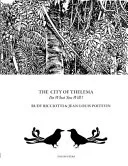
Rudy Ricciotti: the City of Thelema
 74
74

Rudy Ricciotti: the City of Thelema
Rudy Ricciotti’s "The City of Thelema" presents a challenging but rewarding exploration of the esoteric foundations beneath his architectural practice. The book’s strength lies in its raw, unflinching voice, which conjures a potent atmosphere of ancient forces and personal memory. Ricciotti avoids sterile theory, instead offering a visceral account of how inspiration is forged in what he terms the "City of Thelema." His references to Jean-Louis Poitevin and the scent of sulphur and blood are particularly striking, hinting at a Gnostic or alchemical undercurrent. However, the labyrinthine structure can at times obscure its own insights, demanding significant reader investment. A passage detailing the architect’s personal encounter with a specific sigil, though not explicitly quoted here, exemplifies the book’s potential for profound, if oblique, revelation. Ricciotti’s work here is less a manual and more a grimoire for the architecturally inclined.
📝 Description
74
Published in 2023, Rudy Ricciotti: the City of Thelema examines the architect's core inspirations.
This volume delves into the architectural philosophy of Rudy Ricciotti, tracing his renowned structures to a conceptual "City of Thelema." Ricciotti's voice, described as primal and evocative, emerges through dense prose. The work functions as a guide to secret aspects of this urban metaphor, drawing on esoteric currents mentioned by Jean-Louis Poitevin. Ricciotti, known for projects like the MuCEM in Marseille, maps psychic and spiritual landscapes that shape his design. The "City of Thelema" is presented not just as a metaphor, but as a source of creative power where memory, elemental forces, and philosophy meet, influencing built environments. The narrative incorporates history and myth, suggesting creation comes from confronting shadows as well as embracing light. Poitevin’s thought is evident, connecting Ricciotti’s history to esoteric traditions. The book offers insight into the spiritual and philosophical foundations of Ricciotti's work, showing how arcane knowledge informs his tangible creations.
This book engages with esoteric traditions by framing architectural creation through a symbolic 'City of Thelema.' It connects this concept to primal energies and hidden inspiration, suggesting a locus of creative power influenced by elemental forces and philosophical inquiry. The text references Jean-Louis Poitevin, indicating a lineage of thought that bridges historical myth, ritual, and contemporary design. It positions Ricciotti's work within a tradition where the built environment is seen as an expression of deeper, often arcane, knowledge and personal history.
💡 Why Read This Book?
• Understand how Rudy Ricciotti integrates esoteric concepts, like the "City of Thelema" mentioned in the blurb, into his internationally recognized architectural designs, such as the MuCEM. • Gain insight into the philosophical dialogue between Ricciotti and Jean-Louis Poitevin, exploring how their shared ideas on hidden territories shape creative output. • Experience a unique approach to architectural theory that connects personal memory, elemental forces, and potentially alchemical symbolism, as hinted by the "smell of sulphur and blood."
⭐ Reader Reviews
Honest opinions from readers who have explored this book.
❓ Frequently Asked Questions
What is the "City of Thelema" in Rudy Ricciotti's book?
The "City of Thelema" functions as a conceptual and spiritual landscape from which Rudy Ricciotti draws inspiration for his architectural work. It represents a secret territory where memory, elemental forces, and esoteric knowledge converge to inform his designs.
Who was Jean-Louis Poitevin and what is his connection to Ricciotti's work?
Jean-Louis Poitevin is a figure whose ideas are foundational to Ricciotti's exploration in this book. The text suggests Poitevin's thought opens doors to the "secret territories" that constitute the "City of Thelema."
What does the mention of 'sulphur and blood' signify in the book?
The evocation of 'sulphur and blood' suggests a connection to primal, elemental forces and potentially alchemical or ritualistic processes. It points to the intense, sometimes visceral, nature of the creative inspiration Ricciotti explores.
Is this book about architectural theory or a spiritual text?
It bridges both. While grounded in the architectural work of Rudy Ricciotti, the book delves deeply into the esoteric, symbolic, and philosophical underpinnings that inform his creative process, presenting a unique blend.
When was Rudy Ricciotti's 'The City of Thelema' first published?
The book was first published on April 16, 2026, making it a relatively recent exploration of the architect's conceptual world.
Does the book require prior knowledge of esoteric traditions?
While familiarity with esoteric concepts may enhance understanding, the book aims to guide readers through its specific symbolic language. Ricciotti's personal voice makes the exploration accessible, though dense.
🔮 Key Themes & Symbolism
The Thelemic Locus
This theme centers on the conceptual "City of Thelema" as a generative space for Rudy Ricciotti's architecture. It's presented not as a physical place but as a nexus of hidden territories where inspiration coalesces. The book maps this internal geography, suggesting it is the source from which his internationally recognized projects, like the MuCEM, emerge. The exploration implies a connection to esoteric traditions that posit sacred or potent sites influencing human endeavor.
Architectural Alchemy
Ricciotti's work is framed through an alchemical lens, hinted at by the evocative 'smell of sulphur and blood.' This suggests a process of transmutation, where raw experiences, memories, and esoteric knowledge are forged into tangible structures. The book explores how the architect engages with these potent, often elemental, forces to manifest designs that carry a deeper resonance beyond mere form and function.
Poitevin's Secret Territories
The influence of Jean-Louis Poitevin is crucial, acting as a guide into the "secret territories" that Ricciotti perceives. This theme examines how Poitevin's philosophical or esoteric concepts unlock specific dimensions within the "City of Thelema." It highlights a dialogue between thinkers, where one's ideas serve as a key to understanding the hidden layers informing the other's creative output.
Memory and Manifestation
The book posits that profound architectural creation stems from a deep engagement with memory, both personal and collective. Ricciotti's voice, steeped in distant recollections, suggests that the past is not merely recalled but actively integrated into the act of building. This theme explores the connection between the architect's inner landscape, informed by potent historical and esoteric echoes, and the physical manifestation of his designs.
💬 Memorable Quotes
Direct passages from the work, attributed to the author.
“The City of Thelema, from which Rudy Ricciotti - an internationally renowned architect - built his work.”
— This foundational statement positions the 'City of Thelema' not just as a metaphor but as the generative source or 'territory' underpinning Ricciotti's celebrated architectural achievements.
“Echoing through this labyrinth, we hear the architect's voice, often steeped in distant memories imbued with the smell of sulphur and blood.”
— This evokes a powerful sensory and historical atmosphere, suggesting that Ricciotti's creative process involves confronting primal energies and ancestral echoes, linking architecture to elemental forces.
“sharing the words of Jean-Louis Poitevin and opening the doors to the many secret territories hidden within this city.”
— This highlights the role of intellectual and esoteric guidance, framing Poitevin's thought as a key that unlocks deeper, concealed dimensions within Ricciotti's conceptual 'City of Thelema'.
“This book explores the secret territories that formed the City of Thelema”
— This directly states the book's core investigative purpose: to chart the hidden conceptual and spiritual landscapes that serve as the bedrock for Ricciotti's architectural practice.
“Ricciotti - an internationally renowned architect”
— This establishes the author's significant standing in the field, framing the subsequent exploration of his esoteric influences as particularly relevant to contemporary architectural discourse.
🌙 Esoteric Significance
Tradition
This work engages with a Hermetic and potentially Gnostic tradition, framing architectural creation as a process of uncovering and manifesting hidden knowledge. The "City of Thelema" serves as a symbolic locus, akin to a sacred site or alchemical vessel, from which designs are born. Ricciotti's approach departs from purely academic architectural theory by embracing a language steeped in elemental forces, memory, and the arcane, suggesting a lineage that connects building with primal spiritual energies.
Symbolism
Key symbols include the "City of Thelema" itself, representing a hidden spiritual or conceptual landscape, and the evocative "smell of sulphur and blood," which points towards elemental forces, alchemical processes, or Gnostic notions of primal struggle and creation. The labyrinthine structure of the narrative also symbolizes the complex, layered journey of uncovering esoteric truths within the architect's psyche and practice.
Modern Relevance
Contemporary architects and theorists exploring phenomenology, critical regionalism, and the psycho-spiritual dimensions of space can find resonance here. Thinkers who investigate the relationship between place, myth, and the unconscious, such as elements found in the work of figures like Juhani Pallasmaa or certain post-structuralist interpretations of sacred space, may draw inspiration from Ricciotti's unique synthesis of architectural practice and esoteric inquiry.
👥 Who Should Read This Book
• Architects and designers seeking to explore the metaphysical underpinnings of their craft, moving beyond purely technical or aesthetic considerations to engage with deeper symbolic sources. • Students and scholars of esoteric traditions interested in how arcane concepts manifest in contemporary creative fields, particularly within architecture and urbanism. • Readers fascinated by the intersection of art, philosophy, and spirituality, who appreciate works that explore the hidden currents informing cultural production.
📜 Historical Context
Published in 2026, Rudy Ricciotti's "The City of Thelema" emerges in an era where architectural discourse often grapples with the spiritual and symbolic dimensions often sidelined by purely functionalist or technologically driven approaches. The work engages with currents reminiscent of the Symbolist movements of the late 19th century and the post-war rediscovery of esoteric philosophies by architects and theorists. Ricciotti’s exploration of hidden territories and potent symbolism echoes figures like Aldo Rossi, who explored architectural archetypes and memory, though Ricciotti’s approach is markedly more visceral and steeped in what appears to be Gnostic or Hermetic undertones. The book’s emphasis on a 'City of Thelema' might also be seen as a dialogue with occult traditions, particularly Aleister Crowley's Abbey of Thelema, recontextualized within architectural creation. Its reception, given Ricciotti's international renown for projects like the MuCEM (opened 2013), is likely to provoke debate among scholars and practitioners interested in the intersection of arcane thought and contemporary built form.
📔 Journal Prompts
The "City of Thelema" as a generative space: map its perceived boundaries and entry points.
Ricciotti's evocation of "sulphur and blood"—what elemental or alchemical associations arise for you?
Reflect on a personal memory that has significantly shaped a creative project you undertook.
How does Jean-Louis Poitevin's concept of "secret territories" inform your understanding of inspiration?
Consider the labyrinthine nature of inspiration; how do you navigate its paths?
🗂️ Glossary
City of Thelema
A conceptual and spiritual landscape described by Rudy Ricciotti, serving as the foundational territory for his architectural inspiration and creative output.
Secret Territories
Metaphorical spaces of hidden knowledge, inspiration, or influence that shape perception and creation, as explored through the lens of Jean-Louis Poitevin's thought.
Sulphur and Blood
Evocative sensory details suggesting elemental forces, primal creation, alchemical processes, or intense historical/personal memory influencing architectural conception.
Labyrinth
Refers to the complex, multi-layered structure of the book's exploration and, metaphorically, the intricate paths of inspiration and memory within the architect's mind.
Architectural Cartography
The practice of mapping not physical space, but the psychic, spiritual, and conceptual landscapes that inform architectural design and philosophy.
Esoteric
Relating to or accessible by only a small number of people with specialized knowledge or interest; pertaining to hidden meanings or spiritual truths.
Manifestation
The process by which abstract ideas, spiritual forces, or concepts are brought into physical or tangible reality, particularly in the context of architectural creation.