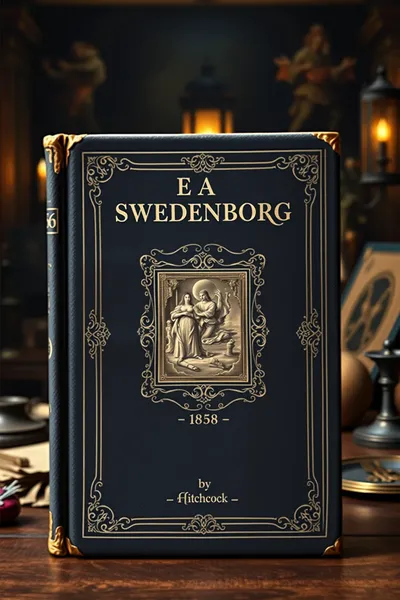
Robert Fludd and the end of the Renaissance

 76
76

Robert Fludd and the end of the Renaissance
William H. Huffman’s 1988 study, Robert Fludd and the End of the Renaissance, provides a much-needed academic dissection of a figure often obscured by myth. Huffman’s strength lies in his patient tracing of Fludd’s labyrinthine arguments, particularly his ambitious attempt to synthesize alchemy, Hermeticism, and Christian theology into a unified cosmology. The work’s detailed exegesis of Fludd’s *Utriusque Cosmi* series is invaluable for understanding the esoteric currents of the early 17th century. However, the book’s dense prose, while accurate, can make it a challenging read for those not already steeped in Renaissance philosophy. Huffman’s exploration of Fludd’s theory of light as the fundamental principle of creation offers a particularly lucid window into the author’s worldview. Ultimately, Huffman’s monograph serves as an essential, albeit demanding, resource for serious students of Fludd and his era.
📝 Description
76
William H. Huffman's 1988 study examines Robert Fludd's complex system linking science, magic, and theology.
William H. Huffman's book reconstructs the philosophical system of Robert Fludd (1574–1637), a key figure in early modern occult thought. Huffman details how Fludd attempted to unite science, magic, and theology through Neoplatonic and Hermetic ideas. The work situates Fludd's extensive writings, including his *Utriusque Cosmi maioris scilicet et minoris metaphysica, physica, atque technica historia* (1617–1621), within the intellectual climate of the late Renaissance. This was a period of alchemical speculation, the beginnings of the scientific revolution, and the circulation of Rosicrucian texts.
Huffman analyzes Fludd's cosmological model, which described a divine, hierarchical universe governed by light and darkness, macrocosm and microcosm. The book explains Fludd's symbolic language, his theories on music, and his synthesis of Kabbalistic thought with Christian Neoplatonism. Central to this analysis is Fludd's concept of the 'Anima Mundi,' or World Soul, and its expression through divine light. The book also addresses Johannes Kepler's critiques of Fludd's cosmology, showing the contemporary debates about the universe.
This book situates Robert Fludd within the late Renaissance and early Baroque periods, a time when esoteric traditions were actively shaping intellectual discourse. Fludd's work drew heavily on Hermeticism, Neoplatonism, and Kabbalah, seeking to create a unified understanding of the cosmos. His ideas about light, the World Soul, and the correspondence between the human and universal realms were part of a broader movement that sought divine knowledge through symbolic and philosophical systems. This study examines how Fludd's elaborate cosmology interacted with the emerging scientific worldview and continued esoteric currents.
💡 Why Read This Book?
• Gain a nuanced understanding of Robert Fludd's complex cosmological system, including his theories on the Anima Mundi, which departed from purely Aristotelian frameworks in the early 17th century. • Grasp the intellectual climate of the late Renaissance, specifically the tension between emerging scientific inquiry and enduring occult philosophies, as exemplified by Fludd’s debates with contemporaries like Johannes Kepler. • Explore Fludd's unique symbolic language and its Hermetic and Neoplatonic underpinnings, revealing how he viewed the universe as a divinely ordered structure of light and darkness.
⭐ Reader Reviews
Honest opinions from readers who have explored this book.
❓ Frequently Asked Questions
When was Robert Fludd alive, and what was his primary intellectual pursuit?
Robert Fludd lived from 1574 to 1637. His primary pursuit was the articulation of a unified, divinely ordered cosmology that integrated Hermeticism, Kabbalah, alchemy, and Christian theology.
What is the significance of Fludd's 'Utriusque Cosmi'?
Fludd's *Utriusque Cosmi maioris scilicet et minoris metaphysica, physica, atque technica historia* (1617–1621) is his magnum opus, a multi-volume work that systematically presents his comprehensive philosophical and cosmological system.
Who was Johannes Kepler and how did he relate to Robert Fludd?
Johannes Kepler was a prominent astronomer and mathematician. He engaged in a notable debate with Fludd regarding cosmology, notably critiquing Fludd's alchemical interpretations of astronomical phenomena in the early 17th century.
What does Huffman's book say about Fludd's concept of light?
Huffman's work details Fludd's theory that light is the fundamental, divine principle of creation, emanating from God and structuring both the macrocosm (universe) and microcosm (human being).
Is William H. Huffman's book suitable for beginners in esoteric studies?
While comprehensive, Huffman's book is written for an academic audience. It requires prior familiarity with Renaissance philosophy and esoteric concepts, making it more suitable for advanced students or scholars.
What Rosicrucian connections does Robert Fludd have?
Fludd was a significant figure associated with the Rosicrucian movement, though his exact relationship is debated. His writings and philosophical system align with many themes found in early Rosicrucian manifestos.
🔮 Key Themes & Symbolism
Unified Cosmological Vision
Huffman meticulously unpacks Fludd's ambitious project to present a single, divinely ordained cosmic order. This vision, detailed in his *Utriusque Cosmi*, integrates macrocosmic and microcosmic principles, emphasizing the interconnectedness of all creation through a divine blueprint. It's a late Renaissance attempt to reconcile ancient wisdom with emerging natural philosophy, positing a universe structured by divine light and intricate correspondences, a stark contrast to later mechanistic worldviews.
Light as Divine Principle
A central tenet of Fludd’s philosophy, as explored by Huffman, is the concept of light as the primary manifestation of the divine. Fludd's theories of light, heavily influenced by Neoplatonism, extend beyond mere optics to encompass creation, life, and spiritual illumination. Huffman highlights how Fludd saw light as the active principle that shapes and animates the cosmos, forming the basis of his alchemical and spiritual understanding of reality.
Hermetic and Kabbalistic Synthesis
Huffman demonstrates how Fludd skillfully synthesized elements from Hermeticism and Kabbalah into his Christian Neoplatonic framework. The work examines Fludd’s use of Kabbalistic concepts, such as divine emanations, and Hermetic principles like the 'As Above, So Below,' to construct his unique esoteric system. This fusion aimed to reveal hidden divine truths through the study of nature and the cosmos, positioning Fludd as a bridge between medieval occult traditions and early modern esoteric thought.
The Microcosm-Macrocosm Analogy
The book looks at Fludd's profound emphasis on the relationship between the human being (microcosm) and the universe (macrocosm). Huffman explains how Fludd viewed the human body and soul as a perfect reflection of the celestial spheres and divine order. This analogy was not merely theoretical but formed the basis for his ideas on health, spiritual development, and the potential for human knowledge to mirror divine wisdom.
💬 Memorable Quotes
Direct passages from the work, attributed to the author.
“Fludd’s cosmology is a systematic attempt to reconcile Christian theology with Hermetic and Kabbalistic traditions.”
— This interpretation highlights Huffman's central argument: Fludd was not merely an alchemist but a philosopher striving for a comprehensive, unified worldview that incorporated diverse esoteric streams within a Christian framework.
“Huffman examines Fludd’s engagement with Johannes Kepler on cosmological matters.”
— This points to a significant intellectual conflict explored in the book, showcasing how Fludd's esoteric cosmology was challenged by emerging scientific perspectives during the early 17th century.
“Fludd’s work represents a late flowering of Renaissance esoteric synthesis.”
— This interpretation positions Fludd and Huffman's study within the broader context of intellectual history, suggesting that Fludd’s efforts marked a culmination of earlier esoteric traditions before the full onset of the scientific revolution.
💡 Key Ideas
Editorial paraphrase of the work's core concepts — not direct quotes.
The principle of light is the fundamental source of all existence in Fludd’s system.
This paraphrase captures Fludd's core metaphysical concept, emphasizing light as the primordial divine energy that organizes and animates the entire cosmos, as detailed in Huffman's analysis.
The human being is understood as a microcosm reflecting the greater universe.
This paraphrased concept underscores Fludd's use of the macrocosm-microcosm analogy, a foundational principle in many esoteric traditions, which Huffman elucidates in the context of Fludd's philosophy.
🌙 Esoteric Significance
Tradition
Robert Fludd stands as a towering figure within the Western Esoteric Tradition, specifically bridging Hermeticism, Christian Kabbalah, and Neoplatonism at the cusp of the modern era. His work represents a late, highly systematic synthesis of these streams, attempting to construct a complete metaphysical system rooted in divine emanations and correspondences. Fludd's adherence to a divinely ordered cosmos, accessible through symbolic interpretation and philosophical inquiry, places him firmly in the lineage of Renaissance magical philosophy, albeit with a unique encyclopedic scope.
Symbolism
Central to Fludd's esoteric symbolism is the concept of divine light, often represented through geometric forms and celestial imagery, as the foundational element of creation. The 'Anima Mundi' or World Soul is another key motif, depicting the universe as a living, interconnected entity animated by divine spirit. Huffman's work also explores Fludd's use of musical harmonies as symbolic representations of cosmic order, reflecting the ancient Pythagorean and Hermetic idea that the universe operates according to mathematical and sonic principles.
Modern Relevance
Contemporary scholars of Western esotericism and intellectual history continue to draw on Huffman's analysis of Fludd. His work remains crucial for understanding the foundations of modern occult movements, particularly those interested in ceremonial magic, Rosicrucianism, and the integration of cosmology with spiritual practice. Thinkers and practitioners exploring the Hermetic roots of Western thought, or those seeking to understand the historical interplay between science and magic, find Fludd's synthesized worldview a significant, albeit complex, point of reference.
👥 Who Should Read This Book
• Scholars of Renaissance intellectual history and the history of science, seeking to understand the complex interplay between empirical inquiry and esoteric philosophy in the early 17th century. • Students of Western Esotericism, particularly those interested in Hermeticism, Kabbalah, and Rosicrucianism, who want to study a key figure who synthesized these traditions. • Philosophers and theologians interested in late Renaissance metaphysics and cosmology, exploring attempts to reconcile faith, reason, and occult knowledge into a unified worldview.
📜 Historical Context
William H. Huffman’s study arrives at a central moment in the reassessment of early modern intellectual history, a period marked by the energetic clash between scholastic traditions and the nascent scientific revolution. Published in 1988, it engages with scholarship that began to move beyond viewing figures like Fludd as mere pre-scientific curiosities. The late 16th and early 17th centuries, Fludd's active period, saw the dissemination of Rosicrucian manifestos like the *Fama Fraternitatis* (1614), which stirred considerable interest and debate across Europe. Fludd's extensive writings, particularly his *Utriusque Cosmi* (1617–1621), were central to this intellectual ferment. He engaged directly with figures like Johannes Kepler, whose critiques of Fludd's alchemical interpretations of his astronomical work highlight the era's contentious philosophical landscape. This era grappled with defining the relationship between empirical observation and ancient, divinely inspired wisdom.
📔 Journal Prompts
The principle of divine light in Fludd's cosmology and its symbolic representation.
Robert Fludd's synthesis of Hermeticism and Kabbalah within his Christian Neoplatonism.
The macrocosm-microcosm relationship as articulated by Fludd and its implications.
Critiques of Fludd's cosmology by contemporaries like Johannes Kepler.
The concept of the Anima Mundi in Fludd's philosophical system.
🗂️ Glossary
Anima Mundi
Latin for 'World Soul'; in Fludd's philosophy, it represents the animating, divine principle that pervades and orders the entire cosmos, linking the macrocosm and microcosm.
Microcosm
The human being, considered as a small-scale representation or reflection of the universe (macrocosm), embodying similar principles and structures.
Macrocosm
The universe or the entirety of creation, viewed as a large-scale system that is mirrored or reflected in the microcosm of the human being.
Neoplatonism
A school of philosophy originating with Plotinus, based on Plato's ideas, emphasizing a hierarchical cosmos emanating from a supreme, ineffable 'One,' and the soul's ascent towards it.
Hermeticism
A philosophical and religious tradition based on the writings attributed to Hermes Trismegistus, emphasizing divine wisdom, magic, alchemy, and the interconnectedness of the cosmos.
Kabbalah
A body of mystical teachings of Judaism that seeks to explain the relationship between the divine, the eternal, and the created universe, often using symbolic interpretations of scripture and the Hebrew alphabet.
Rosicrucianism
A mystical and esoteric movement that emerged in Europe in the early 17th century, associated with secret societies, alchemy, and spiritual enlightenment, often linked to the figure of Christian Rosenkreuz.
🔮 Readers Also Liked
Browse all →








More by William H. Huffman
All books →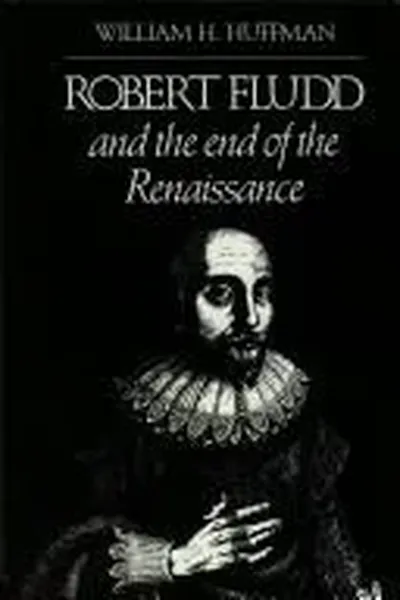
More Free Alchemy & Hermeticism Books
View all →