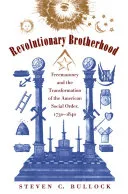
Revolutionary Brotherhood
 84
84

Revolutionary Brotherhood
Steven C. Bullock's "Revolutionary Brotherhood" presents a compelling, if at times dense, chronicle of American Freemasonry's nascent century. Its strength lies in the exhaustive research, tracing the fraternity's path from its cautious introduction in the 1730s through its near eradication by the potent anti-Masonic movement of the 1830s. Bullock effectively demonstrates how the order navigated these turbulent waters, ultimately reconfiguring itself into the familiar brotherhood of today. A particularly insightful passage details the lodge's role as a social lubricant and intellectual salon for figures like Benjamin Franklin, highlighting its significance beyond mere ritual. However, the book's academic rigor sometimes leads to a drier narrative, occasionally sacrificing narrative momentum for exhaustive detail. Despite this, it stands as an essential, fact-driven account for serious students of American fraternal history.
📝 Description
84
Steven C. Bullock’s 2011 book traces Freemasonry’s first century in America, from its 1730s arrival to the anti-Masonic backlash.
Published in 2011, Steven C. Bullock’s "Revolutionary Brotherhood" provides a comprehensive history of Freemasonry in America during its formative first century. The book begins with the fraternity’s introduction from Britain in the 1730s and follows its growth through the colonial and early republic periods. Bullock details the challenges Freemasonry faced, including the significant anti-Masonic movement that emerged in the 1820s and 1830s, nearly dismantling the organization. The narrative then covers the order's subsequent recovery and adaptation.
This work is of interest to scholars of American history, students of fraternal organizations, and anyone examining the intellectual and social dynamics of the colonial and early republic eras. It is particularly relevant for those researching the connections between secret societies, political ideas, and religious viewpoints during the United States' early years. The book offers a detailed, evidence-based account for readers curious about the societal role of groups like the Freemasons.
While not strictly an esoteric text in the sense of occult practices, "Revolutionary Brotherhood" examines Freemasonry as a significant social and intellectual force during the Enlightenment and early American republic. It places the fraternity within the context of transatlantic intellectual exchange and its lodges as centers for discussion among influential figures. The book analyzes how Masonic ideals of fraternalism, civic virtue, and ritual intersected with broader political and social currents, sometimes fueling suspicion. It situates the organization within a tradition of fraternal societies that shaped social cohesion and identity in a developing nation.
💡 Why Read This Book?
• Understand the foundational role of Freemasonry in early American social structures, learning how lodges served as vital meeting places for figures like Benjamin Franklin from the 1730s onwards. • Grasp the specific socio-political forces behind the anti-Masonic movement of the 1830s, recognizing it not as a fringe phenomenon but as a significant challenge that reshaped the fraternity. • Analyze how "civic virtue" and "fraternalism" were operationalized within Masonic lodges, offering a lens into the ethical frameworks prevalent during the nation's formative years.
⭐ Reader Reviews
Honest opinions from readers who have explored this book.
❓ Frequently Asked Questions
When was Freemasonry first introduced to North America according to "Revolutionary Brotherhood"?
Steven C. Bullock's "Revolutionary Brotherhood" states that Freemasonry was introduced into North America in the 1730s, marking the beginning of its first century in the region.
What major historical movement nearly destroyed Freemasonry in America?
The book details the "massive anti-Masonic movement" that arose nearly a century after Freemasonry's introduction, which brought the fraternity to the brink of destruction.
Did Benjamin Franklin have a connection to Freemasonry as discussed in the book?
Yes, "Revolutionary Brotherhood" notes that Benjamin Franklin was a member of the fraternity, highlighting the caliber of individuals involved in its early American chapters.
What is the primary focus of Steven C. Bullock's "Revolutionary Brotherhood"?
The book provides a comprehensive historical account of Freemasonry's first century in America, tracing its origins, growth, challenges from anti-Masonic sentiment, and subsequent reconfiguration.
How does the book explain the secrecy of Freemasonry?
Bullock's work examines the secrecy and rituals integral to Masonic identity, noting how these aspects, while central to the brotherhood, also fueled external suspicion and contributed to anti-Masonic movements.
What time period does "Revolutionary Brotherhood" cover for American Freemasonry?
The book focuses on the fraternity's first century in America, starting from its introduction in the 1730s up to the near-destruction by the anti-Masonic movement and its subsequent reconfiguration.
🔮 Key Themes & Symbolism
Fraternalism and Social Cohesion
Bullock's work illuminates "fraternalism" not merely as a social club but as a crucial mechanism for building community and mutual support in colonial and early republican America. The book traces how Masonic lodges functioned as spaces where individuals from diverse backgrounds could forge bonds, share knowledge, and contribute to a nascent sense of national identity. This theme underscores how organized brotherhoods played an often-overlooked role in the social fabric of a rapidly expanding nation.
Civic Virtue and Republicanism
The text critically examines the concept of "civic virtue" as it was understood and practiced within Freemasonry. It explores how Masonic ideals of morality, duty, and service were presented as contributing to the health of the republic. The book investigates the ways in which these internal principles intersected with, and sometimes diverged from, the broader discourse of republicanism circulating in the era, particularly concerning public participation and the nature of influence.
Secrecy, Ritual, and Public Perception
A central tension explored is the paradox of Masonic "secrecy and ritual." While these elements were intrinsic to the fraternity's identity and internal cohesion, they simultaneously generated significant public suspicion and fear. Bullock details how this perceived exclusivity and enigmatic nature became fertile ground for criticism, ultimately fueling the powerful anti-Masonic movement that threatened the order's very existence in the early 19th century.
The Anti-Masonic Movement
The book provides an in-depth analysis of the "anti-Masonic movement," a significant socio-political phenomenon that emerged in response to Freemasonry's influence and perceived secrecy. Bullock traces the origins and trajectory of this backlash, demonstrating its impact not only on Freemasonry itself but also on American political discourse and the formation of new political parties. This section highlights a critical period of societal reaction to organized, clandestine groups.
💬 Memorable Quotes
Direct passages from the work, attributed to the author.
“Freemasonry's introduction into North America in the 1730s.”
— This factual anchor pinpoints the genesis of the fraternity's organized presence in the American colonies, setting the stage for its subsequent influence and the historical narrative Bullock unfolds.
“The near-destruction of the fraternity by a massive anti-Masonic movement.”
— This highlights a critical period of existential threat, demonstrating the powerful societal forces that Freemasonry contended with and ultimately survived, reshaping its public image and internal practices.
“Membership that included Benjamin Franklin.”
— This specific detail grounds the abstract history in the reality of influential figures participating in the fraternity, suggesting its role in elite social and intellectual circles of the time.
“The reconfiguration into the brotherhood we know today.”
— This points to the adaptive capacity of the fraternity, indicating that the challenges faced led to significant structural and operational changes, leading to its modern form.
“Tracing Freemasonry through its first century in America.”
— This defines the chronological scope of the book, providing a clear framework for understanding the historical evolution of the organization within a specific national context.
🌙 Esoteric Significance
Tradition
While Freemasonry contains esoteric elements, "Revolutionary Brotherhood" primarily frames it within the context of Western civic and fraternal traditions rather than a specific occult lineage like Hermeticism or Kabbalah. It explores how Masonic lodges functioned as spaces for moral instruction and philosophical discourse, drawing on Enlightenment rationalism and deistic principles. The work positions Freemasonry as a social and philosophical institution that, while possessing ritualistic depth, was deeply embedded in the civic and political aspirations of the early American republic.
Symbolism
The book likely touches upon symbols common to Freemasonry, such as the Square and Compasses, which represent morality, rectitude, and the construction of a virtuous life. It may also allude to architectural symbolism, reflecting the fraternity's origins in stonemasonry guilds and its metaphorical application to building character and society. The emphasis is less on arcane occult meanings and more on how these symbols served to communicate ethical principles and foster a shared identity among members during the nation's formative period.
Modern Relevance
Contemporary scholars of American history and sociology continue to draw upon Bullock's work for its detailed account of how fraternal organizations shaped early American social and political landscapes. Researchers examining the evolution of civic engagement, the history of voluntary associations, and the dynamics of social movements (like anti-Masonry) find "Revolutionary Brotherhood" an essential resource. Its examination of secrecy and public perception remains relevant in discussions about modern organizations and their place within democratic societies.
👥 Who Should Read This Book
• Students of American history seeking to understand the social and intellectual networks of the colonial and early republic periods, particularly the role of non-governmental organizations. • Researchers of fraternal organizations interested in the historical development, internal dynamics, and public reception of groups like Freemasonry. • Individuals curious about the impact of secret societies on political discourse and social movements, especially concerning the significant anti-Masonic backlash of the 19th century.
📜 Historical Context
Steven C. Bullock's "Revolutionary Brotherhood" emerged in 2011, offering a historical corrective and deep dive into American Freemasonry's formative years. The work situates the fraternity's arrival in the 1730s within the intellectual milieu of the Enlightenment and the burgeoning colonial society. Masonic lodges served as significant, albeit often discreet, centers for social and philosophical exchange, attracting figures like Benjamin Franklin. The book contrasts this period of integration with the intense backlash of the anti-Masonic movement, which gained significant traction in the 1820s and 1830s. This populist fervor, fueled by suspicions of elitism and secrecy, represented a potent counter-current to the Enlightenment ideals that Freemasonry ostensibly embodied. While not directly engaging with a contemporary author in its narrative, Bullock's meticulous research implicitly engages with the historiography of American secret societies, providing a detailed counterpoint to earlier, perhaps less critical, accounts.
📔 Journal Prompts
The nature of "fraternalism" as a vehicle for social cohesion in early America.
The specific challenges posed by the "anti-Masonic movement" to established organizations.
Benjamin Franklin's involvement with Freemasonry and its implications for his public life.
The function of "secrecy and ritual" in fostering both internal identity and external suspicion.
The concept of "civic virtue" as interpreted and practiced within Masonic lodges.
🗂️ Glossary
Fraternity
An organization of men with shared ideals, rituals, and objectives, often focused on mutual support, moral improvement, and social fellowship. In the context of "Revolutionary Brotherhood," it specifically refers to Freemasonry and its early American manifestations.
Civic Virtue
The moral qualities and actions considered essential for the success of a republic or commonwealth. It includes dedication to the public good, self-sacrifice, and responsible citizenship, concepts explored within Masonic teachings.
Anti-Masonic Movement
A significant socio-political crusade in the United States during the 1820s and 1830s, characterized by widespread opposition to Freemasonry, fueled by accusations of secrecy, elitism, and moral corruption.
Ritual
A prescribed set of actions, ceremonies, or behaviors, often symbolic and traditional, used within organizations like Freemasonry to impart moral lessons, foster group identity, and mark transitions.
Enlightenment
An 18th-century intellectual and cultural movement emphasizing reason, individualism, skepticism, and science. Its ideals influenced the philosophical underpinnings and public discourse surrounding Freemasonry in its early American period.
Reconfiguration
The process of changing the structure, organization, or form of something. In the book, it refers to how Freemasonry adapted and reformed itself following the pressures of the anti-Masonic movement.
Colonial Society
The social structures, institutions, and cultural norms present in the British colonies of North America prior to the American Revolution (1776), during which Freemasonry began to establish itself.