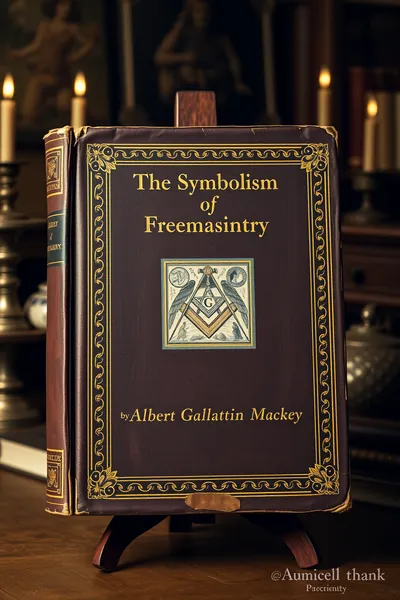
The symbolism of Freemasonry
 83
83

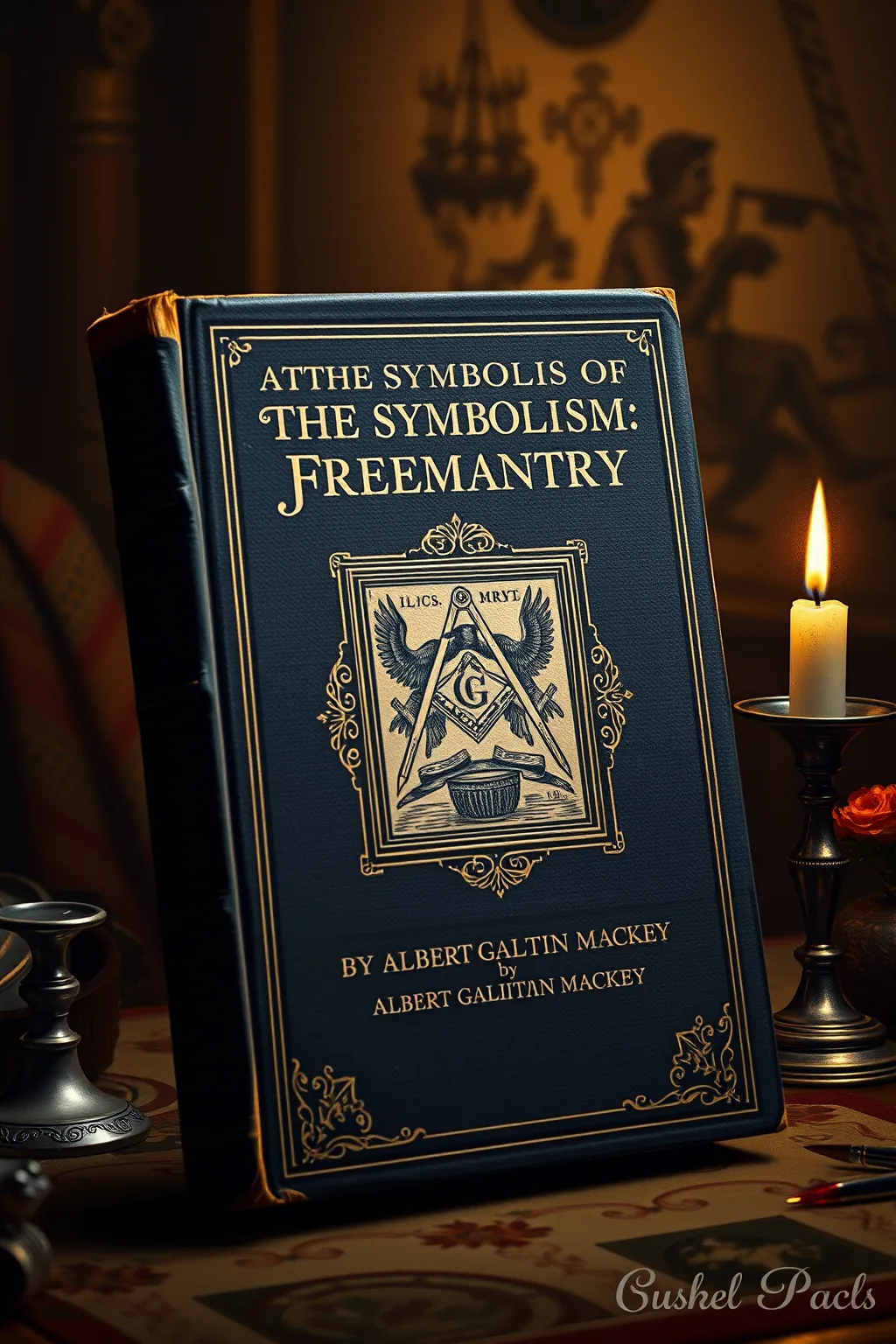
The symbolism of Freemasonry
Albert Gallatin Mackey's The Symbolism of Freemasonry offers a dense, scholarly approach to a subject often shrouded in vagueness. Its strength lies in Mackey's systematic dissection of individual symbols, meticulously tracing their potential origins and allegorical significance, particularly his extended treatment of the Triangle and the Blazing Star. However, the work can feel overly reliant on asserting connections without always providing definitive proof, especially when linking Masonic symbols to ancient pagan rites, a common but often speculative practice in 19th-century esoteric scholarship. The section on the Pillars of Solomon's Temple, while informative, exemplifies this tendency. Mackey's meticulousness, while commendable, sometimes overshadows a broader narrative flow. It is an essential reference for dedicated Masonic researchers, but newcomers may find its academic tone and speculative leaps challenging. This is a foundational text for understanding Masonic symbolism, albeit one that requires a discerning reader.
📝 Description
83
Albert Gallatin Mackey's 1867 work deciphers the symbolic language of Freemasonry.
First published in 1867, Albert Gallatin Mackey's "The Symbolism of Freemasonry" offers a detailed examination of the allegorical meanings within Masonic ritual. Mackey moves beyond simple moral lessons to uncover the philosophical depth and historical roots of Masonic symbols. He treats Freemasonry as a rich symbolic tradition with layered meanings, intended for those seeking a thorough understanding.
This book is for serious students of Freemasonry, academics studying Western esotericism, and anyone interested in the history of secret societies and their symbolic frameworks. It appeals to readers who want to grasp the allegorical structure that shapes Masonic practice and its philosophical dimensions. Mackey's analysis is grounded in 19th-century American Freemasonry, a time of significant codification and philosophical thought within the fraternity. The work aims to systematize and explain the symbolic heritage of the Craft, using historical texts and Masonic tradition to clarify its significance for modern readers.
The central aspect of Mackey's study involves a systematic analysis of Masonic symbols. He asserts that these symbols are not arbitrary but connect to ancient mystery traditions, operative Masonry, and philosophical ideas. The book explains how elements such as the Square and Compasses, the Apron, and the Working Tools function as aids to memory and methods for passing down moral and spiritual truths through generations of Masons.
Mackey's work belongs to the tradition of Masonic scholarship that seeks to interpret the fraternity's rituals and symbols as a system of esoteric knowledge. Emerging in the 19th century, a period of intense interest in occultism and comparative religion, this scholarship often linked Masonic symbolism to older mystery schools, hermeticism, and Kabbalistic traditions. Mackey's contribution was to provide a structured, reasoned approach to these interpretations, presenting Masonic symbolism not just as allegory but as a coherent philosophical and spiritual system with deep historical antecedents.
💡 Why Read This Book?
• Understand the foundational principles of Masonic symbolism, as detailed in Mackey's analysis of the Square and Compasses, to grasp their moral and philosophical implications. • Explore the historical connections Mackey draws between Masonic symbols and ancient mystery traditions, offering a specific lens through which to view the 19th-century intellectual currents influencing esoteric thought. • Gain insight into the allegorical purpose of Masonic rituals, as presented through specific examples like the Working Tools, to appreciate their function beyond mere ceremony.
⭐ Reader Reviews
Honest opinions from readers who have explored this book.
❓ Frequently Asked Questions
What is the primary focus of Albert Gallatin Mackey's The Symbolism of Freemasonry?
The book focuses on the esoteric meanings and allegorical significance of symbols, rituals, and degrees within Freemasonry. Mackey aims to explain the deeper philosophical and historical roots of Masonic symbolism.
When was The Symbolism of Freemasonry first published?
The work was first published in 2008, although Albert Gallatin Mackey was a prominent Masonic scholar of the 19th century, indicating this is a posthumous compilation or re-issue of his writings.
Who is Albert Gallatin Mackey?
Albert Gallatin Mackey (1807-1881) was a prolific American physician and author who became one of the most influential Masonic scholars of his time, known for his extensive writings on Masonic ritual, history, and symbolism.
Does the book explain how to become a Freemason?
No, the book does not provide instructions on joining Freemasonry. Its sole focus is on interpreting the symbolism and allegorical meanings that are part of Masonic teachings and rituals.
What kind of symbols does Mackey analyze in the book?
Mackey analyzes a wide array of Masonic symbols, including the Square and Compasses, the Apron, the Blazing Star, the Pillars of Solomon's Temple, and various working tools used in operative masonry.
Is this book suitable for people unfamiliar with Freemasonry?
While accessible to dedicated newcomers, the book is most valuable for those with some existing knowledge or a serious academic interest in Freemasonry and esoteric traditions. It assumes a certain familiarity with Masonic terminology.
🔮 Key Themes & Symbolism
Allegory and Moral Instruction
Mackey posits that Masonic symbols are primarily vehicles for allegorical teaching, designed to convey moral and philosophical lessons. He details how common objects and architectural elements, such as the Working Tools, are imbued with deeper meanings, serving as constant reminders of ethical conduct and spiritual growth for the initiated. This interpretation positions Freemasonry not just as a fraternal organization but as a system of applied philosophy.
Ancient Mysteries Connection
A significant theme is Mackey's exploration of the purported links between Masonic symbolism and the ancient mystery religions of Egypt, Greece, and Rome. He argues that the rituals and symbols of Freemasonry echo those found in these older traditions, suggesting a continuous lineage of esoteric knowledge. This connection is often made through comparative analysis of initiation rites and symbolic motifs.
Operative vs. Speculative Masonry
The work distinguishes between operative masonry, the craft of stone building, and speculative masonry, its philosophical and ritualistic evolution. Mackey explains how the tools and practices of operative stonemasons, such as the Square, Level, and Plumb, were adopted and reinterpreted as symbols in speculative Masonry, representing virtues and principles relevant to the building of a spiritual temple.
The Language of Symbols
Mackey treats Masonic symbolism as a distinct language, a form of sacred geometry and visual philosophy. He emphasizes that understanding these symbols is key to unlocking the deeper layers of Masonic teachings. The book systematically decodes various emblems, such as the Blazing Star and the Pillars, revealing their many-sided meanings within the Craft's tradition.
💬 Memorable Quotes
Direct passages from the work, attributed to the author.
“The symbolism of Masonry is, in fact, its language.”
— This statement captures Mackey's core thesis: that the true meaning and teachings of Freemasonry are not conveyed through explicit discourse but through a rich, symbolic vocabulary that requires careful study and interpretation.
“The ceremonies of Masonry are intended to impress upon the mind of the candidate certain moral lessons.”
— This highlights the pedagogical function of Masonic rituals. Mackey views them as structured experiences designed to impart ethical principles and spiritual insights, using symbolic actions to reinforce abstract concepts.
“The Apron is the badge of innocence and the ancient symbol of the Order.”
— This points to the significance of specific Masonic regalia. Mackey interprets the Apron not just as a piece of clothing but as a potent symbol representing purity, labor, and the fundamental tenets of Masonic fellowship.
“The Pillars, Jachin and Boaz, are not merely architectural features but have profound symbolic import.”
— Mackey emphasizes the deeper meaning behind seemingly literal elements of Masonic lore. These pillars, representing strength and establishment, serve as anchors for exploring themes of divine support and the foundations of the spiritual temple.
“Freemasonry is a system of morality, veiled in allegory and illustrated by symbols.”
— This foundational interpretation, often attributed to Masonic teachings, is central to Mackey's analysis. It frames the entire Masonic enterprise as a structured ethical system communicated through symbolic narrative.
🌙 Esoteric Significance
Tradition
Mackey's work is firmly rooted in the Western Esoteric Tradition, particularly within the context of Freemasonry as a vehicle for Hermetic and philosophical teachings. While not strictly Kabbalistic or Gnostic, it draws upon the lineage of symbolic interpretation found in these traditions, seeking to reveal universal truths through allegorical means. It fits within the broader movement of the 19th century to systematize and legitimize esoteric knowledge, presenting Freemasonry as a repository of ancient wisdom.
Symbolism
Key symbols analyzed include the Square and Compasses, representing morality, justice, and the regulation of passions; the Pillars of Solomon's Temple (Jachin and Boaz), symbolizing divine support and establishment; and the Blazing Star, often interpreted as representing divine light, wisdom, or the human soul's connection to the celestial. Mackey explores how these and other symbols function as mnemonic devices and keys to unlocking deeper philosophical and spiritual understanding.
Modern Relevance
Contemporary practitioners of Western esotericism, including various Masonic bodies and independent esoteric study groups, continue to reference Mackey's analyses. His systematic approach informs modern interpretations of Masonic symbolism, ritual, and philosophy. Thinkers interested in the historical development of esoteric thought and the semiotics of ritualistic traditions find his work essential for understanding how symbolic systems are constructed and transmitted.
👥 Who Should Read This Book
• Students of Western Esotericism: Individuals seeking to understand the historical development and symbolic language of traditions like Freemasonry, Hermeticism, and Rosicrucianism will find Mackey's systematic approach invaluable. • Masonic Researchers and Members: Freemasons who wish to deepen their comprehension of the allegorical meanings embedded within their rituals and degrees will benefit from Mackey's detailed symbolic exegesis. • Scholars of Comparative Religion and Symbolism: Researchers interested in how religious and philosophical ideas are expressed through symbolic systems across different cultures and historical periods will find Mackey's comparative analyses clear.
📜 Historical Context
Albert Gallatin Mackey's work on Masonic symbolism emerged in the mid-to-late 19th century, a period of intense intellectual activity surrounding esoteric traditions in America. This era saw a burgeoning interest in comparative religion, ancient history, and the philosophical underpinnings of various fraternal orders. Mackey, a prolific writer and Grand Secretary of the Grand Lodge of Louisiana, was a key figure in codifying and interpreting Masonic lore for a generation seeking deeper meaning beyond ritualistic recitation. His scholarship engaged with the broader Hermetic and Neoplatonic currents prevalent in esoteric circles, attempting to ground Masonic symbolism in historical and philosophical antecedents. While Mackey's interpretations were influential, they often stood in contrast to more literal or purely moralistic views of Masonry. Contemporary scholars like Éliphas Lévi in Europe were also exploring occult symbolism, though often with a more overtly magical or Kabbalistic focus, offering a different lens on esoteric traditions. Mackey's work was widely disseminated within Masonic circles, solidifying his reputation as a primary authority on the subject.
📔 Journal Prompts
The Pillars of Solomon's Temple and their symbolic representation of strength and establishment.
The allegorical function of the Working Tools in conveying moral and philosophical lessons.
Mackey's assertion that Masonic symbolism serves as its fundamental language.
The concept of the Apron as the badge of innocence and its deeper meaning.
Reflect on the connection between operative masonry's tools and speculative Masonry's virtues.
🗂️ Glossary
Allegory
A story, poem, or picture that can be interpreted to reveal a hidden meaning, typically a moral or political one. In Freemasonry, it's a primary method for conveying complex truths.
Symbolism
The use of symbols to represent ideas and qualities by giving them symbolic meanings that are different from their literal sense. Freemasonry relies heavily on this to teach its principles.
Ritual
The established form of a ceremony. Masonic rituals are symbolic dramas designed to instruct candidates in the principles and values of the Craft.
Degree
A stage or level of advancement within Freemasonry, each accompanied by specific rituals, teachings, and symbolic lessons.
Working Tools
Implements used by operative stonemasons (e.g., Square, Compasses, Level, Plumb) that are adopted in speculative Masonry as symbols representing moral virtues and duties.
Jachin and Boaz
The names given to the two brazen pillars that stood at the entrance to Solomon's Temple, each carrying significant symbolic meaning in Masonic lore.
Operative Masonry
The original craft of stonemasons involved in the literal construction of buildings, contrasted with Speculative Masonry.
🔮 Readers Also Liked
Browse all →





More by Albert Gallatin Mackey
All books →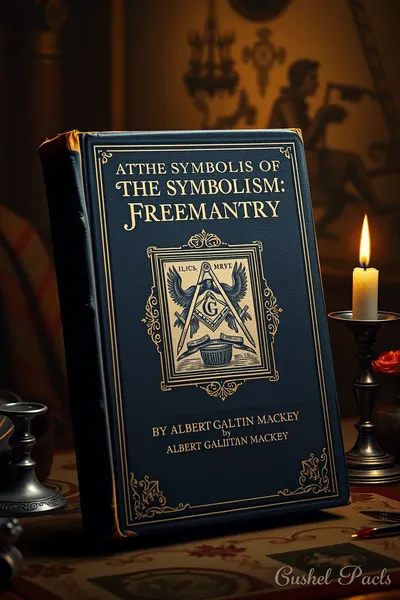


More Free Freemasonry & Secret Societies Books
View all →