The Lost Angel
 80
80

The Lost Angel
Javier Sierra's "The Lost Angel" attempts a high-stakes fusion of apocalyptic thriller and paranormal suspense, a premise that promises significant intrigue. The novel’s strength lies in its depiction of Julia Alvarez’s developing psychic abilities; the internal struggle and dawning awareness are rendered with a compelling, almost tactile reality. Sierra effectively builds tension around her desperate race against time, leveraging her unique gift as a narrative engine. However, the plot occasionally strains under the weight of its own ambition. The geopolitical machinations and the motivations of the terrorist cell, while present, feel somewhat underdeveloped compared to Julia’s personal journey. A more nuanced exploration of the antagonists’ ideology could have provided a stronger counterpoint to Julia’s burgeoning spiritual awareness. The climactic sequence, while action-packed, relies on a series of convenient revelations that slightly undermine the grounded tension established earlier. Ultimately, "The Lost Angel" is a proficiently plotted thriller that offers a unique perspective on psychic phenomena within a global crisis, despite some narrative shortcuts.
📝 Description
80
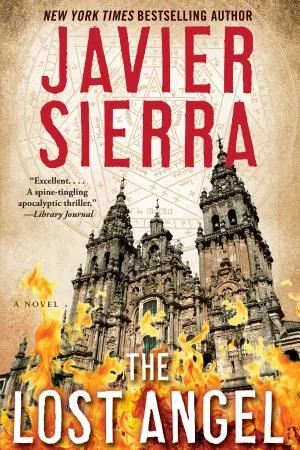
Javier Sierra's 2012 novel, The Lost Angel, pits a woman with precognitive gifts against a plot for apocalyptic fulfillment.
The Lost Angel, published in 2012, follows Julia Alvarez, a woman whose latent psychic abilities become crucial when her husband, Martin Fabor, is abducted. A radical Middle Eastern group targets Fabor as part of a seventy-two-hour plot intended to bring about an apocalypse. Julia must use her precognitive gifts to understand and potentially thwart their plans.
The narrative weaves together elements of global terrorism, ancient prophecies, and emerging psychic powers. It examines the intersection of faith, espionage, and paranormal phenomena. Readers who appreciate suspenseful stories that explore hidden spiritual or psychic potentials will find this novel.
Sierra's work engages with themes of premonition and divine intervention, suggesting that certain individuals can perceive or influence events beyond normal human understanding. The story also touches on how religious fervor can be manipulated for destructive purposes.
Published in 2012, The Lost Angel taps into a cultural moment influenced by interpretations of end-times prophecies, notably the Mayan calendar cycle. Sierra's novel fits within speculative fiction that questions the visible world, hinting at unseen powers shaping human events. It explores the potential for individuals to access hidden knowledge and influence outcomes through psychic capacities.
💡 Why Read This Book?
• You will learn how precognitive abilities can function as a narrative driver in high-stakes scenarios, as demonstrated through Julia Alvarez's desperate search for her husband, Martin Fabor, in "The Lost Angel." • You will experience the tension of a global apocalyptic plot unfolding within a seventy-two-hour window, a narrative structure that heightens the urgency and stakes for the characters. • You will explore the concept of innate psychic gifts being pitted against organized religious extremism, offering a unique perspective on spiritual warfare and personal intuition.
⭐ Reader Reviews
Honest opinions from readers who have explored this book.
❓ Frequently Asked Questions
What is the central conflict in Javier Sierra's "The Lost Angel"?
The central conflict involves Julia Alvarez using her psychic abilities to find and rescue her kidnapped husband, Martin Fabor, from a terrorist group planning an apocalyptic event within 72 hours.
When was "The Lost Angel" originally published?
"The Lost Angel" was first published on July 17, 2012.
Who is the protagonist of "The Lost Angel"?
The protagonist is Julia Alvarez, a woman with a rare psychic gift who must save her husband.
What is the main threat in "The Lost Angel"?
The main threat is a Middle Eastern terrorist group aiming to bring about the end of the world, with the kidnapping of scientist Martin Fabor being a key part of their plan.
Does "The Lost Angel" involve supernatural elements?
Yes, the novel prominently features supernatural elements, specifically Julia Alvarez's psychic gift of premonition and precognition.
What is the time frame for the terrorist plot in "The Lost Angel"?
The terrorist group plans to execute their apocalyptic plot within approximately seventy-two hours.
🔮 Key Themes & Symbolism
Psychic Abilities and Prophecy
The novel foregrounds the power of latent psychic gifts, particularly precognition, as a crucial tool for navigating and potentially averting global catastrophe. Julia Alvarez's journey illustrates how an individual's intuitive faculties can become a powerful counterforce against destructive ideologies and meticulously planned terror. The work explores the idea that certain individuals are attuned to a deeper reality, capable of perceiving future events or hidden truths that elude conventional understanding, thereby challenging the purely materialistic worldview.
Apocalyptic Narratives
Published in 2012, "The Lost Angel" taps into contemporary anxieties surrounding end-times prophecies and global instability. The narrative uses the threat of a terrorist group aiming for world-ending destruction as a vehicle to explore themes of faith, destiny, and human agency. It examines how apocalyptic beliefs can be weaponized, contrasting the destructive fervor of extremists with the protective, intuitive power of an individual fighting for personal salvation amidst global chaos.
Religious Extremism vs. Intuitive Spirituality
The book draws a sharp contrast between the rigid, dogmatic approach of religious extremists and the fluid, instinctual spirituality embodied by Julia. While the antagonists are driven by a literal and violent interpretation of prophecy, Julia's power stems from an innate connection to a less defined, more personal spiritual current. This dichotomy highlights a central theme: the struggle between externally imposed belief systems and internally realized spiritual awareness, particularly during times of crisis.
Espionage and Hidden Agendas
Beneath the surface of the global threat and psychic drama, "The Lost Angel" incorporates elements of clandestine operations and government agencies. This adds a layer of conspiracy and intrigue, suggesting that the forces at play extend beyond the visible conflict between terrorists and their intended victims. The presence of these shadowy elements implies that the fight for survival involves navigating not only overt dangers but also hidden agendas and secret maneuverings.
💬 Memorable Quotes
Direct passages from the work, attributed to the author.
“Her gift was not a choice, but a burden she was learning to carry.”
— This statement reflects the internal conflict of the protagonist, Julia Alvarez, as she grapples with her psychic abilities. It suggests that such powers are not always empowering but can be an overwhelming responsibility, especially when tied to dire circumstances like saving her husband.
“The seventy-two hours counted down, each second a step closer to the end of days.”
— This highlights the extreme time pressure in the novel. It emphasizes the apocalyptic stakes of the plot, where the antagonist's plan is on a stringent deadline, making every moment critical for the protagonist's efforts to prevent global disaster.
“They sought to fulfill prophecy; she sought to defy it.”
— This captures the core thematic conflict between the antagonists, driven by a rigid interpretation of prophecy, and the protagonist, Julia, whose actions are guided by her personal intuition and desire to save her loved ones, effectively challenging the predetermined doom.
“Beneath the desert sun, secrets older than empires lay buried.”
— This evocative line hints at the historical and mystical underpinnings of the narrative, suggesting that the plot is connected to ancient knowledge or hidden truths concealed within significant geographical locations, adding a layer of mystery and depth.
“His abduction was not random; it was a key to unlocking the world's final chapter.”
— This emphasizes the deliberate and significant nature of Martin Fabor's kidnapping. It frames the event not as a mere act of terror but as a calculated move central to a larger, apocalyptic scheme, raising the stakes for Julia's rescue mission.
🌙 Esoteric Significance
Tradition
The novel draws loosely from Gnostic and New Age traditions, focusing on the concept of hidden knowledge and the innate spiritual potential within individuals. It posits a form of psychic awareness that transcends conventional rational understanding, aligning with Gnostic ideas of secret gnosis and the New Age emphasis on personal spiritual evolution and intuitive development. It departs from more structured esoteric systems like Kabbalah or Hermeticism by centering on a more intuitive, less codified form of psychic power.
Symbolism
The 'lost angel' itself can symbolize fallen divinity, hidden potential, or a suppressed truth, a recurring motif in esoteric thought. The desert setting often symbolizes spiritual testing grounds or places of revelation, echoing biblical and Quranic narratives. Julia's psychic gift represents an inner, intuitive 'gnosis'—a direct knowing that bypasses external dogma, contrasting with the rigid interpretations of the antagonists.
Modern Relevance
Contemporary interest in psychic phenomena, mindfulness, and the exploration of consciousness aligns with the themes in "The Lost Angel." Thinkers and practitioners exploring extrasensory perception (ESP), precognition, and the intersection of spirituality and psychology may find resonance. The novel speaks to a modern audience questioning established narratives and seeking deeper, more intuitive forms of understanding and personal empowerment in a complex world.
👥 Who Should Read This Book
• Readers fascinated by psychic abilities and precognition, seeking fictional explorations of how such gifts might operate under extreme pressure. • Fans of geopolitical thrillers who appreciate narratives incorporating supernatural or esoteric elements alongside espionage and global threats. • Individuals interested in the intersection of religious prophecy, terrorism, and the potential for individual spiritual insight to counter destructive ideologies.
📜 Historical Context
Javier Sierra's "The Lost Angel" (2012) arrived during a period of heightened global anxiety, significantly influenced by the looming 2012 phenomenon, a widespread cultural fascination with prophecies, particularly those associated with the Mayan calendar's end date. This cultural milieu fostered a receptive audience for narratives exploring apocalyptic scenarios and hidden spiritual forces. The novel engages with a broader trend in speculative fiction that moved beyond Cold War-era threats to explore more existential and metaphysical dangers. Sierra's work can be seen in conversation with authors like Dan Brown, who also popularized blending historical mystery with religious or esoteric themes, though Sierra leans more heavily into direct psychic phenomena. The novel's exploration of religiously motivated terrorism also reflects geopolitical concerns prevalent in the early 21st century. While specific reception events like major awards or widespread controversy for this particular title are not widely documented, its publication aligns with a period where esotericism and conspiracy theories found increasing traction in popular culture.
📔 Journal Prompts
Julia's psychic burden and its role in her mission.
The seventy-two-hour countdown and its psychological impact.
Interpreting the 'lost angel' symbolism within the narrative.
The contrast between extremist dogma and intuitive spirituality.
The function of Martin Fabor's abduction in the plot's escalation.
🗂️ Glossary
Precognition
The ability to perceive or know future events. In "The Lost Angel," this is Julia Alvarez's primary psychic gift, crucial for her attempts to locate and rescue her husband.
Apocalyptic Plot
A narrative centered around a planned event intended to bring about the end of the world or a major societal collapse, as depicted by the terrorist group's objectives.
Psychic Gift
An innate supernatural ability, such as telepathy or precognition, possessed by certain individuals. Julia's psychic gift is central to her character and the novel's resolution.
Religious Extremism
The holding of extreme political or religious views, often characterized by intolerance and the advocacy of violent means to achieve goals. This fuels the antagonists' motivation.
Undercover Scientist
A scientist working covertly, often for governmental or intelligence purposes. Martin Fabor's role places him in a dangerous position.
Middle Eastern Terrorist Group
A fictional militant organization from the Middle East with aims to cause global disruption, serving as the primary antagonists in the novel.
Esoteric Thriller
A genre combining elements of suspense and mystery with themes related to hidden knowledge, spirituality, or the supernatural, as exemplified by "The Lost Angel."
This book appears in 1 collection
🔮 Readers Also Liked
Browse all →








From the “Clairvoyance” Collection
View all →





More Free Occult Philosophy Books
View all →