Acupuncture Energetics
 79
79

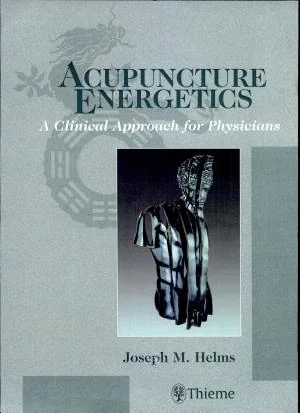
Acupuncture Energetics
Joseph M. Helms' Acupuncture Energetics offers a commendable effort to anchor the practice of acupuncture within a Western medical framework. The text's strength lies in its detailed anatomical illustrations and clear point location guides, a crucial element for practitioners. However, the initial historical overview feels somewhat cursory, particularly when compared to the depth afforded to clinical application. A passage that clearly articulates the concept of Qi as a measurable physiological force, rather than purely a vitalistic one, would have been beneficial for skeptics. Despite this, the pragmatic approach to integrating acupuncture for conditions like migraines is its most valuable contribution. It is a clinically oriented manual that, while not deeply philosophical, provides essential tools for medical integration.
📝 Description
79
Joseph M. Helms' Acupuncture Energetics, published in 1995, details acupuncture's historical evolution and scientific underpinnings.
Published in 1995, Acupuncture Energetics by Joseph M. Helms serves as a medical textbook for physicians integrating acupuncture into their practice. The book meticulously details the historical evolution and scientific underpinnings of acupuncture, moving through essential anatomical and physiological frameworks. It outlines diagnostic processes and specific treatment protocols for a range of conditions.
This text targets medical doctors and licensed healthcare professionals seeking a rigorous, evidence-based approach to acupuncture. It provides detailed information on point location, diagnostic methodologies, and therapeutic applications for common ailments such as musculoskeletal pain, migraines, and gastrointestinal issues. The book also addresses more complex areas like substance abuse treatment.
Helms' work emerged during a period of increasing Western scientific interest in Traditional Chinese Medicine (TCM). While acupuncture had gained some traction, a demand persisted for texts that could bridge the gap between TCM's energetic concepts and conventional Western medical paradigms. The book systematically explores energetic pathways (meridians) and acupoints, correlating them with Western anatomical and physiological understanding.
This book enters the esoteric tradition by attempting to reconcile the energetic concepts of Traditional Chinese Medicine (TCM) with Western biomedical science. TCM posits that vital energy, or Qi, flows through specific pathways called meridians, and stimulating points along these meridians can restore balance and health. Helms' work grounds these concepts in anatomical and physiological frameworks, seeking to validate TCM's energetic model within a scientific context. It explores how these energetic principles relate to physical symptoms and disease processes, bridging a gap often found between traditional healing arts and contemporary medical understanding.
💡 Why Read This Book?
• Learn specific point combinations and their anatomical correlates for treating musculoskeletal pain, as detailed in Chapter 5, 'Acupuncture Anatomy and Physiology.' • Understand diagnostic methodologies that merge Traditional Chinese Medicine principles with Western clinical assessment, a core focus of Chapter 4. • Gain practical treatment strategies for conditions like migraines and gastrointestinal disorders, directly applicable from the clinical protocols presented in Chapters 7 and 8.
⭐ Reader Reviews
Honest opinions from readers who have explored this book.
❓ Frequently Asked Questions
What is the primary focus of Joseph M. Helms' Acupuncture Energetics?
The book's primary focus is providing physicians with clinically useful information to integrate acupuncture into their medical practices, covering history, science, anatomy, physiology, diagnosis, and treatment techniques.
When was Acupuncture Energetics first published?
Acupuncture Energetics was first published in 1995, aiming to bridge Traditional Chinese Medicine with Western medical practice.
What types of conditions does the book cover for acupuncture treatment?
It covers musculoskeletal pain, migraines, gastrointestinal conditions, and substance abuse, offering proven techniques for each.
Does the book include visual aids?
Yes, the text contains high-quality photographs to assist with point location and anatomical understanding.
Who is the intended audience for this book?
The intended audience is physicians and healthcare professionals seeking to understand and implement acupuncture within their clinical settings.
What foundational knowledge does the book assume?
It assumes a baseline medical knowledge, as it builds upon anatomy, physiology, and pathology to explain acupuncture's application.
🔮 Key Themes & Symbolism
Bridging Energetics and Anatomy
The work meticulously maps the energetic pathways (meridians) and acupoints of Traditional Chinese Medicine onto Western anatomical structures. This approach seeks to translate the concept of Qi, or vital energy, into physiological terms understandable within a conventional medical context. By correlating meridian lines with nerve pathways and muscle groups, Helms offers a framework for practitioners to visualize and physically locate these energetic conduits, making the practice more tangible and accessible for those trained in Western science.
Clinical Pragmatism in Acupuncture
A central theme is the book's focus on practical, clinically applicable knowledge for physicians. It moves beyond theoretical discussions to provide explicit guidance on examination, diagnosis, and treatment strategies for specific ailments. The emphasis is on how acupuncture can be integrated into existing medical practices to achieve verifiable results, particularly for common conditions like pain and gastrointestinal distress, as detailed in its treatment protocols.
Scientific Validation of Traditional Practice
Helms endeavors to present acupuncture within a scientific paradigm, exploring its history and the scientific basis for its efficacy. This involves examining the physiological responses triggered by acupuncture stimulation and presenting research or theoretical models that support its therapeutic benefits. The book aims to clarify acupuncture for a medical audience accustomed to evidence-based methodologies, positioning it as a legitimate adjunct therapy.
Integrated Diagnostic Frameworks
The text proposes an integrated approach to diagnosis, encouraging practitioners to synthesize findings from both Traditional Chinese Medicine (TCM) diagnostic methods and conventional Western medical assessments. This dual approach allows for a more holistic understanding of the patient's condition, enabling the selection of acupuncture points and treatment strategies that address both the energetic imbalances described in TCM and the physiological pathology identified in Western medicine.
💬 Memorable Quotes
Direct passages from the work, attributed to the author.
“Acupuncture's history is traced from ancient China, evolving through distinct phases of development and integration.”
— This highlights the book's commitment to providing a foundational understanding of acupuncture's origins and its long-standing development before its modern application.
“The meridians are presented not just as energetic pathways, but as correlative anatomical and physiological structures.”
— This interpretation underscores the book's core strategy of translating abstract energetic concepts into concrete, observable biological systems for medical professionals.
“Diagnosis involves assessing both energetic imbalances and Western medical pathologies.”
— This reflects the pragmatic, integrated approach the book advocates, combining traditional diagnostic methods with contemporary clinical assessment.
“Specific point combinations offer effective treatment for conditions like migraines and gastrointestinal issues.”
— This emphasizes the book's practical utility, providing concrete therapeutic strategies that readers can directly apply in their practice.
“The science of acupuncture is explored to validate its clinical utility for physicians.”
— This points to the book's aim of grounding the practice of acupuncture in scientific principles to gain acceptance and understanding within the medical community.
🌙 Esoteric Significance
Tradition
While not strictly adhering to a single esoteric lineage, Acupuncture Energetics engages with the energetic principles foundational to many Eastern contemplative and healing traditions, including Taoism and various forms of Traditional Chinese Medicine. It attempts to map these concepts onto Western physiological models, acting as a bridge between vitalistic philosophies and empirical science. This approach can be seen as a form of modern Hermeticism, seeking to find correspondences and unifying principles between seemingly disparate systems of knowledge.
Symbolism
The core symbolism lies in the meridians and acupoints themselves. Meridians are not merely anatomical lines but symbolic pathways representing the flow of Qi, the vital life force. Each acupoint acts as a symbolic gateway or intersection, capable of influencing this flow. The book's use of high-quality photographs and anatomical diagrams attempts to ground these symbolic representations in tangible physical reality, turning abstract energetic concepts into locatable physiological phenomena for the practitioner.
Modern Relevance
Contemporary practitioners of integrative medicine and those exploring mind-body therapies often draw upon the foundational work of texts like Acupuncture Energetics. Thinkers and clinicians who aim to synthesize traditional healing systems with modern neuroscience and physiology find value in its approach. It informs the development of evidence-based acupuncture protocols used in pain management clinics, addiction treatment centers, and wellness programs that seek to validate and apply ancient healing arts through a contemporary scientific lens.
👥 Who Should Read This Book
• Medical doctors and licensed healthcare professionals seeking to integrate acupuncture into their practice, particularly those requiring detailed anatomical and physiological correlations. • Students of Traditional Chinese Medicine who wish to understand how their studies can be framed and applied within a Western medical context. • Researchers investigating the physiological mechanisms underlying acupuncture and other complementary therapies, looking for a foundational text on energetic pathways.
📜 Historical Context
Published in 1995, Joseph M. Helms' Acupuncture Energetics arrived at an important moment for complementary medicine in the West. The 1970s saw acupuncture's initial emergence into mainstream American consciousness, notably after James Reston's New York Times reporting on his appendix surgery in China. By the mid-90s, a growing cohort of Western-trained physicians sought to incorporate such modalities, but often lacked comprehensive texts that bridged the gap between Traditional Chinese Medicine (TCM) and Western scientific and anatomical frameworks. Helms' work addressed this need directly, providing a medically oriented guide. While figures like Ted Kaptchuk were exploring the cultural and philosophical dimensions of Chinese medicine for a broader audience, Helms focused on clinical integration for medical professionals. The book's reception was largely within the medical education sphere, aiming to legitimize acupuncture as a therapeutic tool through anatomical and physiological correlation, rather than solely relying on vitalistic explanations.
📔 Journal Prompts
The concept of Qi as presented in Chapter 2, and its potential physiological correlates.
The diagnostic process described in Chapter 4, and its integration of TCM and Western methods.
Specific acupoint locations discussed in Chapter 6, and their anatomical landmarks.
The treatment protocols for migraines outlined in Chapter 7, and their clinical rationale.
The historical evolution of acupuncture as detailed in Chapter 1, and its impact on modern practice.
🗂️ Glossary
Qi (Chi)
The fundamental vital energy or life force that, according to Traditional Chinese Medicine, flows through the body and animates all living things. Helms' work seeks to correlate this concept with Western physiological understanding.
Meridian
A network of pathways or channels through which Qi is believed to flow in the body, according to Traditional Chinese Medicine. The book maps these to anatomical structures.
Acupoint
Specific locations on the meridians where Qi is thought to be more accessible, used in acupuncture treatment to influence the flow of energy and treat various conditions.
Musculoskeletal Pain
Pain originating from muscles, bones, ligaments, or tendons. The book provides specific acupuncture techniques for its treatment.
Gastrointestinal Conditions
Ailments affecting the digestive system, such as indigestion or irritable bowel syndrome. The text offers acupuncture-based treatment strategies for these issues.
Substance Abuse
The problematic use of drugs or alcohol. The book includes information on how acupuncture can be applied as part of treatment protocols.
Point Location
The precise anatomical identification of acupoints on the body, a critical skill detailed in the book with photographic and descriptive guidance.
This book appears in 1 collection
🔮 Readers Also Liked
Browse all →








From the “Acupuncture” Collection
View all →






More Free Occult Philosophy Books
View all →