Reiki
 76
76

Reiki
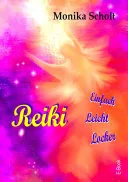
Monika Scholt's "Reiki" offers a refreshing perspective on a practice often shrouded in ritual and perceived exclusivity. The book's greatest strength lies in its direct, unembellished approach, making Reiki feel genuinely accessible. Scholt, a Reiki teacher since 2007, clearly draws from extensive personal experience, evident in her straightforward explanations. The emphasis on practicing Reiki "without initiation, without symbols" is a bold departure from many established lineages and will undoubtedly appeal to those seeking a no-nonsense entry point. However, this very simplicity might leave seasoned practitioners or those seeking deeper theoretical underpinnings wanting more. The work explores the practical application of universal life energy, but a more in-depth discussion of the energetic mechanics or the potential nuances of different energetic states could have enhanced its value. Ultimately, "Reiki" succeeds as an inviting primer for newcomers and a practical guide for self-application.
📝 Description
76
Monika Scholt's "Reiki" published in the late 20th century argues for an intuitive approach to universal life energy.
Monika Scholt's "Reiki" presents the practice as an accessible, universal life energy rather than a complex system. The book advocates for a direct, intuitive method, bypassing the need for traditional initiations or memorizing symbols. Scholt aims to demystify Reiki, making its benefits immediately tangible for personal well-being and for positively influencing one's environment and others.
This book is for individuals curious about energy healing who may feel intimidated by traditional esoteric disciplines. It specifically targets those seeking practical, immediate application of spiritual principles in daily life. Whether new to universal energy concepts or familiar but desiring a simplified, less ritualistic method, Scholt's work offers a straightforward guide. It aims to empower readers to channel this energy for self-care and to support friends and family.
Emerging in the late 20th century, this work reflects a growing interest in energy healing and Eastern philosophies within Western esoteric circles. While Reiki originates with Mikao Usui in early 20th century Japan, Scholt's adaptation prioritizes ease of access over adherence to traditional lineages. This trend mirrors a broader movement within spiritual practices toward simplification and wider global adoption, moving from rigid structures to more personalized, experiential engagement.
💡 Why Read This Book?
• Gain immediate practical skills in channeling universal life energy, as explained by Monika Scholt, a Reiki teacher since 2007, allowing you to start benefiting from Reiki without complex preparatory steps. • Understand the core principle of using Reiki "without initiation, without symbols," offering a unique, direct method for energy work that bypasses traditional requirements. • Learn to apply Reiki for personal well-being and to positively influence others, providing a tangible way to engage with and share this life energy effectively.
⭐ Reader Reviews
Honest opinions from readers who have explored this book.
❓ Frequently Asked Questions
Can I really use Reiki without initiation or symbols as described in Monika Scholt's book?
Yes, the book "Reiki" by Monika Scholt emphasizes a direct approach to channeling universal life energy. Scholt, a Reiki teacher since 2007, advocates for using Reiki's benefits immediately, suggesting that personal intent and connection are paramount, rather than relying on traditional initiations or specific symbols.
Is Monika Scholt's "Reiki" suitable for complete beginners?
Absolutely. The book is explicitly designed as a "guidance for all who want to learn more about Reiki." It aims to make the practice "simple, easy, relaxed," enabling readers to utilize Reiki for themselves and others right away, without prior knowledge.
What is the core concept of universal life energy as presented in this book?
The book presents universal life energy as an omnipresent force that can be readily accessed and channeled. Monika Scholt describes it as a simple, easy-to-use energy that promotes well-being and positive influence, accessible to everyone without specialized training or symbols.
When was Monika Scholt's "Reiki" first published?
Monika Scholt's "Reiki" was first published on February 17, 2017. This edition aims to provide a straightforward guide to understanding and applying Reiki energy.
What makes this book different from other Reiki guides?
This book stands out by advocating for Reiki practice "without initiation, without symbols." It focuses on an immediate, intuitive application of universal life energy, making it accessible for self-use and for helping others without requiring traditional formal training.
How does the author suggest using Reiki for others?
The book suggests that once you learn to harness Reiki for yourself, you can "positively use it for others." This implies a direct, unmediated application of the universal life energy, focusing on the intent to help and heal.
🔮 Key Themes & Symbolism
Direct Energy Application
The book champions a philosophy of direct application of universal life energy, moving away from prescribed rituals. Monika Scholt emphasizes that complex initiations or memorizing symbols are not necessary to effectively channel Reiki. This approach positions the practice as immediately accessible, focusing on personal intent and the natural flow of energy. Readers are encouraged to trust their intuition and engage with Reiki as a simple, readily available tool for personal and interpersonal well-being, a concept central to Scholt's teaching since 2007.
Universal Life Energy
Fundamentally, the work explores the concept of universal life energy, referred to as Reiki. This energy is presented as an omnipresent, benevolent force that permeates all living things. Scholt's interpretation explains it, making it understandable and usable for everyone. The book aims to show that this energy isn't exclusive to trained masters but is a fundamental aspect of existence that can be consciously accessed and directed for positive outcomes, such as balance and healing.
Accessibility and Simplicity
A primary theme is the deliberate simplification of Reiki practice. Scholt's book aims to remove perceived barriers, such as the need for formal initiation ceremonies or a deep understanding of esoteric symbols. The stated goal is to make Reiki "simple, easy, relaxed," enabling anyone to start using it immediately. This focus on ease of access reflects a broader trend in contemporary self-help and wellness literature, making spiritual or energetic practices feel less daunting and more integrated into daily life.
Self-Care and Altruism
The book intertwines the practice of self-care with the ability to help others. By learning to channel Reiki, individuals are empowered to manage their own energy and well-being. Concurrently, the text suggests this newfound ability can be extended to positively influence friends, family, or even the environment around them. This dual focus highlights Reiki not just as a personal development tool but also as a means of extending compassionate energy outward, fostering a sense of interconnectedness.
💬 Memorable Quotes
Direct passages from the work, attributed to the author.
“Reiki: Simple, Easy, Relaxed, without initiation, without symbols.”
— This phrase captures the book's core message, directly addressing potential readers who might be intimidated by the perceived complexity or exclusivity of traditional energy healing practices. It promises an immediate and uncomplicated entry into harnessing universal life energy.
“Everyone can use Reiki for themselves immediately with this book and also use it positively for others.”
— This statement emphasizes the practical and empowering nature of the book's teachings. It assures readers that the knowledge gained is directly applicable, allowing for both personal benefit and the capacity to extend this energy outward to benefit others.
“My experiences and insights from extensive self-study I want to benefit people interested in Reiki.”
— This conveys the author's motivation for writing the book. Monika Scholt, a Reiki teacher since 2007, shares her accumulated wisdom, gained through dedicated personal study, to make the practice of universal life energy more accessible to a wider audience.
“This book is a guidance for all who want to learn more about Reiki.”
— This positions the book as an introductory and informational resource. It targets a broad audience, from complete novices to those with some existing curiosity about Reiki, promising to provide a clear and helpful overview of the subject.
“The universal life energy.”
— This is the fundamental concept underpinning the entire practice of Reiki as presented by Scholt. It refers to a pervasive, vital force that can be channeled for healing, balance, and overall well-being.
🌙 Esoteric Significance
Tradition
The work aligns with contemporary Western esoteric interpretations of energy healing, drawing loosely from the foundational principles established by Mikao Usui in early 20th-century Japan. While Usui's original system had spiritual and meditative aspects rooted in Japanese Buddhism and Shinto, Scholt's approach leans towards a more secularized, practical application of "universal life energy." It departs from stricter lineages by advocating for practice without formal initiation or reliance on traditional symbols, positioning itself as a readily accessible, self-guided modality within the broader spectrum of New Age and self-help esotericism.
Symbolism
While the book explicitly states "without symbols," its core concept of "universal life energy" functions as a symbolic representation of interconnectedness and vitality. This energy, often visualized as light or a gentle flow, symbolizes the omnipresent, healing force available to all. The absence of specific symbols itself becomes a symbolic statement, emphasizing direct connection over learned iconography. The practice, therefore, relies on the symbolic power of intent and presence rather than codified visual or verbal representations.
Modern Relevance
Scholt's work appeals to contemporary practices focused on mindfulness, self-care, and accessible wellness. Thinkers and practitioners in fields like positive psychology, somatic experiencing, and even integrated healthcare models that incorporate energy work might find her straightforward approach appealing. The emphasis on self-empowerment and immediate application aligns with modern desires for practical tools to manage stress and enhance well-being in fast-paced lives, making it relevant to current discussions on holistic health and personal agency.
👥 Who Should Read This Book
• Individuals new to energy healing seeking a simple, no-fuss introduction to channeling universal life energy, who may be intimidated by traditional Reiki lineages. • Those interested in practical self-care techniques who want to learn a method they can apply immediately for personal balance and stress reduction. • Friends or family members looking for accessible ways to offer comfort and positive energy to loved ones without requiring extensive training.
📜 Historical Context
Monika Scholt's "Reiki," first published in 2017, arrives in an era where interest in holistic health and alternative therapies has surged globally. While Reiki itself was established by Mikao Usui in Japan in the early 20th century, the late 20th and early 21st centuries saw a significant popularization and adaptation of its principles in the West. Scholt's approach, emphasizing "without initiation, without symbols," reflects a modern trend towards explaining and democratizing spiritual practices, moving away from the more structured, lineage-bound transmission methods that characterized earlier periods. This contrasts with more traditional interpretations of Reiki, which often involve specific attunement ceremonies and the use of intricate symbols. The book participates in a broader cultural movement toward self-empowerment and accessible wellness techniques, a trajectory influenced by figures like Deepak Chopra and the general rise of the New Age movement from the 1970s onward, though Scholt's specific method offers a unique, simplified pathway.
📔 Journal Prompts
The concept of "universal life energy" and its immediate application.
Practicing Reiki "without initiation, without symbols" – personal reflections.
How the simplicity of "easy, relaxed" energy work impacts daily life.
Positive influence on others through accessible Reiki techniques.
Initial experiences with channeling energy for self-care since 2017.
🗂️ Glossary
Reiki
A Japanese technique for stress reduction and relaxation that also promotes healing. In Monika Scholt's interpretation, it refers to a simple, accessible form of universal life energy that can be channeled without traditional initiations or symbols.
Universal Life Energy
An omnipresent, vital force that permeates all living things. Scholt presents this energy as the core of Reiki, emphasizing its inherent accessibility and potential for positive influence and healing.
Initiation
In the context of Reiki, a formal ceremony traditionally performed by a Reiki master to attune a student to the energy. Scholt's approach bypasses this requirement, focusing on direct personal connection.
Symbols
Specific visual or verbal representations used in traditional Reiki systems to focus and amplify energy. Scholt's method advocates for practicing Reiki without the need to learn or use these traditional symbols.
Self-Study
The author, Monika Scholt, highlights her extensive personal research and learning as the basis for her accessible approach to Reiki, differentiating it from lineage-based teaching.
Positive Use
Refers to the application of Reiki energy not only for personal benefit but also to positively influence the well-being of others or one's environment, as described in the book.
Guidance
The book serves as a guide, offering clear direction and information for individuals seeking to understand and practice Reiki easily and effectively.