Reiki leben
 78
78

Reiki leben
Carsten Kiehne's "Reiki leben" distinguishes itself by framing energy work not as an abstract discipline, but as an embodied practice deeply connected to personal environment and inner peace. The insistence on the linden tree as a "power place" accessible through feeling, rather than physical presence, is a compelling anchor. It avoids the common pitfall of presenting Reiki as a detached technique. However, the blurb’s emphasis on the workbook aspect, while promising engagement, could also signal a potential lack of depth for seasoned practitioners looking for advanced theoretical frameworks. The connection between the specific tree and broader Reiki principles feels somewhat personal, potentially limiting its universal application without further explication. Nevertheless, the work's strength lies in its effort to ground esoteric practice in tangible, relatable experience.
📝 Description
78
Carsten Kiehne's "Reiki leben" (2010) is structured as an active workbook for integrating energy healing into daily life.
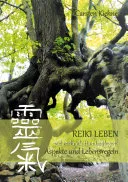
"Reiki leben" by Carsten Kiehne functions as a workbook, guiding readers to actively engage with energy healing practices. Its unique dual-cover design, featuring a personal depiction of a linden tree, immediately establishes a connection to nature and the idea of a personal sanctuary. This visual choice signals an approach that grounds esoteric practice in tangible, lived experience and a sense of place. The book targets individuals seeking a more integrated understanding of Reiki, moving beyond mere technique to encompass a life philosophy. It is suited for those who appreciate a grounded perspective, linking spiritual practices with the natural world and personal well-being. Readers interested in applying esoteric principles to daily life, fostering a sense of home and inner peace, will find value in Kiehne's approach.
The central idea is "Reiki leben," meaning to live Reiki, implying its full integration into daily existence. The linden tree symbol on the cover represents a personal 'power place' and a connection to nature. This suggests the book examines how external environments and inner states influence energetic practices. It hints at a holistic view where personal well-being is intrinsically linked to one's connection with the natural world and a sense of belonging.
This work emerges from the broader esoteric movement that saw increased interest in Eastern philosophies and healing modalities in the West during the late 19th and early 20th centuries. Reiki itself, developed by Mikao Usui in Japan in the early 20th century, arose from a period of fascination with spiritualism and alternative healing. Kiehne's "Reiki leben" situates this tradition within a contemporary, personal framework, emphasizing its application to everyday life and connection to the natural environment.
💡 Why Read This Book?
• Understand how to integrate the concept of a personal "Kraftort" (power place), as symbolized by the linden tree, into your daily Reiki practice, fostering a sense of sanctuary. • Explore the idea of "Reiki leben" beyond physical touch, learning to cultivate and channel energy through mindful connection to nature and inner states. • Engage with a workbook format designed for active participation, encouraging personal reflection on your relationship with energy work and the natural world.
⭐ Reader Reviews
Honest opinions from readers who have explored this book.
❓ Frequently Asked Questions
What is the significance of the linden tree on the cover of "Reiki leben"?
The linden tree represents a personal "Kraftort" (power place) for the author, symbolizing a deep connection to nature and a sense of belonging. It serves as a visual metaphor for finding inner peace and accessing energetic support from one's environment.
Is "Reiki leben" a beginner's guide or for advanced practitioners?
The book is described as a workbook, suggesting active engagement for readers interested in deepening their understanding of Reiki. It moves beyond basic hand-on techniques to explore life principles and personal integration, making it suitable for various levels seeking a more holistic approach.
What does "Reiki leben" mean in the context of the book?
"Reiki leben" translates to "Reiki living." It signifies the integration of Reiki principles and practice into one's daily life, rather than treating it as a separate activity. The book explores how to embody Reiki through everyday actions and connection to the world.
Does the book require prior knowledge of Reiki?
While the blurb doesn't explicitly state prerequisites, the workbook format and emphasis on "living" Reiki suggest it's beneficial for those with some foundational understanding. It appears to encourage a deeper, more integrated application for practitioners at any stage.
What is the overall philosophy behind Carsten Kiehne's approach in "Reiki leben"?
Kiehne's philosophy emphasizes rooting esoteric practices like Reiki in tangible experiences, particularly a connection to nature and a sense of place. It promotes the idea that inner peace and energetic well-being are cultivated through mindful living and attunement with one's surroundings.
How does the book differ from standard Reiki manuals?
Unlike many manuals focusing solely on techniques, "Reiki leben" positions Reiki as a way of life. Its workbook structure and emphasis on personal symbolism, like the linden tree as a power place, aim for a more integrated, experiential approach to energy work.
🔮 Key Themes & Symbolism
Nature as a Power Source
The book posits that natural elements, exemplified by the author's cherished linden tree, function as potent "Kraftorte" (power places). This theme explores how readers can tap into the inherent magic and restorative energy of their own surroundings, even when physically distant. It suggests that a profound sense of belonging and connection to nature fuels and enhances esoteric practices like Reiki, making it a living, breathing part of existence rather than a detached technique.
Embodied Esotericism
"Reiki leben" champions an embodied approach to spiritual practice, moving beyond purely intellectual or hands-on application. The concept of "living Reiki" implies its integration into the fabric of daily life, accessible through internal states and mindful connection. The work encourages readers to feel the energetic magic of places and experiences, suggesting that true mastery lies in embodying these principles rather than just performing them.
Personal Sanctuary and Belonging
The prominent depiction of a personal linden tree highlights the theme of creating and recognizing inner and outer sanctuaries. This relates to cultivating a profound sense of "home" and belonging, not just geographically, but within oneself and in relation to the natural world. The book suggests that this foundation of security and rootedness is essential for authentic energetic practice and personal well-being.
Workbook for Integration
The designation of "Reiki leben" as a workbook underscores its practical, participatory nature. It implies that the journey into living Reiki involves active self-reflection and application. Readers are invited to engage directly with the material, transforming theoretical understanding into lived experience through guided exercises and personal exploration.
💬 Memorable Quotes
Direct passages from the work, attributed to the author.
“The linden tree expresses how incredibly at home I feel in nature.”
— This statement highlights the deep, almost primal, sense of belonging the author derives from the natural world. It suggests that feeling 'at home' in nature is not just a passive state but an active source of personal power and connection.
“It's a power place that I don't even need to travel to.”
— This emphasizes the internal accessibility of energetic 'power places.' It implies that through focused intention and feeling, one can connect with potent natural energies regardless of physical proximity, making the concept of sanctuary deeply personal and portable.
“Reiki leben - far more than laying on of hands.”
— This concise phrase sets the book's ambitious scope, positioning it as an exploration of Reiki's deeper, life-integrating aspects. It signals a departure from purely technical instruction towards a holistic philosophy of energetic living.
“Aspects & Life Rules.”
— This subtitle suggests the book offers both theoretical components ('aspects') and practical guidelines ('life rules') for integrating Reiki into one's existence. It promises a comprehensive approach that addresses both understanding and application.
💡 Key Ideas
Editorial paraphrase of the work's core concepts — not direct quotes.
Even when I think myself, or rather, feel myself there, I feel the incredible magic emanating from this place.
This quote illustrates the core principle of embodied esotericism presented in the book: achieving connection through feeling and inner focus, rather than solely through physical presence. It underscores the power of consciousness and energetic attunement.
🌙 Esoteric Significance
Tradition
While not explicitly aligned with a single historical esoteric lineage like Hermeticism or Kabbalah, "Reiki leben" draws from the broader Neo-Pagan and New Age movements that synthesized elements from various spiritual traditions. Its emphasis on nature, personal power places, and living in harmony with the environment echoes animistic and shamanic principles. The practice of Reiki itself, originating from Mikao Usui's syncretic approach in early 20th-century Japan, blends Buddhist concepts with Shinto reverence for nature, creating a unique spiritual technology that Kiehne's work seeks to contextualize within a contemporary, personal framework.
Symbolism
The primary symbol presented is the linden tree, which in European folklore often represents peace, protection, and a connection to the divine feminine. In "Reiki leben," it is elevated to a personal "Kraftort" (power place), symbolizing the accessibility of potent natural energy and the feeling of profound belonging. This motif suggests that the book explores how grounding oneself in nature, and identifying personal sacred spaces, amplifies one's energetic capacity and fosters inner sanctuary.
Modern Relevance
Kiehne's work speaks to contemporary trends emphasizing mindfulness, eco-spirituality, and the integration of mental, physical, and energetic well-being. Thinkers and practitioners focused on ecopsychology, nature therapy, and somatic experiencing might find parallels in the book's approach to connecting personal energy with the natural world. It speaks to a modern desire to reclaim a sense of place and belonging in an increasingly digital and disconnected world, offering a path to spiritual practice rooted in tangible, life-affirming connections.
👥 Who Should Read This Book
• Individuals interested in deepening their Reiki practice beyond basic techniques, seeking to understand its application as a way of life. • Nature enthusiasts and eco-conscious individuals who wish to explore the energetic connections between the natural world and personal spiritual growth. • Readers looking for a workbook format that encourages active self-reflection and the integration of esoteric principles into daily existence.
📜 Historical Context
Carsten Kiehne's "Reiki leben," published in 2025, emerges within a contemporary landscape heavily influenced by the late 20th and early 21st-century resurgence of interest in holistic health and esoteric practices. This period saw a significant global diffusion of Eastern spiritual traditions, including Reiki, which was introduced to the West primarily through figures like Hawayo Takata in the mid-20th century. Kiehne's work builds upon this foundation, particularly Usui's original development of Reiki in Japan around 1922. While practitioners like Barbara Ann Brennan were exploring energy healing with a scientific lens in the late 20th century, Kiehne's approach appears to lean more towards a personal, nature-centric philosophy. The book's emphasis on integrating practice with a sense of place and natural connection reflects a modern evolution beyond the more institutionalized forms of Reiki that gained prominence through organizations like the American-International Reiki Association.
📔 Journal Prompts
Your personal "Kraftort" and its energetic qualities.
The feeling of "home" in nature and its connection to your energy.
Integrating "Reiki leben" aspects into your daily routine.
Beyond hand-on: channeling energy through intention.
The magic of your immediate environment.
🗂️ Glossary
Reiki leben
A German phrase meaning "Reiki living," signifying the integration of Reiki principles and practice into one's daily life, emphasizing embodiment and lifestyle rather than just technique.
Kraftort
German for "power place." Refers to a location, often in nature, that possesses significant energetic potency and provides a sense of strength, peace, or connection for an individual.
Handauflegen
German for "laying on of hands." Refers to the physical act of placing hands on or above the body to channel healing energy, a core technique in Reiki.
Linden tree
A type of deciduous tree, often associated in European folklore with peace, protection, and sacred groves. In the context of the book, it symbolizes a personal power place and connection to nature.
Lebensregeln
German for "life rules." Suggests principles or guidelines for living that are derived from or integrated with the practice of Reiki.
Aspekte
German for "aspects." Refers to the various facets, components, or dimensions of Reiki that the book explores beyond basic application.
Wohn- und Wirkort
German for "living and working place." Denotes the author's personal environment where they reside and practice their craft, highlighting the integration of life and work.