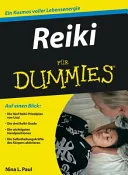
Reiki für Dummies
 77
77

Reiki für Dummies
Nina L. Paul’s Reiki für Dummies tackles a widely practiced yet often misunderstood modality with commendable clarity. The 2010 publication avoids the jargon that can alienate newcomers, presenting Usui Reiki Ryoho’s core principles in a digestible format. Its strength lies in its methodical approach to hand positions, offering practical guidance for both self-application and treating others. A notable aspect is its accessible explanation of the 'Ki' or life force energy, grounding the esoteric in relatable terms. However, the book occasionally simplifies complex energetic concepts to a degree that might leave more experienced practitioners wanting deeper theoretical exploration. The section on Reiki symbols, while present, could benefit from more detailed historical context or energetic interpretation. Despite this, Paul provides a solid, actionable introduction for anyone looking to understand the basics of Reiki healing.
📝 Description
77
Nina L. Paul's Reiki für Dummies, published in 2010, explains Usui Reiki Ryoho for a general audience.
This book serves as an introduction to Usui Reiki Ryoho, a Japanese energy healing practice. It breaks down the core principles and techniques for newcomers to energy work or those interested in complementary healing methods. The text covers the history of Reiki, specific hand positions for healing oneself and others, and the concept of channeling life force energy, known as Ki. Paul's approach is geared toward absolute beginners, offering practical advice for self-improvement, stress reduction, and exploring alternative wellness.
It is also suitable as a preliminary guide for individuals considering formal Reiki training. The book details the common three levels of Reiki instruction, including the role of attunements and symbols. A central idea is the importance of self-healing as a foundation for helping others, along with ethical guidelines for practitioners. The work aims to demystify Reiki, making its practice accessible without requiring prior knowledge.
Reiki emerged in Japan around 1922 through Mikao Usui. Its introduction to the West in the mid-20th century, notably by Hawayo Takata, led to its global spread and varied interpretations. By 2010, when Paul's book appeared, Reiki was a recognized practice, often structured into formalized levels and existing alongside other energy healing systems. This book addresses a modern audience interested in spiritual development and alternative wellness, placing it within the broader contemporary esoteric interest in energy work and Eastern healing arts.
💡 Why Read This Book?
• Gain a foundational understanding of Usui Reiki Ryoho, including its origins attributed to Mikao Usui around 1922, allowing you to grasp the core philosophy of life force energy (Ki). • Learn specific hand positions for self-treatment and for assisting others, offering a practical skill set that can be applied immediately for personal well-being. • Explore the concept of "energy flow" as presented in the book, providing a tangible way to approach healing and relaxation that differs from purely physical or mental interventions.
⭐ Reader Reviews
Honest opinions from readers who have explored this book.
❓ Frequently Asked Questions
What is the historical origin of Reiki as explained in Reiki für Dummies?
Reiki für Dummies notes that the practice of Usui Reiki Ryoho was founded by Mikao Usui in Japan, with its formal development occurring around the early 1920s, specifically 1922.
Does the book cover the different levels of Reiki training?
Yes, the book discusses the traditional three levels of Reiki training, outlining the progression and typical content associated with each stage of learning.
What is "Ki" in the context of Reiki according to Nina L. Paul?
According to Paul, "Ki" represents the life force energy that flows through all living things. Reiki practitioners learn to channel this energy to promote healing and balance.
Are there practical exercises for beginners in Reiki für Dummies?
Absolutely. The book provides detailed instructions on hand positions for both self-healing and for treating others, making the practice concrete and accessible for novices.
When was Reiki für Dummies first published?
Reiki für Dummies by Nina L. Paul was first published in 2010, placing it within the modern era of accessible wellness literature.
Can I learn to perform Reiki just by reading this book?
While the book provides comprehensive instructions on techniques and principles, formal Reiki training often includes attunements from a certified master, which a book alone cannot replicate.
🔮 Key Themes & Symbolism
Life Force Energy (Ki)
The central concept is "Ki," or life force energy, believed by practitioners to be the fundamental essence of all living things. Paul's work details how this energy can be consciously directed through specific techniques to promote physical, emotional, and spiritual well-being. The book explains how disruptions or blockages in the flow of Ki can lead to illness, and how Reiki aims to restore this energetic balance, drawing from principles that have been explored in various Eastern traditions for centuries.
Hand Positions and Techniques
A significant portion of the book is dedicated to the practical application of Reiki through a series of standardized hand positions. These are presented systematically, covering areas of the head, torso, and limbs for both self-treatment and for administering Reiki to others. The precise placement and duration of hands in each position are crucial for effectively channeling energy, as outlined by Paul, ensuring a comprehensive energetic treatment.
The Three Levels of Reiki
The book breaks down the traditional progression of Reiki training into three distinct levels. Each level typically involves specific teachings, symbols, and energetic attunements. Paul describes how these stages guide the practitioner from basic self-healing in Level 1, to advanced techniques and distance healing in Level 2, and often to mastery and teaching in Level 3, reflecting a structured approach to developing Reiki proficiency.
Self-Healing and Balance
A core principle emphasized throughout the text is the importance of self-healing. Paul posits that a practitioner must first cultivate their own energetic balance and well-being before effectively assisting others. This focus on personal practice is presented not only as an ethical requirement but also as the foundation for developing stronger intuitive and channeling abilities within the Reiki framework.
💬 Memorable Quotes
Direct passages from the work, attributed to the author.
“The book explains "Ki" as the fundamental life force energy.”
— This highlights the core energetic concept central to Reiki practice, emphasizing its universal nature and its role in vitality.
“Detailed hand positions are provided for self-treatment.”
— This signifies the book's practical, hands-on approach, empowering readers with immediate tools for personal energy work.
“Reiki training is often structured into three distinct levels.”
— This indicates a progression of learning, suggesting that mastery and deeper understanding of Reiki techniques develop over time and through dedicated study.
“Practitioners are encouraged to focus on their own healing first.”
— This underscores the principle of personal integrity and energetic preparedness, vital for ethical and effective energy work with others.
“The work references the founder, Mikao Usui, and his system.”
— This grounds the practice in its historical origins, acknowledging the lineage and the specific system developed by Usui around 1922.
🌙 Esoteric Significance
Tradition
While rooted in the Japanese practice of Usui Reiki Ryoho, "Reiki für Dummies" interfaces with a broader Western esoteric interest in "energy healing" and "laying on of hands." It departs from more mystical or ritualistic traditions by presenting a secularized, accessible approach focused on practical application. It fits within the modern esoteric movement's tendency to adapt and simplify ancient practices for contemporary wellness seekers, making it less about a specific lineage like Hermeticism and more about universal energy principles.
Symbolism
Key symbols in Reiki, often introduced in Level 2, represent concepts of power (Cho Ku Rei), harmony (Sei Hei Ki), and distance healing (Hon Sha Ze Sho Nen). "Reiki für Dummies" likely introduces these symbols, which are understood within the esoteric tradition as focal points for intention, capable of amplifying or directing the flow of Ki. The act of channeling energy through hands itself becomes a potent symbol of connection and healing, bridging the physical and energetic realms.
Modern Relevance
Contemporary holistic health practitioners, mindfulness coaches, and even some therapists draw upon the accessible techniques popularized by books like Paul's. The emphasis on self-care and stress reduction through energy work aligns with current wellness trends. While not directly linked to specific academic thinkers, the principles of energy flow and focused intention echo concepts explored in fields ranging from quantum physics interpretations to modern mindfulness practices, making its foundational ideas relevant today.
👥 Who Should Read This Book
• Individuals new to energy work or spiritual healing who seek a clear, non-intimidating introduction to the principles and practices of Reiki. • People interested in self-care and stress reduction techniques looking for practical methods they can integrate into their daily routines. • Those considering formal Reiki training who want to understand the basic concepts and techniques before committing to a course with a certified master.
📜 Historical Context
The 2010 publication of Nina L. Paul's "Reiki für Dummies" arrived decades after Reiki had gained significant traction in the West, primarily through the efforts of Hawayo Takata, who began teaching in the United States in the 1970s. Usui's original system, developed in Japan around 1922, had by the early 21st century evolved into a global phenomenon with numerous schools and interpretations. Paul's book enters a landscape where Reiki is widely recognized, sometimes criticized for commercialization, and coexists with a multitude of other energy healing modalities. Its approach reflects the growing demand for accessible guides to spiritual and therapeutic practices, a trend amplified in the early 2000s, contrasting with the more esoteric and exclusive circles where Reiki was initially introduced to the West. The work implicitly engages with a broad wellness movement, distinct from the more academic or rigidly traditional esoteric studies of contemporaries like Frances Yates.
📔 Journal Prompts
Reflection on the concept of "Ki" and its perceived presence in daily life.
Documenting personal experiences after applying the self-treatment hand positions.
Exploring the intention behind each of the three Reiki levels outlined.
Considering how the founder, Mikao Usui, might have initially envisioned the practice.
Identifying personal blockages and how energy flow might be restored.
🗂️ Glossary
Ki
The Japanese term for life force energy, believed to be the fundamental energy that animates all living beings and is central to Reiki practice.
Usui Reiki Ryoho
The original system of Reiki founded by Mikao Usui in Japan, meaning 'Usui's Reiki Method of Healing'.
Attunement
A sacred energy transmission process performed by a Reiki master to initiate a student into Reiki, opening their channels to receive and transmit energy.
Hand Positions
Specific placements of the hands on the body used by a Reiki practitioner to direct energy flow for healing and balance.
Self-Healing
The practice of using Reiki techniques on oneself to promote personal well-being, balance, and spiritual growth.
Energy Flow
The movement and circulation of life force energy (Ki) throughout the body, which Reiki aims to harmonize and strengthen.
Mikao Usui
The Japanese Buddhist monk credited with founding the Usui Reiki Ryoho system of natural healing in the early 20th century.