Real Alchemy

 82
82

Real Alchemy
Robert Allen Bartlett's *Real Alchemy* is a bracing antidote to the more ethereal interpretations of the alchemical tradition. Its strength lies in its unwavering commitment to practical application, presenting a framework for experimentation that feels grounded and actionable. Bartlett doesn't shy away from the material aspects, which is refreshing. However, the book's very directness can sometimes feel austere; the lack of extensive theoretical or historical context might leave some readers wanting more depth beyond the operational steps. A particularly striking passage details the process of 'fermentation,' which, stripped of its mystical veneer, is presented as a tangible, observable stage of material transformation. This focus on the observable makes the work compelling, even if its brevity on broader philosophical implications is a notable omission. It’s a manual for the determined practitioner, less so for the contemplative scholar.
📝 Description
82
Robert Allen Bartlett published Real Alchemy in 2009, focusing on the physical application of alchemical principles.
Robert Allen Bartlett's Real Alchemy offers a practical guide to the Great Work, moving beyond symbolic interpretation to physical manipulation. Bartlett draws on historical alchemical texts and his own laboratory experience to present a system for tangible results. The book emphasizes direct observation and the handling of matter and energy, avoiding ornate language in favor of clear instruction. It is written for serious students of hermetic arts who seek verifiable processes and hands-on engagement with alchemical tradition. Readers will find a focus on actionable steps rather than purely theoretical contemplation.
This work is intended for practitioners who have a basic grasp of esoteric concepts but wish to transition from theory to practice. Bartlett's approach contrasts with more recent trends that prioritize psychological or symbolic readings of alchemy. Instead, he looks to a more material and mechanistic understanding found in earlier alchemical writings. The book aims to demystify the subject, making its principles accessible for contemporary application.
Published in 2009, Real Alchemy arrived during a resurgence of interest in Western esoteric traditions. Unlike many contemporary works that explored alchemy's psychological or symbolic facets, Bartlett's book returned to a more material and mechanistic focus. This approach aligns with earlier alchemical writings, standing apart from the intellectual history explored by figures like Frances Yates or the symbolic interpretations common in occult circles. The book's direct, experimental stance offers a contrast to more academic or mystical treatments of Hermeticism.
💡 Why Read This Book?
• Gain a practical, step-by-step methodology for approaching the alchemical 'Great Work,' moving beyond purely symbolic interpretations as detailed in Bartlett's operational framework. • Understand core alchemical processes like 'fermentation' and 'distillation' not as abstract metaphors but as concrete stages of material transformation, as described in the book's practical sections. • Learn to identify and work with the 'Prima Materia' as a foundational substance, a concept explored through Bartlett's experimental approach, offering a tangible starting point for practice.
⭐ Reader Reviews
Honest opinions from readers who have explored this book.
❓ Frequently Asked Questions
What is the 'Great Work' according to Robert Allen Bartlett in Real Alchemy?
In *Real Alchemy*, the 'Great Work' is presented not as a metaphor but as a series of tangible, achievable physical and energetic transformations, emphasizing practical experimentation and observable results.
Does Real Alchemy require specific laboratory equipment?
The book implies the need for equipment suitable for practical alchemical operations, focusing on processes like distillation and fermentation, suggesting a hands-on experimental setup is necessary.
What is the 'Prima Materia' as discussed in Real Alchemy?
Bartlett defines the 'Prima Materia' as the foundational substance from which alchemical transformations begin, detailing methods for its refinement within the practical framework of the book.
Is Real Alchemy suitable for beginners in esoteric studies?
While it offers a practical approach, *Real Alchemy* is best suited for those with a foundational understanding of esoteric concepts who wish to engage in hands-on experimentation, rather than absolute beginners.
When was Real Alchemy first published?
Robert Allen Bartlett's *Real Alchemy* was first published in 2009, contributing to a renewed interest in practical esoteric practices.
How does Real Alchemy differ from other alchemical texts?
It distinguishes itself by prioritizing direct, observable experimentation and material transformation over purely symbolic or psychological interpretations, offering a more mechanistic view.
🔮 Key Themes & Symbolism
Practical Material Transformation
The core of *Real Alchemy* lies in its insistence that the alchemical 'Great Work' is fundamentally about tangible, observable changes in matter. Bartlett steers the reader away from purely allegorical interpretations, focusing instead on the precise execution of operations like fermentation and distillation. This approach grounds esoteric practice in material science, suggesting that the principles of transformation can be apprehended through careful experimentation and manipulation of the 'Prima Materia.' The emphasis is on verifiable processes and reproducible results, treating alchemy as an experimental art.
The Operational Great Work
Bartlett structures the alchemical process as a series of distinct operational stages, moving from the initial preparation of the 'Prima Materia' through refinement. Concepts like 'fermentation' and 'distillation' are presented not as mystical experiences but as crucial steps in a methodical progression. This operational framework provides a clear roadmap for practitioners, explaining the alchemical journey by breaking it down into manageable, actionable phases. The goal is not just understanding, but achieving specific, material outcomes.
Experimental Alchemy
This work champions an experimental ethos, encouraging practitioners to engage directly with the substances and processes described. Bartlett's text serves as a manual for those willing to undertake laboratory work, emphasizing keen observation and precise execution. It posits that the secrets of alchemy are unlocked not through esoteric dogma alone, but through diligent practice and empirical investigation. The book provides the foundational knowledge for such an experimental approach, bridging the gap between ancient lore and contemporary practical application.
The Prima Materia
Central to Bartlett's practical alchemy is the concept of the 'Prima Materia,' the fundamental, undifferentiated substance from which all things arise. *Real Alchemy* offers specific insights into identifying, preparing, and refining this primordial matter. It moves beyond vague descriptions, providing concrete guidance on how to work with this foundational element as the starting point for the alchemical quest. The text treats the 'Prima Materia' as a tangible entity amenable to manipulation and transformation.
💬 Memorable Quotes
Direct passages from the work, attributed to the author.
“The Great Work is not a metaphor.”
— This concise statement expresses Bartlett's core thesis: alchemy should be approached as a literal, material process with observable outcomes, rather than solely as a psychological or spiritual allegory.
“Fermentation is a vital stage of preparation.”
— This highlights the importance of specific alchemical operations, presenting 'fermentation' as a tangible, necessary step in the transformative process, requiring careful attention and execution.
“The Prima Materia must be understood and worked.”
— This concept underscores the foundational role of the 'Prima Materia' in Bartlett's system, stressing that practical engagement and comprehension of this initial substance are prerequisites for the alchemical work.
“Observation is key to alchemical progress.”
— This emphasizes the experimental nature of the work, suggesting that diligent and accurate observation of material changes is crucial for understanding and advancing the alchemical process.
💡 Key Ideas
Editorial paraphrase of the work's core concepts — not direct quotes.
Distillation is the purification of the essence.
This paraphrase emphasizes the practical function of distillation within the alchemical framework described by Bartlett, framing it as a method for isolating and refining the core principles of a substance.
🌙 Esoteric Significance
Tradition
This work firmly sits within the Western Hermetic tradition, specifically focusing on its practical, laboratory-based aspects. It departs from purely philosophical or Kabbalistic interpretations by prioritizing the material transformations central to classical alchemy. Bartlett's approach is less concerned with Neoplatonic emanations or Gnostic redemption narratives and more aligned with the experimental alchemical practices documented from figures like Nicolas Flamel or the Rosicrucian manifestos, albeit updated for a modern context.
Symbolism
While emphasizing the material, *Real Alchemy* necessarily engages with core alchemical symbolism. The 'Prima Materia' represents the undifferentiated potential at the start of any creation or transformation. 'Fermentation' symbolizes a stage of dissolution and re-emergence, akin to death and rebirth, applied to substances. 'Distillation' represents the purification and separation of the subtle from the gross, the essence from the dross, a process vital for achieving higher states of matter and consciousness.
Modern Relevance
Bartlett's work remains highly relevant for contemporary practitioners seeking a tangible path in alchemy. It informs modern experimental occultists and those interested in the material aspects of Western esotericism. The emphasis on verifiable processes appeals to individuals seeking to bridge the gap between ancient lore and modern scientific inquiry, influencing groups and individuals who practice laboratory alchemy outside of purely academic or symbolic contexts.
👥 Who Should Read This Book
• Aspiring alchemists seeking a practical, operational framework to begin their laboratory work, moving beyond purely theoretical studies. • Students of Western Hermeticism looking for a text that reconnects the art with its material and experimental roots, as detailed in the operational sections. • Skeptics of esoteric claims who are interested in empirically investigating alchemical processes, focusing on the tangible 'Great Work' described.
📜 Historical Context
Robert Allen Bartlett's *Real Alchemy*, published in 2009, arrived during a period of significant resurgence in esoteric studies, particularly within Western Hermeticism. While many contemporary authors focused on the psychological or symbolic interpretations of alchemy, Bartlett’s work deliberately re-emphasized a more mechanistic and material understanding, echoing traditions from centuries prior. This approach offered a counterpoint to schools of thought that had largely spiritualized the art. The book’s direct, operational focus stands in contrast to the historical scholarship of figures like Frances Yates, whose work illuminated the intellectual history of Hermeticism, or the more symbolic explorations found in contemporary occult journals. Its publication did not coincide with a specific major reception event like a ban or prize, but rather contributed to a growing body of literature aimed at reviving practical occult arts.
📔 Journal Prompts
The Prima Materia as a starting point for transformation.
Fermentation as a process of dissolution and renewal.
Distillation's role in purifying essence from dross.
The balance between theoretical knowledge and practical execution.
Observing subtle changes in material processes.
🗂️ Glossary
Great Work
In *Real Alchemy*, this refers to the literal, material process of alchemical transformation and the creation of the Philosopher's Stone, rather than a metaphorical spiritual journey.
Prima Materia
The fundamental, undifferentiated substance or 'first matter' from which all other substances are believed to be formed in alchemy; the starting point of the alchemical process.
Fermentation
An alchemical operation described as a process of dissolution and re-creation, often involving putrefaction followed by a new growth or animation of the matter.
Distillation
A key alchemical process for separating and purifying substances by vaporizing them and then condensing the vapor; aimed at extracting the subtle essence.
Operation
A specific, defined step or process within the larger alchemical framework, such as calcination, dissolution, separation, conjunction, fermentation, distillation, and coagulation.
Laboratory Alchemy
The practice of alchemy focused on physical and chemical manipulations in a laboratory setting, aiming for tangible results and material transformations.
Refinement
The process of purifying a substance, removing impurities, and increasing its potency or essential quality through various alchemical operations.
🔮 Readers Also Liked
Browse all →


![Easie Introduction to the Philosophers Magical Gold : To Which Is Added, Zor[o]asters Cave](/img/thumb/easie-introduction-to-the-philosophers-magical-gold-to-which-is-added-zor-o-asters-cave-thor-george.webp)





More by Robert Allen Bartlett
All books →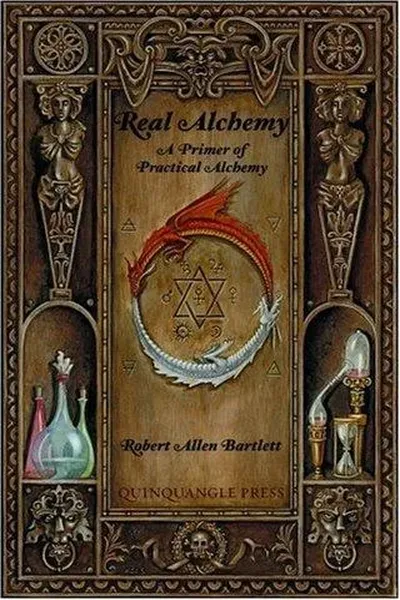


More Free Alchemy & Hermeticism Books
View all →