Taoism

 75
75

Taoism
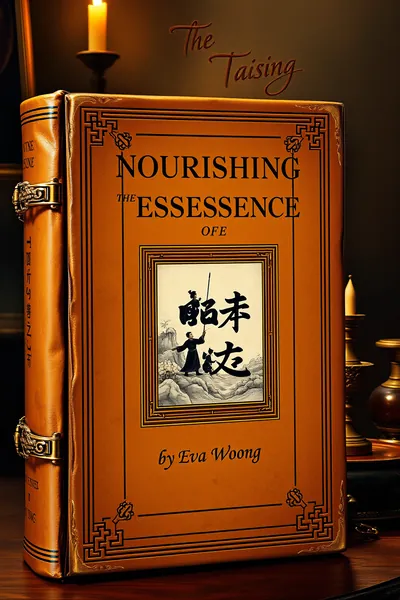
Eva Wong's *Taoism* presents a solid, if somewhat conventional, introduction to this vast tradition. The initial publication in 2011 means it doesn't engage with the most recent scholarship, but it excels in its clear exposition of core concepts. Wong's strength lies in her ability to break down complex ideas like *Wu Wei* and the *Tao* into digestible components, making them accessible without oversimplification. A particular strength is the section on the historical development, which effectively traces the lineage from early philosophers to organized religious movements. However, the book could benefit from more direct engagement with primary texts, offering longer translated passages rather than relying solely on explanations. The narrative sometimes feels encyclopedic, lacking a distinct personal voice or critical perspective. Overall, *Taoism* is a reliable primer for newcomers, offering a well-organized foundation for further study.
📝 Description
75
Eva Wong's Taoism, published in 2011, explains this ancient tradition's core ideas and practices.
Eva Wong's book details the philosophical and spiritual tradition of Taoism. It covers the core tenets, practices, and historical development of Taoism, moving beyond simple explanations to show its philosophical depth. The book examines foundational texts, significant figures, and the changing interpretations that have influenced Taoist thought over centuries. It offers a structured overview for those wanting to understand Taoism's essence.
This work is suited for those new to Eastern philosophies or seeking a more thorough study of Taoism. It will interest students of comparative religion, philosophy enthusiasts, and practitioners interested in the theoretical basis of practices like meditation, qigong, and internal alchemy. Readers who value detailed historical context and clear explanations of complex ideas will find it a useful resource for building a firm grasp of the Taoist worldview.
Taoism, originating in ancient China, is a tradition focused on living in harmony with the Tao, the fundamental principle of the universe. Its esoteric dimension often involves practices aimed at spiritual cultivation and understanding the natural order. The book situates these practices within their historical and philosophical context, acknowledging the interplay between philosophical Taoism, Daojia, and religious Taoism, Daojiao, which developed over centuries and influenced intellectual currents alongside other major traditions.
💡 Why Read This Book?
• Gain a structured understanding of *Wu Wei*, the principle of effortless action, and its practical application beyond mere passivity, as detailed in the historical context of Taoist philosophy. • Explore the concept of *Qi* (vital energy) and its significance in maintaining health and spiritual balance, a core element discussed throughout the book's examination of Taoist practices. • Differentiate between philosophical Taoism and religious Taoism, appreciating their distinct yet interconnected historical trajectories and practices as presented in the work's historical overview.
⭐ Reader Reviews
Honest opinions from readers who have explored this book.
❓ Frequently Asked Questions
What is the primary goal of Taoism as presented in Eva Wong's book?
The primary goal, as explored in Wong's *Taoism*, is to live in harmony with the Tao, the fundamental, ineffable principle of the universe. This involves cultivating balance, understanding natural rhythms, and practicing *Wu Wei* (effortless action).
When was Eva Wong's book 'Taoism' first published?
Eva Wong's *Taoism* was first published in 2011, providing a comprehensive overview of the tradition from its ancient origins to more developed forms.
Does the book discuss the *Tao Te Ching*?
Yes, the book extensively discusses the *Tao Te Ching*, attributing its authorship to Lao Tzu and exploring its significance as a foundational text for Taoist philosophy, originating from the Spring and Autumn period.
What is the concept of Yin and Yang in Taoism according to this book?
Wong's *Taoism* explains Yin and Yang as complementary, interdependent forces that shape the universe. Their dynamic balance is crucial for understanding natural processes, health, and spiritual cultivation within the Taoist framework.
Is the book suitable for absolute beginners in Eastern philosophy?
Yes, the book is designed to be accessible to beginners, offering clear explanations of complex concepts and providing a solid historical and philosophical foundation for understanding Taoism.
What is 'Qi' in the context of Taoism discussed by Eva Wong?
Qi, or vital energy, is presented as the fundamental life force permeating all things. Wong's work details its importance in Taoist practices for health, vitality, and spiritual development, particularly in relation to the concept of the Tao.
🔮 Key Themes & Symbolism
The Tao as the Unmanifest Source
The work emphasizes the Tao as the ineffable, primordial principle from which all existence arises. It's not a creator god but the natural order and underlying reality. Understanding the Tao is presented as central to aligning one's life with the fundamental flow of the universe, moving beyond conventional perception to grasp the unnamable source described in texts attributed to Lao Tzu.
Wu Wei and Effortless Action
A cornerstone concept explored is *Wu Wei*, often translated as 'non-action' or 'effortless action'. The book clarifies this is not about passivity but about acting in accordance with the natural flow, without forcing or striving. It's about achieving results through minimal effort, by understanding the inherent patterns of nature and human interaction, a practice central to Taoist sagehood.
Yin and Yang Dynamics
The intricate relationship between Yin and Yang, the dualistic yet complementary forces, is thoroughly examined. The book illustrates how their interplay governs all phenomena, from the cosmos to human physiology. Achieving balance between these forces is presented as essential for harmony, health, and spiritual development within the Taoist worldview, as seen in various schools of practice.
Qi and Vital Energy Cultivation
The concept of *Qi* (vital energy) is central to the book's discussion of Taoist practices. It explains Qi as the life force that animates all beings and the universe. The work touches upon methods aimed at cultivating and balancing Qi, crucial for longevity, health, and achieving higher states of consciousness, linking ancient practices to contemporary understanding of energy work.
💬 Memorable Quotes
Direct passages from the work, attributed to the author.
“The Tao that can be told is not the eternal Tao.”
— This foundational statement highlights the ineffable nature of the ultimate reality in Taoism. It suggests that any attempt to define or describe the Tao through language is inherently limited and cannot capture its true, eternal essence.
“The sage acts without acting.”
— This captures the essence of *Wu Wei*. It means acting spontaneously and naturally, in alignment with the Tao, without artificial effort or ego-driven intention. Such action is effective because it flows with the universal current.
“Excessive desire leads to exhaustion.”
— This concept underlines the Taoist caution against ambition and greed. Unchecked desires create internal friction and external conflict, depleting one's vital energy (*Qi*) and moving one away from a state of natural harmony and peace.
“Harmony between Yin and Yang is health.”
— This interpretation posits that balance between the opposing yet complementary forces of Yin and Yang is fundamental to well-being. Imbalances are seen as the root of illness, while equilibrium promotes vitality and a harmonious existence.
💡 Key Ideas
Editorial paraphrase of the work's core concepts — not direct quotes.
To know when enough is enough is to be evergreen.
This paraphrase emphasizes the Taoist virtue of contentment and moderation. Understanding personal limits and recognizing sufficiency prevents exhaustion and decay, promoting a state of enduring vitality and well-being, akin to nature's cycles.
🌙 Esoteric Significance
Tradition
This work fits within the broad category of Eastern Esotericism, specifically focusing on the Taoist tradition. It explores lineages stemming from ancient Chinese philosophy and religion, encompassing both philosophical interpretations (Daojia) and the more ritualistic and devotional aspects (Daojiao). It examines practices aimed at spiritual cultivation, longevity, and alignment with the cosmic order, distinguishing it from Western Hermetic or Gnostic traditions while sharing a common pursuit of hidden knowledge and transformation.
Symbolism
Central symbols include the *Tao* itself, represented by the Yin-Yang symbol (Taijitu), illustrating the dynamic interplay of opposites. *Qi*, the vital energy, is often visualized as a flowing current or breath. The concept of the *Eight Trigrams* (Bagua) from the *I Ching* also features, representing fundamental cosmic forces and principles. These symbols are not mere representations but are understood as active principles governing reality and human experience.
Modern Relevance
Contemporary practitioners of internal martial arts, Qigong, and meditation often draw directly from the principles outlined in works like Wong's *Taoism*. Thinkers interested in ecological philosophies also find resonance in the Taoist emphasis on naturalness and living in harmony with the environment. Furthermore, the pursuit of longevity and well-being through energy cultivation continues to influence modern health and wellness movements globally.
👥 Who Should Read This Book
• Students of comparative religion seeking a structured overview of a major Eastern tradition, appreciating clear explanations of philosophical concepts and historical development. • Aspiring practitioners of Qigong, Tai Chi, or meditation looking to understand the theoretical underpinnings and philosophical motivations behind these practices. • Readers interested in ancient Chinese philosophy and cosmology who wish to grasp the principles of *Wu Wei*, *Yin*, and *Yang* from a reputable source.
📜 Historical Context
Eva Wong's *Taoism*, first published in 2011, arrives in a landscape shaped by centuries of Taoist development and Western engagement. Its roots trace back to ancient China, with foundational texts like the *Tao Te Ching* emerging during the Spring and Autumn period (771–476 BCE). The work situates itself within the broader intellectual currents of Chinese thought, often contrasted with Confucianism's emphasis on social order and ritual. By the Han Dynasty (206 BCE – 220 CE), Taoism had evolved into organized religious forms, compiling its vast canon, the *Daozang*. While not directly engaging with contemporaries in the 2011 publication context, Wong's work builds upon scholarship that interprets figures like Zhuang Zhou and the development of internal alchemy, a practice that gained prominence in later dynasties. The reception of Taoism in the West has seen various waves, from early philosophical translations to modern popularizations, and Wong’s text aims for a comprehensive overview that acknowledges this evolution.
📔 Journal Prompts
The nature of the Tao as beyond description; how can one approach understanding it?
Reflecting on *Wu Wei*: Identify a situation where acting effortlessly might yield better results than forcing an outcome.
The balance of *Yin* and *Yang* in your daily life; where do you find harmony and where do you see imbalance?
Personal cultivation of *Qi*: What practices, if any, do you currently engage in that relate to vital energy?
The concept of *Xian* (immortality); what does this pursuit signify in a modern context?
🗂️ Glossary
Tao (Dao)
The fundamental, ineffable principle of the universe; the Way. It is the unmanifest source from which all existence arises and to which all returns.
Wu Wei
Literally 'non-action' or 'effortless action'. It signifies acting in accordance with the natural flow of the Tao, without force, striving, or artificiality.
Qi (Chi)
Vital energy or life force that animates all beings and the universe. Its cultivation and balance are central to Taoist health and spiritual practices.
Yin and Yang
Two complementary, interdependent, and opposing forces that shape the universe. Yin is typically associated with passivity, darkness, and the feminine; Yang with activity, light, and the masculine.
Lao Tzu
The attributed author of the *Tao Te Ching*, considered a foundational figure of philosophical Taoism. His historical existence is debated, but his teachings are central to the tradition.
Tao Te Ching
The foundational text of Taoism, traditionally attributed to Lao Tzu. It outlines the principles of the Tao, *Wu Wei*, and living in harmony with nature.
Xian
An immortal being or transcendent adept in Taoism. The pursuit of immortality, often through spiritual and physical cultivation, is a significant aspect of religious Taoism.
🔮 Readers Also Liked
Browse all →









More by Eva Wong
All books →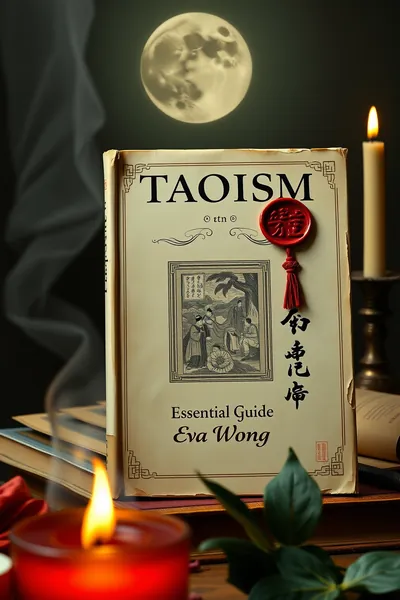

More Free Occult Philosophy Books
View all →