Ramayana
 71
71

Ramayana
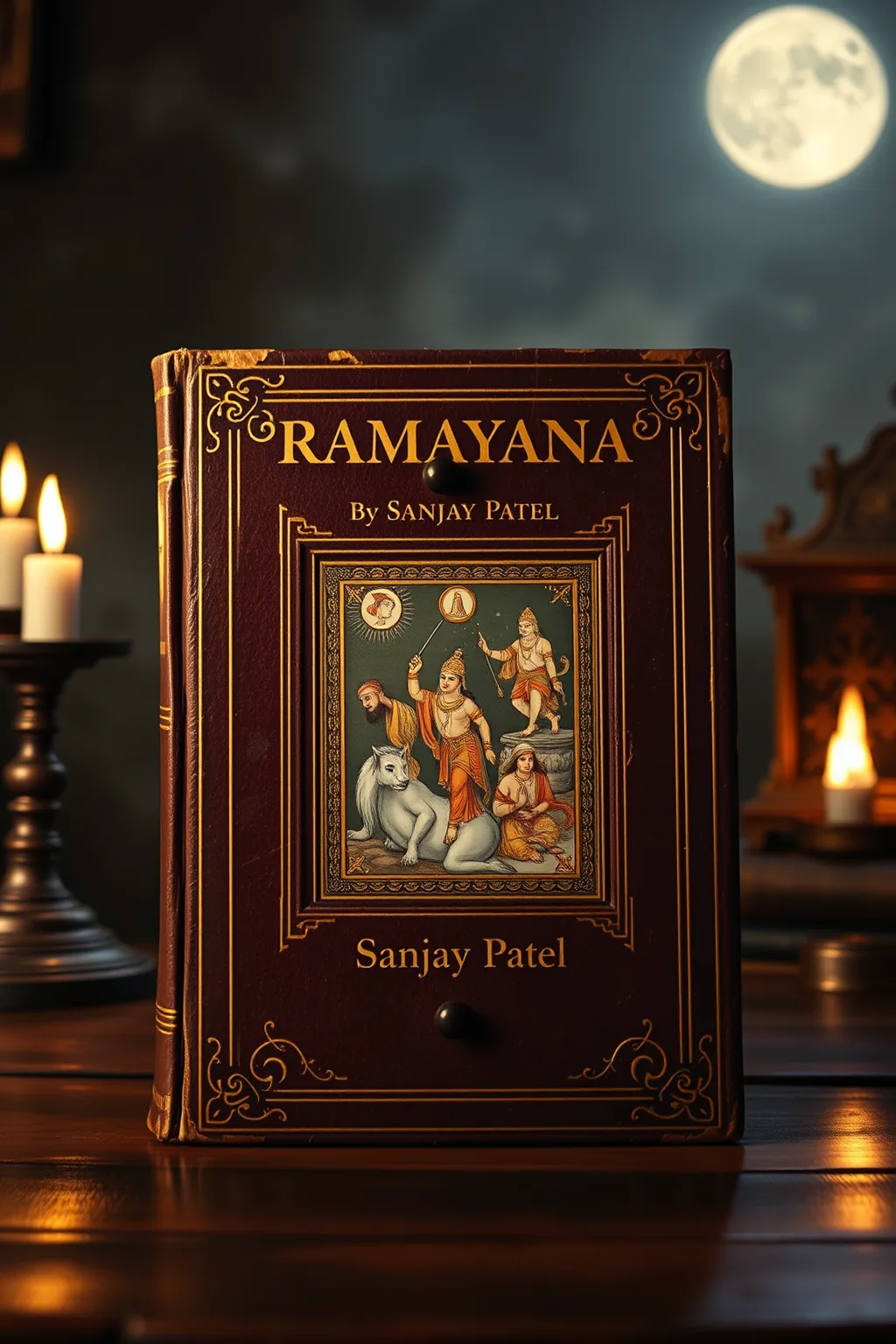
Sanjay Patel's 2010 rendition of the Ramayana presents a vibrant, accessible visual interpretation of a foundational epic. The work succeeds admirably in translating complex narratives and spiritual concepts into a format suitable for a contemporary audience, particularly younger readers or those new to the story. Patel's artistic style, characterized by bold lines and a modern aesthetic, offers a fresh perspective on the ancient tale of Rama, Sita, and Ravana. Its strength lies in its visual appeal and its ability to distill the essence of the Ramayana's moral and spiritual lessons.
A notable limitation, however, is that in its effort to simplify, some of the deeper philosophical nuances and the intricate theological debates that enrich the original text might feel less pronounced. While the depiction of Hanuman's unwavering loyalty is clear, the subtler aspects of dharma's application in ambiguous situations, a hallmark of the epic, are sometimes streamlined. Nonetheless, the section detailing Rama's patient endurance during his fourteen-year exile serves as a potent reminder of principled action.
Read more ↓
Patel's Ramayana is a commendable visual introduction to a significant cultural and spiritual narrative.
📝 Description
71
Composed between the 5th century BCE and 1st century CE, the Ramayana narrates Prince Rama's life.
The Ramayana, attributed to the poet Valmiki, is a major Sanskrit epic from ancient India, alongside the Mahabharata. It recounts the story of Prince Rama of Ayodhya, detailing his fourteen-year exile, the abduction of his wife Sita by Ravana, and his subsequent rescue mission. This epic is a significant text in Hinduism, examining concepts such as dharma, karma, and devotion.
Its composition likely occurred between the 5th century BCE and the 1st century CE, a time of considerable philosophical and religious growth in India. The Ramayana's influence extended across the Indian subcontinent and into Southeast Asia, impacting art, literature, and performance. The text played a key role in establishing the worship of Vishnu as the Rama avatar.
The Ramayana functions as a narrative framework for core Hindu philosophical concepts. Its emphasis on dharma, the cosmic order and individual duty, guides readers toward righteous action. The interplay of karma illustrates the consequences of deeds, shaping understanding of spiritual progression. The epic also highlights bhakti, or selfless devotion, particularly through characters like Hanuman, demonstrating a path of spiritual surrender. These elements collectively offer a comprehensive vision of spiritual life and the pursuit of liberation within the Hindu tradition.
💡 Why Read This Book?
• Gain insight into the concept of 'dharma' as exemplified by Prince Rama's adherence to duty, even amidst personal hardship, offering a model for righteous conduct. • Understand the archetypal conflict between good and evil through the narrative of Rama's quest to rescue Sita from Ravana, a central theme in Hindu philosophy. • Appreciate the profound devotion depicted, particularly through Hanuman's unwavering loyalty to Rama, illustrating the power of selfless service and faith.
⭐ Reader Reviews
Honest opinions from readers who have explored this book.
❓ Frequently Asked Questions
When was the Ramayana first composed?
The composition of the Ramayana is generally dated to between the 5th century BCE and 1st century CE, making it one of the oldest epic poems in existence and a cornerstone of ancient Indian literature.
Who is the primary antagonist in the Ramayana?
The primary antagonist is Ravana, the ten-headed demon king of Lanka, who abducts Sita, Rama's wife, thereby instigating the epic's central conflict.
What is the significance of Rama's exile?
Rama's fourteen-year exile to the forest, a consequence of a promise made by his father King Dasharatha, is central to the narrative. It tests Rama's adherence to dharma and sets the stage for the abduction of Sita.
What role does Hanuman play in the Ramayana?
Hanuman, the devoted monkey general, is a pivotal character. He is instrumental in Rama's quest, demonstrating immense strength, loyalty, and devotion in his efforts to find and rescue Sita.
Is the Ramayana a religious text or a literary work?
The Ramayana is both a profound religious text for Hindus, revered as the life story of Lord Rama, and a literary masterpiece that has influenced Indian culture, art, and philosophy for millennia.
What does the term 'dharma' mean in the context of the Ramayana?
In the Ramayana, 'dharma' signifies one's duty, righteousness, moral law, and the cosmic order. Rama's life is presented as the epitome of adherence to dharma, guiding his actions and decisions.
🔮 Key Themes & Symbolism
The Embodiment of Dharma
The Ramayana meticulously details the concept of 'dharma,' the principle of righteous living and cosmic order. Prince Rama is depicted as the ideal 'man' and king, whose life consistently upholds his dharma, even when faced with immense personal sacrifice and injustice. This unwavering commitment serves as a moral compass, guiding his actions through exile, warfare, and governance. The epic explores how adhering to dharma, even when difficult, is the path to spiritual merit and the maintenance of societal harmony, making it a central focus for those studying ethical frameworks.
Devotion and Loyalty
Beyond the primary narrative of Rama and Sita, the Ramayana is rich with examples of profound devotion ('bhakti') and unwavering loyalty. The character of Hanuman, the monkey general, stands out as the ultimate devotee, demonstrating selfless service and unwavering allegiance to Rama. His exploits in finding Sita and aiding Rama in battle highlight the spiritual power derived from pure devotion. This theme resonates deeply within Hindu traditions, offering a powerful model for spiritual connection and commitment.
The Cosmic Struggle of Good vs. Evil
Fundamentally, the Ramayana presents an archetypal battle between divine righteousness and demonic forces. Rama, an avatar of Vishnu, represents the forces of good, while Ravana, the demon king of Lanka, embodies evil and ego. The epic chronicles their conflict, illustrating that the struggle against malevolent forces is an ongoing cosmic event. This narrative framework provides a profound exploration of the nature of evil, the consequences of arrogance, and the ultimate triumph of virtue, offering insights for understanding existential dualities.
The Ideal Kingdom and Governance
The Ramayana offers a vision of an ideal kingdom ('Rama Rajya') characterized by justice, prosperity, and righteousness. Rama's reign is often cited as a model of perfect governance, where the welfare of the subjects is paramount. The epic contrasts this with the corrupt rule of Ravana, highlighting the responsibilities and virtues expected of a righteous ruler. This exploration of political philosophy and ethical leadership provides valuable lessons for understanding societal structures and the impact of leadership on collective well-being.
💬 Memorable Quotes
Direct passages from the work, attributed to the author.
“Rama's adherence to his father's promise, leading to his fourteen-year exile.”
— This central event underscores the paramount importance of upholding vows and familial duty ('dharma') in the epic, even at immense personal cost, setting a precedent for righteous action.
“Hanuman's leap across the ocean to Lanka.”
— This feat symbolizes extraordinary devotion and capability, illustrating how faith and dedication can enable one to overcome seemingly insurmountable obstacles in service of a higher purpose.
“Sita's ordeal by fire to prove her purity.”
— This trial highlights the challenges faced by virtuous individuals, particularly women, in asserting their integrity amidst accusations and societal judgment, emphasizing the burden of proof for the righteous.
“Ravana's immense power juxtaposed with his arrogance and downfall.”
— This character arc demonstrates that even great strength or knowledge can lead to destruction when corrupted by ego, pride, and a disregard for dharma, serving as a cautionary tale.
“The concept of 'Rama Rajya' as an ideal state.”
— This ideal kingdom represents a society governed by justice, peace, and righteousness, where the ruler is devoted to the welfare of the people, offering a vision of perfect governance.
🌙 Esoteric Significance
Tradition
The Ramayana is a central to the Vaishnavism tradition within Hinduism, a lineage deeply focused on the worship of Vishnu. Esoterically, it is viewed as a 'purana' or sacred history that reveals divine truths and provides a blueprint for spiritual living. It aligns with the broader Vedic understanding of cosmic cycles and the manifestation of the divine in human form (avatars). The narrative serves as an allegory for the soul's journey towards enlightenment and union with the divine, mirroring concepts found in other mystical traditions regarding the struggle against inner demons and the attainment of spiritual liberation.
Symbolism
Key symbols abound in the Ramayana. The forest exile of Rama represents the soul's journey through the material world, a testing ground for spiritual fortitude. The demon king Ravana embodies ego, attachment, and the forces that bind the soul to illusion. Sita, often interpreted as the individual soul or consciousness, is tested and purified, symbolizing the divine spark within. Hanuman, the monkey general, represents the disciplined mind or 'manas,' which, when fully devoted to the divine (Rama), can achieve extraordinary feats and bridge the gap between the earthly and the spiritual.
Modern Relevance
Contemporary Hindu practice and global spiritual movements continue to draw heavily from the Ramayana. Its teachings on dharma, duty, and righteous living remain central to ethical discourse within India and among the diaspora. Modern interpretations often focus on Rama as an ideal leader and Sita as a symbol of female strength and resilience. The epic's narrative structure and character archetypes are also studied in comparative mythology and psychology, particularly in relation to Jungian archetypes. Its emphasis on devotion ('bhakti') continues to inspire spiritual seekers worldwide.
👥 Who Should Read This Book
• Students of comparative religion and mythology seeking to understand a foundational text of Hinduism and its cultural impact across Asia. • Individuals interested in philosophical ethics and the concept of 'dharma,' exploring how duty and righteousness are depicted in an epic narrative. • Readers drawn to stories of heroism, spiritual devotion, and the archetypal struggle between good and evil, seeking a profound narrative with deep symbolic meaning.
📜 Historical Context
Composed over several centuries, likely between the 5th century BCE and 1st century CE, the Ramayana emerged during a period of significant intellectual ferment in ancient India, witnessing the consolidation of Brahmanical traditions and the nascent development of what would become classical Hinduism. While not a direct contemporary, the philosophical ideas explored within the epic, such as the nature of dharma and karma, were being debated alongside the Upanishads and early Buddhist thought. The Ramayana's influence was immense, spreading across Southeast Asia, shaping regional cultures and artistic expressions, and solidifying the worship of Vishnu as Rama. Its reception was overwhelmingly positive, quickly becoming a foundational text, although later critical analyses, such as those by the Sanskrit poet Kalidasa centuries later, would engage with its narrative structure and character portrayals, offering different perspectives on the epic's themes.
📔 Journal Prompts
Reflect on Rama's unwavering commitment to dharma during his fourteen-year exile.
Consider Hanuman's demonstration of selfless devotion and its implications.
Analyze the symbolic representation of Ravana as a manifestation of ego.
Explore Sita's resilience and integrity throughout her trials.
Contemplate the ideal of 'Rama Rajya' and its relevance to contemporary governance.
🗂️ Glossary
Dharma
In the context of the Ramayana, dharma refers to one's duty, righteousness, moral law, and the cosmic order. It guides the actions and responsibilities of individuals and society, embodying ethical conduct and spiritual obligation.
Avatar
An avatar is a deliberate descent or incarnation of a deity, particularly Vishnu, on Earth. Rama is considered the seventh avatar of Vishnu, embodying divine principles in human form to restore cosmic balance.
Bhakti
Bhakti signifies devotion, love, and worship directed towards a deity. The epic highlights bhakti through characters like Hanuman, whose unwavering loyalty to Rama exemplifies this spiritual path.
Asura
Asuras are powerful beings, often depicted as demigods or demons, who are frequently antagonists in Vedic and Hindu literature. Ravana and his kin are prominent examples of asuras in the Ramayana.
Vanara
Vanaras are a group of forest-dwelling ape-like humanoids, often depicted with monkey-like features. Hanuman and his army are the most famous Vanaras, playing an important role in Rama's quest.
Lanka
Lanka is the mythical island kingdom ruled by Ravana, the primary antagonist. It is the setting for much of the latter part of the Ramayana, including Sita's captivity and the climactic battle.
Rama Rajya
Rama Rajya translates to 'the reign of Rama' and signifies an ideal kingdom characterized by justice, prosperity, peace, and righteousness, where all citizens live in happiness and harmony.
🔮 Readers Also Liked
Browse all →









More by Sanjay Patel
All books →

More Free Occult Philosophy Books
View all →