Radical Transformation
 78
78

Radical Transformation
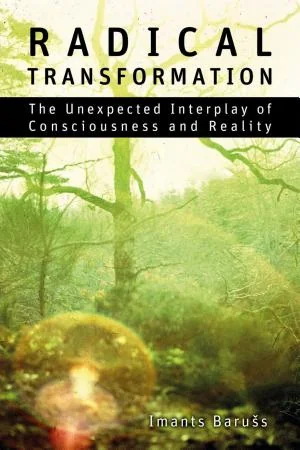
Imants Barušs’s Radical Transformation charts a course away from the well-trodden paths of materialism, venturing into the speculative territories of post-materialist thought. The strength of the book lies in its direct confrontation with the limitations of current scientific dogma regarding consciousness. Barušs doesn't shy away from posing difficult questions, such as the nature of event boundaries when consciousness is nonlocal. However, the work occasionally feels more like a series of challenging inquiries than a fully developed thesis, leaving some of the proposed mechanisms for consciousness-reality interaction open to further elaboration. A particularly striking section explores the potential 'interference' from non-physical entities post-mortem, a concept that pushes the boundaries of conventional metaphysical discourse. Despite its speculative nature, the book provides a vital intellectual challenge for anyone seeking to expand their understanding of existence beyond the purely physical. It serves as a potent catalyst for re-evaluating our assumptions about the mind and its place in the cosmos.
📝 Description
78
Imants Barušs's 2021 book Radical Transformation argues that consciousness, not matter, is primary.
Radical Transformation challenges the materialist worldview by asserting the fundamental nature of consciousness. Barušs proposes that consciousness possesses nonlocal properties and can directly affect physical reality. The book prompts consideration of a post-materialist perspective, where consciousness's influence on events, its capacity to modulate experience, and its survival after death become key inquiries.
This work is for those dissatisfied with purely physical explanations for existence. It appeals to individuals curious about consciousness's role in shaping reality, including researchers, philosophers, and practitioners of esoteric fields. Readers should be open to unconventional ideas about being and the self. Barušs's 2021 publication arrived during a period of renewed interest in consciousness studies, alongside thinkers like Rupert Sheldrake and explorations of quantum entanglement's connections to the mind.
Published in 2021, Radical Transformation engages with a lineage of thought that questions the sufficiency of classical materialism. It aligns with traditions that posit consciousness as a fundamental force, rather than a mere byproduct of biological processes. This includes philosophical idealism and various esoteric systems that explore mind's influence on matter, moving beyond the Enlightenment's mechanistic view of the universe. Barušs contributes to a contemporary resurgence of these ideas, often informed by developments in quantum physics and parapsychology.
💡 Why Read This Book?
• Understand the implications of consciousness possessing nonlocal properties, a concept Barušs explores by questioning how event boundaries are established, offering a novel perspective beyond standard physics. • Grasp the potential scope of consciousness directly modulating physical manifestation, as detailed in Barušs's framework, providing a tangible way to consider mind-matter interaction. • Explore the concept of consciousness continuing after physical death and potential interference from non-physical entities, as presented in the book, for a deeper contemplation of existence beyond the material.
⭐ Reader Reviews
Honest opinions from readers who have explored this book.
❓ Frequently Asked Questions
What is the central argument of Imants Barušs's Radical Transformation?
The central argument is that consciousness is primary and possesses nonlocal properties, leading to a post-materialist understanding of reality where consciousness directly influences physical manifestation.
When was Radical Transformation first published?
Radical Transformation was first published on January 28, 2021.
What kind of questions does the book raise about consciousness?
It raises questions about how event boundaries are formed if consciousness is nonlocal, the extent to which consciousness can modulate physical reality, and the potential for consciousness to persist after death.
Who is Imants Barušs?
Imants Barušs is the author of Radical Transformation, a work that explores the philosophical and metaphysical implications of consciousness.
What paradigm does the book encourage readers to move away from?
The book encourages readers to move away from the receding materialist paradigm towards an emerging post-materialist landscape.
What is the relationship between consciousness and physical manifestation discussed in the book?
The book posits that consciousness has the ability to directly modulate physical manifestation, suggesting a more active role for mind in shaping reality than materialism allows.
🔮 Key Themes & Symbolism
Nonlocal Consciousness
The book posits consciousness as a fundamental, nonlocal phenomenon, extending beyond the confines of the physical brain. This challenges the traditional view of consciousness as solely an emergent property of matter. Barušs explores how this nonlocality could explain phenomena that current materialist science struggles to account for, suggesting that our perception of discrete events and separated individuals may be an illusion. The implications are far-reaching, potentially redefining our understanding of personal identity and interconnectedness within the cosmos.
Consciousness-Matter Interaction
Radical Transformation explores the idea that consciousness is not just an observer but an active participant in shaping physical reality. It questions the extent to which our thoughts, intentions, and awareness can directly influence material manifestations. This concept moves beyond placebo effects or psychosomatic responses, proposing a more fundamental interface between mind and matter. The exploration encourages readers to consider the tangible power of their own consciousness in their daily lives and the broader universe.
Post-Death Continuity
A significant aspect of the book addresses the persistence of consciousness beyond physical death. Barušs examines the implications of this continuity, including the possibility of interference from non-physical entities. This perspective offers a framework for understanding spiritual experiences, mediumship, and other phenomena that suggest an ongoing existence separate from the physical body. It invites a re-evaluation of life, death, and the nature of reality itself, challenging a purely materialistic view of mortality.
Beyond Materialism
The overarching theme is a critique of the materialist paradigm, which asserts that only matter and energy are fundamentally real. Barušs argues that this worldview is becoming increasingly insufficient to explain the observed nature of consciousness and reality. He advocates for an emergent post-materialist landscape where consciousness is recognized as a primary element. This shift in perspective is presented not just as an intellectual exercise but as a necessary step towards a more complete and accurate understanding of existence.
💬 Memorable Quotes
Direct passages from the work, attributed to the author.
“If consciousness has nonlocal properties, then how are boundaries between events established?”
— This question probes the fundamental nature of reality and perception. If consciousness isn't confined to a specific point in space-time, the very definition of what constitutes a separate 'event' becomes fluid, challenging our linear understanding of cause and effect.
“If consciousness directly modulates physical manifestation, then what is the scope of such modulation?”
— This highlights the active role of consciousness in the physical world. It suggests that our mental states and awareness might have a far greater impact on external reality than conventionally accepted, prompting an investigation into the limits and mechanisms of this influence.
“If consciousness continues after physical death, then how much interference is there from non-physical entities?”
— This thought-provoking inquiry opens up discussions about the afterlife and potential interactions with other planes of existence. It suggests that post-mortem consciousness might not be isolated but could engage with or be influenced by other non-corporeal beings or forces.
“The receding materialist paradigm.”
— This phrase signifies a shift in worldview, suggesting that the dominant scientific and philosophical model based solely on matter is becoming inadequate to explain phenomena, particularly those related to consciousness.
“An emerging post-materialist landscape.”
— This describes the potential new framework for understanding reality, where consciousness is considered a fundamental aspect, moving beyond the limitations of purely materialistic explanations and opening up new avenues of inquiry.
🌙 Esoteric Significance
Tradition
Radical Transformation contributes to the broader esoteric tradition of idealism and consciousness-centric philosophies, which have roots in various ancient traditions including Hermeticism, Vedanta, and Neoplatonism. It departs from purely physicalist interpretations by asserting consciousness as primary, aligning with metaphysical schools that view the universe as fundamentally mental or spiritual in nature. The work seeks to bridge these ancient insights with contemporary questions arising from modern science and philosophy.
Symbolism
While the book is largely conceptual, the 'receding materialist paradigm' and 'emerging post-materialist landscape' act as symbolic representations of a fundamental shift in understanding. The paradigm itself is a symbol for the old, limiting framework, while the landscape signifies the new, expanded possibilities. The questions posed about 'boundaries between events' and 'interference from non-physical entities' symbolize the breakdown of perceived separation and the recognition of interconnectedness beyond the physical.
Modern Relevance
Contemporary thinkers exploring the hard problem of consciousness, such as those in the field of philosophical idealism or consciousness research (e.g., Bernardo Kastrup, Anil Seth), find resonance in Barušs's arguments. Practices that emphasize the power of intention, manifestation, or energy healing also draw implicit connections, as they operate on the assumption that consciousness can influence physical outcomes, a core tenet explored in the book.
👥 Who Should Read This Book
• Individuals questioning the sufficiency of the materialist worldview, seeking a philosophical framework that places consciousness at the center of reality, as explored in Barušs's post-materialist approach. • Researchers and students of consciousness studies who are looking for rigorous, albeit speculative, arguments that challenge conventional scientific paradigms and explore nonlocal properties of mind. • Those interested in the perennial philosophy and metaphysical traditions, seeking to understand how ancient concepts of mind-over-matter can be recontextualized within contemporary scientific and philosophical discourse.
📜 Historical Context
Published in 2021, Imants Barušs's Radical Transformation arrived during a resurgence of interest in consciousness studies, often referred to as the 'second cognitive revolution.' This period saw significant debate challenging the philosophical underpinnings of neuroscience and physics. Thinkers like Bernardo Kastrup were actively promoting panpsychist and idealist viewpoints, directly confronting the entrenched materialist dogma that had dominated Western thought since the Enlightenment. Barušs's work engages with this intellectual current, seeking to provide a coherent framework for a post-materialist understanding of reality. While not directly engaging with specific contemporary figures in the text itself, the book's questions about nonlocal consciousness and its influence on physical manifestation echo discussions found in the works of researchers exploring quantum mechanics' potential implications for consciousness, such as those associated with the PEAR lab at Princeton University in earlier decades. The reception of such ideas often involves skepticism from mainstream scientific circles, which tend to adhere to strict empirical verification methods, making works like Barušs's valuable for those seeking alternative perspectives.
📔 Journal Prompts
The potential for consciousness to modulate physical manifestation: what are its perceived limits?
Reflect on the concept of nonlocal consciousness and its implications for personal identity.
Consider the 'receding materialist paradigm' and its influence on your own worldview.
The nature of event boundaries in a post-materialist landscape: how might they differ?
Explore the idea of consciousness continuing after physical death and its potential interactions.
🗂️ Glossary
Materialist Paradigm
A philosophical viewpoint that asserts matter and energy are the fundamental constituents of the universe, and that consciousness is an emergent property of physical processes, primarily brain activity.
Post-Materialist Landscape
A proposed shift in understanding reality where consciousness is considered a fundamental aspect of existence, rather than solely a product of matter, allowing for phenomena not explained by materialism.
Nonlocal Properties (of Consciousness)
The idea that consciousness is not confined to a specific location in space-time, suggesting it can extend beyond the physical brain and potentially interact with distant events or aspects of reality simultaneously.
Modulate Physical Manifestation
The concept that consciousness has the capacity to directly influence or alter the physical world, suggesting a more active role for mind in shaping reality beyond conventional physical interactions.
Consciousness Continues After Physical Death
The proposition that awareness and personal identity persist independently of the physical body after biological death, a concept explored in various spiritual and metaphysical traditions.
Interference from Non-Physical Entities
The possibility that consciousness persisting after death might encounter or be influenced by beings or forces that do not have a physical form, a concept relevant to mediumship and spiritualist discussions.
Event Boundaries
The conceptual or perceived divisions between distinct occurrences or phenomena in space-time. The book questions how these boundaries are established if consciousness is nonlocal.
This book appears in 1 collection
🔮 Readers Also Liked
Browse all →









From the “Altered States of Consciousness” Collection
View all →


![EBOOK COLLECTION ( PART 8) [ CSI][h 33t]](/img/thumb/ebook-collection-part-8-csi-h-33t.webp)



More Free Occult Philosophy Books
View all →