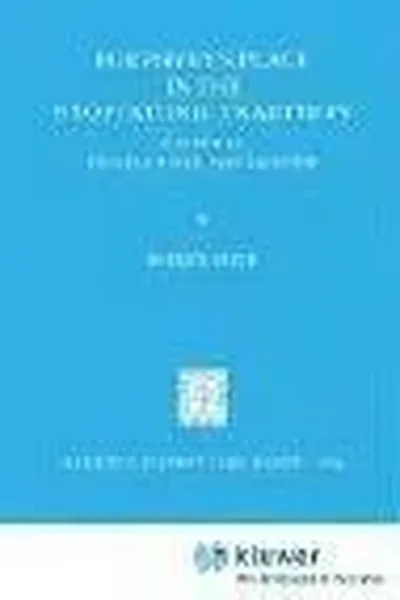
Quicksilver

 79
79

Quicksilver
Callie Hart’s *Quicksilver* attempts a bold reinterpretation of alchemical symbolism for the 21st century. The strength of the book lies in its innovative conceptualization of mercury not just as a substance, but as a dynamic principle of consciousness. Hart skillfully avoids common pitfalls by focusing on speculative inquiry rather than prescriptive instruction. However, the work suffers from a certain opacity in its central metaphor; while Quicksilver is presented as a unifying concept, its application can feel inconsistent, leaving the reader to bridge significant interpretive gaps. A particularly striking passage explores the concept of the ‘Anima Mundi’ through the lens of this mercurial flow, offering a glimpse into the book’s potential. Ultimately, *Quicksilver* is an ambitious, if occasionally elusive, exploration for the dedicated student of esoteric philosophy.
📝 Description
79
Callie Hart's 2024 book, Quicksilver, proposes a model for consciousness and material reality.
Quicksilver, by Callie Hart, is a 2024 work that engages with occult philosophy. The book develops a framework for understanding the relationship between consciousness and the material world. Rather than providing simple answers, it examines interconnectedness through alchemical principles and philosophical thought. This speculative text encourages readers to consider ways of perceiving and existing that differ from standard scientific views. The book is best suited for those already interested in occult philosophy, comparative religion, and speculative metaphysics. It will appeal to readers who like works that question common perspectives and prompt deep thought on abstract ideas. Those looking for clear doctrines or brief summaries may find Quicksilver challenging. However, readers who value complex conceptual structures and the pursuit of esoteric knowledge should find it rewarding.
The text focuses on 'Quicksilver' as a central metaphor. This concept signifies fluidity, change, and the difficult nature of consciousness itself. It looks at how this essence affects perception and the creation of reality. The book examines how this mercurial quality is present throughout existence, shaping our experience of the world.
Published in 2024, Quicksilver appears during a period of renewed interest in esoteric thought, often connecting with physics and consciousness studies. It follows traditions that sought to unify mystical ideas from East and West, though Hart's work concentrates on a single, adaptable concept. Its reception is still developing, entering a sphere where occult ideas are widely shared online, unlike the more private groups of earlier esoteric movements.
💡 Why Read This Book?
• Gain a novel perspective on alchemical symbolism, particularly the concept of Quicksilver, as a principle of transformation distinct from its historical chemical context. • Understand how the work posits a connection between consciousness and material reality, moving beyond simple dualism by referencing the 'Anima Mundi'. • Explore speculative metaphysics through a unique lens, offering alternative frameworks for perceiving interconnectedness that differ from established philosophical traditions.
⭐ Reader Reviews
Honest opinions from readers who have explored this book.
❓ Frequently Asked Questions
What is the central metaphor in Callie Hart's Quicksilver?
The central metaphor is 'Quicksilver,' which represents fluidity, transformation, and the elusive nature of consciousness. It's presented as a dynamic principle permeating existence, influencing perception and reality itself.
When was Quicksilver first published?
Quicksilver by Callie Hart was first published in 2024, placing it firmly within contemporary esoteric literature.
Does Quicksilver offer practical occult techniques?
The book is primarily a philosophical and speculative exploration rather than a manual of practical techniques. Its value lies in conceptual understanding and contemplation.
What historical esoteric traditions influence Quicksilver?
While not explicitly detailed, the work draws conceptually from alchemical traditions and broader metaphysical ideas about interconnectedness, reminiscent of concepts explored by Theosophical writers.
Is Quicksilver suitable for beginners in occult studies?
It is best suited for those with some background in esoteric philosophy. Beginners might find its abstract nature challenging without prior familiarity with related concepts.
How does Quicksilver relate to modern science?
The book engages with contemporary discussions in consciousness studies and touches upon ideas that intersect with quantum physics, framing them within an esoteric context.
🔮 Key Themes & Symbolism
The Mercurial Principle
The core of Quicksilver lies in its redefinition of mercury not just as a chemical element but as a fundamental principle of change and fluidity. Hart uses this concept to explore how consciousness itself is not static but constantly transforming. This principle is seen as the agent through which reality shifts and perceptions evolve, linking the macrocosm and the microcosm in a constant dance of becoming.
Consciousness and Materiality
Hart investigates the intricate relationship between the subjective experience of consciousness and the objective world of matter. The book suggests that 'Quicksilver' acts as a bridge or mediator, blurring the lines between mind and substance. This challenges traditional materialistic or purely idealistic viewpoints, proposing a more dynamic, integrated model where consciousness actively shapes and is shaped by the material plane.
Sympathetic Resonance
A significant theme is sympathetic resonance, the idea that like attracts like and that connections exist across seemingly separate entities. Quicksilver, in its fluid nature, facilitates these connections. The book explores how understanding this principle can lead to a deeper awareness of the interconnected web of existence, where actions and thoughts ripple outwards, influencing the whole.
The Anima Mundi
The concept of the 'Anima Mundi,' or World Soul, is examined through the lens of Quicksilver. Hart posits that this mercurial essence is the animating force within the universal soul, providing the dynamic potential for creation and change. This perspective offers a framework for understanding the living, responsive nature of the cosmos, rather than viewing it as inert matter.
💬 Memorable Quotes
Direct passages from the work, attributed to the author.
“Reality is not a fixed state, but a continuous alchemical process.”
— This interpretation suggests that the book views existence as perpetually in flux, akin to the transformative processes studied in alchemy, rather than a static arrangement of facts.
“The boundaries of self dissolve in the flow of universal consciousness.”
— This highlights a theme of interconnectedness, proposing that individual identity is not isolated but part of a larger, fluid cosmic awareness.
“Perception is the crucible where potential solidifies into form.”
— This phrase emphasizes the active role of the observer in manifesting reality, suggesting that consciousness shapes the material world through the act of perceiving it.
“To grasp Quicksilver is to understand the mechanism of becoming.”
— This interpretation points to the central metaphor's significance, positioning the understanding of this mercurial principle as key to comprehending the fundamental processes of change and evolution.
“Sympathetic resonance is the silent language of the cosmos.”
— This suggests that the universe communicates and interacts through unseen forces of attraction and connection, a principle that the book seeks to illuminate.
🌙 Esoteric Significance
Tradition
Quicksilver aligns with the Hermetic and alchemical traditions, reinterpreting the symbolism of mercury not just as a physical substance but as a metaphysical principle. It departs from strict alchemical dogma by focusing on consciousness as the primary medium for transformation, rather than solely on physical transmutation. This approach echoes Gnostic ideas of hidden knowledge and the spark of divinity within the material world, framing mercury as the vital, mutable essence that connects the spiritual and material realms.
Symbolism
The primary symbol is 'Quicksilver' itself, representing fluidity, adaptability, and the ceaseless flow of consciousness. Another key motif is the 'crucible,' symbolizing the transformative process where raw potential (consciousness) is refined and shaped into manifest reality. The book also likely engages with concepts of celestial influence or sympathetic resonance, suggesting an interconnectedness mirroring the macrocosm within the individual's microcosm.
Modern Relevance
Contemporary thinkers in consciousness studies and speculative philosophy find resonance in Hart's work. The book’s exploration of a fluid, interconnected reality offers a counterpoint to rigid, materialistic worldviews. It speaks to modern practices seeking to integrate mind and matter, influencing discussions around non-dualism and the potential for consciousness to actively participate in shaping reality, finding echoes in certain New Age philosophies and transhumanist thought experiments.
👥 Who Should Read This Book
• Students of Western Esotericism: Those interested in Hermeticism, alchemy, and symbolic philosophy will find a contemporary interpretation of core concepts. • Speculative Philosophers: Individuals who enjoy exploring abstract theories about consciousness, reality, and interconnectedness beyond conventional academic discourse. • Seekers of Alternative Frameworks: Readers looking for texts that challenge established paradigms and offer unique perspectives on the nature of existence and perception.
📜 Historical Context
Published in 2024, Callie Hart's *Quicksilver* arrives during a period of renewed interest in esoteric philosophy, often finding common ground with popular science explorations of consciousness and quantum mechanics. The work echoes, in part, the syncretic ambitions of the late 19th-century Theosophical movement, spearheaded by figures like Helena Blavatsky, who sought to unify diverse mystical traditions. However, Hart’s focus appears more concentrated on a singular, fluid principle rather than a broad synthesis. The work emerges in a digital age where occult ideas proliferate online, contrasting sharply with the more exclusive, print-bound dissemination of esoteric knowledge in earlier eras. While direct engagement from contemporaries is yet to be widely documented, *Quicksilver* implicitly enters dialogues with researchers exploring consciousness and speculative metaphysics, offering an alternative to purely materialist or established philosophical frameworks.
📔 Journal Prompts
The mercurial nature of 'Quicksilver' as a principle of consciousness.
Reflecting on the 'crucible' as a metaphor for personal transformation.
Identifying instances of sympathetic resonance in daily life.
How does the concept of the 'Anima Mundi' manifest in your understanding of reality?
The boundary between self and universal consciousness, as explored in the text.
🗂️ Glossary
Quicksilver
In this work, the term refers not just to the element mercury but to a metaphysical principle embodying fluidity, transformation, and the dynamic essence of consciousness.
Anima Mundi
Latin for 'World Soul.' A concept suggesting a living, conscious entity pervading the entire cosmos, often seen as the animating principle of the universe.
Sympathetic Resonance
The principle that like influences like, and that connections exist between seemingly separate things, allowing for influence and communication across distances.
Crucible
A vessel used for high-temperature chemical reactions. Metaphorically, a place or situation of severe trial or testing, leading to transformation.
Becoming
In a philosophical context, the process of change and development; the state of moving from potentiality to actuality, contrasting with static being.
Metaphysical
Relating to the fundamental nature of reality, existence, and the universe; often concerning concepts beyond the physical or empirical.
Esoteric
Intended for or likely to be understood by only a small number of people with a specialized knowledge or interest; often pertaining to mystical or occult subjects.
🔮 Readers Also Liked
Browse all →








More by Callie Hart
All books →

More Free Alchemy & Hermeticism Books
View all →