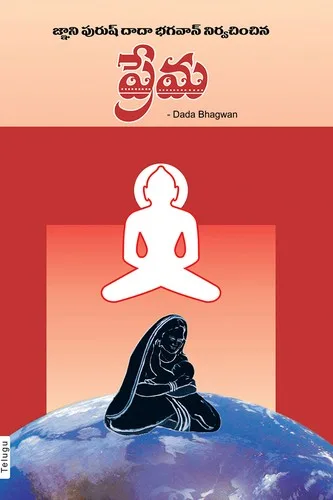
Pure Love (In Telugu)
 73
73

Pure Love (In Telugu)
Dada Bhagwan's Pure Love (In Telugu) offers a starkly direct path toward understanding love as an existential state rather than a relational dynamic. The strength of this work lies in its refusal to romanticize emotion, instead positing love as the intrinsic nature of the Self, accessible through rigorous self-inquiry. A particularly compelling section discusses the 'tendency' to react with possessiveness, framing it not as a moral failing but as a misidentification with the ego. However, the text's directness can also be its limitation; readers accustomed to more poetic or narrative spiritual explorations might find the approach too stark or abstract, particularly concerning the practical application of dissolving the ego's grip. The concept of 'pure love' itself, stripped of conventional emotional associations, requires significant mental reorientation. It’s a challenging, yet potentially liberating, perspective on a fundamental human experience.
📝 Description
73
Published in 2025, Pure Love (In Telugu) presents Dada Bhagwan's direct path to unconditional acceptance.
This spiritual discourse by Dada Bhagwan addresses the nature of pure love. It distinguishes this inherent state of the Self from common affections rooted in ego and attachment. The work guides readers toward unconditional acceptance and spiritual bliss, utilizing practical self-inquiry. It is intended for those seeking spiritual truth through direct, non-dualistic teachings. Individuals interested in understanding love as a quality of the Self, rather than an emotion, will find this text relevant. Those familiar with Dada Bhagwan's path of Akram Vignan, the science of the Self, will recognize its core principles.
The teachings, which gained prominence in the late 20th century, contrast with more complex philosophical or devotional systems. Dada Bhagwan's method, Akram Vignan, emphasizes immediate self-realization. This approach is distinct from traditional, gradual spiritual paths. It gained recognition in the decades following his public discourses, particularly in the 1980s and 1990s. The book centers on the distinction between the Self (Atma) and the ego. It explains how ordinary experiences of love are often ego projections, tied to expectations. True love, as described, is the Self's natural, unadulterated state, realized when the ego's influence diminishes. Concepts of detachment and equanimity are presented as necessary for experiencing this pure love.
Dada Bhagwan's teachings emerged in the late 20th century, a time of renewed global interest in Indian spirituality. His approach, Akram Vignan, offered a distinct path focused on immediate self-realization, diverging from more gradual or purely philosophical traditions. This method emphasizes understanding the Self as separate from the ego and its associated emotions and attachments. The work positions pure love not as an earned emotion but as the inherent state of the realized Self, accessible through direct experience rather than complex ritual or intellectual pursuit.
💡 Why Read This Book?
• Learn to distinguish between conditional affection and the Self's inherent bliss, a core teaching of Dada Bhagwan's Akram Vignan. • Understand love as an unadulterated state of being, not dependent on external validation or circumstances, as explained in the text's experiential framework. • Gain practical self-inquiry techniques to dismantle ego-driven reactions, allowing the natural experience of pure love to emerge, as presented by Dada Bhagwan.
⭐ Reader Reviews
Honest opinions from readers who have explored this book.
❓ Frequently Asked Questions
What is the primary message of 'Pure Love (In Telugu)' by Dada Bhagwan?
The book's core message is that true love is not an emotion but the intrinsic nature of the Self, accessible through self-realization and the dissolution of the ego, a concept central to Dada Bhagwan's teachings.
Who was Dada Bhagwan and when did he teach?
Dada Bhagwan (Ambalal Muljibhai Patel) was an Indian spiritual master who taught from the mid-20th century until his passing in 1988, emphasizing the science of Self-realization known as Akram Vignan.
Does 'Pure Love' require prior knowledge of Indian philosophy?
While beneficial, extensive prior knowledge is not strictly required. Dada Bhagwan's teachings, including those on pure love, are designed for direct experience, making the book accessible to sincere seekers.
What is Akram Vignan, as mentioned in relation to Dada Bhagwan's work?
Akram Vignan, or the 'science of the step-less path,' is Dada Bhagwan's unique spiritual methodology for achieving Self-realization without the need for gradual, arduous spiritual practices.
Is 'Pure Love' a devotional text?
While rooted in spiritual devotion, 'Pure Love' focuses less on devotional acts and more on the experiential understanding of love as the Self's inherent state, a key distinction in Dada Bhagwan's philosophy.
In what language was 'Pure Love' originally presented?
The title indicates the book is presented in Telugu, though Dada Bhagwan's original teachings were primarily in Gujarati, with many works translated into numerous languages.
🔮 Key Themes & Symbolism
The Self vs. Ego
The work rigorously differentiates between the pure, unchanging Self (Atma) and the transient, reactive ego (karmatic body). It posits that conventional notions of love are ego-driven projections, bound by attachment and expectation. By understanding this distinction, particularly through Dada Bhagwan's method of self-inquiry, one can begin to disidentify from the ego and experience the inherent bliss of the true Self, which is pure love.
Love as an Existential State
Pure Love challenges the common perception of love as an emotion or feeling that fluctuates. Instead, it presents love as the fundamental nature of existence, the very essence of the Self. This pure love is not something to be attained through external means but is to be recognized and experienced by looking inward, beyond the veil of the ego and its desires.
Akram Vignan Principles
Underlying the discourse on pure love are the foundational principles of Akram Vignan, Dada Bhagwan's 'step-less path' to Self-realization. This approach emphasizes practical self-recognition and the dissolution of karmic residues. The book applies these principles to the understanding of love, suggesting that the 'problem' of conditional love stems from ignorance of the Self, solvable through this direct science.
Detachment and Equanimity
The text explores how detachment from the fruits of actions and equanimity in the face of dualities (pleasure/pain, gain/loss) are not merely virtues but necessary conditions for experiencing pure love. By relinquishing attachment to the ego's desires and aversions, the reader paves the way for the unobstructed flow of the Self's inherent loving nature.
💬 Memorable Quotes
Direct passages from the work, attributed to the author.
“Love is not what you give or receive; it is your very nature.”
— This statement captures the book's central thesis: that love, in its purest form, is not an action or an emotion dependent on external factors, but an intrinsic quality of the Soul (Self) that is revealed when the ego's conditioning is removed.
“When you see others as they truly are, love flows naturally.”
— This highlights the connection between true perception and pure love. The implication is that 'seeing others as they truly are' involves recognizing their Self, free from the ego's projections and judgments, which then allows for an unhindered expression of love.
“Attachment is the disease; detachment is the cure for worldly suffering.”
— This aphorism connects worldly suffering directly to attachment, a key characteristic of the ego. By advocating for detachment, the work suggests a pathway to alleviate suffering and, consequently, to experience the unadulterated state of pure love.
“Pure love is experienced in the state of the Self, not in the mind.”
— This emphasizes the non-mental, experiential quality of pure love. It distinguishes this profound state from mere intellectual understanding or emotional sentiment, grounding it in the direct realization of one's true identity as the Self.
💡 Key Ideas
Editorial paraphrase of the work's core concepts — not direct quotes.
The ego wants to be loved; the Self simply is love.
This quote starkly contrasts the ego's self-centered desires with the Self's inherent nature. It suggests that the frantic pursuit of love by the ego is a misdirection, as the true source of love lies within the unmanifested Self.
🌙 Esoteric Significance
Tradition
Dada Bhagwan's teachings, particularly Akram Vignan, draw heavily from the non-dualistic traditions of Indian Vedanta and Jainism, yet present a radical departure. While Vedanta explores the identity of Atman (Self) and Brahman (Ultimate Reality), and Jainism emphasizes non-violence and detachment, Dada Bhagwan synthesized these into a practical, accessible method for immediate Self-realization. His work fits within the broader esoteric goal of liberating the soul from the cycle of rebirth, but does so through a unique 'science' focused on experiential shifts rather than solely on devotional surrender or intellectual understanding.
Symbolism
The concept of the 'Self' (Atma) itself functions as a central symbol, representing pure consciousness and unconditional love, distinct from the illusory ego. The 'ego' or 'karmatic body' acts as a symbolic veil obscuring this true nature. While not heavy on overt symbols, the work uses the metaphor of 'light' and 'darkness' to represent the state of Self-realization versus ignorance, and the 'clinging' of attachment as a binding force from which one must become free.
Modern Relevance
Dada Bhagwan's emphasis on direct experience, practical self-inquiry, and the dissolution of egoic patterns finds resonance with contemporary Western psychological and spiritual movements. Thinkers and practitioners exploring mindfulness, non-duality, and consciousness studies often find value in his direct approach. His teachings are particularly relevant to those seeking practical methods for inner peace and liberation from suffering in the fast-paced modern world, offering an alternative to complex philosophical systems or purely emotional spiritual paths.
👥 Who Should Read This Book
• Seekers interested in non-dualistic spiritual paths who desire direct experiential understanding rather than complex philosophical study. • Individuals grappling with conditional relationships and emotional suffering, looking for practical methods to cultivate inner peace and unconditional love. • Students of Indian spirituality interested in unique paths to Self-realization, such as Dada Bhagwan's Akram Vignan, that diverge from traditional lineages.
📜 Historical Context
Dada Bhagwan's teachings, including those on pure love, emerged in India during a period of significant spiritual renaissance in the 20th century. While figures like Ramana Maharshi emphasized Advaita Vedanta and Paramahansa Yogananda brought Kriya Yoga to the West, Dada Bhagwan presented a distinct path: Akram Vignan. This 'step-less' approach, gaining prominence particularly from the 1970s onwards, offered a direct route to Self-realization that bypassed traditional ascetic or meditative disciplines. Unlike philosophical schools that debated the nature of love or Brahman, Dada Bhagwan's method focused on practical self-inquiry and experiential shifts. His approach was often contrasted with the gradualist paths common in Vedanta and Yoga. While not facing overt censorship, his direct style and unique methodology generated considerable interest and debate within spiritual circles, attracting followers seeking immediate spiritual results.
📔 Journal Prompts
The nature of the Self as pure love, contrasted with egoic affection.
Moments of unconditional acceptance experienced without seeking validation.
Identifying egoic attachments that obscure the experience of pure love.
The 'step-less path' to recognizing one's true nature.
Equanimity in the face of external circumstances.
🗂️ Glossary
Self (Atma)
The true, eternal, unchanging consciousness or Soul; the core identity beyond the ego and physical body. Dada Bhagwan teaches that the Self is pure bliss and inherently loving.
Ego (Karmatic Body)
The sense of 'I-ness' based on accumulated past actions (karma), thoughts, and identification with the physical body and mind. This is the source of worldly suffering and conditional emotions.
Akram Vignan
Literally 'the science of the step-less path.' Dada Bhagwan's unique spiritual methodology for achieving Self-realization through direct experience and ego dissolution, without the need for gradual purification.
Pure Love
The intrinsic, unconditional, and unadulterated state of the Self, experienced when the ego's conditioning and attachments are dissolved. It is a state of being, not an emotion.
Attachment
The ego's tendency to cling to people, possessions, or experiences out of a mistaken sense of need or identity. It is seen as a primary cause of suffering and a barrier to pure love.
Equanimity
A state of mental calmness and composure, especially in difficult situations. In Dada Bhagwan's teachings, it arises from recognizing the Self and detaching from the ego's reactions.
Self-Realization
The direct, experiential knowledge and realization of one's true identity as the Self (Atma), leading to liberation from suffering and the cycle of birth and death.
🔮 Readers Also Liked
Browse all →









More by Dada Bhagwan
All books →





More Free Spiritual Development Books
View all →