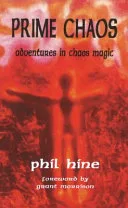
Prime Chaos
 78
78

Prime Chaos
Phil Hine’s *Prime Chaos*, co-authored with Grant Morrison for its initial release, cuts through the usual obfuscation surrounding practical magic. Its strength lies in its direct, almost instructional tone, offering a clear breakdown of techniques for ritual, sorcery, and invocation. Hine doesn't shy away from the mechanics, presenting them with a clarity that is rare in the genre. A passage detailing the construction of a ritual circle, for example, is precise and avoids unnecessary esoteric jargon. However, the book's limitation is its sheer breadth; by attempting to cover so many facets of practical magic, some sections feel more like introductions than exhaustive explorations. Despite this, the work remains a valuable primer for those seeking to understand the fundamental operations of magic beyond theoretical musings. It serves as a solid, no-nonsense guide for the aspiring practitioner.
📝 Description
78
Published in 2009, Prime Chaos offers practical techniques for occult philosophy and magical practice.
Prime Chaos approaches occult philosophy and magical practice with a focus on actionable techniques. The book demystifies ritual, sorcery, and other esoteric disciplines, breaking down complex ideas into understandable components. Its aim is to equip readers with tools for direct engagement with magical forces, examining various methods from invocation to evocation. The text provides a structured framework for understanding the mechanics and applications of magical work.
This book is for individuals serious about developing practical magical abilities and seeking a hands-on understanding of occult principles. It is suited for aspiring sorcerers, ritualists, and anyone interested in influencing reality through focused intent. The authors assume a reader willing to actively engage with the material, moving beyond passive study to applied experimentation. Those wishing to grasp the underlying principles of various magical traditions will also find it beneficial.
Prime Chaos emerged in 2009 amid a resurgence of interest in practical occultism, amplified by online communities. It engages with the legacy of early 20th-century figures like Aleister Crowley and Austin Osman Spare, who also prioritized experiential occultism. The book adapts these traditions for contemporary practitioners, contrasting with earlier periods of more limited access to esoteric knowledge.
💡 Why Read This Book?
• Gain actionable insights into ritual construction and execution, directly applicable to personal magical practice, as detailed in the book's breakdown of ritual magic. • Understand the distinct methodologies of sorcery, invocation, and evocation, learning to differentiate their purposes and applications as presented in the text. • Develop a clearer comprehension of magical intent and its practical application, drawing from the book's focus on techniques for influencing reality through focused will.
⭐ Reader Reviews
Honest opinions from readers who have explored this book.
❓ Frequently Asked Questions
What specific magical techniques are explored in Phil Hine's Prime Chaos?
The book details techniques for ritual magic, sorcery, invocation, possession, and evocation. It offers a structured approach to understanding and applying these diverse methods of magical practice.
Who is the primary audience for Prime Chaos by Phil Hine and Grant Morrison?
The primary audience consists of individuals serious about developing practical magical abilities. It's for those seeking a hands-on, instructional guide to occult principles and their application.
When was Prime Chaos first published?
Prime Chaos was first published in November 2009.
Does Prime Chaos offer theoretical or practical magic guidance?
The book strongly emphasizes practical magic. It aims to provide actionable techniques and demystify the mechanics of various esoteric disciplines for direct engagement.
What is the core philosophy presented in Prime Chaos?
The core philosophy centers on a pragmatic and accessible approach to occultism, focusing on clear instruction and the efficacy of magical techniques for the practitioner.
Is Grant Morrison's involvement significant in Prime Chaos?
Grant Morrison is credited as a co-author for the initial 2009 publication, indicating a significant contribution to the book's conceptualization and content.
🔮 Key Themes & Symbolism
Mechanics of Ritual
The work dissects ritual magic not as an abstract art, but as a structured process with discernible mechanics. It explores the components of effective ritual, from the intent of the practitioner to the symbolic landscape created. The book emphasizes how specific actions, symbols, and states of consciousness can be orchestrated to achieve desired outcomes, moving beyond mere ceremony to an understanding of ritual as applied will.
Sorcery and Its Applications
Prime Chaos offers a practical perspective on sorcery, defining it as a direct means of magical action and influence. It outlines various approaches to sorcerous practice, focusing on techniques that empower the individual practitioner. The text provides a framework for understanding how to wield magical energy and intent effectively in the external world, explaining its more fearsome connotations.
Invocation and Evocation
The book distinguishes between invocation and evocation, presenting them as distinct methods of engaging with different orders of being or consciousness. It breaks down the techniques associated with each, explaining the purpose and potential outcomes. This section aims to clarify the practitioner's role and the nature of the entities or forces being contacted, offering guidance on safe and effective interaction.
Pragmatic Occultism
A central theme is the presentation of occult philosophy as a practical discipline. Prime Chaos eschews purely academic or esoteric theorizing in favor of techniques that can be learned and applied. The emphasis is on efficacy and direct experience, encouraging readers to engage with magic as a skill to be developed through diligent practice and experimentation, rather than a matter of belief.
💬 Memorable Quotes
Direct passages from the work, attributed to the author.
“An exhaustive breakdown of the possibilities offered by ritual magic, sorcery, invocation, possession and evocation.”
— This indicates the book's comprehensive scope, promising a thorough exploration of various magical modalities. It suggests that readers will find detailed explanations and potential applications for a wide range of esoteric practices.
“Explaining complex concepts into understandable components.”
— This interpretation underscores the book's pedagogical approach. It aims to make the often-obscure principles of magic clear and accessible to a broader audience interested in practical application.
“The work examines various modalities of magical work, from invocation to evocation.”
— This highlights the book's structured exploration of different magical disciplines. It suggests a comparative approach, detailing the distinct characteristics and uses of each practice covered.
💡 Key Ideas
Editorial paraphrase of the work's core concepts — not direct quotes.
The author presents simple, yet effective techniques for becoming proficient in practical magic.
This quote highlights the book's core promise: to provide accessible methods for developing skill in magic. It suggests that the complexity often associated with occultism is being streamlined into actionable advice for the reader.
Focus on techniques for influencing reality through focused intent.
This paraphrase points to the book's emphasis on the power of the practitioner's will. It suggests that the techniques taught are designed to harness and direct mental energy effectively for tangible results.
🌙 Esoteric Significance
Tradition
While not strictly adhering to a single lineage, *Prime Chaos* draws heavily from Western Esotericism, particularly the traditions influenced by figures like Aleister Crowley and Chaos Magic. It presents a pragmatic, operational approach that aligns with the practical and experiential focus of many modern occult movements. The work departs from purely symbolic or philosophical interpretations by emphasizing direct magical action and the practitioner's agency.
Symbolism
The book's symbolism often centers on the concept of 'chaos' itself, representing the primordial, undifferentiated potential from which all forms arise. It also implicitly engages with symbols of will and focus, such as the magician's tools or the charged sigil, which are employed to structure and direct magical energy. The act of ritual construction itself becomes symbolic, representing the practitioner's power to impose order and intent upon the flux of reality.
Modern Relevance
Contemporary practitioners of Chaos Magic, eclectic witchcraft, and modern ritualists frequently cite *Prime Chaos* as a foundational text. Its emphasis on clear technique and demystification makes it accessible to newcomers, while its pragmatic approach appeals to experienced practitioners seeking to refine their methods. Thinkers exploring the intersection of consciousness, technology, and altered states often find its operational framework relevant.
👥 Who Should Read This Book
• Aspiring practitioners of Western Esotericism seeking clear, actionable techniques for ritual and sorcery. • Individuals interested in understanding the mechanics of magic beyond theoretical discussions, looking for a practical guide. • Students of comparative religion or occult history who wish to examine modern approaches to magical practice.
📜 Historical Context
Published in November 2009, *Prime Chaos* emerged during a resurgence of interest in practical occultism, a period marked by increased online discourse and accessible publishing platforms. It builds upon the foundations laid by earlier 20th-century figures like Aleister Crowley and Austin Osman Spare, who championed experiential magic. While these predecessors often wrote in denser, more symbolic language, Hine and Morrison aimed for a more direct, instructional approach, making the book a contemporary counterpoint to earlier, more esoteric texts. The work arrived as the internet facilitated global communities of practitioners, allowing for rapid dissemination and discussion of ideas that might have previously been confined to small circles or faced greater censorship. It offered a modern, pragmatic distillation of magical principles, contrasting with the more academic or purely theoretical explorations of magic prevalent in some circles.
📔 Journal Prompts
The mechanics of ritual: Analyze the components of a ritual you have performed or plan to perform.
Sorcery techniques: How might the principles of sorcery, as outlined, apply to a non-magical goal?
Invocation vs. Evocation: Reflect on the distinction between these two modes of contact.
Practical magic efficacy: Consider an instance where focused intent demonstrably influenced an outcome.
The role of symbols in ritual: Evaluate the symbolic field of a ritual you've encountered.
🗂️ Glossary
Ritual Magic
A structured form of magic involving specific actions, symbols, and intentions performed in a defined space and time to achieve a particular magical effect.
Sorcery
A direct application of magical techniques aimed at influencing events or individuals, often characterized by its practical and goal-oriented nature.
Invocation
The act of calling upon a spirit, deity, or force to enter and possess the practitioner or to work through them.
Possession
A state where a non-physical entity or consciousness temporarily takes control of a physical body, often facilitated through invocation.
Evocation
The practice of summoning or calling forth spirits or entities from their own realms into the practitioner's space, typically for communication or instruction.
Prime Chaos
Refers to the fundamental, undifferentiated state of potential from which all reality emerges, a concept explored as a source of raw magical power.
Will
In the context of magic, the focused intention and directed psychic energy of the practitioner, considered the primary tool for effecting change.