Pregnant darkness

 76
76

Pregnant darkness
Monika Wikman's *Pregnant Darkness* offers a compelling, if at times demanding, exploration of the psyche's encounter with the primordial feminine. Wikman, a Jungian analyst, skillfully bridges the gap between psychological theory and esoteric practice, particularly evident in her discussions of the alchemical stages as they relate to internal transformation. The book's strength lies in its unflinching gaze into the shadow aspects of the self, presenting darkness not as an absence of light, but as a generative space for profound psychic evolution. A passage that particularly stands out is Wikman's interpretation of the 'terrible mother' archetype, which she unpacks with both psychological rigor and spiritual reverence.
However, the text's density can be a barrier for the uninitiated. While essential for its depth, readers unfamiliar with Jungian terminology or alchemical symbolism might find themselves frequently consulting external resources. The narrative, while rich, occasionally feels less like a guided exploration and more like an academic treatise, potentially alienating those seeking a more immediately accessible spiritual text. Despite this, *Pregnant Darkness* remains a vital contribution to the literature on the sacred feminine and psychological integration.
Read more ↓
Ultimately, this is a challenging but rewarding text for those willing to engage deeply with the darker, more potent aspects of the soul's journey.
📝 Description
76
Monika Wikman's 2004 book *Pregnant Darkness* examines the psyche's encounter with the primordial feminine.
Published in 2004, *Pregnant Darkness* investigates the psyche's engagement with the deep feminine principle. Monika Wikman, grounded in Jungian psychology and esoteric traditions, writes about the soul's confrontation with its shadow aspects and the potential for transformation through this encounter. She frames this process within the concept of 'pregnant darkness,' a generative void from which new understanding arises.
The book focuses on the feminine archetype not just as a nurturing force, but as a powerful, sometimes formidable, figure central to spiritual renewal. Wikman also touches on the alchemical marriage and the confrontation with unconscious elements that lead to psychological rebirth. The text is aimed at those with an interest in depth psychology, comparative religion, and esoteric philosophy, especially readers familiar with Carl Jung's ideas on the anima and the shadow.
Wikman's work joins a tradition of psychological and esoteric inquiry that bridges the symbolic language of myths and dreams with personal experience. It emerged during a time of renewed interest in Jungian thought and goddess spirituality. The book relates to contemporary explorations of archetypal psychology and the sacred feminine, offering a distinct focus on alchemical and psychological processes.
💡 Why Read This Book?
• Gain a profound understanding of the 'pregnant darkness' concept, learning how to view difficult psychological states as fertile ground for transformation, as explored in the book's central metaphors. • Discover the alchemical stages of inner work, specifically how Wikman frames these processes within the context of confronting the shadow and integrating the feminine divine, a process detailed throughout the text. • Deepen your appreciation for archetypal psychology by examining Wikman's unique application of Jungian concepts to esoteric traditions, offering a fresh perspective on the anima and the underworld journey.
⭐ Reader Reviews
Honest opinions from readers who have explored this book.
❓ Frequently Asked Questions
What is the primary focus of Monika Wikman's 'Pregnant Darkness'?
The book primarily focuses on the psychological and esoteric exploration of the 'pregnant darkness,' a concept representing the fertile, unknown void from which psychic transformation and spiritual rebirth can emerge, particularly through engaging with the primordial feminine.
What is the significance of the 'pregnant darkness' concept?
The 'pregnant darkness' signifies a potent, often terrifying, primordial feminine archetype that holds the capacity for profound psychic evolution. It is seen not as an absence of light, but as a generative space essential for spiritual rebirth and self-discovery.
What esoteric traditions does 'Pregnant Darkness' draw upon?
The work draws significantly from Jungian psychology, alchemy, and various esoteric traditions that explore the feminine divine and the process of individuation. It bridges depth psychology with ancient symbolic systems.
Who is Monika Wikman and what is her background?
Monika Wikman is a Jungian analyst and author. Her background combines extensive clinical practice in depth psychology with a deep engagement with esoteric philosophy and spiritual traditions, informing her unique approach in works like 'Pregnant Darkness'.
When was 'Pregnant Darkness' first published?
'Pregnant Darkness' was first published in 2004, a period marked by growing interest in Jungian psychology and the resurgence of goddess-centered spiritual movements.
How does 'Pregnant Darkness' relate to Carl Jung's work?
The book is deeply rooted in Carl Jung's analytical psychology, particularly his concepts of archetypes, the anima, and the shadow. Wikman extends these theories by applying them to esoteric symbolism and the exploration of the feminine principle.
🔮 Key Themes & Symbolism
The Primordial Feminine
This theme explores the archetypal feminine not as a simple nurturing force, but as a potent, sometimes terrifying, primordial power. Wikman explores its role in initiating psychological crisis and spiritual rebirth, drawing parallels between the Great Mother archetype and the darkness from which creation emerges. The text examines how engaging with this aspect of the psyche, often ignored or repressed, is crucial for wholeness and individuation.
Alchemical Transformation
Wikman masterfully interprets the stages of alchemical transformation—nigredo (blackening), albedo (whitening), citrinitas (yellowing), and rubedo (reddening)—as metaphors for profound psychological processes. The 'pregnant darkness' itself is intrinsically linked to the nigredo, the chaotic, dissolving phase that precedes the emergence of new consciousness. The book details how confronting the shadow is an essential alchemical step towards inner gold.
The Shadow and the Underworld
A central tenet of *Pregnant Darkness* is the necessity of confronting the shadow self. Wikman posits that the descent into the underworld, a classic mythological motif, represents the psychological journey into the unconscious and the confrontation with repressed aspects of the personality. This journey through darkness is not an end but a necessary precursor to integration and the realization of the divine within.
Jungian Psychology and Esotericism
The work functions as a sophisticated synthesis of Carl Jung's analytical psychology and various esoteric traditions, particularly alchemy and Gnosticism. Wikman uses Jungian frameworks to understand esoteric symbolism and spiritual experiences, demonstrating how ancient wisdom can illuminate the dynamics of the modern psyche. This interdisciplinary approach offers a unique perspective on individuation and the search for meaning.
💬 Memorable Quotes
Direct passages from the work, attributed to the author.
“The darkness is not empty; it is pregnant with potential.”
— This central concept suggests that periods of uncertainty, despair, or the unknown are not voids to be feared but fertile spaces brimming with the possibility for creation and profound psychological growth.
“Confronting the shadow is an alchemical necessity.”
— This highlights the book's core message that acknowledging and integrating one's repressed or 'darker' aspects is a crucial, transformative step akin to the alchemical process of purification and refinement.
“The feminine principle holds the key to the underworld's mysteries.”
— This interpretation emphasizes the archetypal feminine not just as a life-giver, but as a potent force connected to the depths of the unconscious, the area of dissolution and rebirth.
“Psychic crisis can be the catalyst for spiritual awakening.”
— This suggests that periods of intense psychological difficulty or turmoil, often associated with the 'pregnant darkness,' are not merely destructive but can serve as powerful initiations into deeper self-understanding and spiritual awareness.
“Individuation requires a journey through the nigredo.”
— Referencing the alchemical stage of blackening, this implies that the path to becoming a whole, unique individual involves a necessary descent into chaos and dissolution before any true renewal can occur.
🌙 Esoteric Significance
Tradition
This work is firmly situated within the Western Esoteric Tradition, drawing heavily from Jungian analytical psychology, which itself is deeply influenced by Gnosticism, Hermeticism, and Alchemy. Wikman bridges the empirical language of modern psychology with the symbolic language of these ancient traditions. She departs from purely academic Jungianism by directly engaging with the transformative, initiatory power of the archetypes, particularly the feminine, framing psychological work as a form of inner alchemy.
Symbolism
Key symbols include the 'pregnant darkness,' representing the fertile void and the womb of transformation, intrinsically linked to the alchemical nigredo. The 'Underworld' symbolizes the descent into the unconscious, the confrontation with the shadow self, and the primal energies that must be integrated. The 'feminine principle' is depicted not solely as nurturing but as a fierce, dark, and creative force essential for psychic wholeness and spiritual rebirth, akin to the concept of the Anima's shadow aspects.
Modern Relevance
Contemporary thinkers and practitioners in depth psychology, particularly those focusing on archetypal psychology and the sacred feminine, continue to draw from Wikman's insights. Her work is relevant to modern shamanic practitioners, ritualists engaged with goddess spirituality, and psychotherapists seeking to integrate Jungian concepts with esoteric wisdom. The book's exploration of confronting darkness remains pertinent in an era grappling with collective shadow and existential anxieties.
👥 Who Should Read This Book
• Students of Jungian psychology: Those seeking to deepen their understanding of archetypal theory, particularly the anima, the shadow, and the process of individuation, will find a rich, symbolically informed perspective. • Practitioners of esoteric traditions: Individuals involved in alchemy, Gnosticism, or goddess spirituality looking for a psychological framework to understand their practices and experiences will benefit from Wikman's synthesis. • Seekers of psychological transformation: Readers undergoing personal crises or seeking profound inner change will find guidance in the book's exploration of darkness as a generative force for rebirth and integration.
📜 Historical Context
Published in 2004, *Pregnant Darkness* emerged within a vibrant intellectual landscape marked by a resurgence of interest in Carl Jung's work and the growing prominence of ecofeminist and goddess spirituality movements. Monika Wikman's approach, deeply rooted in Jungian analysis, positioned her within a lineage of thinkers like Marie-Louise von Franz and James Hillman, who sought to revitalize psychological inquiry through myth, symbol, and esoteric traditions. The book contributed to a broader conversation concerning the archetype of the feminine, challenging patriarchal interpretations and exploring its potent, often shadow-laden, aspects. While authors like Marion Woodman were already exploring the body-psyche connection and the feminine, Wikman's distinct focus on the alchemical and the 'pregnant darkness' offered a unique contribution. The work did not face significant public controversy or censorship but rather found its audience among students of depth psychology and esoteric studies seeking a more integrated understanding of the psyche's relationship with the sacred feminine.
📔 Journal Prompts
The concept of the 'pregnant darkness' and its potential for psychic renewal.
Reflecting on personal encounters with the 'terrible mother' archetype.
Mapping alchemical stages (nigredo, albedo, etc.) to personal psychological processes.
The symbolic journey through the underworld as a metaphor for confronting personal shadow aspects.
Integrating the fierce, creative power of the feminine divine into one's life.
🗂️ Glossary
Pregnant Darkness
A central concept in the book, representing the fertile, unknown void from which transformation and new consciousness emerge. It signifies a potent, generative state within the psyche, often associated with the initial stages of spiritual or psychological rebirth.
Archetypal Feminine
Refers to the primordial, symbolic feminine principle as understood in Jungian psychology and esoteric traditions. It encompasses not only nurturing aspects but also the fierce, dark, and creative powers essential for psychic wholeness and initiation.
Nigredo
The first stage of the alchemical process, often translated as 'blackening' or 'putrefaction.' Psychologically, it represents dissolution, chaos, confrontation with the shadow, and the breakdown of old structures, seen as a necessary precursor to transformation.
Albedo
The second stage of alchemy, or 'whitening.' Following the nigredo, it symbolizes purification, the emergence of clarity from chaos, and the initial steps toward integrating the dismembered parts of the psyche.
Shadow Self
In Jungian psychology, the shadow comprises the repressed, unconscious aspects of the personality—traits, desires, and instincts that the conscious ego deems unacceptable. Confronting the shadow is crucial for individuation.
Anima
The feminine archetype within the male unconscious, according to Jung. Wikman extends this to discuss the broader feminine principle and its psychological manifestations, including its connection to the unconscious and the underworld.
Individuation
The lifelong psychological process of becoming an individual; the realization of the self by integrating conscious and unconscious aspects of the personality to achieve wholeness.
🔮 Readers Also Liked
Browse all →







More by Monika Wikman
All books →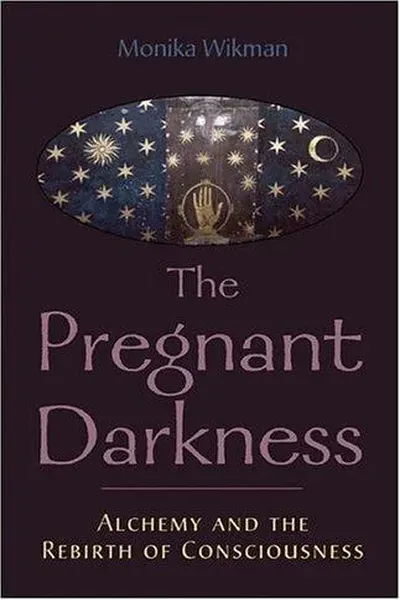
More Free Alchemy & Hermeticism Books
View all →