Praywell
 74
74

Praywell
Walter L. Weston's "Praywell" attempts a formidable task: bridging the gap between esoteric healing practices and empirical observation. The book's strength lies in its systematic approach to energy field manipulation, offering concrete techniques for practitioners. Weston's "Emotional Release Therapy," for instance, is presented as a rapid method for addressing psychological distress, moving beyond mere symptom management. However, the work occasionally falters in its scientific explanations, sometimes presenting assertions that, while internally consistent, lack robust external validation within the mainstream scientific community of 1996. The detailed guidance on touch-healing is commendable, offering practical steps for improving therapeutic outcomes. Despite its ambitious scope, the dense theoretical framework might require significant effort from readers accustomed to less technical spiritual literature. "Praywell" offers a valuable, if demanding, resource for those committed to exploring the energetic dimensions of healing.
📝 Description
74
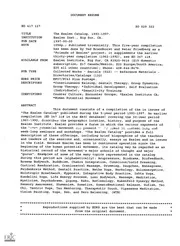
Walter L. Weston's 1996 book, Praywell, connects spiritual practice with human energy fields.
Published in March 1996, Walter L. Weston's Praywell offers a framework for understanding human energy fields and their maintenance. The book proposes that conscious intent and focused application can improve personal and physical well-being, moving beyond popular New Age ideas by grounding its teachings in energetic science. It details a systematic approach to interacting with subtle energies. Praywell is written for individuals seeking practical methods for self-healing and emotional restoration. It appeals to those interested in the connection between science and spirituality, especially if current healing modalities seem insufficient or too abstract. Practitioners of energy healing, therapists, and anyone curious about the scientific basis of prayer and touch-healing will find material for integration into their work.
In the mid-1990s, a time of heightened public interest in mind-body connections and alternative healing, Praywell emerged. While books like The Celestine Prophecy had already introduced spiritual energy concepts to a wide audience, Weston's work aimed for a more structured, almost scientific explanation. It drew parallels with emerging energy research and contributed to the discourse on bioenergetics and subtle energy manipulation during an era that saw a rise in literature about consciousness and healing.
Praywell emerged from the spiritual and alternative healing currents of the mid-1990s, a period marked by widespread interest in mind-body connections. It distinguishes itself by attempting to provide a systematic, science-adjacent explanation for phenomena previously discussed in more metaphysical terms. The book situates itself within traditions that view the human body as an energetic system, susceptible to manipulation and healing through focused intention and specific techniques. It bridges the gap between popular New Age concepts and a more structured, almost clinical, approach to energetic well-being.
💡 Why Read This Book?
• You will learn specific "Emotional Release Therapy" techniques to address and process past emotional hurts, providing a practical method for rapid psychological relief distinct from purely talk-therapy approaches, as detailed within the book. • You will gain a deeper understanding of human energy fields, moving beyond abstract spiritual notions to grasp their mechanics and how they can be consciously renewed through self-healing practices described in its chapters. • You will discover detailed guidance on touch-healing, enhancing your existing skills or developing new ones by understanding the energetic principles Weston outlines, potentially improving professional healing outcomes.
⭐ Reader Reviews
Honest opinions from readers who have explored this book.
❓ Frequently Asked Questions
What is the core concept of "Praywell" regarding energy fields?
"Praywell" posits that human energy fields can be actively cleansed and renewed. It explores touch-healing and prayer through the lens of energetic research, suggesting these practices directly influence physical and emotional well-being by interacting with these fields.
How does "Praywell" differ from "The Celestine Prophecy"?
While "The Celestine Prophecy" introduced popularized concepts of spiritual energy, "Praywell" moves further by offering a more systematic, science-informed understanding of energy field cleansing and renewal, including detailed techniques for self-healing and touch-healing.
What is "Emotional Release Therapy" as presented in "Praywell"?
This therapy, detailed in "Praywell," is presented as a method for the rapid healing of emotional hurts and negative feelings. It focuses on directly addressing and releasing suppressed emotional energy stored within the human field.
Is "Praywell" suitable for professional healers?
Yes, the book provides detailed guidance intended to improve professional healing skills, particularly in touch-healing, by offering a new scientific understanding based on energy research and field interaction.
What is the publication date of Walter L. Weston's "Praywell"?
The first publication of "Praywell" by Walter L. Weston was in March 1996.
Can "Praywell" help with physical health?
According to its premise, "Praywell" aims to improve physical health by teaching self-healing techniques that work on the human energy fields, promoting a state of wholeness that positively impacts the physical body.
🔮 Key Themes & Symbolism
Energy Field Dynamics
The central tenet of "Praywell" revolves around the concept of human energy fields. Weston posits that these fields are not merely metaphorical but possess a tangible energetic quality that can be influenced. The book provides a framework for understanding how these fields become cluttered or damaged through emotional and physical stress. It then offers practical methods, such as specific breathing exercises and focused intention, to cleanse and renew these fields, aiming for improved vitality and emotional equilibrium.
Applied Energetic Healing
"Praywell" distinguishes itself by detailing actionable techniques for both self-healing and assisting others. It elaborates on the principles of touch-healing, suggesting that the practitioner's energy field can positively interact with the recipient's field to facilitate restoration. This section moves beyond theoretical discussion to offer step-by-step guidance, making it a resource for those seeking to enhance their therapeutic capabilities through an energetic understanding.
Emotional Release Therapy
A significant component of "Praywell" is its focus on "Emotional Release Therapy." This therapeutic approach is presented as a rapid means to address and resolve deep-seated emotional pain, trauma, and negative thought patterns. The book explains how emotional blockages manifest within the energy field and provides techniques to systematically release this stored energy, thereby promoting psychological and emotional wholeness.
The Science of Prayer and Touch
Weston attempts to provide a scientific rationale for the efficacy of prayer and touch-healing, grounding these practices in energy research. "Praywell" explores how focused consciousness and directed energy transfer, whether through prayer or physical touch, can create measurable changes in the human energetic system. This perspective aims to explain these spiritual phenomena, presenting them as observable and controllable energetic interactions.
💬 Memorable Quotes
Direct passages from the work, attributed to the author.
“Cleansing and renewing human energy fields.”
— This phrase expresses the core objective of "Praywell." It suggests that our energetic bodies, like our physical ones, require maintenance and can be actively improved through specific practices outlined in the book.
“A new scientific understanding of touch-healing and prayer based upon energy research.”
— This highlights the book's ambition to legitimize spiritual healing modalities by grounding them in scientific inquiry. It signals an intent to move beyond anecdotal evidence towards a more empirical explanation of energetic interactions.
“Uses 'Emotional Release Therapy' for rapid healing of emotional hurts.”
— This points to a specific, named methodology within "Praywell" designed for efficient emotional processing. It suggests a practical, results-oriented approach to psychological well-being through energy work.
“Helps improve physical health and emotional wholeness with self-healing techniques.”
— This emphasizes the dual benefits of the book's teachings: addressing both somatic and psychological well-being. It underscores the holistic approach, linking energetic health to overall vitality.
“Improves professional healing skills, with detailed guidance.”
— This directly addresses practitioners, indicating that "Praywell" offers practical, instructive content aimed at enhancing existing healing abilities through a deeper understanding of energy dynamics.
🌙 Esoteric Significance
Tradition
"Praywell" can be situated within the broader esoteric tradition of bioenergetics and subtle energy work, drawing parallels with practices found in some branches of Western Esotericism and Eastern energy systems like Qigong. It departs from traditional Hermetic or Kabbalistic frameworks by explicitly aiming for a scientific, rather than purely mystical or symbolic, explanation of energetic phenomena. Its focus on quantifiable energy fields and their manipulation aligns with a modern esoteric impulse to bridge the spiritual and the material through verifiable principles.
Symbolism
While "Praywell" emphasizes scientific explanation, the concept of the "energy field" itself functions symbolically, representing the totality of an individual's energetic state—physical, emotional, and spiritual. "Cleansing" and "renewal" act as core motifs, symbolizing purification and rejuvenation, akin to alchemical processes of transformation but applied to the human energetic constitution. The act of "touch" becomes a symbolic conduit for energetic transfer and healing, representing connection and intentional energetic influence.
Modern Relevance
Weston's work, particularly its focus on energy fields and "Emotional Release Therapy," finds echoes in contemporary somatic experiencing, energy psychology modalities, and various forms of energy healing. Thinkers and practitioners who explore the quantifiable aspects of consciousness and the body's energetic system, often integrating principles from quantum physics (though sometimes speculatively) into their models, can find conceptual antecedents in "Praywell's" approach to energetic renewal and healing.
👥 Who Should Read This Book
• Aspiring and current energy healers seeking a structured, energetically-focused methodology to enhance their touch-healing skills and deepen their understanding of patient energetic fields. • Individuals experiencing persistent emotional distress or physical discomfort looking for practical self-healing techniques grounded in energetic principles beyond conventional therapies. • Researchers and students of consciousness studies and alternative healing modalities interested in mid-1990s attempts to scientifically explain and systematize esoteric practices.
📜 Historical Context
Published in March 1996, "Praywell" arrived during a vibrant period for New Age and self-help literature, a time when books like "The Celestine Prophecy" (1993) had already brought concepts of spiritual energy into mainstream consciousness. Walter L. Weston's work distinguished itself by attempting a more scientific framing, drawing parallels with nascent energy research and bioenergetics. This era saw a proliferation of interest in mind-body medicine, consciousness studies, and alternative healing modalities. Weston's attempt to systematize touch-healing and emotional release through an energetic lens placed "Praywell" within a broader intellectual current that sought to validate esoteric practices through empirical-sounding frameworks. While figures like Candace Pert were beginning to explore the biochemical basis of emotions, Weston's approach focused more directly on the energetic field itself, offering a distinct, though less scientifically established, perspective compared to the burgeoning psychoneuroimmunology movement.
📔 Journal Prompts
The concept of human energy fields and their cleansing.
Personal application of "Emotional Release Therapy" techniques.
The role of focused intention in self-healing practices.
Evaluating the effectiveness of touch-healing methods described.
Reflecting on the connection between emotional wholeness and physical health.
🗂️ Glossary
Human Energy Fields
The subtle energetic systems surrounding and permeating the physical body, believed in "Praywell" to influence health, emotions, and consciousness. These fields are presented as susceptible to cleansing and renewal.
Cleansing
In the context of "Praywell," this refers to the process of removing stagnant or negative energetic imprints from the human energy fields, often resulting from stress, trauma, or negative emotions.
Renewal
The act of revitalizing and restoring the human energy fields to a state of optimal function and balance, as taught through specific techniques in "Praywell."
Touch-Healing
A practice detailed in "Praywell" where therapeutic touch is used to facilitate the transfer of beneficial energy, aiming to promote healing and restore balance within the recipient's energy field.
Emotional Release Therapy
A specific technique presented in "Praywell" designed for the rapid processing and resolution of emotional hurts and negative feelings by addressing their energetic component.
Self-Healing
Techniques described in "Praywell" that individuals can apply to themselves to improve their physical health and emotional wholeness by consciously working with their energy fields.
Energy Research
The scientific investigation into the nature and properties of energy fields, which "Praywell" uses as a basis for understanding and validating practices like prayer and touch-healing.
This book appears in 2 collections
🔮 Readers Also Liked
Browse all →








From the “Energy Healing” Collection
View all →







More Free Occult Philosophy Books
View all →