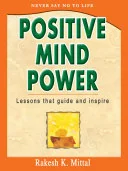
Positive Mind Power
 73
73

Positive Mind Power
Rakesh K Mittal’s Positive Mind Power attempts to demystify the generative force of a positive mental state. The author’s insistence that the mind’s capacity for acceptance or repulsion is key to navigating life’s challenges is a persistent theme. Mittal’s personal anecdotes, while intended to validate his thesis, sometimes feel anecdotal rather than systematically presented evidence. A notable strength lies in the book’s directness; it avoids overly complex philosophical jargon, making its core message accessible. However, the limitation is the lack of deeper exploration into the psychological mechanisms or potential pitfalls of enforced positivity. The passage discussing how accepting a situation with a positive frame naturally brings forth answers is central, yet the 'how' remains somewhat underspecified. It’s a practical primer, but lacks the depth for seasoned practitioners.
📝 Description
73
Rakesh K Mittal's Positive Mind Power argues that our thoughts actively shape our experiences and outcomes.
Rakesh K Mittal's book, Positive Mind Power, asserts that human consciousness has the ability to either accept or reject circumstances. The central idea is that a positive mental outlook generates solutions, whereas a negative one worsens existing problems. Mittal uses his own experiences to show the strong impact of one's disposition on life's results. This work is for people who want to understand and use the force of their thoughts. It will appeal to those interested in practical psychology, self-improvement, and the philosophy behind mental attitudes. Readers seeking concrete methods to change their view of challenges and foster optimism will find valuable content.
The book's main point is the inherent strength of mental framing. Mittal stresses that how we perceive things creates our reality, and that a positive mindset draws solutions and good results. Conversely, a negative outlook blocks opportunities and worsens difficulties. The book examines how this principle plays out in daily life, affecting personal connections and professional efforts alike.
Positive Mind Power fits within the broader historical currents of 20th-century self-help and New Thought movements, which gained prominence from the mid-1900s. Thinkers like Napoleon Hill, whose *Think and Grow Rich* (1937) advanced similar ideas on mental attitude and success, represent a related intellectual tradition. The book emerged during a time when psychological approaches to personal fulfillment were becoming more accepted.
💡 Why Read This Book?
• You will learn how to leverage your mental framing to influence outcomes, a concept Mittal illustrates through personal experiences detailed in the book, offering a unique perspective on problem-solving. • You will gain practical strategies for cultivating an accepting mindset, as discussed in the section on the mind's capacity for acceptance versus repulsion, providing actionable steps for personal growth. • You will understand the direct link between positive thinking and problem resolution, a core tenet explored through the author's reflections on overcoming challenges, offering a tangible benefit for daily application.
⭐ Reader Reviews
Honest opinions from readers who have explored this book.
❓ Frequently Asked Questions
What is the central premise of Rakesh K Mittal's Positive Mind Power?
The book's central premise is that the human mind possesses a powerful capacity for acceptance or repulsion. Mittal argues that adopting a positive frame of mind actively attracts solutions, while negativity exacerbates difficulties, as demonstrated through his personal experiences.
How does Positive Mind Power suggest one can overcome problems?
According to Mittal, overcoming problems involves consciously adopting a positive frame of mind towards the situation. This acceptance, the book suggests, naturally leads to the emergence of answers and solutions, rather than resistance.
Is Positive Mind Power based on scientific research or personal anecdotes?
The book primarily draws upon the author's personal experiences and reflections to illustrate the principles of positive thinking. While it aligns with psychological concepts, it is presented more as experiential wisdom than academic research.
What is the intended audience for Positive Mind Power?
The book is intended for individuals interested in self-improvement, practical psychology, and harnessing the power of their thoughts. It appeals to those seeking to cultivate optimism and reframe challenges in their lives.
Does the book offer specific techniques for positive thinking?
While the book emphasizes the *principle* of positive framing, it focuses more on the underlying philosophy and personal validation through experience rather than providing a step-by-step technical manual.
What is the significance of 'acceptance' in the context of positive thinking in this book?
In Mittal's work, acceptance signifies a non-resistant, positive engagement with a situation. This mental posture is presented as crucial for unlocking the mind's natural problem-solving capabilities, contrasting with a repelling or negative approach.
🔮 Key Themes & Symbolism
Mental Framing and Reality
The work posits that the human mind actively constructs its reality through its inherent capacity for acceptance or repulsion. Mittal argues that framing a situation positively allows for the natural emergence of solutions, whereas a negative outlook closes off possibilities and worsens conditions. This is not mere optimism but a claim about the mind's direct influence on external circumstances, illustrated through the author's personal accounts of how his disposition altered outcomes.
The Power of Acceptance
Central to Mittal's thesis is the concept of acceptance as a potent force. He suggests that when individuals accept a situation without resistance, their minds are free to find answers. This contrasts with repulsion, which Mittal describes as a blockage that intensifies problems. The book explores this dynamic as a fundamental principle governing human experience and problem-solving.
Personal Experience as Validation
Mittal frequently refers to his own life experiences as primary evidence for the principles discussed in Positive Mind Power. This reliance on personal testimony underscores the book's practical and experiential approach. The author uses these narratives to demonstrate the tangible effects of maintaining a positive mental attitude, suggesting that these insights are not theoretical but empirically derived from lived events.
Mind-Body-Circumstance Connection
The book implies a profound connection between an individual's mental state, their physical experience, and the circumstances they encounter. By emphasizing the mind's power, Mittal suggests that internal shifts in perception can lead to external changes. This holistic view connects psychological attitudes directly to the unfolding of life events, positioning the mind as a central agent of creation.
💬 Memorable Quotes
Direct passages from the work, attributed to the author.
“The human mind has a tremendous capacity for acceptance as well as repulsion.”
— This statement expresses the book's core dichotomy. It suggests our thoughts are not passive but actively engage with reality, either embracing it to find solutions or rejecting it to create obstacles.
“When we accept a situation with a positive frame of mind, answers come in the natural course.”
— This highlights the generative power of positivity. It implies that a receptive, optimistic mental state creates an environment where solutions organically arise, rather than needing to be forced.
“The situation gets worsened when we approach it with a negative frame.”
— This contrasts the previous point, emphasizing the destructive potential of negativity. Mittal suggests that a negative mindset actively contributes to the escalation of problems, creating a self-fulfilling prophecy.
“Thus a positive mind has immense power and this fact is amply reflected in his experiences.”
— This directly links the abstract concept of a positive mind to tangible power, grounding its efficacy in the author's personal narrative and lived results.
“Answers come in the natural course.”
— This phrase suggests that the solutions to our problems are not external discoveries but inherent potentials unlocked by the right mental disposition, implying a natural order to problem resolution.
🌙 Esoteric Significance
Tradition
While not explicitly tied to a single esoteric lineage, *Positive Mind Power* speaks to Hermetic principles concerning the nature of thought as a creative force ('The All is Mind'). It aligns with mental alchemy traditions that posit the transformation of consciousness as primary. The work departs from more complex symbolic systems by focusing on direct psychological application, making its principles accessible outside formal initiatory structures.
Symbolism
The central 'symbol' is the mind itself, depicted as a dual-natured entity capable of creation (acceptance) or destruction (repulsion). The 'situation' can be seen as the alchemical base matter, which is transmuted or worsened by the mental 'agent' of the observer. The 'answers' represent the refined gold or philosopher's stone, achieved through the correct application of mental attitude.
Modern Relevance
Mittal's emphasis on the mind's power anticipates modern concepts in positive psychology, the law of attraction (popularized by works like *The Secret*), and manifestation practices. Contemporary thinkers and practitioners in areas like neuro-linguistic programming (NLP) and various mindfulness-based therapeutic approaches often draw upon similar ideas about cognitive reframing and the impact of belief systems on experience.
👥 Who Should Read This Book
• Individuals seeking practical self-improvement tools: Those looking for actionable advice on how to shift their mindset to overcome daily obstacles and improve their outlook. • Students of New Thought and positive psychology: Readers interested in exploring the historical and philosophical underpinnings of mind-over-matter philosophies, particularly those originating in the 20th century. • Personal development enthusiasts: Anyone aiming to understand and harness the psychological power of their thoughts to achieve greater personal success and well-being.
📜 Historical Context
Published in an era influenced by the burgeoning self-help movement and New Thought philosophy, Rakesh K Mittal's *Positive Mind Power* echoes sentiments popularized by figures like Napoleon Hill and Dale Carnegie in the mid-20th century. The 1930s and onward saw a significant cultural shift towards psychological frameworks for personal success and well-being, moving away from purely material or spiritual explanations. This period was marked by widespread interest in the power of affirmation and mental attitude, exemplified by Hill's *Think and Grow Rich* (1937), which explored similar themes of success through focused thought. While not directly engaging with academic psychology of the time, such as behaviorism, Mittal's work tapped into a popular demand for accessible methods to improve one's life through internal control. The book's reception likely aligned with a broader societal embrace of optimistic psychology as a tool for navigating economic and personal challenges.
📔 Journal Prompts
Your mind's capacity for acceptance versus repulsion: identify a current challenge and reframe it positively.
The natural course of answers: describe a time when accepting a difficult situation led to an unexpected solution.
Reflecting on the immense power of a positive mind: document instances where your outlook directly influenced an outcome.
The contrast between positive and negative framing: analyze how approaching two similar situations differently yielded varied results.
Personal experiences of mental disposition: record a moment where your internal state clearly shaped external events.
🗂️ Glossary
Acceptance (in context of Positive Mind Power)
A mental state characterized by a non-resistant, positive engagement with circumstances. It is presented as a key to unlocking the mind's natural problem-solving abilities.
Repulsion (in context of Positive Mind Power)
The opposite of acceptance; a negative or resistant mental approach to a situation. This is described as a factor that worsens problems and blocks solutions.
Positive Frame of Mind
The author's concept referring to an outlook characterized by optimism and a belief in the possibility of favorable outcomes, which actively facilitates the discovery of solutions.
Natural Course (of answers)
Refers to the idea that solutions to problems emerge organically and effortlessly when the mind is in a state of positive acceptance, rather than requiring forced effort.
Immense Power (of the positive mind)
The significant influence that a positive mental attitude is believed to exert on an individual's circumstances and ability to overcome challenges, as validated by personal experience.
Mental Disposition
An individual's underlying attitude or tendency of mind; their habitual way of thinking and feeling, which Mittal argues is crucial in shaping life experiences.
Worsened Situation
A circumstance that becomes more difficult or problematic due to a negative or resistant mental approach, as opposed to being resolved through acceptance.
This book appears in 1 collection
🔮 Readers Also Liked
Browse all →









From the “Mind Power” Collection
View all →








More Free Occult Philosophy Books
View all →