Hex Hall

 74
74

Hex Hall
Rachel Hawkins’ Hex Hall presents a familiar setup: a protagonist with latent powers thrust into a specialized school. Sophie Mercer’s journey through the titular Hex Hall, a reform school for supernatural beings, offers a briskly paced introduction to a world teeming with witches, vampires, and other creatures. The strength of the novel lies in its engaging voice and the relatable angst of its teenage characters navigating new social hierarchies and dangerous secrets. However, the plot sometimes feels predictable, relying on established YA paranormal tropes without significant deviation. The portrayal of the magical community, while colorful, could benefit from deeper exploration beyond the immediate concerns of schoolyard drama and romantic entanglements. Despite these limitations, the book’s initial premise and energetic pacing make it a solid entry for its target audience.
Hex Hall effectively establishes its world and characters, laying a foundation for further developments in the series.
📝 Description
74
Rachel Hawkins' 2011 novel Hex Hall places a teenage witch at a boarding school for supernatural beings.
Hex Hall follows Sophie Mercer, a sixteen-year-old witch who finds herself sent to a special academy after an accident reveals her magical abilities. The school, known as Hex Hall, houses a variety of supernatural creatures, including vampires, shapeshifters, and other witches. Sophie must learn to control her powers and navigate the complex social hierarchy of this hidden community. The story blends elements of fantasy, young adult fiction, and mystery as Sophie uncovers secrets about the school and its inhabitants.
The novel centers on Sophie's adjustment to life at Hex Hall, her attempts to make friends, and her burgeoning romantic interests. She grapples with her identity as a witch and her place among beings who often view her kind with suspicion. The narrative builds towards uncovering a dark conspiracy within the academy, forcing Sophie to confront dangerous truths.
Published in 2011, Hex Hall taps into the popular young adult trend of hidden magical worlds coexisting with the mundane. It reflects a fascination with secret societies and adolescent protagonists who discover extraordinary abilities. The book places witches, vampires, and shapeshifters within a structured, almost hierarchical, academic environment, mirroring societal structures onto a supernatural plane. This approach makes the occult accessible through familiar coming-of-age tropes, focusing on social challenges and personal growth within a magical framework.
💡 Why Read This Book?
• Gain insight into the challenges of mastering innate magical abilities, as seen through Sophie Mercer's struggle with her witchcraft, offering a tangible look at power control. • Experience the dynamics of a supernatural boarding school environment, specifically Hex Hall, which presents a unique social ecosystem for magical beings. • Understand the tropes of 2011 young adult paranormal fiction by engaging with its blend of teenage romance and hidden magical societies, a key characteristic of the era.
⭐ Reader Reviews
Honest opinions from readers who have explored this book.
❓ Frequently Asked Questions
When was Hex Hall first published?
Hex Hall was first published in 2011, marking its entry into the burgeoning young adult paranormal fiction market of that decade.
What types of supernatural creatures are in Hex Hall?
The book features a variety of supernatural beings, including witches, vampires, and shapeshifters, all attending the specialized academy known as Hex Hall.
Who is the main character of Hex Hall?
The main character is Sophie Mercer, a teenage witch who discovers her powers after a magical accident and is sent to Hex Hall.
What is the setting of Hex Hall?
The primary setting is Hex Hall, a boarding school designed to educate and discipline young supernatural beings, existing secretly within the human world.
Is Hex Hall part of a series?
Yes, Hex Hall is the first book in a trilogy by Rachel Hawkins, followed by 'Demonglass' and 'Curse the Dawn'.
What genre does Hex Hall belong to?
Hex Hall is categorized as young adult fantasy, with strong elements of paranormal romance and mystery.
🔮 Key Themes & Symbolism
The Hidden Supernatural World
Hex Hall posits a reality where supernatural beings—witches, vampires, shapeshifters—live in secret alongside humans, attending specialized institutions like Hex Hall. This concept explores the idea of parallel societies and the mechanisms required to maintain such secrecy. The narrative examines the societal structures, hierarchies, and prejudices that emerge within this concealed world, mirroring human societal issues in a fantastical context. The existence of Hex Hall itself is a central element, representing a controlled environment for those with extraordinary abilities.
Identity and Belonging
Central to the novel is the protagonist Sophie Mercer's struggle to understand and control her own identity as a witch. Upon discovering her powers, she grapples with fitting into the supernatural community while also retaining a sense of self. The pressures of Hex Hall, a place for 'troubled' supernatural teens, amplify these themes. Sophie’s journey involves navigating friendships, romantic interests, and rivalries, all while questioning where she truly belongs and who she can trust in a world filled with deception and hidden agendas.
The Nature of Magic and Power
The book examines magic not just as an inherent ability but as something that requires discipline and understanding. Sophie’s uncontrolled magic after the initial incident highlights the potential dangers of raw power. The narrative contrasts different forms of supernatural abilities and the ways they are perceived and managed within the Hex Hall system. It touches upon the idea that power, whether magical or social, can be a source of both conflict and connection within the community.
Secrecy and Revelation
The core premise of a hidden world necessitates a constant interplay between secrecy and revelation. Characters are often forced to conceal their true natures, leading to dramatic tension and mistrust. Sophie's own journey involves uncovering secrets about her past, her family, and the true purpose of Hex Hall. The narrative uses the gradual unveiling of information to drive the plot, keeping readers engaged as mysteries surrounding the characters and the institution are slowly brought to light.
💬 Memorable Quotes
Direct passages from the work, attributed to the author.
“My life had been a series of embarrassing moments strung together.”
— This reflects the protagonist's self-deprecating humor and her feeling of social awkwardness, particularly before fully embracing her supernatural identity.
“Some people just have a knack for finding trouble.”
— This observation speaks to the protagonist's tendency to attract or fall into dangerous situations, a recurring theme as she navigates the complexities of Hex Hall.
“The worst part about being a witch is that you can’t get away with anything.”
— This highlights the challenges and scrutiny faced by magical individuals, suggesting that their powers make them more visible and accountable for their actions.
“It was a school for the magically gifted, which was a nice way of saying a school for monsters.”
— This stark description reveals the protagonist's initial perception of Hex Hall, emphasizing the darker, more dangerous side of the supernatural community.
💡 Key Ideas
Editorial paraphrase of the work's core concepts — not direct quotes.
I’d always been a sucker for a guy who looked like he’d crawled out of a gothic novel.
This line captures the protagonist's romantic inclinations and her attraction to characters possessing a certain brooding, dark aesthetic, a common trope in YA paranormal fiction.
🌙 Esoteric Significance
Tradition
Hex Hall draws loosely from modern interpretations of witchcraft and the concept of hidden magical societies often found in occult fiction. While not adhering strictly to any specific historical esoteric tradition like Hermeticism or Kabbalah, it taps into the popular cultural understanding of witchcraft as an innate, sometimes volatile, power residing within certain individuals. The idea of a specialized 'school' for those with such abilities echoes themes present in some magical orders that emphasize structured learning and control, albeit secularized and fictionalized for a YA audience.
Symbolism
The concept of the 'witch' itself is a primary symbol, representing untamed power, potential, and societal 'otherness.' Hex Hall, the academy, functions as a symbol of both confinement and tutelage—a place where dangerous potential is meant to be harnessed or suppressed. The magical accident that triggers Sophie’s powers symbolizes the sudden, often disruptive, emergence of hidden aspects of the self, forcing confrontation and integration. The hidden nature of the supernatural world represents the subconscious or the unseen forces that influence human lives.
Modern Relevance
Contemporary YA fiction continues to explore themes of magical academies and hidden identities, often with more diverse representations and complex explorations of power dynamics. Authors like Leigh Bardugo (*Shadow and Bone* series) and Sarah J. Maas (*Throne of Glass* series) build upon the foundation laid by books like Hex Hall, infusing their narratives with intricate world-building and morally grey characters. The appeal of Hex Hall's premise—a relatable teen discovering extraordinary abilities and navigating a secret world—remains relevant for readers seeking escapism and explorations of identity through a supernatural lens.
👥 Who Should Read This Book
• Young adult readers aged 13-18 interested in fantasy novels featuring witches, magic, and boarding school settings. • Fans of paranormal romance seeking stories with teenage protagonists, romantic subplots, and supernatural creatures. • Readers who enjoy narratives about discovering one's identity and finding a place to belong within a unique community.
📜 Historical Context
When Rachel Hawkins’ Hex Hall debuted in 2011, the young adult literary landscape was significantly shaped by the enduring popularity of paranormal romance and fantasy series. Books like Stephenie Meyer’s *Twilight* (concluded in 2008) and the *Vampire Diaries* series by L.J. Smith (which saw a resurgence due to its television adaptation starting in 2009) had cemented a market hungry for supernatural teenagers and hidden worlds. Hawkins’ novel entered this sphere, offering a narrative focused specifically on witches and a reform school setting, differentiating itself from the vampire and werewolf-centric trends. This period also saw a critical examination of YA paranormal tropes, with some reviewers and readers beginning to seek narratives that offered more nuanced character development or alternative takes on established myths. While not directly engaging with contemporaries like Cassandra Clare (whose *Mortal Instruments* series was also active), Hawkins’ work participated in the broader cultural conversation about adolescent identity intertwined with extraordinary abilities.
📔 Journal Prompts
Sophie Mercer’s struggle with controlling her magic.
The social dynamics within Hex Hall.
Consider the concept of a hidden supernatural society.
The pressure of secrecy surrounding magical abilities.
Character motivations of figures like Archer Finn.
🗂️ Glossary
Witch
An individual, typically female, possessing innate magical abilities. In Hex Hall, witches are a prominent supernatural species attending the academy.
Vampire
A mythical being who subsists by feeding on the life essence (typically blood) of living creatures. Vampires are present among the students at Hex Hall.
Shapeshifter
A being capable of changing its physical form into that of another creature or object. Shapeshifters are also part of the student body at Hex Hall.
Hex Hall
A fictional boarding school for supernatural beings, designed to educate and discipline young individuals with magical or paranormal abilities.
The Prodigium
A broader term referring to the supernatural community and the hidden world they inhabit, encompassing various species.
Occult
Secret or hidden knowledge, particularly concerning supernatural or magical practices. The existence of the Prodigium is an occult secret.
The Coven
A group or gathering of witches, often implying a formal or organized assembly for magical practice or social interaction.
🔮 Readers Also Liked
Browse all →






More by Rachel Hawkins
All books →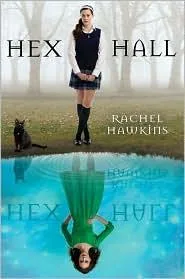





More Free Magic & Ritual Books
View all →