Reliving past lives

 83
83

Reliving past lives
Helen Wambach's "Reliving Past Lives" attempts to bring a semblance of scientific rigor to the often-sensationalized topic of past-life regression. Her extensive data collection from thousands of subjects, analyzed for consistency and historical accuracy, forms the bedrock of her argument. The detail with which she outlines her methodology is commendable, offering a structured approach to a field rife with anecdotal evidence. A significant strength lies in her careful cataloging of historical details recalled by subjects, which she then cross-references with documented history. However, the inherent limitations of hypnotic recall—susceptibility to suggestion, confabulation, and the difficulty of definitively proving the authenticity of memories—remain a considerable challenge to her conclusions. The work struggles to entirely escape the subjective nature of the data it presents, despite Wambach's statistical efforts. Ultimately, "Reliving Past Lives" offers a compelling case study for the *possibility* of past-life recall, grounded in empirical effort, yet falls short of definitive proof.
📝 Description
83
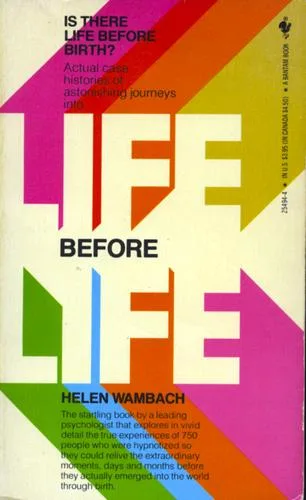
Helen Wambach's 1979 book presents findings from thousands of past-life regression sessions.
Helen Wambach's "Reliving Past Lives," published in 1979, details her systematic research into past-life regression. The book describes Wambach's methods and the results from thousands of regression sessions conducted over several years. Under hypnosis, participants recalled specific experiences and identities from previous historical periods, sometimes spanning centuries. Wambach aimed to show the consistency and detail within these recalled memories, arguing they reflect actual past existences rather than imagination.
This work is for those interested in consciousness, memory, and the possibility of lives beyond our current one. It will attract readers of parapsychology, consciousness studies, and those curious about hypnosis for subjective exploration. Therapists and counselors seeking empirical data on alternative methods for client understanding will also find valuable information.
Wambach's research emerged in the 1970s, a time of growing interest in parapsychology and altered states. Her work followed figures like J.B. Rhine and coincided with the rise of the New Age movement. Unlike more anecdotal accounts of reincarnation, Wambach's approach focused on rigorous methodology and statistical analysis of data from regression sessions. Her research sought to build a framework for understanding past-life recall, offering a data-driven perspective distinct from purely speculative or spiritual interpretations.
💡 Why Read This Book?
• Understand Wambach's systematic approach to past-life regression, including her methods for data collection and analysis, which differ from purely anecdotal accounts. • Examine the concept of "historical consistency" as presented by Wambach, exploring how subjects' recalled details from specific eras, like the medieval period, were cross-referenced. • Gain insight into the challenges and potential evidence for past-life recall, particularly through Wambach's focus on subjects' apparent knowledge of historical specifics they had no conscious access to.
⭐ Reader Reviews
Honest opinions from readers who have explored this book.
❓ Frequently Asked Questions
What is Helen Wambach's primary research method in 'Reliving Past Lives'?
Wambach utilized a systematic approach involving thousands of past-life regression sessions conducted under hypnosis. She meticulously recorded subjects' recollections and analyzed them for consistency, detail, and historical accuracy across multiple sessions and individuals.
When was 'Reliving Past Lives' first published and what was the intellectual climate like?
The book was first published in 1979, a period marked by significant public and academic interest in parapsychology, consciousness studies, and the burgeoning New Age movement.
Does the book provide evidence of xenoglossy?
Yes, 'Reliving Past Lives' discusses instances of xenoglossy, where subjects reportedly spoke or understood languages unknown to them in their current life, presenting it as potential evidence for past-life recall.
What kind of historical periods do subjects typically recall in Wambach's studies?
Subjects in Wambach's studies recalled experiences across various historical periods, with many detailing lives in eras such as ancient Rome, medieval Europe, and colonial America, often providing specific cultural and daily life details.
Is 'Reliving Past Lives' considered a scientific text?
While Wambach employed empirical methods and statistical analysis, the subject matter (hypnotic recall of past lives) and the inherent difficulties in verifying such memories mean the book is often discussed within parapsychology and esoteric studies rather than mainstream scientific consensus.
What are the main limitations acknowledged or inherent in Wambach's research?
The primary limitations involve the subjective nature of hypnotic recall, the potential for confabulation (unintentional fabrication) and cryptomnesia (hidden memory), and the difficulty in definitively proving the objective reality of recalled past-life experiences.
🔮 Key Themes & Symbolism
Empirical Regression Methodology
Wambach's work is distinguished by its structured, data-driven approach to past-life regression. She details her protocols for hypnosis, subject selection, and data recording, aiming for objectivity. The book explains how she categorized recalled information, focusing on consistency across subjects and eras, such as specific details about clothing, societal structures, and daily routines in periods like 17th-century France or ancient Egypt. This emphasis on empirical collection and analysis distinguishes her research from more purely speculative or anecdotal accounts within esoteric literature, positioning it as an early attempt to quantify and systematize the exploration of past-life memories.
Memory and Consciousness Architecture
The book probes the fundamental nature of memory, suggesting that experiences, even those from alleged past lives, might be stored in a form accessible through altered states of consciousness. Wambach explores the idea that the subconscious or a deeper layer of awareness holds vast reservoirs of information. Her research implies that identity is not solely tied to the current physical existence, but that consciousness may persist and retain imprints of previous experiences. This challenges conventional materialistic views of mind and memory, proposing a more expansive model where personal history extends beyond the current lifespan.
Historical Accuracy in Recall
A central theme is the remarkable historical accuracy observed in subjects' regressions. Wambach highlights instances where individuals recalled specific, verifiable details about historical periods, objects, or events that they had no conscious knowledge of. The book presents examples of subjects describing archaic tools, social customs, or architectural features with a precision that suggests access to authentic historical data. This theme underpins her argument that past-life recall is not mere fantasy but potentially a window into actual historical existences, providing a unique lens through which to view the past.
Therapeutic Potential of Regression
Beyond historical inquiry, Wambach touches upon the therapeutic applications of past-life regression. The process, by allowing individuals to access and potentially resolve unresolved issues or traumas from previous incarnations, can lead to significant psychological healing in the present life. Understanding the roots of current phobias, anxieties, or relationship patterns through regression is presented as a key benefit. This perspective frames past-life exploration not just as an academic or esoteric pursuit, but as a practical tool for personal growth and emotional well-being, offering a different dimension to consciousness exploration.
💬 Memorable Quotes
Direct passages from the work, attributed to the author.
“Subjects consistently recalled specific details about clothing, tools, and social customs of historical periods.”
— This highlights Wambach's core empirical finding: the verifiable specificity of details recalled during regressions. It suggests a level of historical knowledge beyond ordinary awareness, forming a core part of her argument for genuine past-life recall.
“The accuracy of historical details often surprised even the subjects themselves.”
— This points to the unconscious nature of the recalled information. If subjects were consciously fabricating, they might not achieve such unexpected, verifiable accuracy, implying a deeper source for the memories.
“A significant percentage of regressions provided statistically consistent data across different individuals.”
— This emphasizes Wambach's methodological rigor. The statistical consistency suggests patterns in recalled experiences that transcend individual imagination, lending weight to the collective or objective reality of these past-life memories.
“Regression offered potential insights into the origins of current-life phobias and anxieties.”
— This interpretation focuses on the therapeutic angle, suggesting that understanding past-life traumas could be key to healing present-day psychological issues, framing regression as a form of depth psychology.
“The study involved thousands of subjects, creating a substantial database of recalled experiences.”
— This speaks to the scale of Wambach's research. The sheer volume of data collected and analyzed is presented as a strength, providing a broad empirical foundation for her conclusions about past-life recall.
🌙 Esoteric Significance
Tradition
Wambach's work can be situated within the broader esoteric interest in reincarnation, which has roots in ancient Eastern philosophies (Hinduism, Buddhism) and was adopted and adapted by Western esoteric movements like Theosophy in the late 19th and early 20th centuries. While not strictly adhering to any single lineage, her research engages directly with the concept of past lives, a core tenet in many reincarnationist traditions. She bridges the gap between spiritual belief and empirical investigation, attempting to provide evidence for a concept traditionally accepted on faith or through mystical experience, thereby offering a potentially more 'scientific' or verifiable perspective on reincarnation.
Symbolism
While Wambach's work is more focused on empirical data than overt symbolism, the act of regression itself can be seen as symbolic. It represents a journey into the less-obvious layers of the psyche, a descent into the 'underworld' of accumulated experience. The consistency of historical details recalled by subjects can be interpreted symbolically as the 'echoes' of past existences, suggesting that the fabric of reality is more layered and interconnected than conventionally understood. The hypnotic state itself functions as a symbolic threshold, a liminal space between conscious awareness and the deeper, perhaps ancestral or collective, memory.
Modern Relevance
Wambach's research continues to inform contemporary discussions in consciousness studies, parapsychology, and transpersonal psychology. Her emphasis on empirical data and statistical analysis has influenced researchers seeking to legitimize the study of anomalous experiences. Modern practitioners of past-life regression therapy, often working within psychotherapeutic frameworks, build upon the foundations laid by Wambach and others who demonstrated the potential for accessing such material. Her work remains a reference point for those exploring the nature of memory, identity, and consciousness beyond the confines of a single lifetime, particularly in academic circles that cautiously examine non-mainstream psychological phenomena.
👥 Who Should Read This Book
• Students of consciousness studies and parapsychology seeking empirical data on past-life recall, moving beyond anecdotal accounts. • Therapists and counselors interested in alternative methodologies for exploring deep-seated psychological patterns and the potential origins of trauma. • Skeptics and researchers intrigued by the possibility of memory beyond current life, looking for structured research that attempts to address historical accuracy in regression.
📜 Historical Context
Published in 1979, Helen Wambach's "Reliving Past Lives" emerged during a fertile period for parapsychology and consciousness exploration. The post-war era had seen a growing, albeit often fringe, interest in phenomena like reincarnation, fueled partly by figures such as Carl Jung and his theories on the collective unconscious, and later by the Theosophical Society's influence. Wambach's work contrasted with more mystical or spiritual interpretations by employing a methodologically rigorous, data-driven approach. She sought to validate past-life recall through empirical observation and statistical analysis of thousands of hypnotic sessions, positioning her research within a scientific framework, albeit one that challenged mainstream paradigms. This era also saw increased popular engagement with altered states of consciousness through practices like Transcendental Meditation and interest in figures like Elisabeth Kübler-Ross, whose work on death and dying touched upon similar existential questions.
📔 Journal Prompts
Recalled historical details: Compare a specific detail Wambach notes about a past era with current historical understanding.
The subconscious archive: Reflect on how memory might be stored beyond the conscious mind, as suggested by Wambach's findings.
Hypnotic state as access: Consider the role of altered states in accessing information not readily available in ordinary consciousness.
Identity continuity: Explore the implications of Wambach's research for the concept of a continuous self across lifetimes.
Evidence for past lives: Analyze Wambach's criteria for what constitutes convincing evidence for past-life recall.
🗂️ Glossary
Past-Life Regression
A therapeutic or investigative technique, typically involving hypnosis, aimed at accessing memories or experiences from previous lifetimes attributed to an individual's soul or consciousness.
Hypnosis
A state of human consciousness involving focused attention and reduced peripheral awareness characterized by an enhanced capacity for response to suggestion. Used in regression to access subconscious memories.
Xenoglossy
The phenomenon of speaking or understanding a language that the individual has not learned through conventional means in their current lifetime. Presented as potential evidence for past-life recall.
Confabulation
The creation of false memories or the distortion of existing memories without the conscious intention to deceive. A potential challenge in verifying hypnotic recall.
Cryptomnesia
A memory disorder characterized by the retrieval of a memory that has been forgotten or not recognized as such, leading to the belief that a recalled idea or event is original or from another source.
Parapsychology
A field of study that investigates psychic phenomena or the 'sixth sense,' including telepathy, clairvoyance, precognition, and psychokinesis, as well as reincarnation and altered states of consciousness.
Empirical Research
A method of study based on direct observation, measurement, and experimentation, rather than solely on theory or logic. Wambach employed this approach in her regression studies.
🔮 Readers Also Liked
Browse all →









More by Helen Wambach
All books →


More Free Occult Philosophy Books
View all →