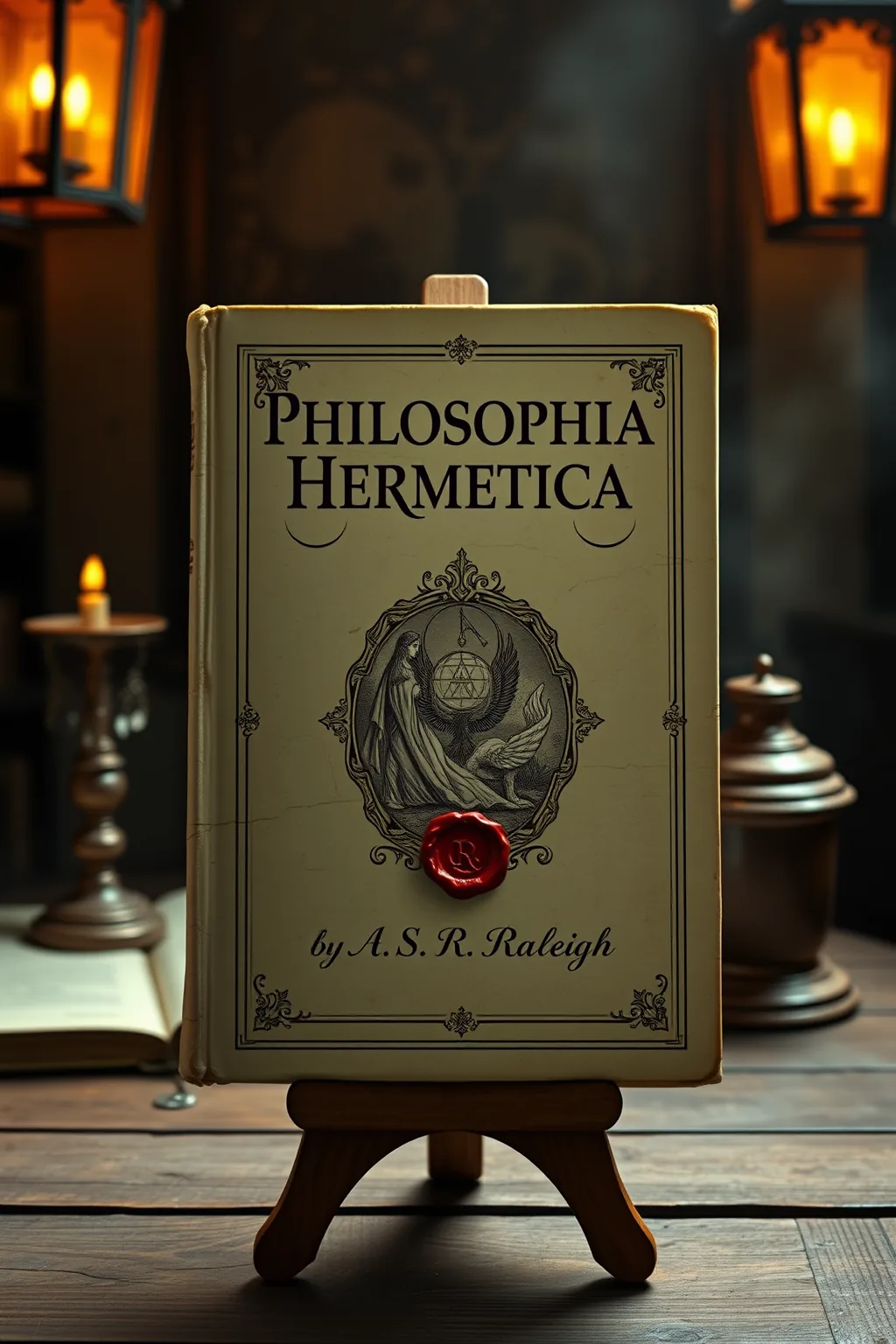
Philosophia Hermetica
 76
76

Philosophia Hermetica
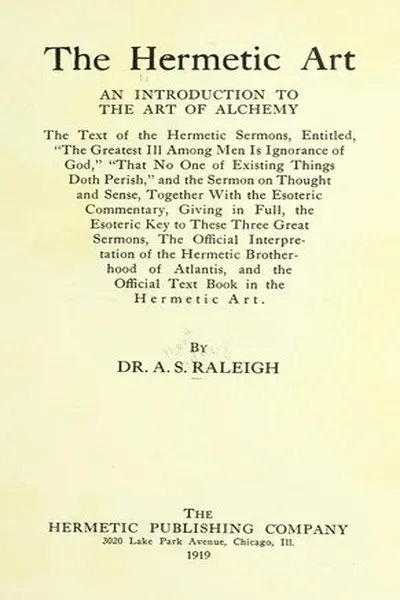
A. S. Raleigh's *Philosophia Hermetica* offers a rigorous, if at times dense, examination of its subject. The author’s strength lies in situating Hermeticism within its historical and philosophical milieu, avoiding the common pitfalls of ahistorical romanticism. The section detailing the macrocosm-microcosm relationship is particularly well-articulated, presenting the principle of "As Above, So Below" not as a mere aphorism but as a foundational ontological framework. However, the prose can become overly academic, occasionally obscuring the very esoteric luminescence it seeks to illuminate. The work might benefit from more direct engagement with the practical, experiential aspects often associated with Hermetic practice, rather than focusing solely on its philosophical architecture. Nevertheless, for the serious student, it provides a solid, well-researched foundation. It is a valuable academic contribution to the study of Western esotericism.
📝 Description
76
A. S. Raleigh's Philosophia Hermetica, published in 2015, examines Hermetic doctrines beyond simple definitions.
Published in 2015, Philosophia Hermetica offers a detailed look at the philosophy attributed to Hermes Trismegistus. Raleigh moves past basic explanations to study the foundational texts and lasting principles of this tradition. The book covers core beliefs, following their impact across different historical eras and esoteric paths.
This work is structured for students of comparative religion and Western esotericism. It will appeal to readers who value careful analysis and work with primary sources. Those interested in the philosophical bases of alchemy, astrology, and ceremonial magic will find it especially useful. The book suits individuals prepared for complex philosophical discussions over brief overviews.
Hermetic thought saw a significant revival during the Renaissance, particularly after Marsilio Ficino translated the Corpus Hermeticum in 1471. Raleigh situates his work within this long history of Hermetic revival and reinterpretation. The book acknowledges debates about the texts' origins, often placing them in Hellenistic Egypt, and examines their connections to Gnostic and Neoplatonic thought from the early centuries CE.
💡 Why Read This Book?
• Gain a structured understanding of the core Hermetic principles, such as the Law of Correspondence, as presented in the context of Hellenistic Egypt, moving beyond popular interpretations. • Explore the historical trajectory of Hermetic thought from its likely origins to its Renaissance revival, noting specific translations like Ficino's in 1471. • Grasp the philosophical underpinnings of alchemy and other occult arts through a detailed analysis of the *Corpus Hermeticum* and its symbolic language.
⭐ Reader Reviews
Honest opinions from readers who have explored this book.
❓ Frequently Asked Questions
When was Philosophia Hermetica first published and by whom?
Philosophia Hermetica was first published in 2015. The author is A. S. Raleigh, who curated this specific examination of Hermetic philosophy.
What historical period is most relevant to the origins of Hermetic texts discussed?
The origins of the Hermetic texts are most often situated in the Hellenistic period of Egypt, with scholarly debate continuing regarding their precise dating and influences.
Does the book discuss the macrocosm-microcosm principle?
Yes, the book discusses the macrocosm-microcosm correspondence extensively. It presents "As Above, So Below" as a fundamental ontological principle within Hermetic philosophy.
Is this book suitable for absolute beginners in occult studies?
While it offers foundational concepts, the book's academic rigor and depth make it more suitable for those with some prior exposure or a serious academic interest in esoteric philosophy.
What is the primary focus of Philosophia Hermetica?
The primary focus is a comprehensive exploration and philosophical analysis of Hermetic doctrines, tracing their lineage and key concepts through history.
Does the author cite specific translations of Hermetic texts?
The work engages with the historical context of translations, referencing significant moments like Marsilio Ficino's 1471 rendering of the *Corpus Hermeticum*.
🔮 Key Themes & Symbolism
Cosmic Correspondence
This theme examines the Hermetic axiom 'As Above, So Below,' positing a fundamental interconnectedness between the celestial realms and the terrestrial world. Raleigh elucidates how this principle underpins the Hermetic worldview, suggesting that understanding the macrocosm (universe) provides direct insight into the microcosm (individual) and vice versa. The work details how this concept informed alchemical processes, astrological interpretations, and magical practices, viewing the universe as a unified, divinely orchestrated system accessible through symbolic knowledge.
The Divine and the Gnosis
Central to Philosophia Hermetica is the exploration of the divine nature and the path to attaining gnosis (direct spiritual knowledge). The book examines the Hermetic conception of God as an ultimate, ineffable source from which all emanates. It details how gnosis is achieved not merely through intellectual assent but through a process of spiritual ascent and inner realization, leading to an understanding of one's own divine spark and place within the cosmic order.
Hermetic Principles of Operation
The work systematically analyzes the foundational laws or principles that govern the universe according to Hermetic philosophy. These include concepts such as mentalism (the All is Mind), correspondence, vibration, polarity, rhythm, cause and effect, and gender. Raleigh illustrates how these principles are not abstract theories but active forces shaping reality, providing a framework for understanding phenomena from the mundane to the most esoteric.
Textual Lineage and Interpretation
Philosophia Hermetica critically engages with the primary texts attributed to Hermes Trismegistus, particularly the *Corpus Hermeticum*. It discusses the challenges of textual transmission and interpretation, acknowledging scholarly debates about their origins and dating, often placed in the Hellenistic period. The book examines how various historical epochs, notably the Renaissance with Marsilio Ficino's translation in 1471, have reinterpreted and integrated these ancient teachings into Western esoteric traditions.
💬 Memorable Quotes
Direct passages from the work, attributed to the author.
“The universe is a living entity, a manifestation of divine Mind.”
— This statement expresses the Hermetic belief in a conscious, divinely animated cosmos. It implies that reality is not inert matter but a dynamic expression of a supreme intelligence, accessible through understanding its underlying principles.
“Gnosis is the key to unlocking the correspondence between the outer and inner worlds.”
— This highlights the role of direct spiritual knowledge (gnosis) as the essential tool for perceiving the interconnectedness of the macrocosm and microcosm, a core tenet of Hermetic philosophy.
“Hermetic principles provide a blueprint for understanding the laws of creation.”
— This interpretation underscores the book's focus on the foundational laws like correspondence and vibration, presenting them as essential frameworks for comprehending the mechanics of the universe.
“The study of Hermeticism requires both intellectual rigor and intuitive insight.”
— This emphasizes the dual approach necessary for engaging with Hermetic philosophy. It requires analytical study of texts and concepts, alongside a cultivated inner perception to grasp its deeper, often symbolic, meanings.
“The *Corpus Hermeticum* serves as a foundational text for numerous Western esoteric traditions.”
— This acknowledges the significant historical and philosophical impact of these ancient Egyptian-Hellenistic texts, positioning them as a critical source for subsequent occult and mystical movements.
🌙 Esoteric Significance
Tradition
This work belongs firmly within the Western Esoteric Tradition, specifically focusing on the Hermetic lineage. It engages directly with the philosophical and cosmological teachings attributed to Hermes Trismegistus, a syncretic figure blending Egyptian Thoth and Greek Hermes. The book positions itself as a scholarly explication of these foundational texts, tracing their influence through subsequent schools like Rosicrucianism, Alchemy, and various forms of Western ceremonial magic, while also acknowledging departures from purely mystical interpretations.
Symbolism
Key symbols explored include the Caduceus, representing balance, duality, and the flow of universal energy, often linked to the concept of vibration and union of opposites. The Ouroboros, the serpent eating its tail, symbolizes cyclical time, eternal return, and the totality of existence, reflecting the Hermetic understanding of the universe as a singular, self-contained entity. The Emerald Tablet, a core text within Hermeticism, is also central, representing the fundamental principles of transformation and the microcosm-macrocosm relationship.
Modern Relevance
Contemporary practitioners of Western esotericism, including modern alchemists, ceremonial magicians, and students of comparative spirituality, continue to draw heavily on the principles outlined in *Philosophia Hermetica*. Thinkers and groups exploring consciousness studies, quantum mysticism, and the integration of ancient wisdom with modern science often reference Hermetic concepts. The work's emphasis on interconnectedness and the power of the mind speaks to current interest in mindfulness, manifestation, and holistic approaches to well-being.
👥 Who Should Read This Book
• Students of Western Esotericism seeking a detailed philosophical grounding in Hermetic principles, moving beyond popular interpretations to engage with core doctrines. • Comparative Religion scholars interested in the Hellenistic period and the cross-pollination of Egyptian, Greek, and Jewish mystical thought, particularly concerning the *Corpus Hermeticum*. • Aspiring Alchemists and Magicians looking to understand the theoretical framework and symbolic language that underpin their practical disciplines, referencing concepts like the Macrocosm-Microcosm connection.
📜 Historical Context
The intellectual landscape into which *Philosophia Hermetica* emerges is one deeply indebted to the Renaissance rediscovery of classical and esoteric texts. The reintroduction of the *Corpus Hermeticum*, notably through Marsilio Ficino's Latin translation in 1471, sparked a profound revival of interest in ancient wisdom traditions. Raleigh's work situates itself within this long historical arc, acknowledging the scholarly debates surrounding the texts' origins, often attributed to Hellenistic Egypt and influenced by Neoplatonic and Gnostic currents. This period also saw a flourishing of competing intellectual frameworks, including burgeoning scientific rationalism and established theological doctrines, against which Hermeticism offered a distinct, mystical worldview. The reception of Hermetic ideas was complex, simultaneously inspiring thinkers like Giordano Bruno and facing scrutiny from orthodox religious authorities, highlighting its controversial yet influential position in Western thought.
📔 Journal Prompts
The principle of correspondence, 'As Above, So Below,' as presented in chapter X.
The concept of gnosis and its attainment through spiritual ascent.
The role of the Caduceus symbol in Hermetic cosmology.
The historical reception of the *Corpus Hermeticum* following Ficino's 1471 translation.
The implications of the Hermetic axiom that 'The All is Mind'.
🗂️ Glossary
Hermeticism
A religious and philosophical tradition based primarily upon writings attributed to Hermes Trismegistus, a syncretic figure combining Greek Hermes and Egyptian Thoth. It emphasizes gnosis, cosmic correspondence, and the divine nature of the universe.
Corpus Hermeticum
A collection of ancient Greek philosophical and religious writings which are attributed to Hermes Trismegistus. These texts are foundational to the Hermetic tradition and explore theology, cosmology, and ethics.
Gnosis
Greek for 'knowledge.' In esoteric contexts, it refers to direct spiritual insight or intuitive understanding of divine truths, often seen as a path to salvation or enlightenment.
Macrocosm
The 'great world' or universe, viewed as a single, unified entity. In Hermeticism, it is understood in correspondence with the microcosm.
Microcosm
The 'little world,' referring to the human being or the earthly realm. Hermetic philosophy posits a direct relationship and correspondence between the microcosm and the macrocosm.
Hellenistic Period
The period of Mediterranean and Near Eastern history between the death of Alexander the Great (323 BCE) and the rise of the Roman Empire (c. 30 BCE). It was a time of cultural fusion, particularly in Egypt.
Marsilio Ficino
An Italian scholar and physician of the Italian Renaissance who translated the *Corpus Hermeticum* from Greek into Latin in 1471, significantly influencing the Renaissance Neoplatonic movement.
🔮 Readers Also Liked
Browse all →









More by A. S. Raleigh
All books →




More Free Alchemy & Hermeticism Books
View all →