Personality, divination, and the tarot
 83
83

Personality, divination, and the tarot
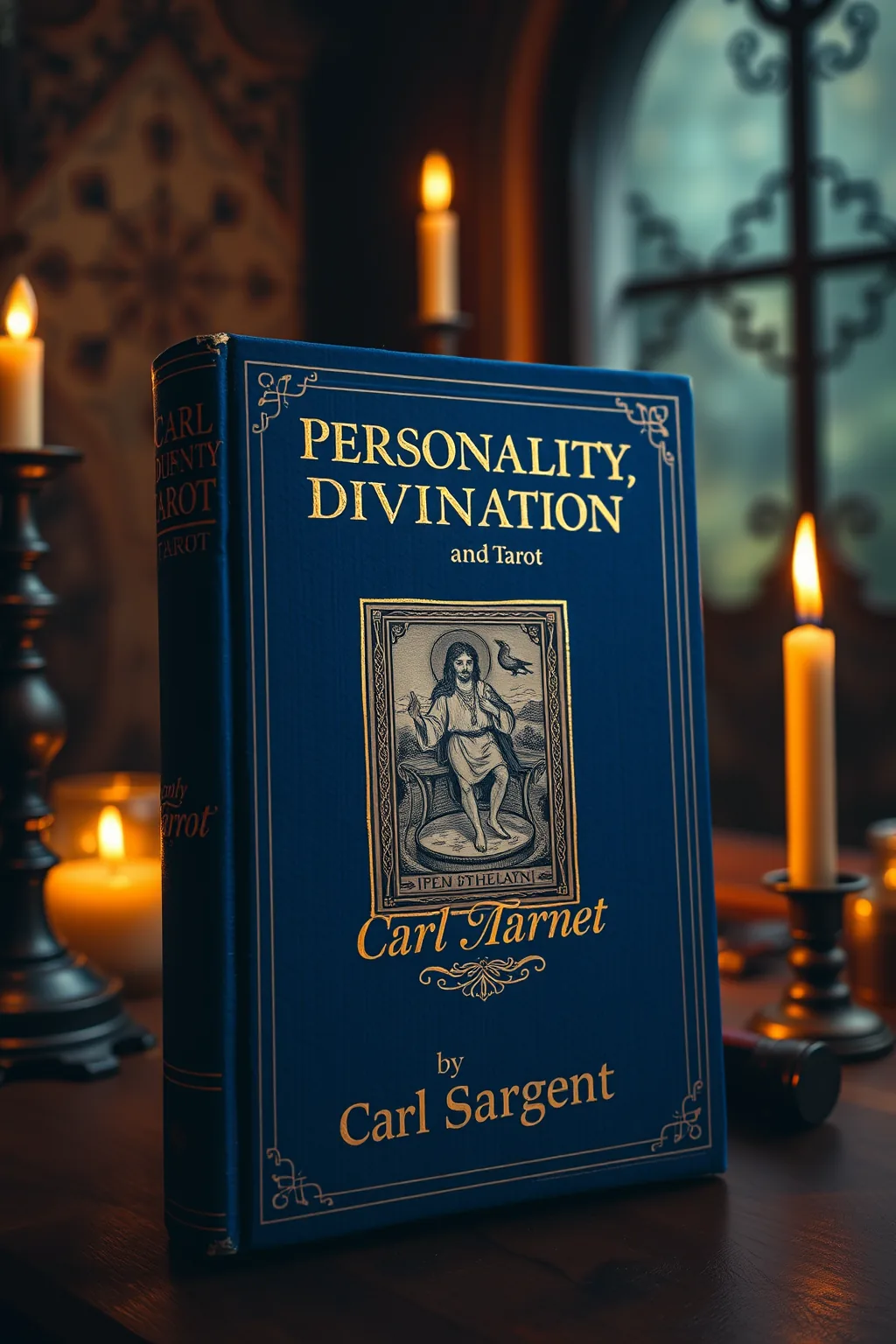
Carl Sargent’s 1988 treatise, 'Personality, Divination, and the Tarot,' attempts a rigorous psychological mapping of the Tarot deck. Its strength lies in its detailed attempt to link specific card imagery to psychological states, particularly drawing from Jungian concepts. Sargent’s analysis of the Fool's journey as a representation of ego development is particularly well-articulated, moving beyond simplistic interpretations. However, the book occasionally falters under the weight of its own systematic approach. At times, the psychological correlations feel forced, reducing the inherent polysemy of the cards to a rigid interpretive schema. A notable limitation is the lack of engagement with earlier esoteric traditions that informed Tarot's development, focusing almost exclusively on a modern psychological lens. Sargent’s exploration of the Hermit card as an embodiment of introversion and wisdom, while sound, could have benefited from acknowledging its roots in alchemical and contemplative practices. Ultimately, it's a valuable, if somewhat dry, contribution to psychological Tarot studies.
📝 Description
83
Carl Sargent's 1988 book links personality structures to the symbolic language of Tarot cards.
Published in 1988, Carl Sargent's "Personality, Divination, and the Tarot" provides a structured framework for understanding how Tarot cards reflect an individual's psychology. The book moves beyond simple fortune-telling, suggesting the cards act as a mirror to the psyche, revealing patterns in thought, behavior, and potential development. It is intended for serious students of Tarot and psychology who want a more analytical method for interpretation. Those interested in Jungian psychology, archetypes, and using symbolic systems for self-understanding will find this work particularly relevant. It is not the best resource for readers seeking quick divinatory answers.
Sargent dissects the Tarot, mapping its components onto personality structures. He examines how specific Major and Minor Arcana cards connect with archetypal energies and stages of personal growth. The book also considers how concepts like the 'shadow self' can appear in card combinations, and how consistent engagement with the deck can foster self-awareness.
Emerging in the late 1980s, a time of revived interest in Jungian psychology and esoteric studies, Sargent's book contributed to a shift in Tarot interpretation. It presented the Tarot not just as a predictive tool but as a psychological atlas. This perspective aligned with contemporary explorations of archetypes and individuation within esoteric and psychological circles. Other authors like Mary K. Greer and Robert Wang were also publishing influential works on the Tarot during this period, contributing to a growing academic discourse.
💡 Why Read This Book?
• Gain a structured method for mapping personality traits to Tarot archetypes, moving beyond simple divinatory readings, as exemplified by Sargent's analysis of the Major Arcana. • Understand the Tarot as a psychological mirror reflecting inner states and developmental stages, a concept explored through specific card symbolism like the Shadow figures. • Explore the 1988 intellectual climate of Tarot studies, where Jungian psychology began to heavily influence interpretations, as evidenced by the book's focus on individuation.
⭐ Reader Reviews
Honest opinions from readers who have explored this book.
❓ Frequently Asked Questions
What is the primary focus of Carl Sargent's 'Personality, Divination, and the Tarot'?
The book's core aim is to connect Tarot card imagery and symbolism with psychological concepts, particularly personality structures and archetypes. It presents the Tarot as a tool for self-understanding and psychological exploration, rather than solely for predictive purposes.
When was 'Personality, Divination, and the Tarot' first published?
Carl Sargent's work was first published in 1988, positioning it within a wave of psychological interpretations of the Tarot that gained traction in the late 20th century.
Does the book offer practical guidance for beginners?
While it provides a framework, the book is more analytical and theoretical. Beginners may find its psychological depth requires a foundational understanding of both Tarot and basic psychological principles.
What psychological theories influence Sargent's approach?
The work is heavily influenced by Carl Jung's theories, particularly concepts like archetypes, the collective unconscious, and the process of individuation, which Sargent uses to interpret Tarot symbolism.
How does Sargent view the relationship between personality and divination?
Sargent posits that divination through Tarot is not about predicting external events but about revealing the internal landscape of the querent's personality, their psychological patterns, and their potential for growth.
Is this book suitable for experienced Tarot readers?
Yes, experienced readers seeking a more structured, psychological framework for their interpretations will find Sargent's systematic approach valuable for deepening their understanding of card meanings.
🔮 Key Themes & Symbolism
Tarot as Psychological Mirror
Sargent presents the Tarot not as a mystical oracle of fate, but as a sophisticated system reflecting the querent's inner world. The cards become symbols of psychological states, archetypal patterns, and developmental stages. This perspective aligns with a psychodynamic approach, where external symbols are interpreted as manifestations of internal psychological processes. The book encourages readers to view card readings as opportunities for introspection and self-discovery, identifying recurring themes in their lives and personalities through the symbolic language of the deck.
Archetypal Dynamics
Drawing heavily on Jungian psychology, the work maps the Major Arcana onto universal human experiences and archetypes. Figures like The Magician, The High Priestess, and The Emperor are analyzed as representations of specific psychic functions or developmental phases. Sargent explores how these archetypes, present in the collective unconscious, manifest in individual consciousness and can be identified within a Tarot spread, offering insights into motivations, challenges, and inherent potentials.
Personality Structure and the Minor Arcana
Beyond the Major Arcana, Sargent's analysis extends to the Minor Arcana, correlating suits and numbers with specific personality traits and situational dynamics. The book explores how the court cards (Page, Knight, Queen, King) can represent different facets of personality or roles individuals play. This detailed mapping allows for a nuanced understanding of how everyday psychological experiences and interactions are symbolized, providing a comprehensive psychological profile through the full deck.
The Divinatory Process as Introspection
Sargent re-frames divination not as prediction, but as a sophisticated form of introspection. The act of drawing cards and interpreting them becomes a dialogue with the unconscious mind. The 'divination' aspect serves to externalize internal psychological processes, making them visible and accessible for examination. This approach encourages a disciplined, self-reflective practice, where the Tarot serves as a catalyst for personal growth and psychological integration.
💬 Memorable Quotes
Direct passages from the work, attributed to the author.
“The Tarot provides a symbolic language for the unconscious mind.”
— This core idea suggests that the images and narratives within the Tarot deck are not arbitrary but form a coherent symbolic system capable of expressing the hidden aspects of our psyche, mirroring our inner landscape.
“Archetypes manifest through the cards, revealing universal human patterns.”
— This highlights the Jungian influence, positing that the figures and situations in Tarot are not unique to the querent but are expressions of deeper, shared psychological structures common to all humanity.
“Divination is a tool for psychological self-exploration.”
— This redefines the purpose of Tarot readings, shifting focus from predicting external events to understanding internal motivations, personality dynamics, and the querent's own psychological landscape.
“Each card represents a facet of personality or a stage of development.”
— This emphasizes the book's systematic approach, suggesting a direct correlation between specific Tarot cards and distinct psychological components or developmental milestones in an individual's life journey.
“Understanding the Fool's journey illuminates the process of individuation.”
— This points to a specific conceptual link, framing the progression through the Major Arcana as a metaphor for the psychological journey of becoming a whole, integrated self.
🌙 Esoteric Significance
Tradition
This work primarily engages with the Western Esoteric tradition, particularly through its heavy reliance on Jungian psychology and archetypal theory. While not explicitly Kabbalistic or Hermetic in its methodology, it draws upon the symbolic richness inherent in systems that have historically been part of these traditions. Sargent's approach interprets the Tarot's structure and imagery through a lens focused on individuation and psychological integration, a theme resonant within broader esoteric quests for self-knowledge.
Symbolism
The book emphasizes the symbolic language of the Tarot, particularly the Major Arcana. Archetypes like The Hermit (representing introversion and wisdom) and The Fool (symbolizing the initial leap into the unknown, ego development) are central. Sargent interprets these figures not as literal entities but as psychological potentials or stages within the human journey, connecting them to concepts like the shadow self and the process of self-realization.
Modern Relevance
Sargent's framework continues to influence contemporary Tarot readers and psychologists interested in symbolic systems. His emphasis on the Tarot as a tool for introspection and personality analysis appeals to modern therapeutic approaches that utilize archetypal imagery and narrative. Thinkers and practitioners in fields like depth psychology, archetypal astrology, and modern Jungian Tarot interpretation often cite or implicitly draw upon the systematic psychological mapping he pioneered.
👥 Who Should Read This Book
• Students of Jungian psychology and archetypal theory seeking to apply these concepts to a practical symbolic system. • Tarot enthusiasts who wish to move beyond basic divination towards a deeper psychological understanding of card meanings. • Psychologically-minded individuals interested in self-reflection and using symbolic tools for personal growth and introspection.
📜 Historical Context
Carl Sargent's 'Personality, Divination, and the Tarot,' released in 1988, emerged during a period of significant academic and popular interest in psychology's intersection with esoteric traditions. The late 1980s saw a flourishing of Jungian thought applied to various symbolic systems, including the Tarot. Sargent's work contributed to a growing movement that sought to understand the Tarot not just as a divinatory tool but as a profound psychological map. This era also featured contemporaries like Mary K. Greer, whose own work explored Tarot's psychological dimensions and historical roots. Sargent's analytical approach, focusing on personality mapping, stood in contrast to more purely predictive or spiritual interpretations prevalent at the time, aligning with a broader intellectual current that viewed symbolic systems as keys to unlocking the human psyche.
📔 Journal Prompts
The archetype of The Magician as a representation of conscious will and skill.
The Fool's journey as a metaphor for psychological initiation.
Mapping specific Minor Arcana suits to aspects of personal experience.
Interpreting court cards as reflections of personality facets.
The concept of the shadow self within a Tarot spread.
🗂️ Glossary
Archetype
In Jungian psychology, universal, archaic patterns and images that derive from the collective unconscious and are the psychic counterpart of the instincts. They are innate predispositions that shape human experience and perception.
Individuation
The psychological process of integrating the conscious and unconscious aspects of the psyche into a unified whole, leading to the development of the individual self. It is a lifelong journey of becoming one's true self.
Collective Unconscious
A concept introduced by Carl Jung, referring to a deeper layer of the unconscious psyche that is inherited and shared by all members of the human species. It contains archetypes and primal images.
Shadow Self
In Jungian psychology, the part of the personality that the conscious ego does not identify in itself. It contains repressed desires, weaknesses, and instincts that are often projected onto others.
Psychological Mirror
A metaphor suggesting that the Tarot, through its symbolic imagery, reflects the querent's inner psychological state, personality patterns, and unconscious dynamics.
Divination
The practice of seeking knowledge of the future or the unknown by supernatural means. In this context, it is reframed as a method for accessing unconscious psychological information.
Major Arcana
The set of 22 trump cards in a Tarot deck, representing significant life lessons, archetypal figures, and major spiritual or psychological themes in a reading.
🔮 Readers Also Liked
Browse all →









More by Carl Sargent
All books →
More Free Divination & Tarot Books
View all →