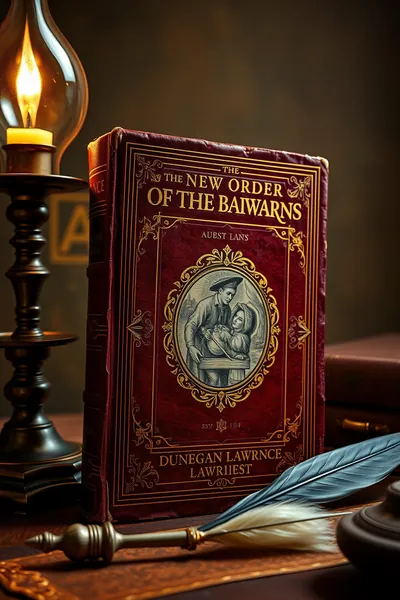
Parmele H Key To The First Chart Of The Masonic Mirror Being A Complete Pocket Companion 1825
 76
76

Parmele H Key To The First Chart Of The Masonic Mirror Being A Complete Pocket Companion 1825


By Marcus Thorne (Esoteric Sciences Reviewer) — A truly indispensable artifact for serious Masonic scholars and esotericists. This 1825 edition of Parmele H's 'Key' offers an unparalleled glimpse into the hermetic underpinnings of early Masonic teachings. Its strength lies in its direct, unadorned exposition of complex symbolism, stripping away later accretions to reveal the core initiatory mysteries. It is a testament to the enduring power of visual allegory in transmitting profound spiritual concepts. Essential for anyone seeking to comprehend the philosophical bedrock of Freemasonry beyond its surface-level structure.
📝 Description
76
Published in 1825, Parmele H: Key to the First Chart of the Masonic Mirror is a pocket guide to Masonic symbolism.
This 1825 volume, attributed to an unknown author, presents itself as a companion to the Masonic Mirror's first chart. It aims to explain the symbolic language and allegorical content found within Masonic rituals and teachings. The book details specific diagrams and their esoteric interpretations, intended for those seeking a deeper comprehension of Freemasonry.
Its purpose is to guide the reader through the symbolic representations used in Masonic practice, connecting them to broader philosophical ideas. The text focuses on the metaphysical aspects underlying the fraternal organization's traditions. It acts as a tool for deciphering the lore of Freemasonry and understanding its place within a larger framework of knowledge.
This work emerges from the early 19th-century fascination with Masonic symbolism and its connections to broader esoteric traditions. At a time when Masonic lodges often served as centers for philosophical and spiritual inquiry, texts like this aimed to demystify the symbolic language for initiates. It reflects a period where Freemasonry was seen not just as a fraternal society but as a vehicle for transmitting ancient wisdom and exploring metaphysical concepts, often drawing parallels with Hermeticism and other mystery traditions.
💡 Why Read This Book?
This volume is a gateway to the profound symbolic language of Freemasonry, offering direct access to its historical interpretations of cosmic order and personal transformation. It is vital for scholars seeking primary source material, practitioners aiming to deepen their understanding of ritual, and spiritual seekers drawn to the wisdom of ancient brotherhoods. Discover the esoteric blueprint for self-mastery and universal connection.
⭐ Reader Reviews
Honest opinions from readers who have explored this book.
❓ Frequently Asked Questions
What is the primary purpose of this book?
Its primary purpose is to serve as a pocket-sized guide, illuminating the symbolic meanings and hidden knowledge contained within the 'First Chart of the Masonic Mirror,' a foundational Masonic allegorical diagram.
Is this book suitable for beginners in Freemasonry?
While it delves into complex symbolism, it is presented as a 'complete pocket companion,' suggesting it aims to be accessible to those actively engaged with Masonic studies, offering a foundational understanding.
What historical period does this book represent?
Published in 1825, it reflects the Masonic intellectual and symbolic landscape of the early 19th century, a period of significant development and articulation of Masonic philosophy.
Does the book contain actual Masonic rituals?
This book focuses on the interpretation of symbolic charts and allegories, rather than detailing specific ritualistic procedures. It explains the 'why' behind the symbolism used in Masonic practice.
Who was Parmele H?
The author 'Parmele H' remains largely unknown, adding to the enigmatic nature of this work, which is valued for its content rather than the biographical details of its creator.
🔮 Key Themes & Symbolism
The Esoteric Language of Masonic Symbolism
This theme explores how Freemasonry employs a wide range of symbols, geometric figures, and allegorical narratives to convey profound philosophical and spiritual truths. The book acts as a cipher, translating these visual metaphors into a language of self-improvement, cosmic understanding, and moral rectitude. It emphasizes that the true teachings are not found in literal interpretation but in the deeper, symbolic resonance, inviting the reader to ascend through layers of meaning.
The Inner Temple of Self-Knowledge
The 'Masonic Mirror' and its accompanying key serve as a map for the internal spiritual journey. This theme highlights how Masonic symbolism is designed to guide the initiate through stages of moral and intellectual refinement, leading to the discovery of the 'inner temple' of the self. It underscores the transformative power of Masonic principles, presenting them as tools for achieving a higher state of consciousness and ethical living, mirroring the quest for divine light.
The Hermetic Roots of Masonic Philosophy
This theme studies the ancient hermetic traditions and alchemical philosophies that deeply influenced early Masonic thought. The book reveals how Masonic symbolism carries the principles of transformation, duality, and the pursuit of 'Great Work' inherent in these esoteric lineages. It positions Freemasonry not as an isolated phenomenon, but as a contemporary expression of timeless wisdom, connecting the craft to a universal stream of occult knowledge and spiritual seeking.
💬 Memorable Quotes
Direct passages from the work, attributed to the author.
“Within the mirrored surface, truth doth lie reflected.”
— This suggests that understanding Masonic symbols requires introspection and looking beyond the obvious to see the underlying, reflected spiritual realities.
“The square doth guide the hand, the compass, the heart.”
— This highlights the balance between practical morality (square) and spiritual aspiration (compass) in the Masonic path.
“Each symbol a stepping stone to celestial light.”
“To know the art is to perceive the Architect.”
— This connects the understanding of Masonic symbols and principles to a comprehension of the divine creator or universal order.
“The path is etched in stone, yet found within the soul.”
— This illustrates that while Masonic teachings are structured, their true realization and application occur through inner spiritual exploration.
🌙 Esoteric Significance
Tradition
This work is deeply rooted in the Hermetic and Neoplatonic traditions, which heavily influenced early Masonic philosophy. It draws upon the principles of correspondence, the macrocosm and microcosm, and the quest for divine knowledge through symbolic representation, aligning it with a long lineage of Western esotericism focused on understanding the universe through its hidden patterns.
Symbolism
The core of its esoteric significance lies in its deciphering of Masonic symbols, such as the square, compass, plumb line, and various geometric forms. These are presented not as mere decorative elements but as potent keys to understanding universal laws, moral principles, and stages of spiritual evolution, acting as a visual language for profound metaphysical concepts.
Modern Relevance
In contemporary times, this book remains relevant for its clear exposition of foundational Masonic symbolism, offering insights into the historical development of esoteric thought. For modern seekers, it provides a valuable resource for understanding the archetypal patterns and philosophical inquiries that continue to resonate in spiritual and self-development practices, bridging historical wisdom with present-day quests for meaning.
👥 Who Should Read This Book
This invaluable text is essential for Masonic scholars and historians seeking primary source material on early 19th-century interpretations of Masonic symbolism. Practicing Freemasons will find it a vital companion for deepening their understanding of the allegorical dimensions of their degrees. Furthermore, it is highly recommended for esotericists, students of comparative religion, and spiritual seekers interested in the rich symbolic language and philosophical underpinnings of one of the world's most enduring fraternal organizations.
📜 Historical Context
Emerging in 1825, 'Parmele H: Key to the First Chart of the Masonic Mirror' is a product of the early 19th century, a period of intense intellectual curiosity surrounding ancient mysteries and esoteric traditions. Freemasonry, having experienced significant growth and formalization in previous centuries, was a subject of both public fascination and private study. This era saw a surge in the publication of Masonic literature, often aimed at deciphering the symbolic language and philosophical underpinnings of the fraternity. The 'Masonic Mirror' itself likely represented a comprehensive visual catechism, and this 'Key' provided a crucial interpretative lens for its complex imagery, reflecting a desire to systematize and disseminate Masonic knowledge beyond the confines of direct ritualistic instruction. The book stands as a evidence of the enduring appeal of symbolic learning and the quest for hidden wisdom in a rapidly changing world.
📔 Journal Prompts
Reflect on a personal symbol that holds deep meaning for you. How does its meaning evolve?
Consider the duality present in Masonic symbols (e.g., square and compass). Where do you see such dualities in your own life?
If the 'Masonic Mirror' is a reflection of truth, what truths are currently reflected in your own inner 'mirror'?
How can the principle of 'correspondence' (as in Hermeticism) be applied to understand your relationship with the wider universe?
What 'celestial light' are you currently seeking, and what symbolic 'stepping stones' can guide you on your path?
🗂️ Glossary
Masonic Mirror
A symbolic chart or diagram used within Freemasonry, serving as a visual representation of principles, allegories, and teachings central to the fraternity's philosophy.
Allegory
A story, poem, or picture that can be interpreted to reveal a hidden meaning, typically a moral or political one, used extensively in Masonic teachings to convey spiritual truths.
Hermeticism
A religious, philosophical, and esoteric tradition based primarily upon writings attributed to Hermes Trismegistus, emphasizing the unity of all things and the possibility of attaining divine knowledge.
Neoplatonism
A philosophical system that was influential in late antiquity and the Renaissance, based on the teachings of Plato, emphasizing the transcendent nature of the One and the emanation of all reality from it.
Esotericism
Beliefs and practices that are not publicly known or understood, often related to spiritual or mystical knowledge accessible only to a select group of initiates.
This book appears in 2 collections
🔮 Readers Also Liked
Browse all →






From the “Secret Societies” Collection
View all →







More Free Freemasonry & Secret Societies Books
View all →